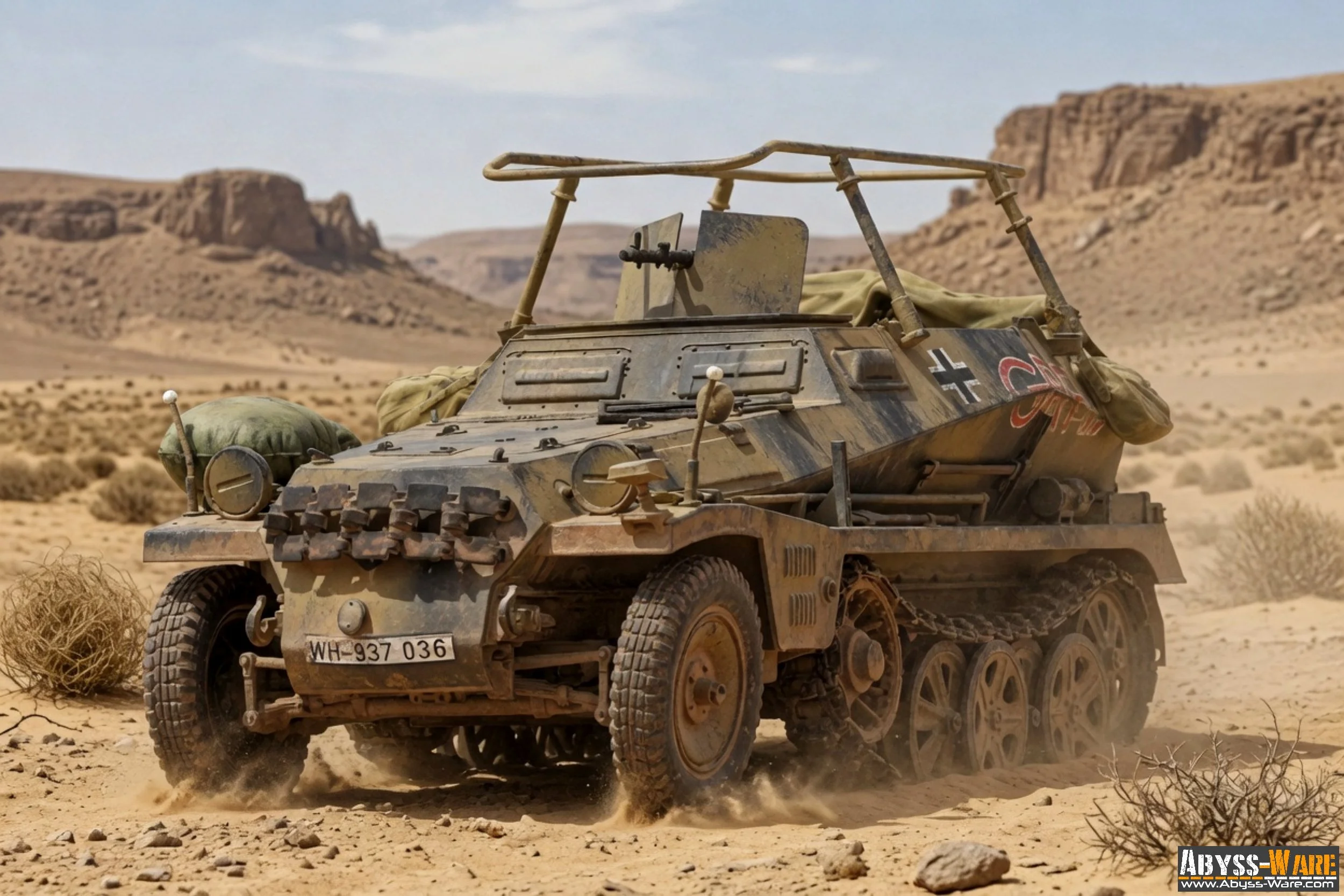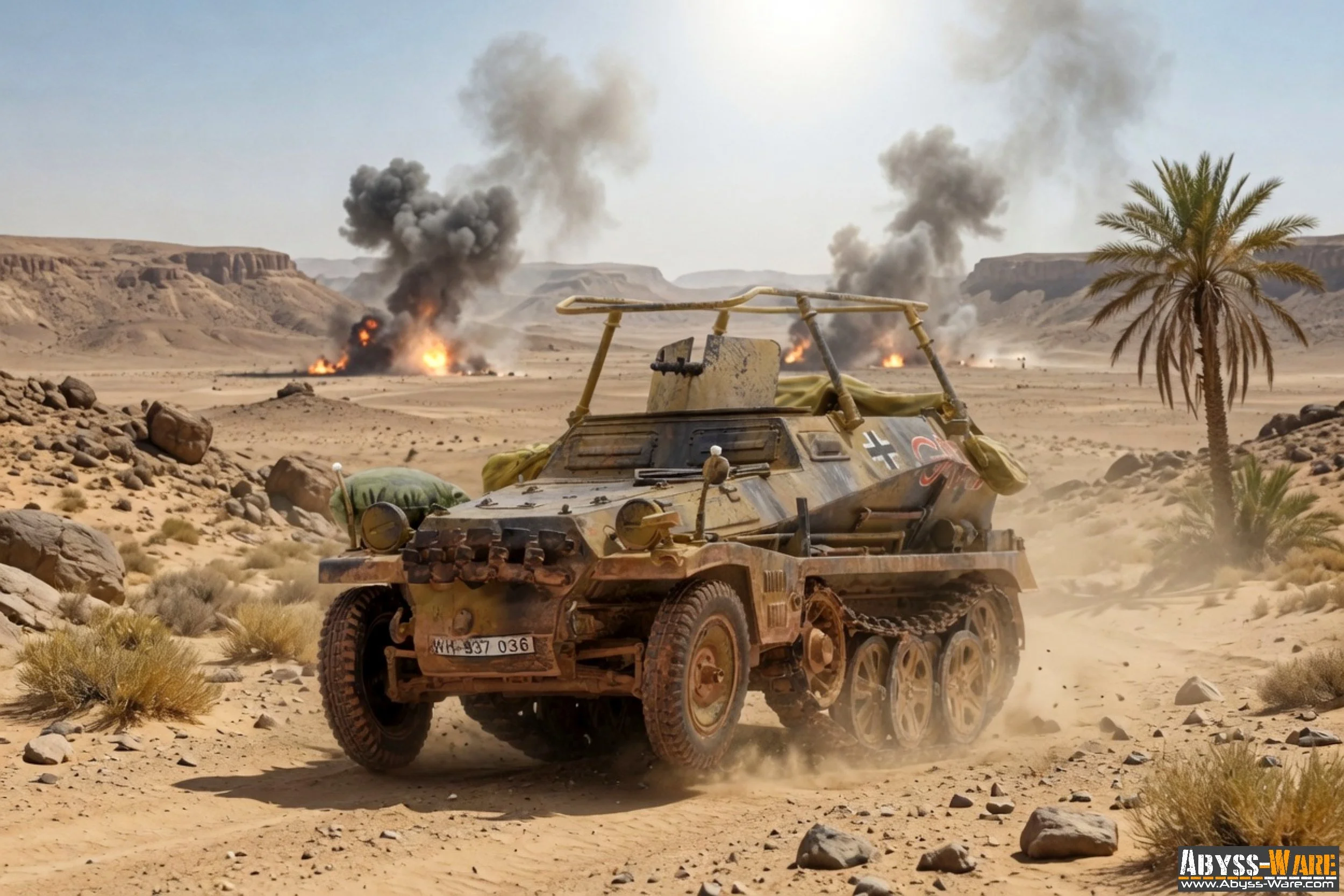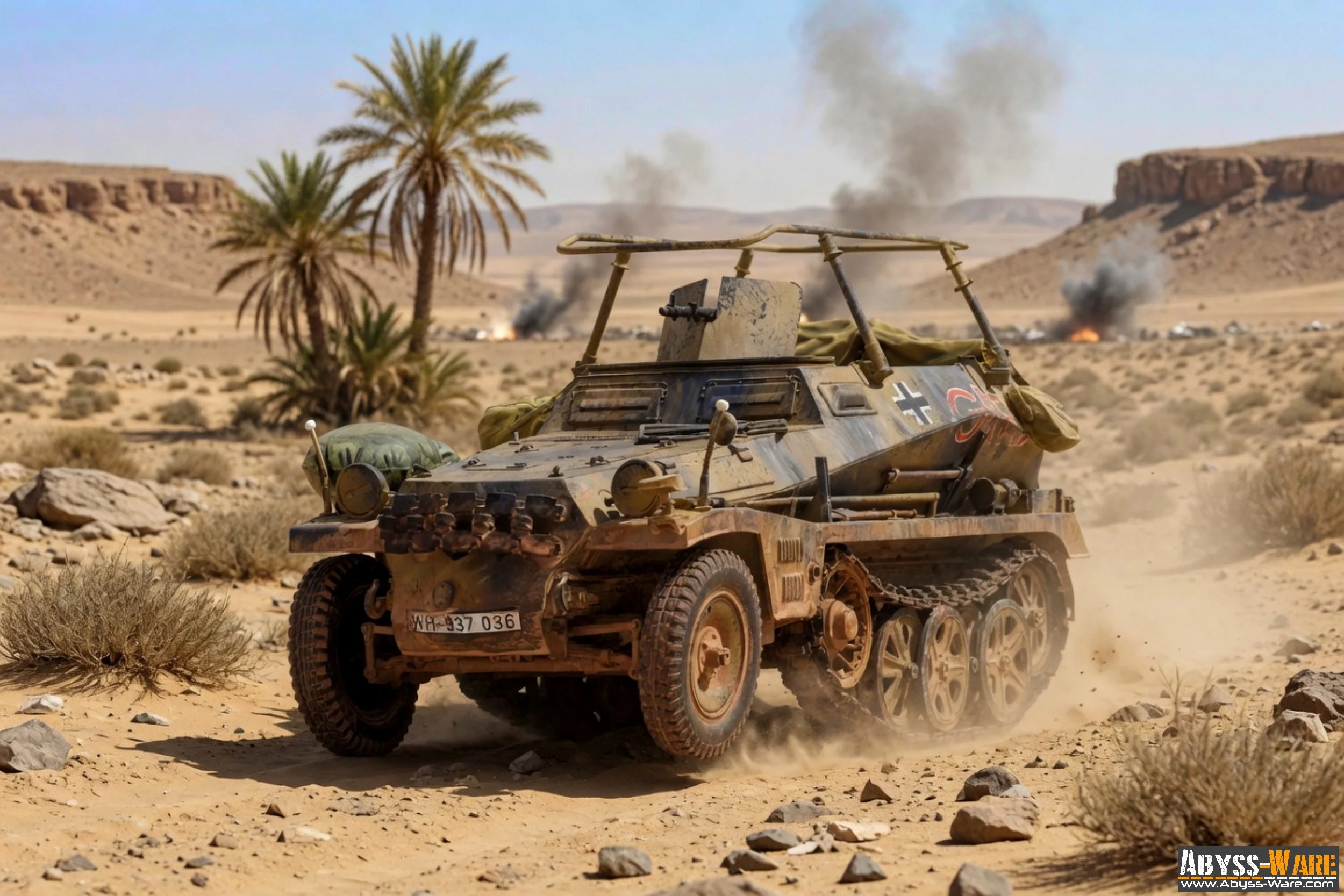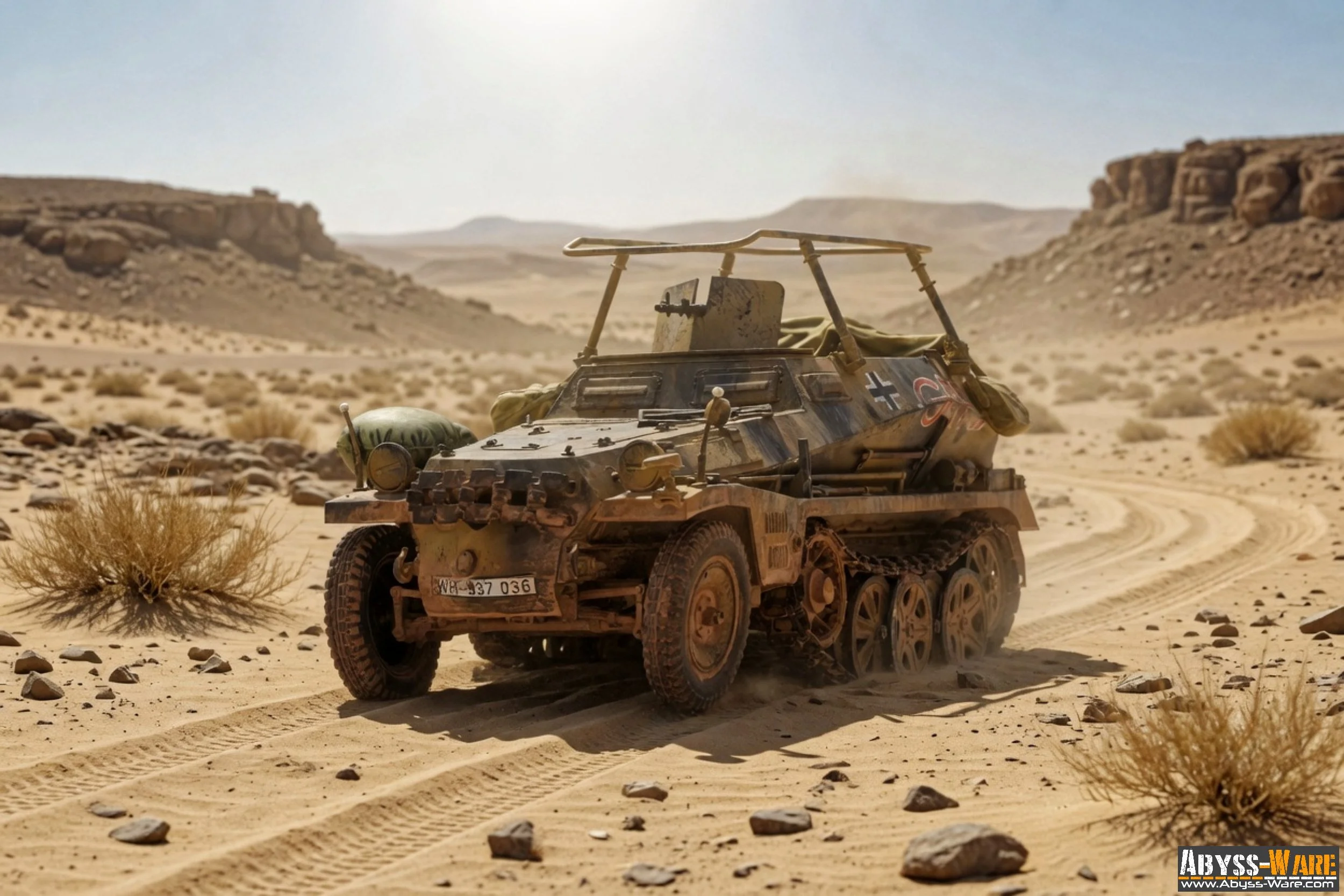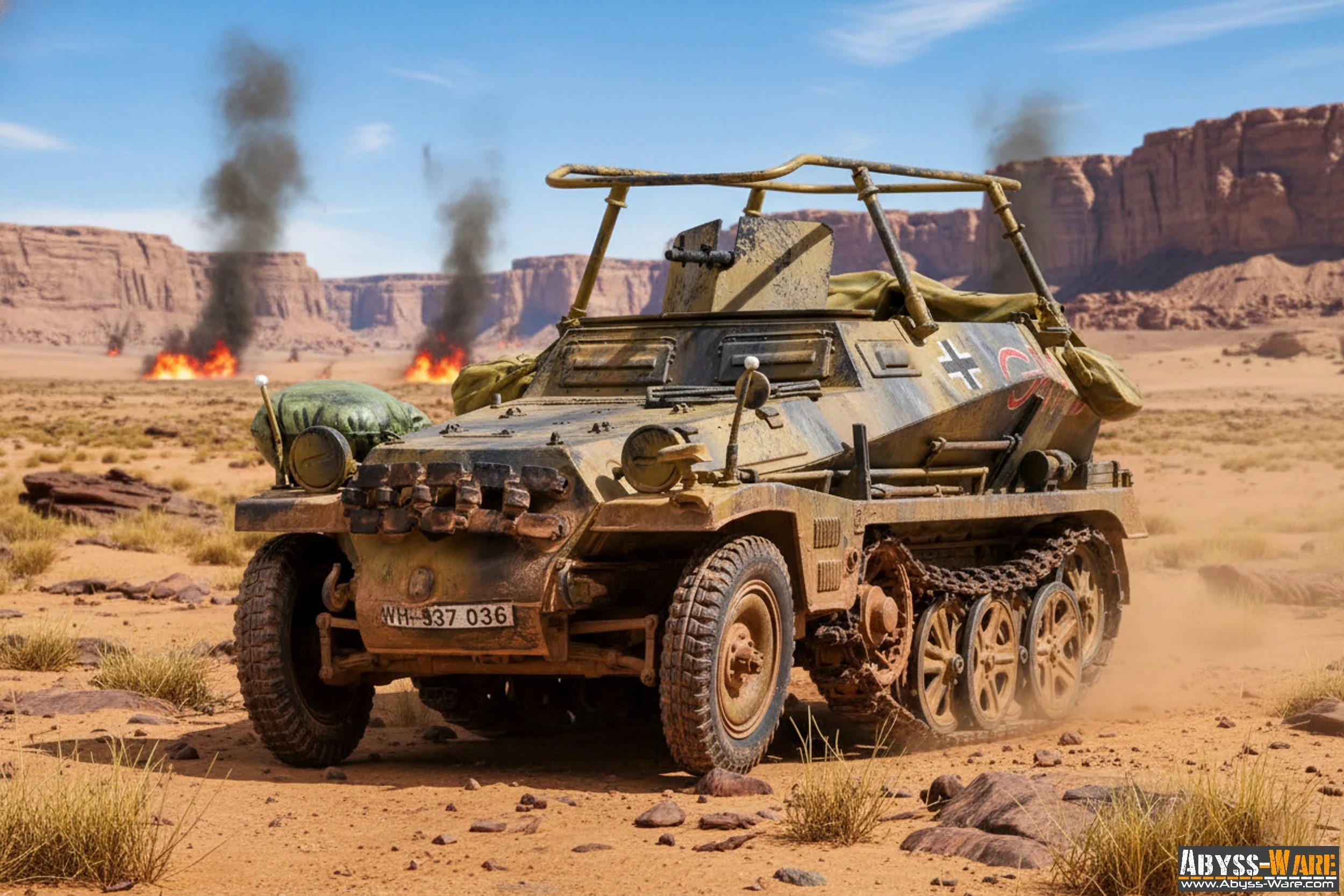
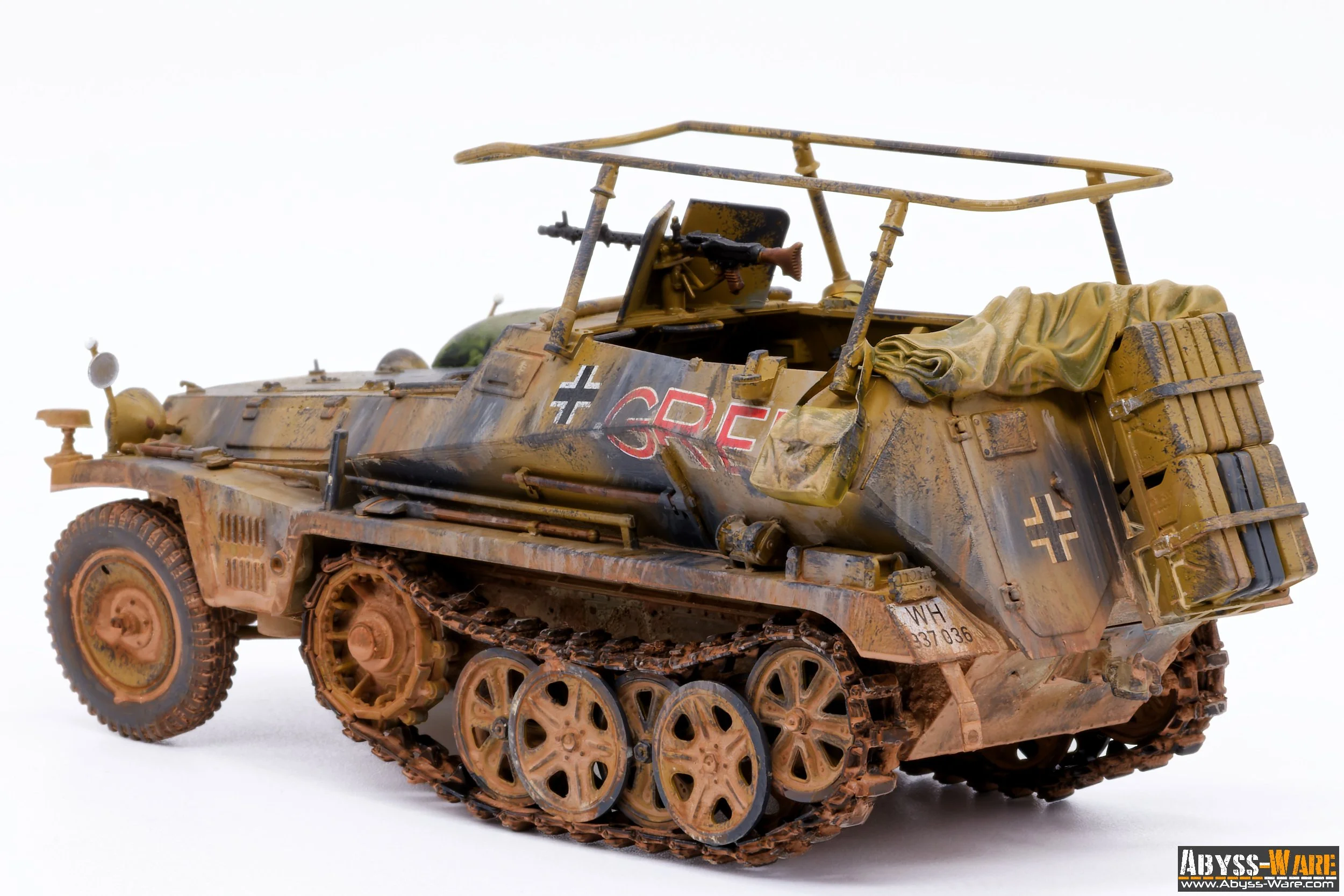
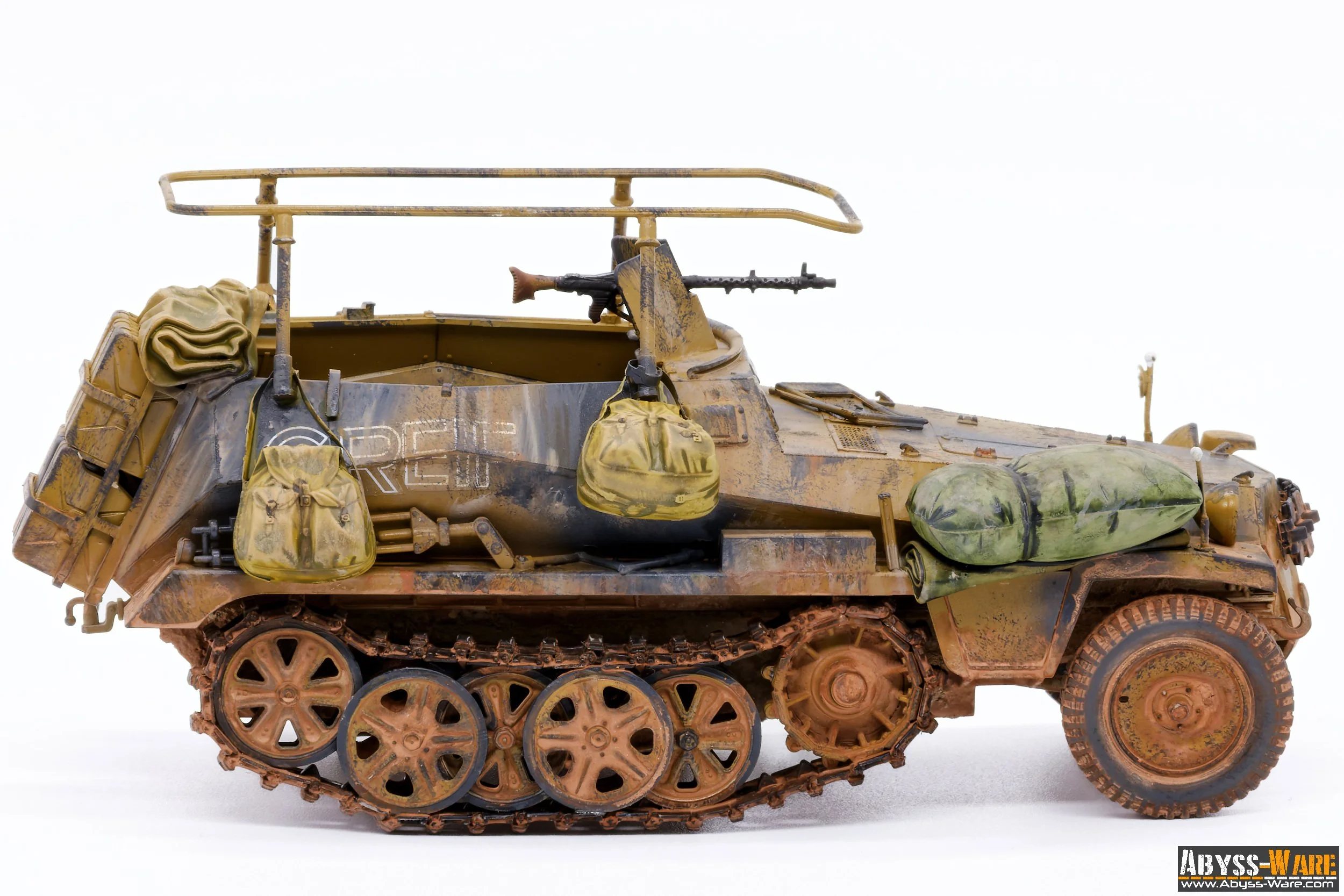
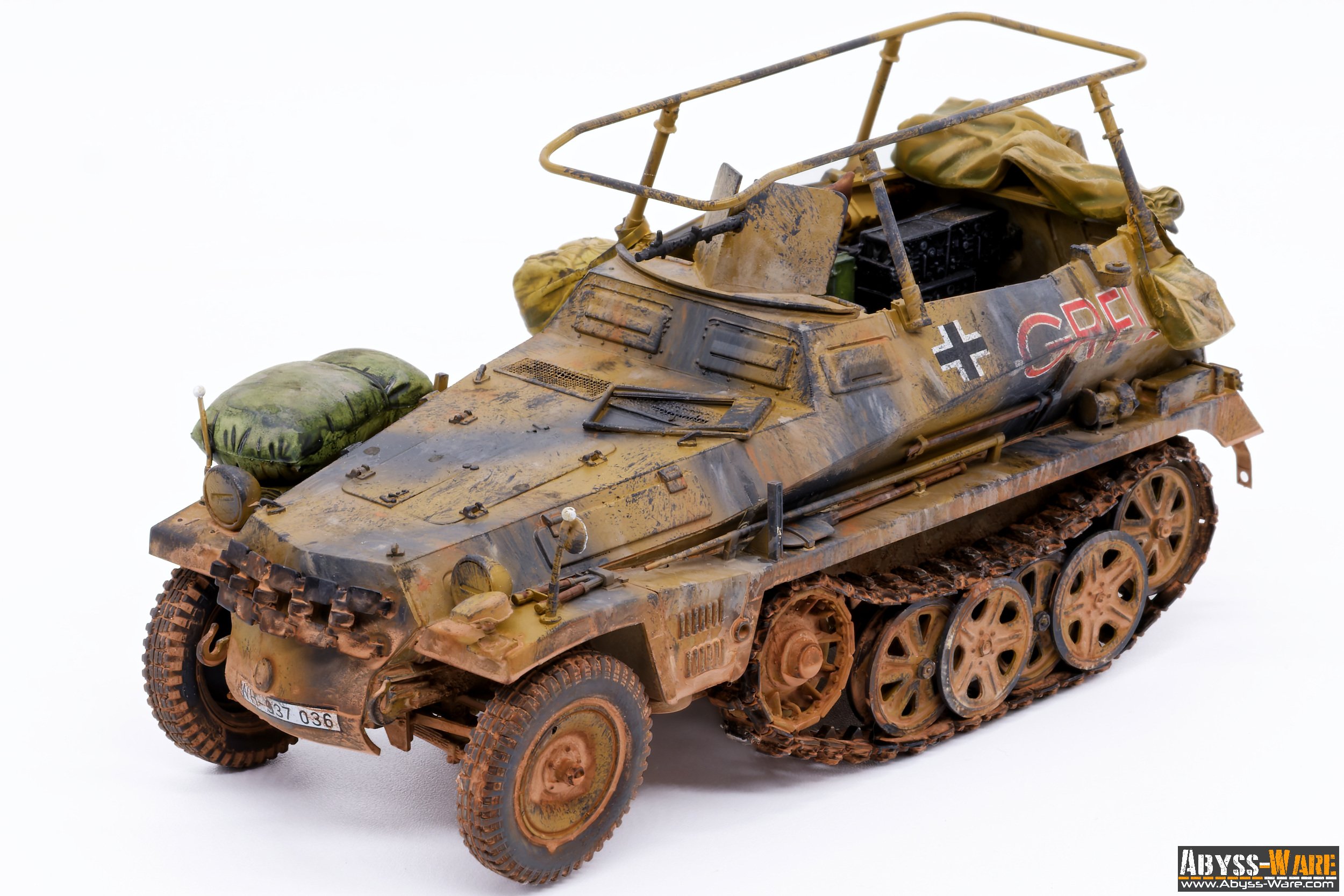
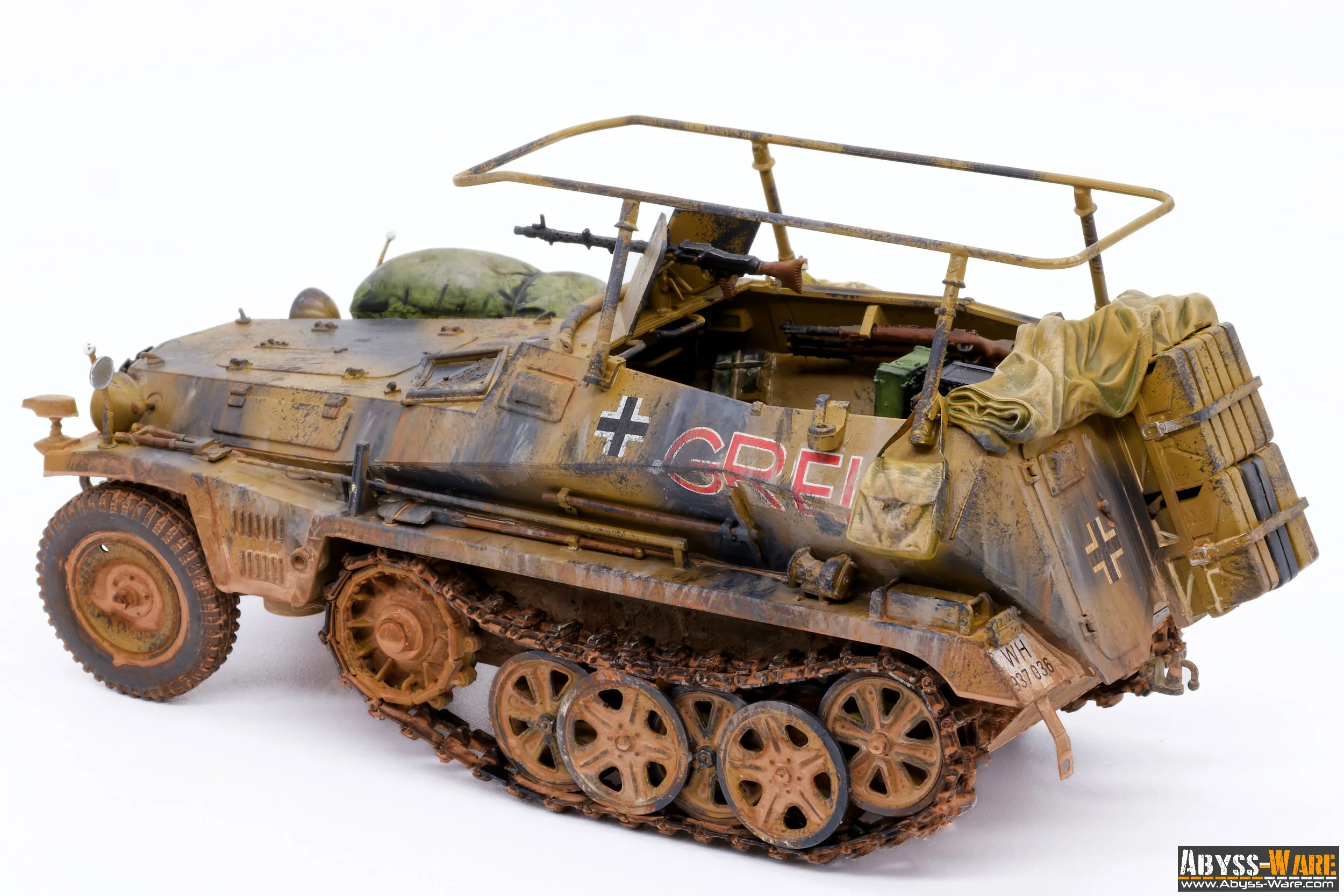
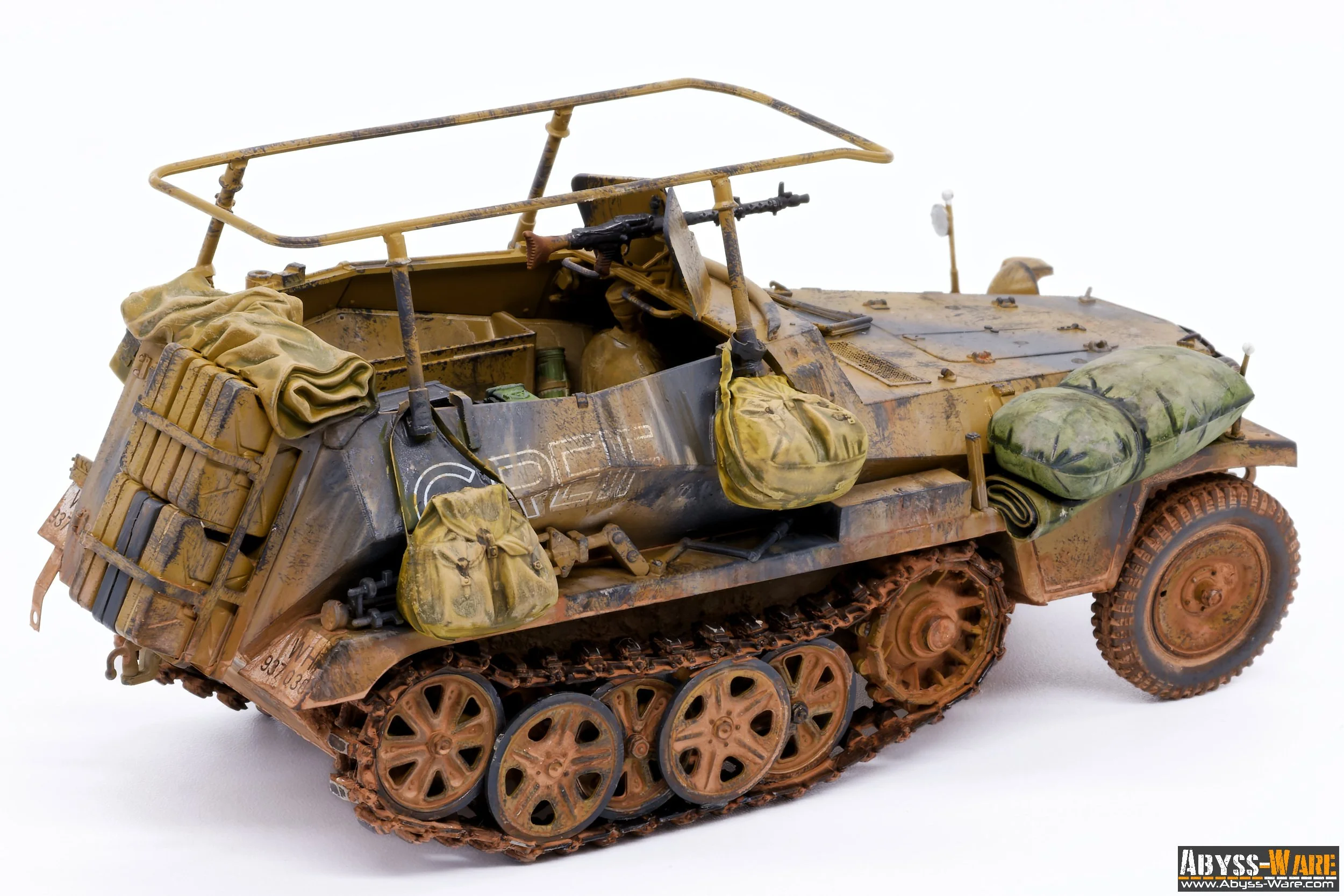
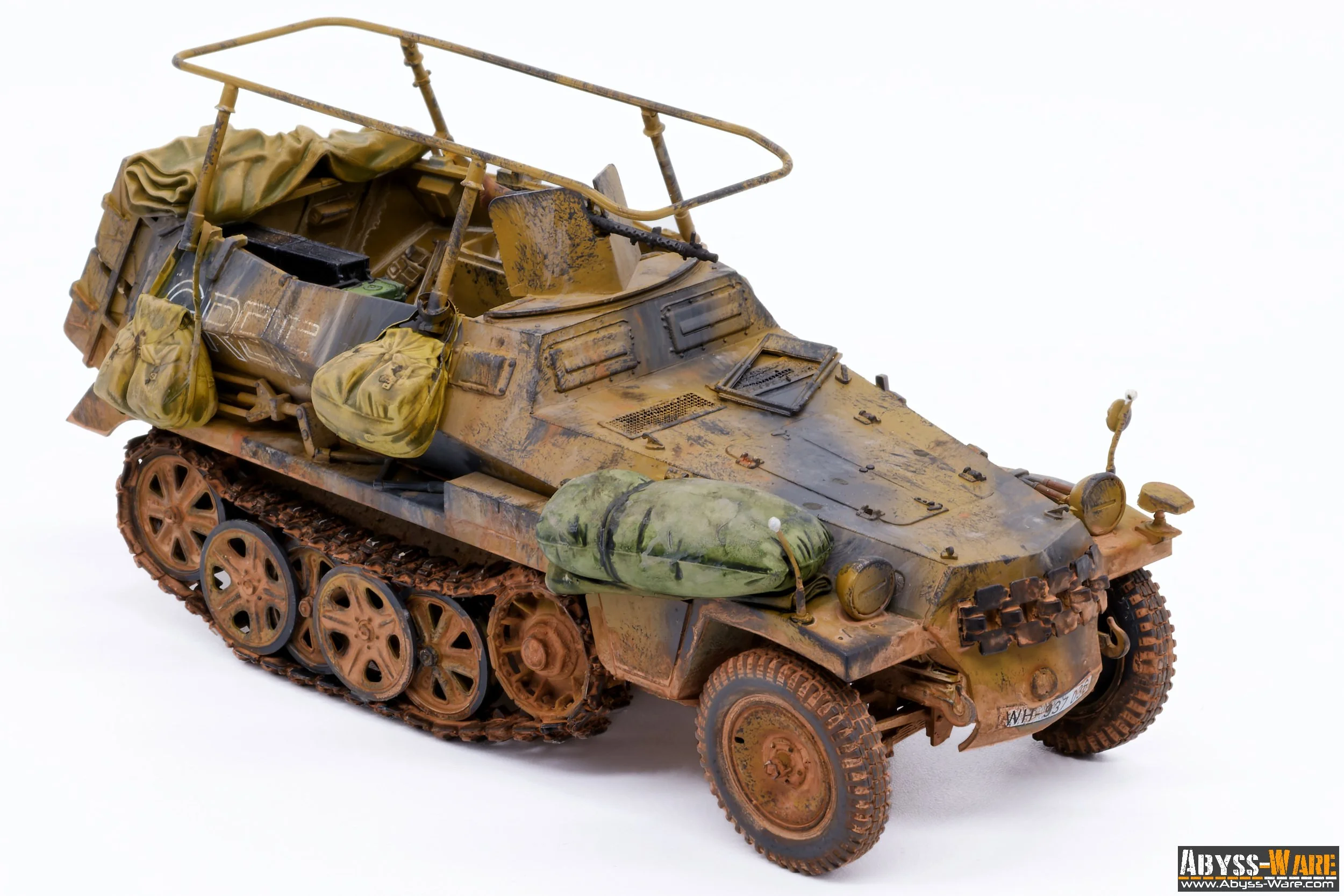
Sd. Kfz. 250/3 “GREIF”
TAKOM 2194
SCALE 1/35
.
;
The Sd. Kfz. 250/3 “GREIF” stands as one of the most iconic German half-tracks of World War II. This light armored command vehicle, based on the versatile Sd. Kfz. 250 chassis produced by DEMAG, served as a mobile communications hub for high-ranking officers in the Wehrmacht. The Sd. Kfz. 250 series was a compact, half-tracked armored personnel carrier developed in the late 1930s to provide Panzer divisions with agile infantry and support transport. The /3 variant functioned as a leichter Funkpanzerwagen (light radio armored vehicle). It featured enhanced radio equipment, including sets like the FuG 12, often paired with a distinctive "bedstead" frame antenna mounted over the rear compartment for long-range communication.
Weighing around 5.35 tons, the vehicle measured approximately 4.77 m in length, 2.0 m in width, and 2.15 m in height. It was powered by a Maybach HL 42 TRKM 6-cylinder gasoline engine producing about 100 hp, delivering a top speed of roughly 76 km/h on roads and a respectable operational range. Armor protection ranged from 8 to 15 mm, sufficient against small arms fire but vulnerable to heavier threats. The open-topped design and crew of four (including driver, commander, and radio operators) prioritized mobility and communications over heavy protection. The Sd. Kfz. 250/3 gained legendary status through its association with Field Marshal Erwin Rommel, the “Desert Fox.” During the North African campaign in 1942, Rommel used “GREIF” (German for “Griffin”) as his personal command vehicle while leading the Deutsches Afrikakorps. While only a small number of Sd. Kfz. 250/3s were built compared to the roughly 4,250 total Sd. Kfz. 250 family vehicles produced between 1941 and 1943, the “GREIF” remains the most photographed and recognizable example.
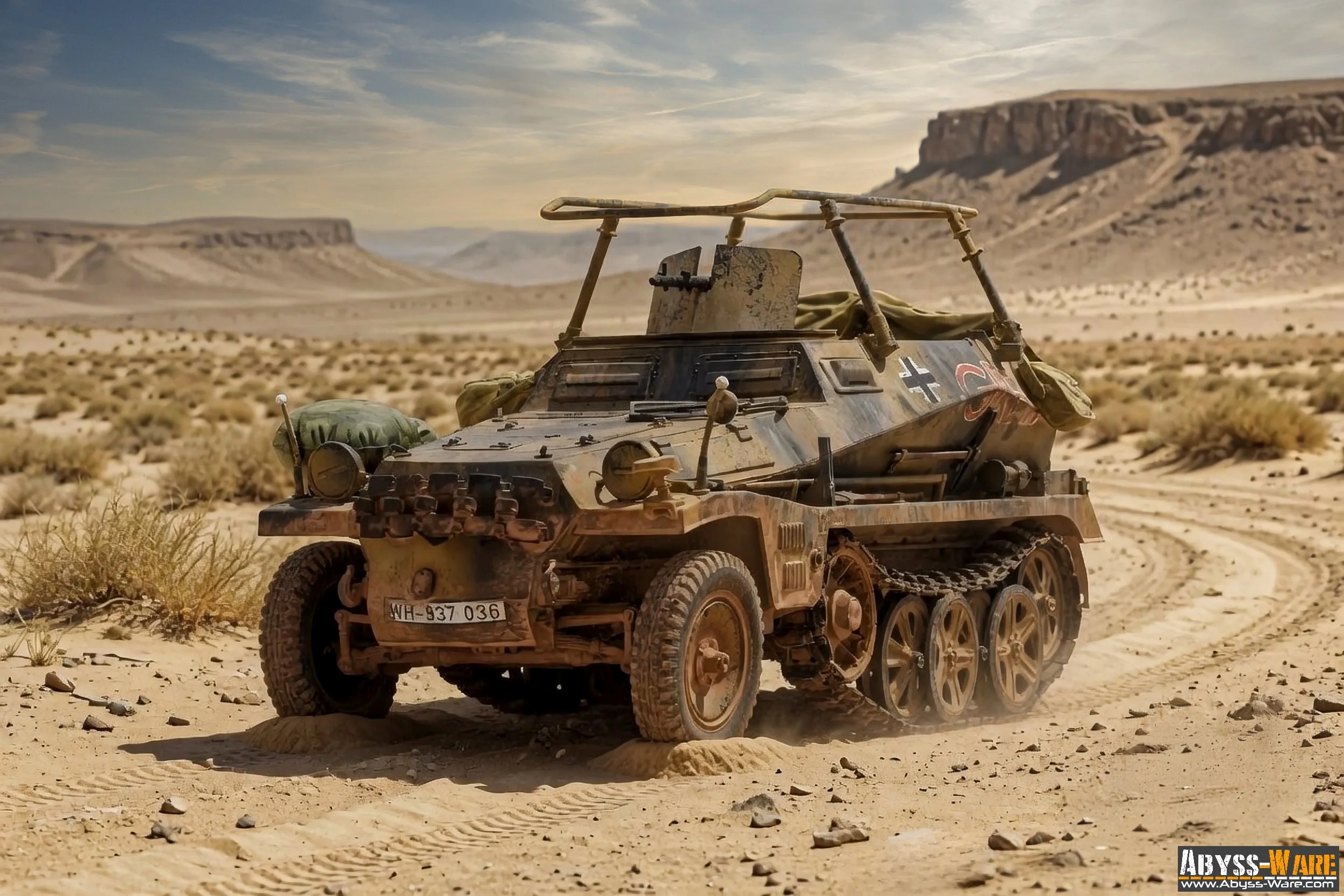
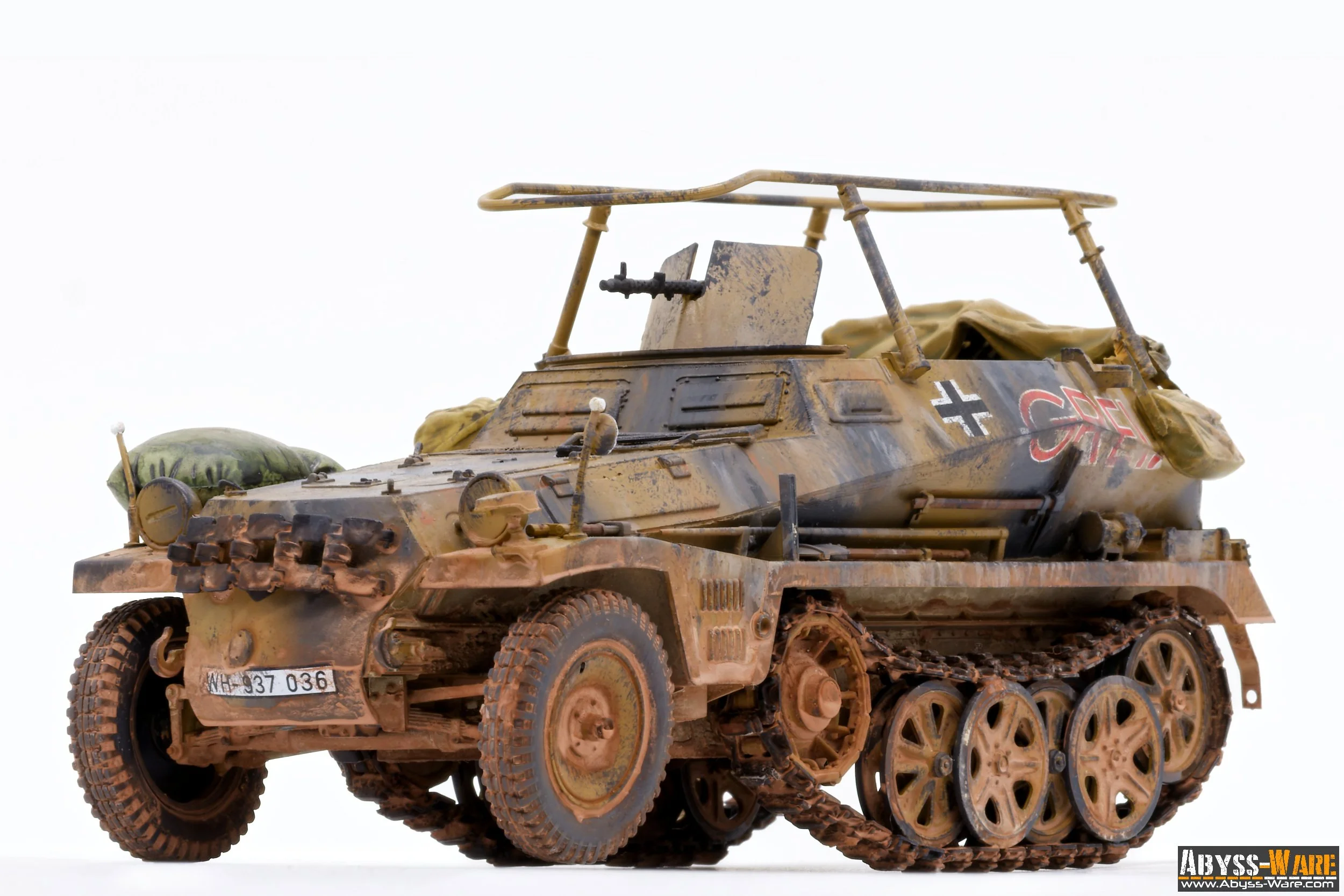
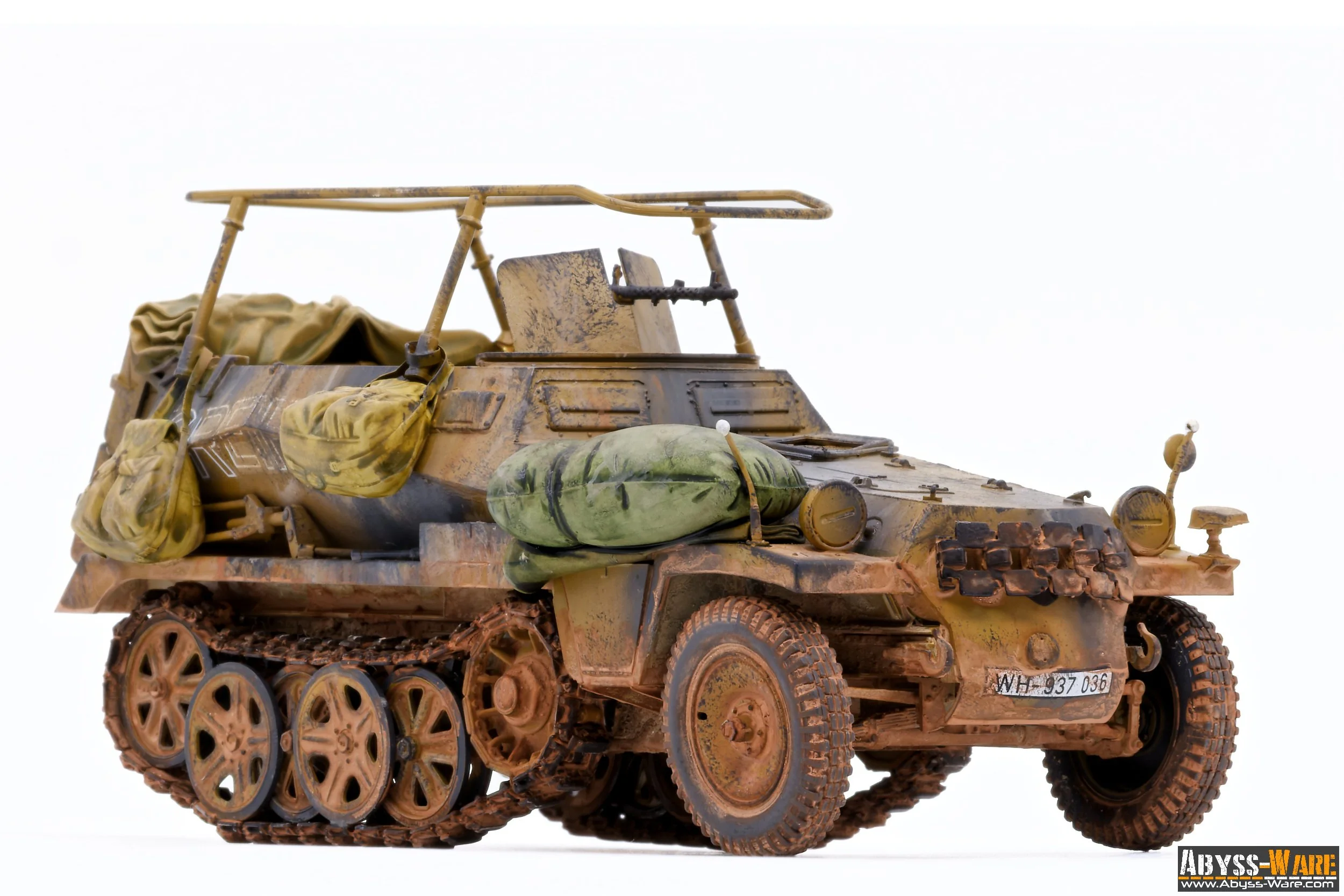
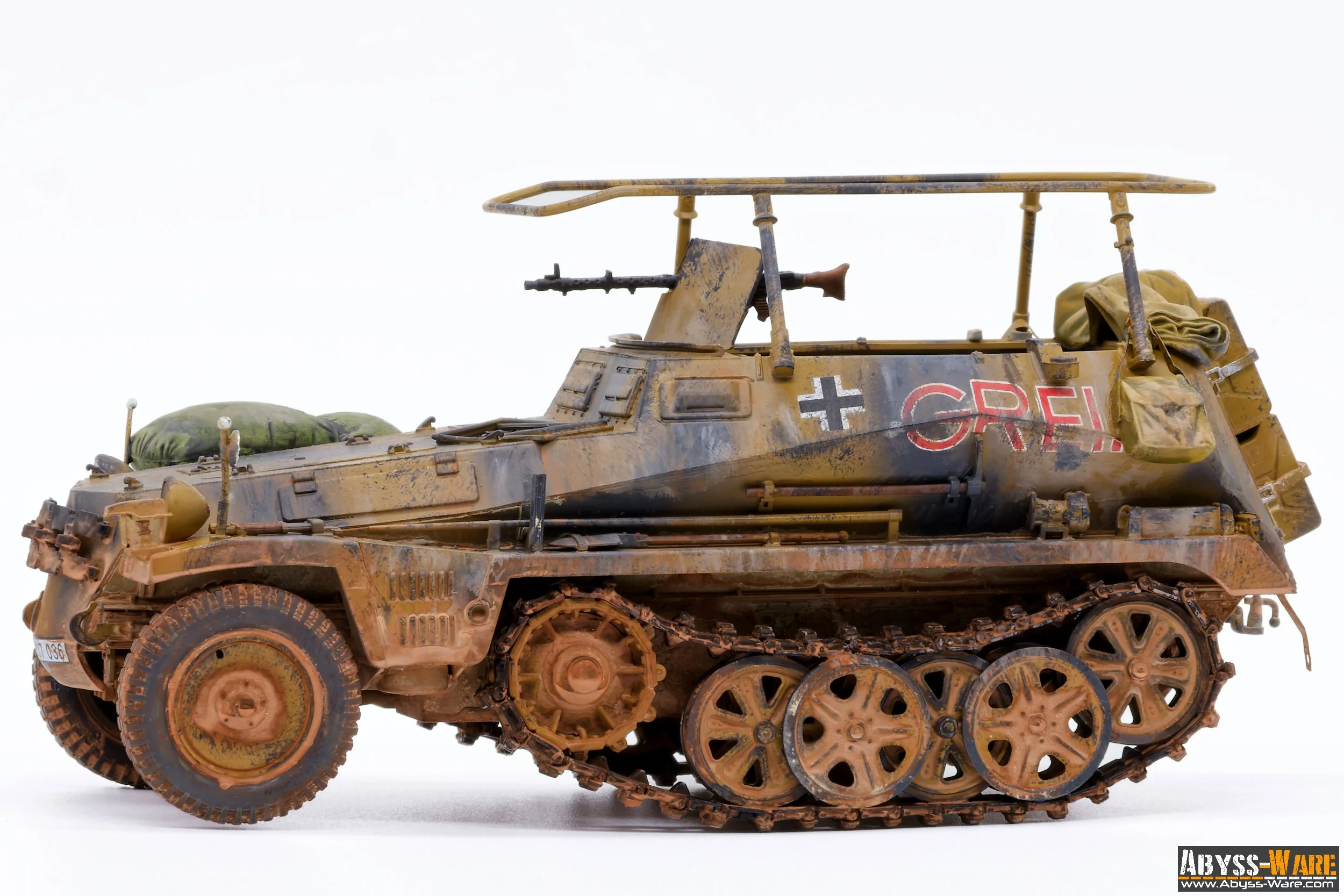
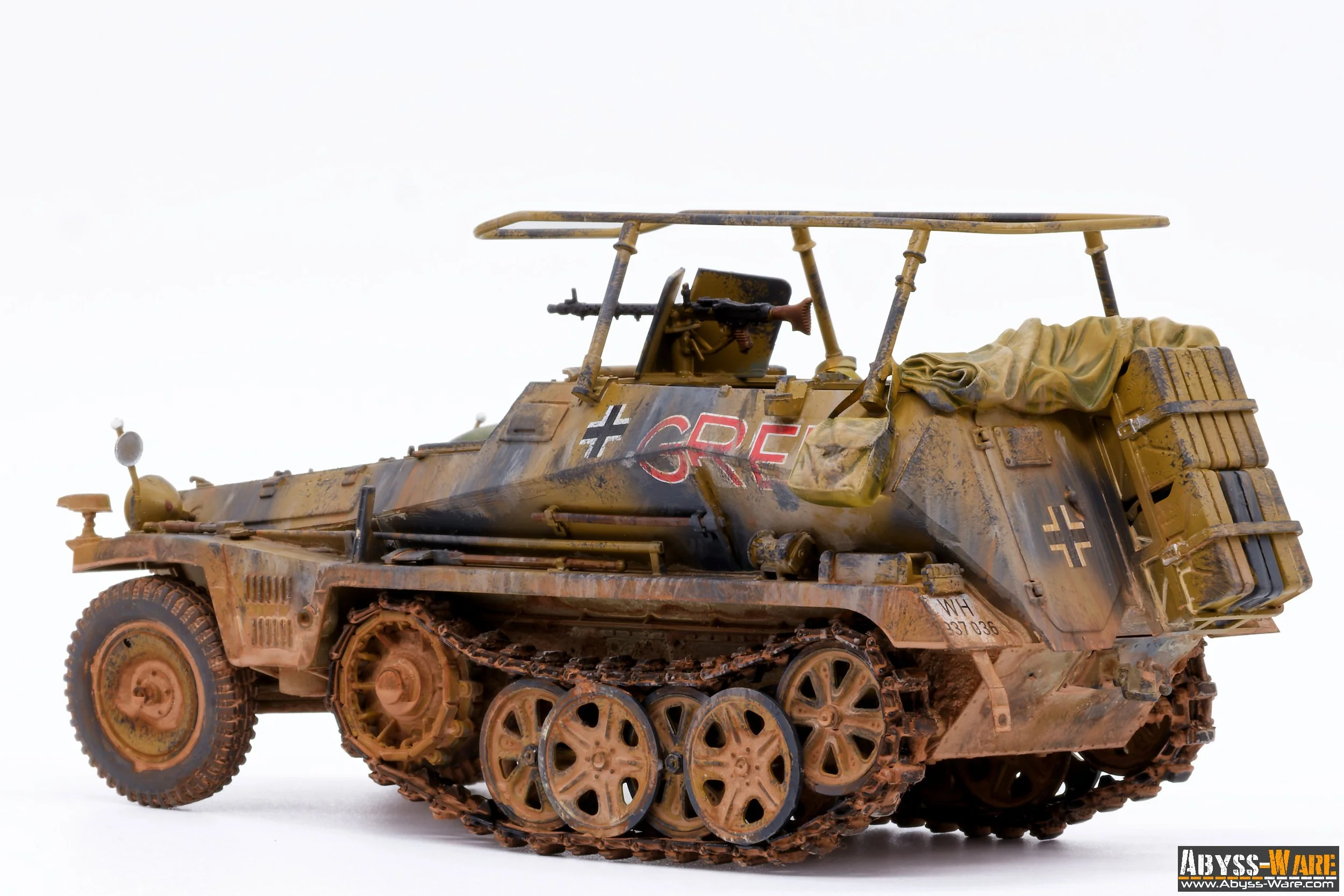
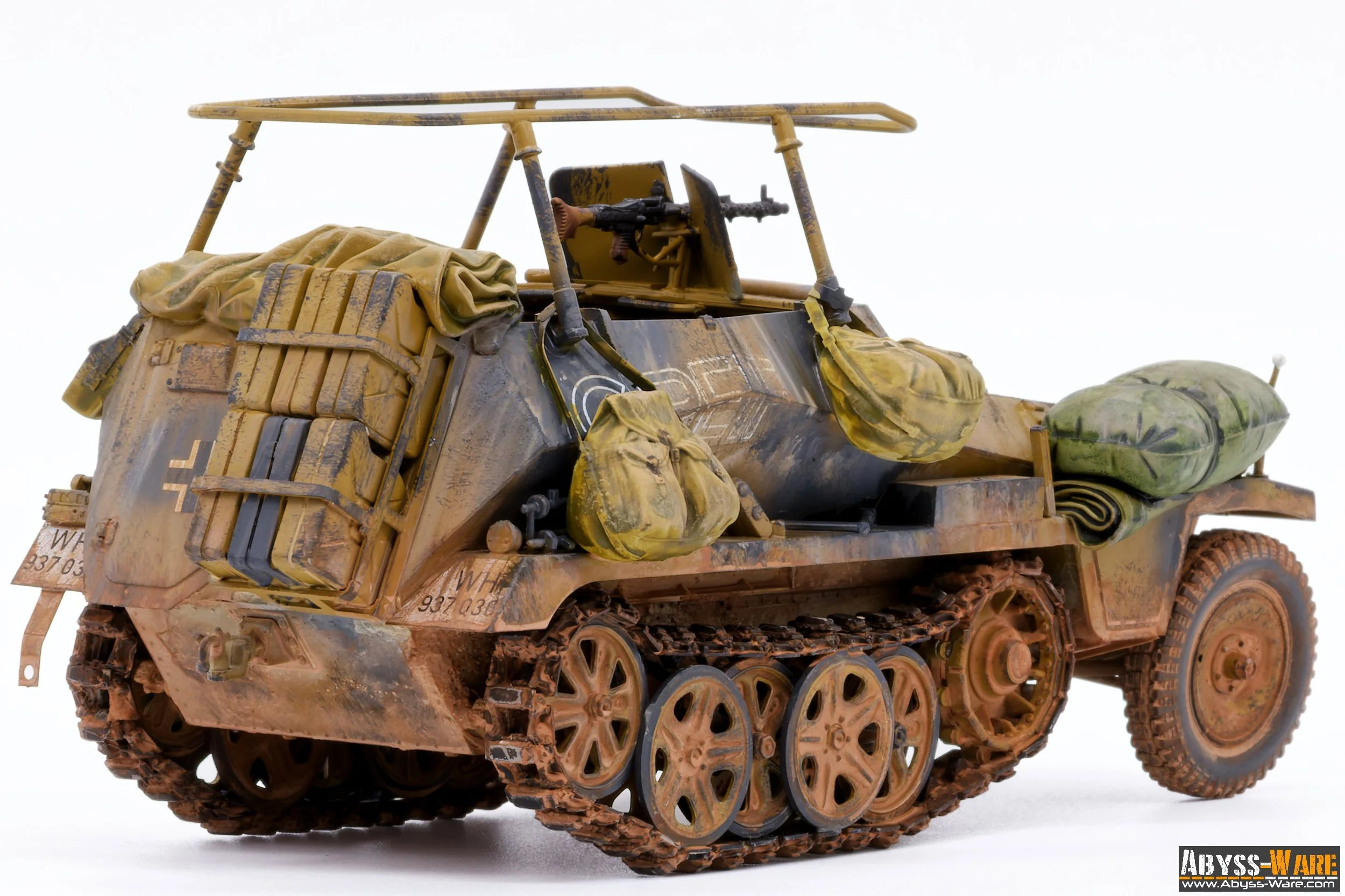
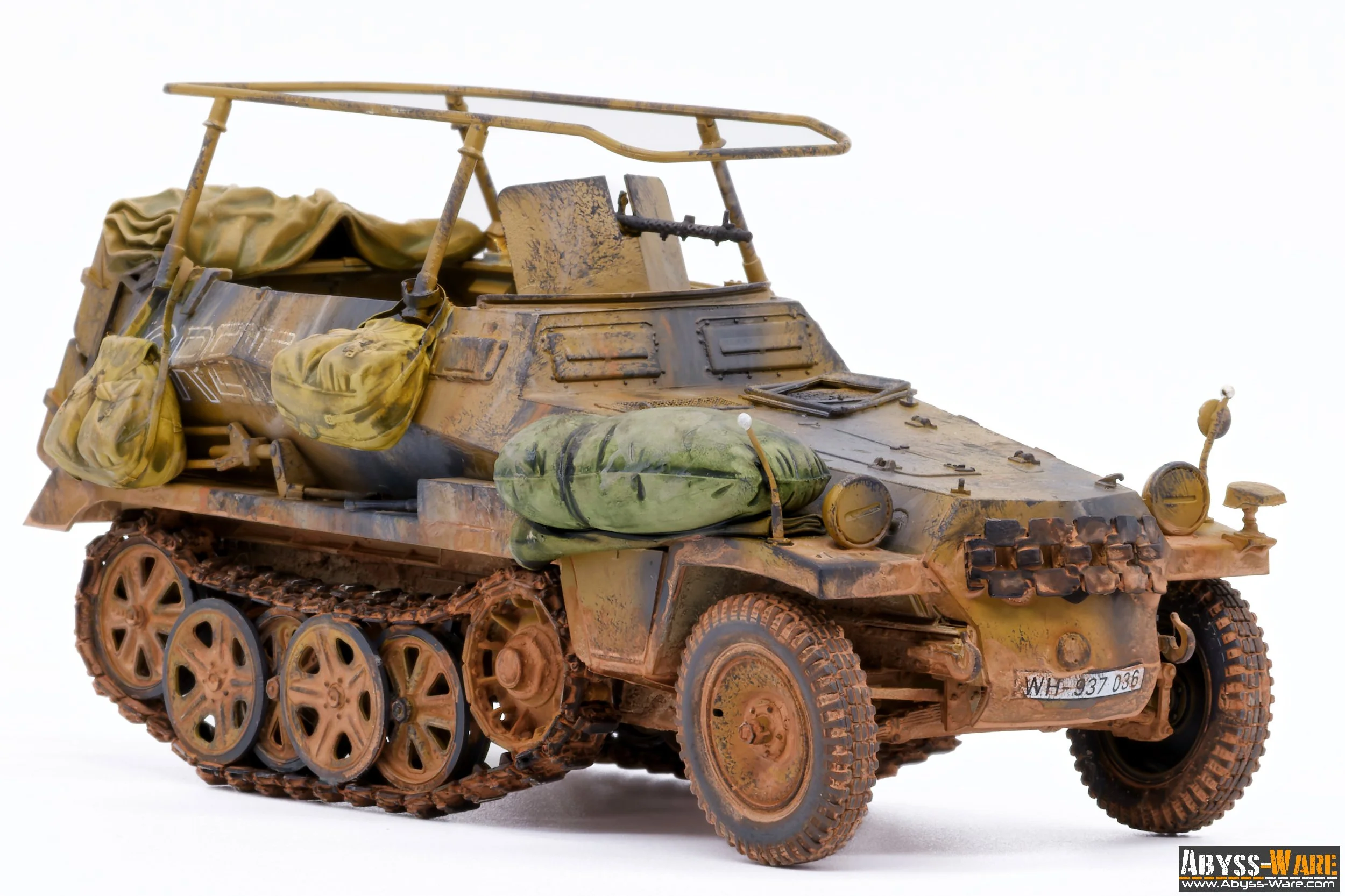
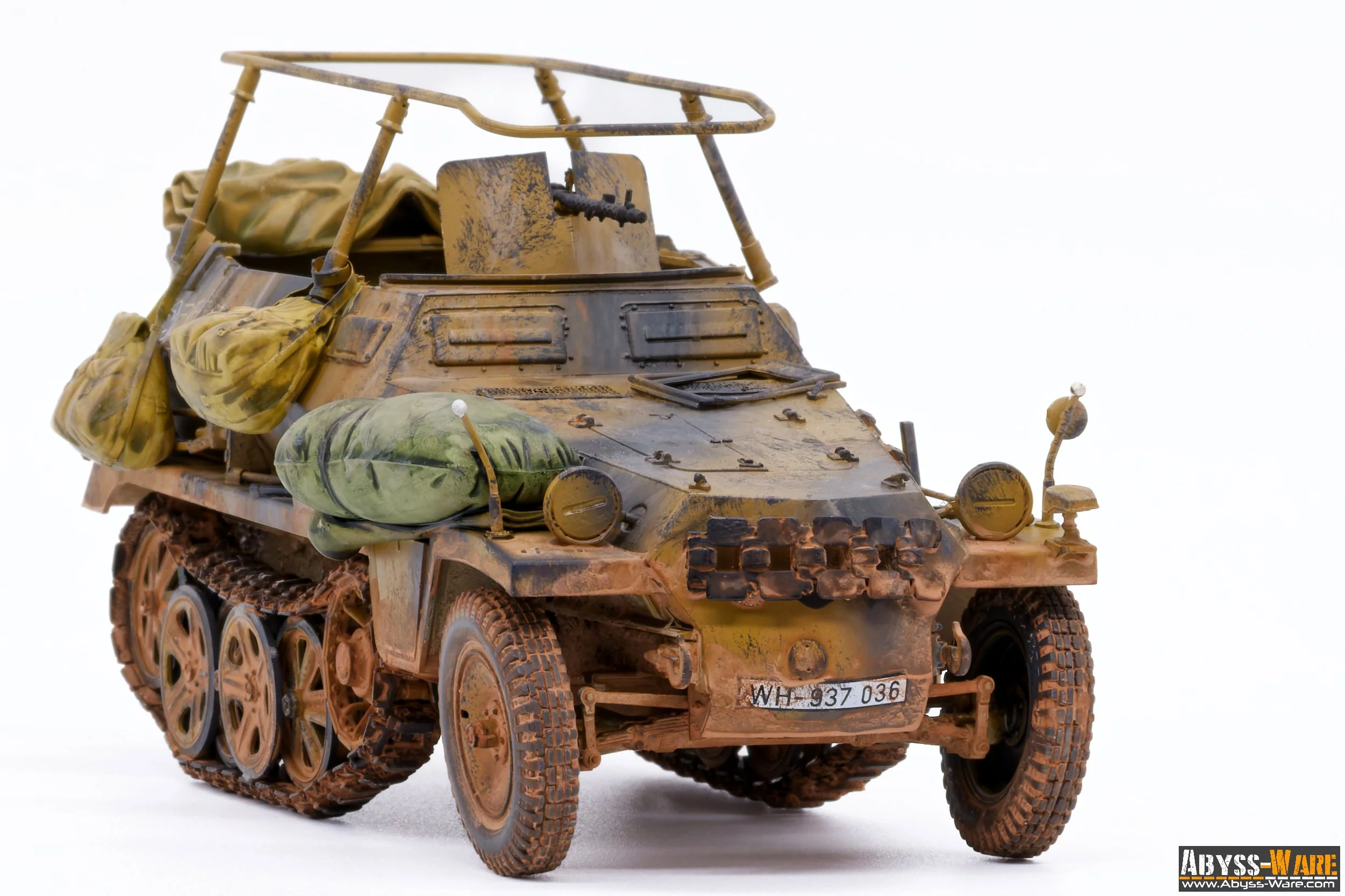
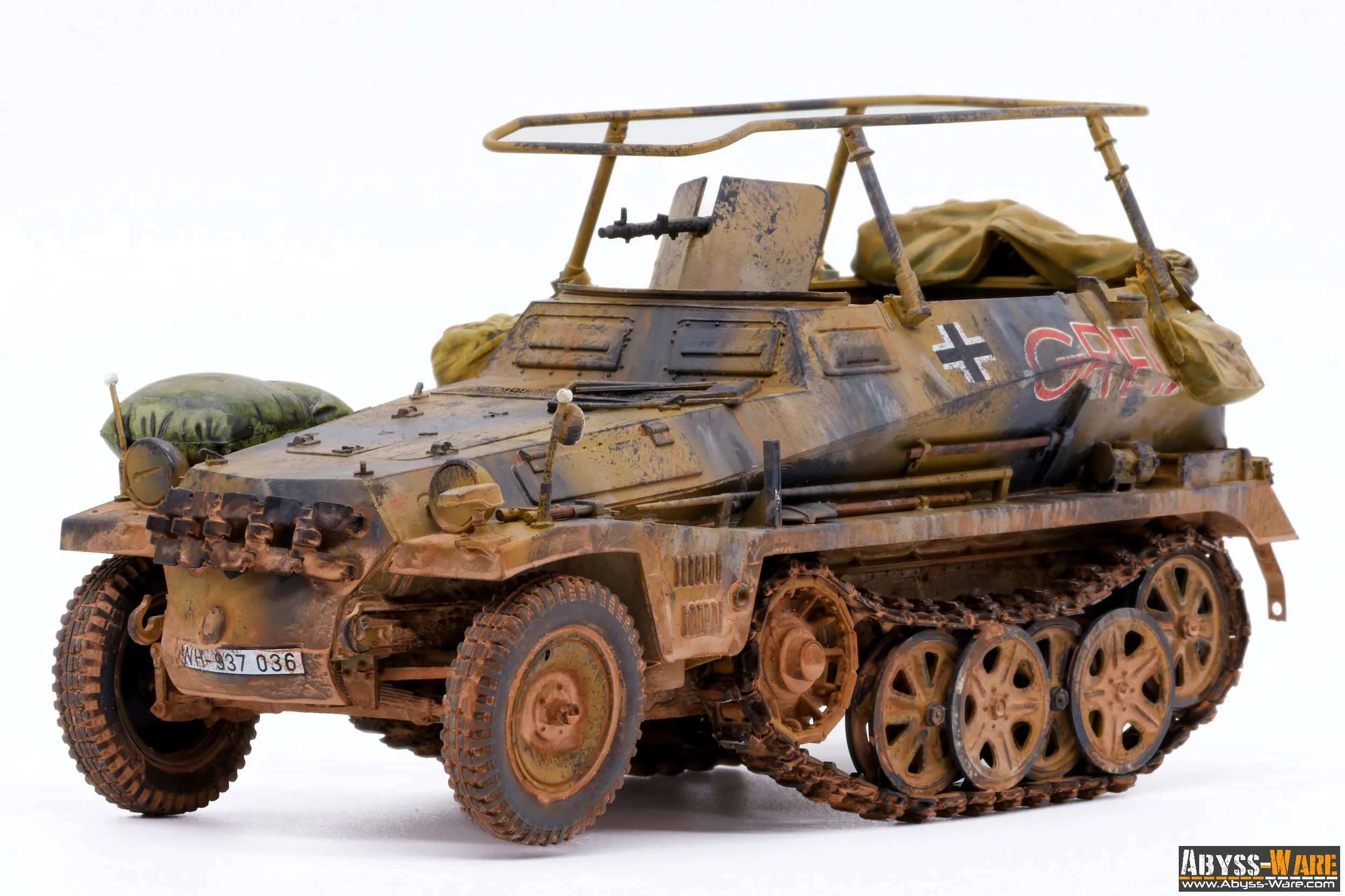
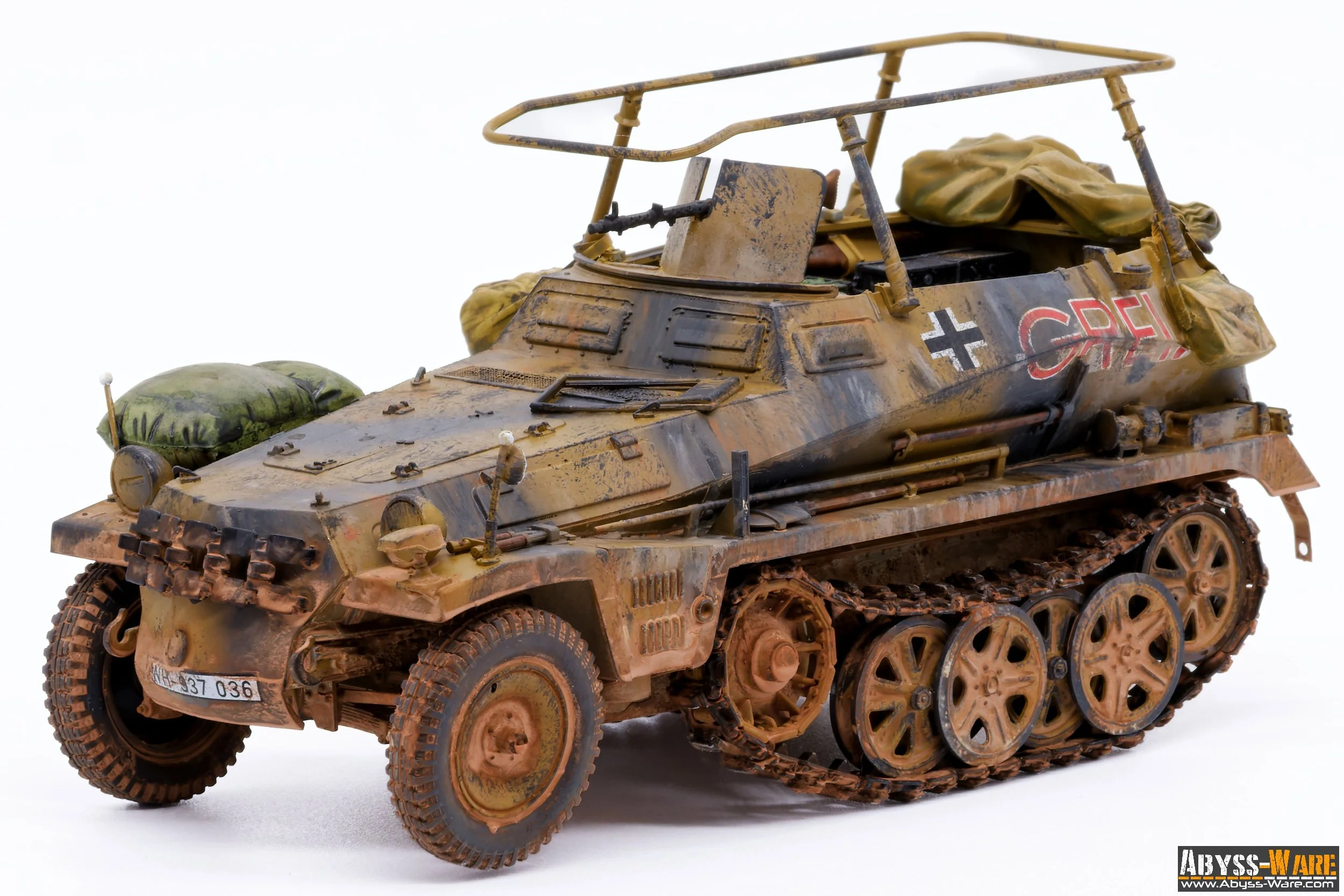
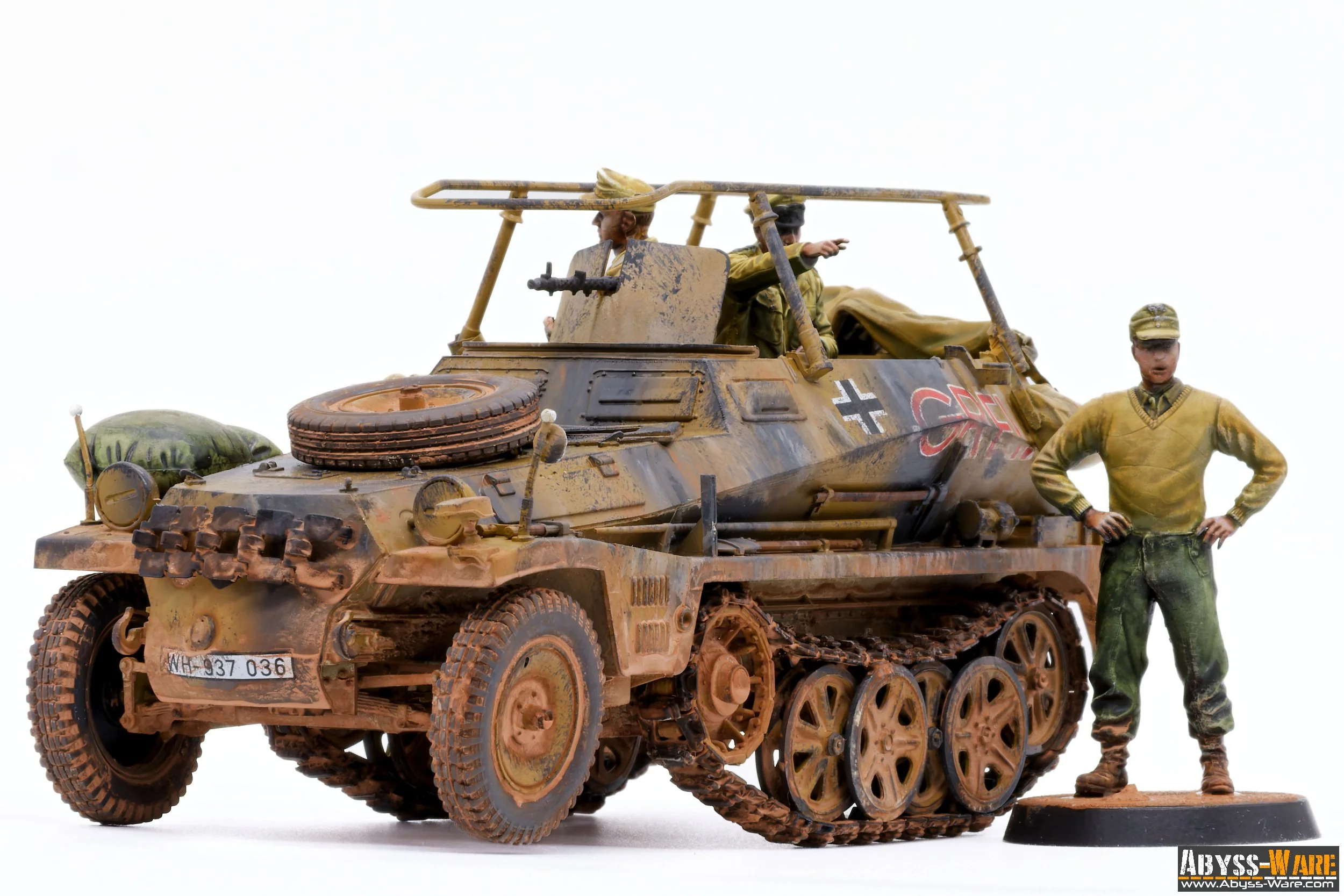
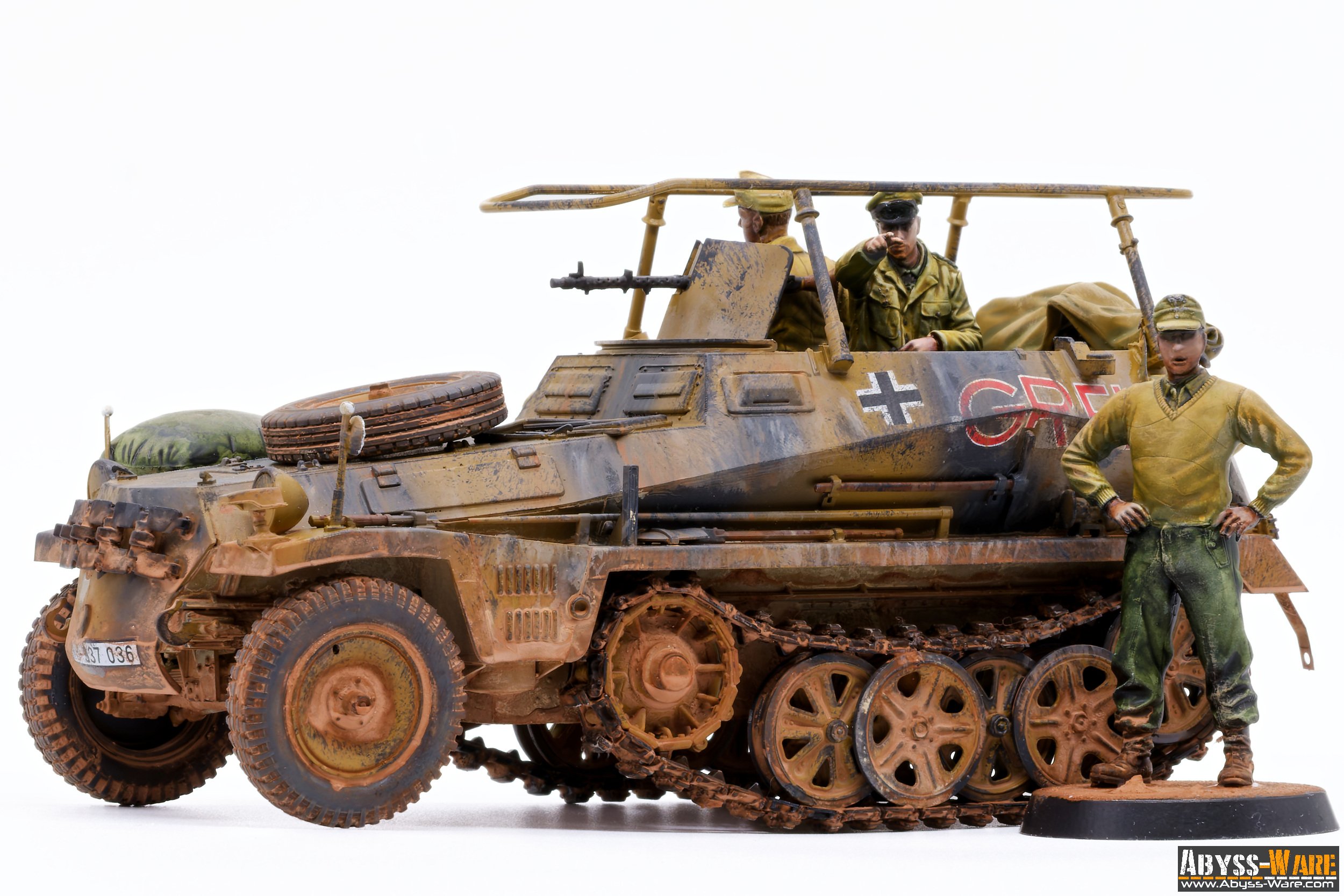
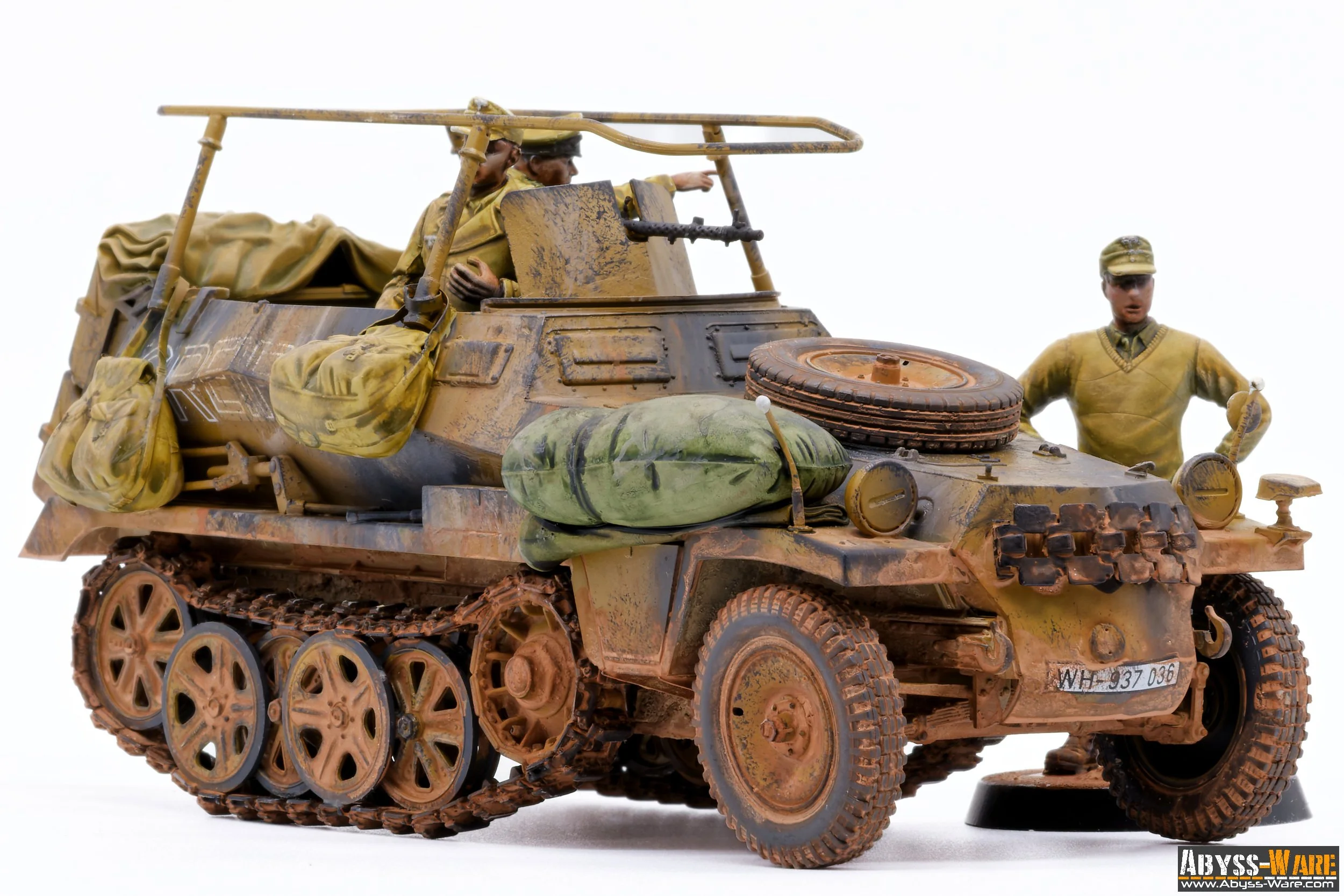
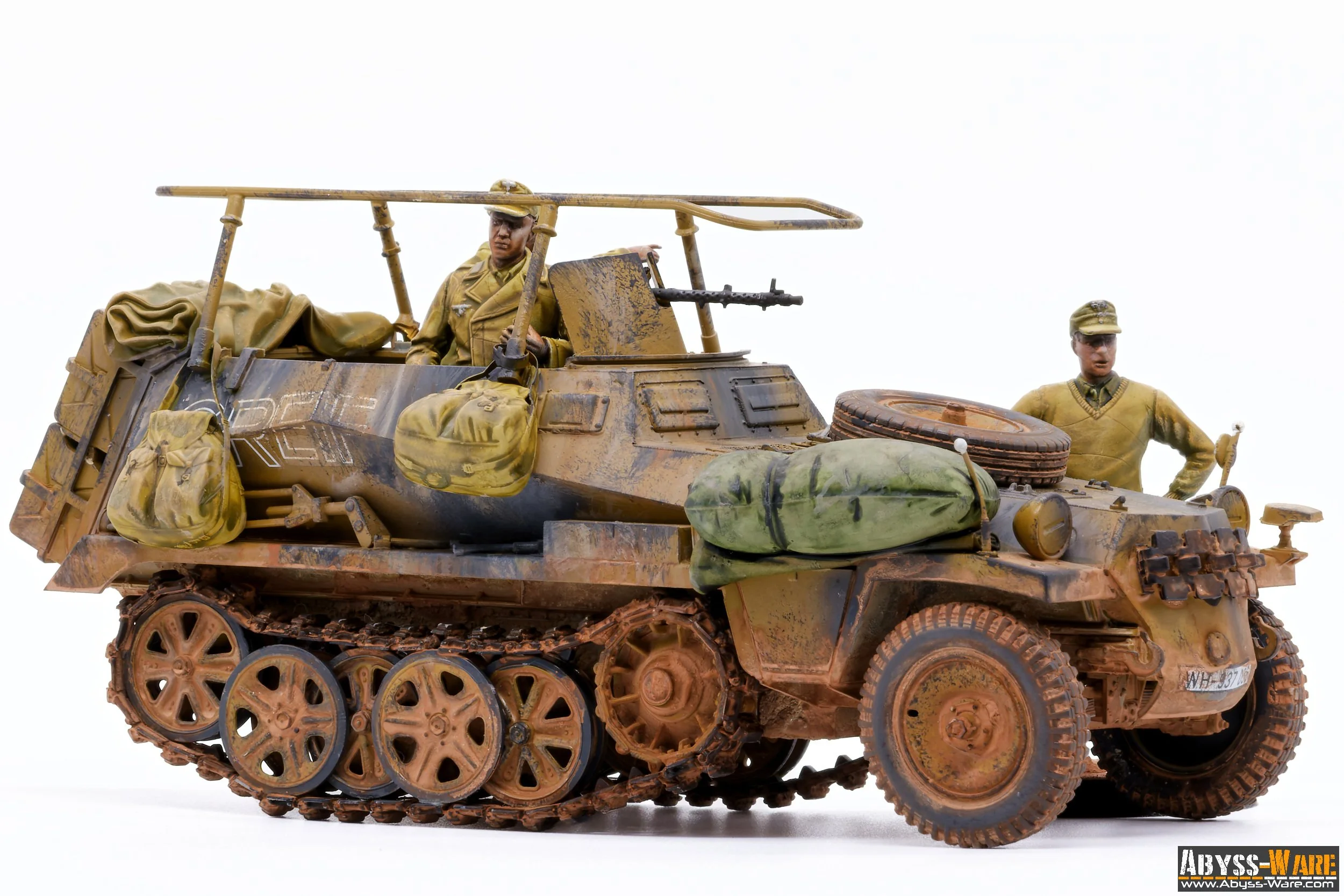
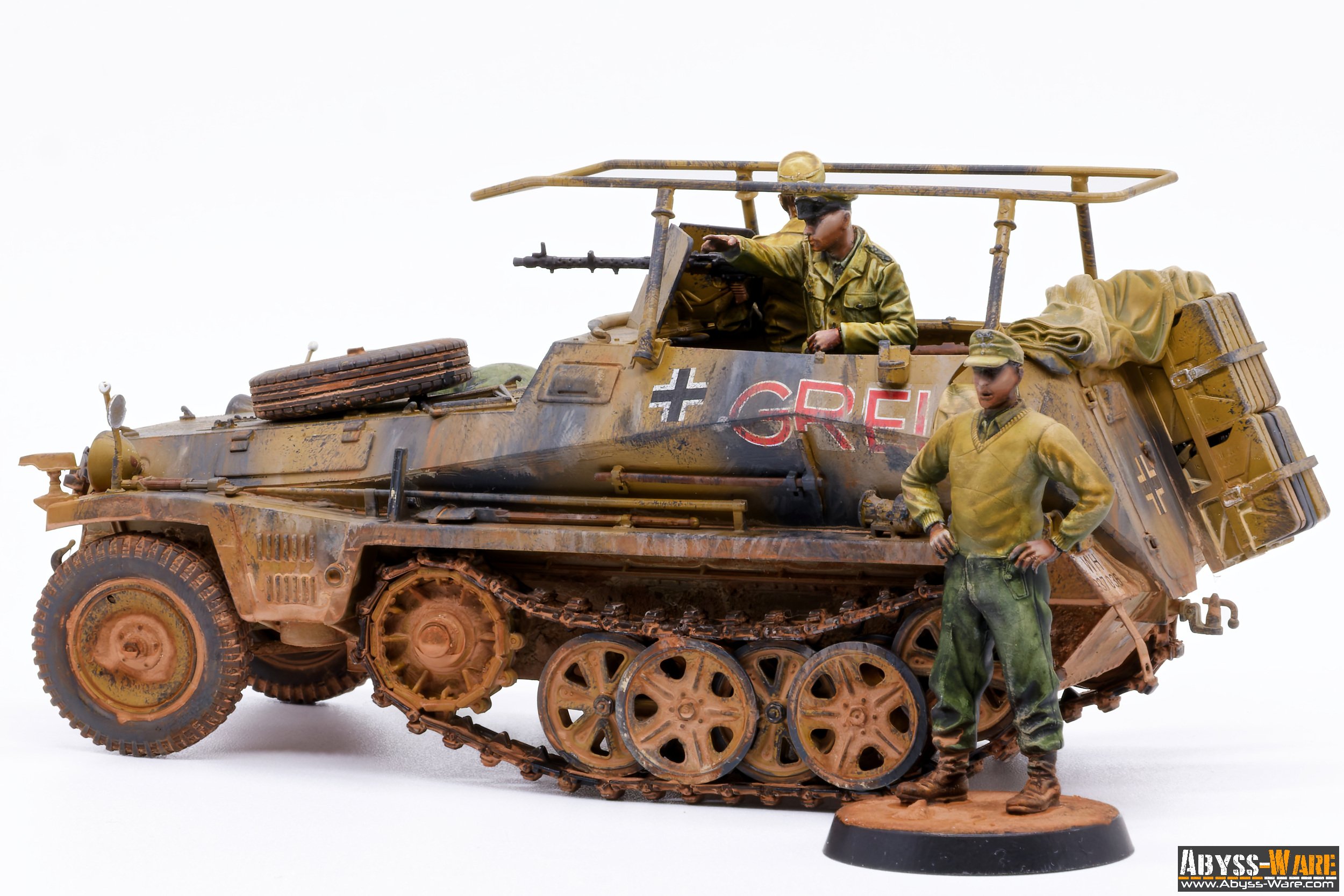
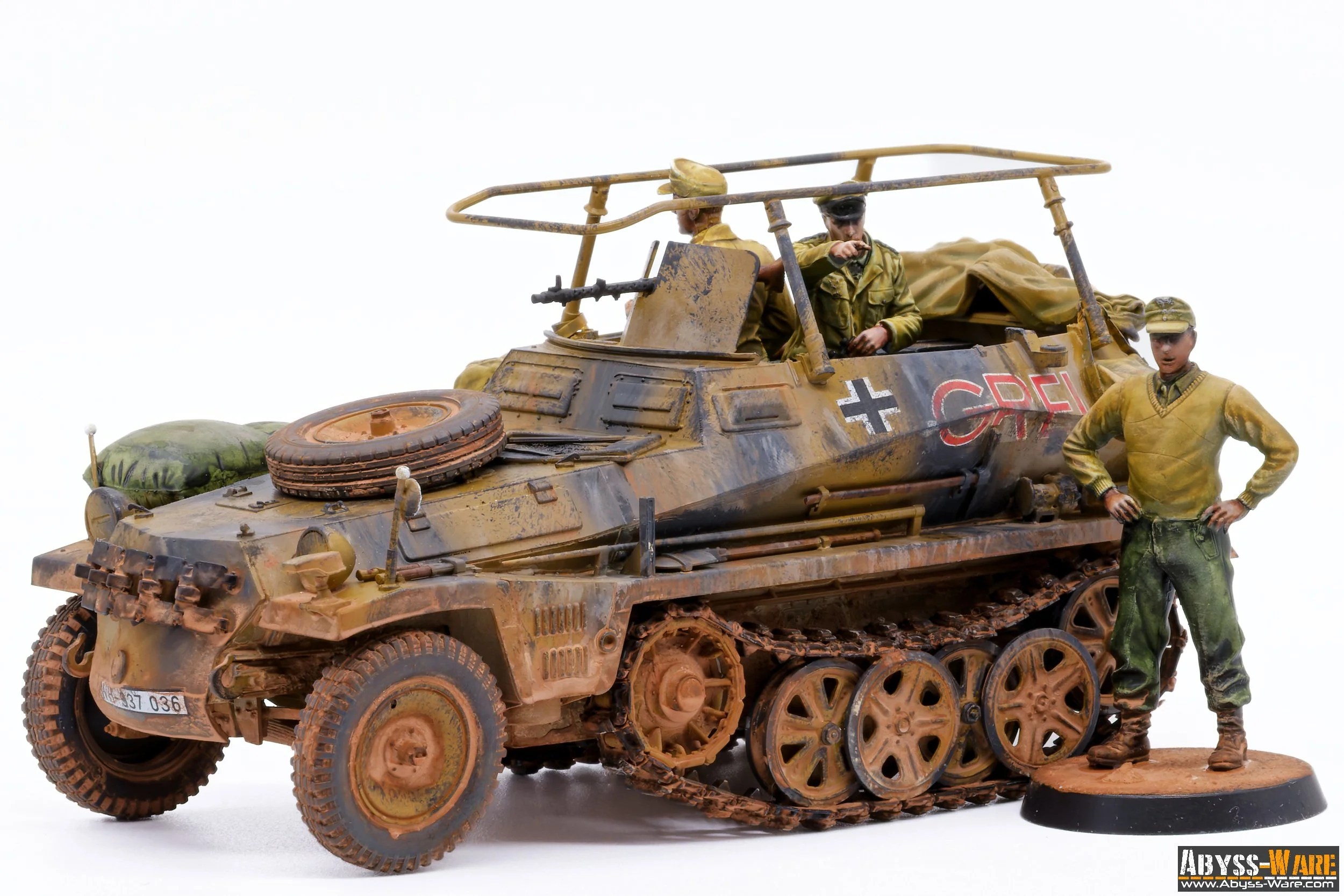
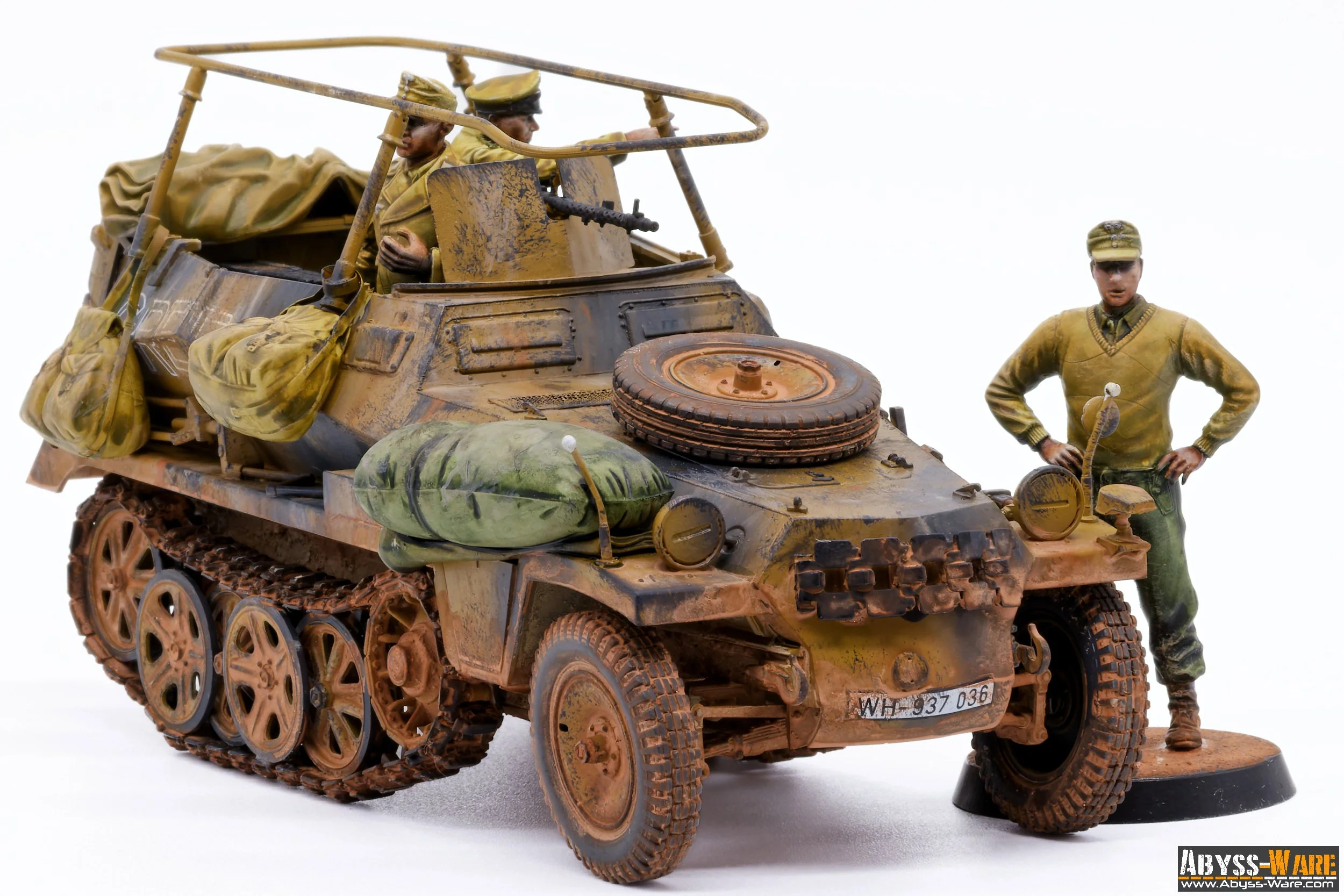
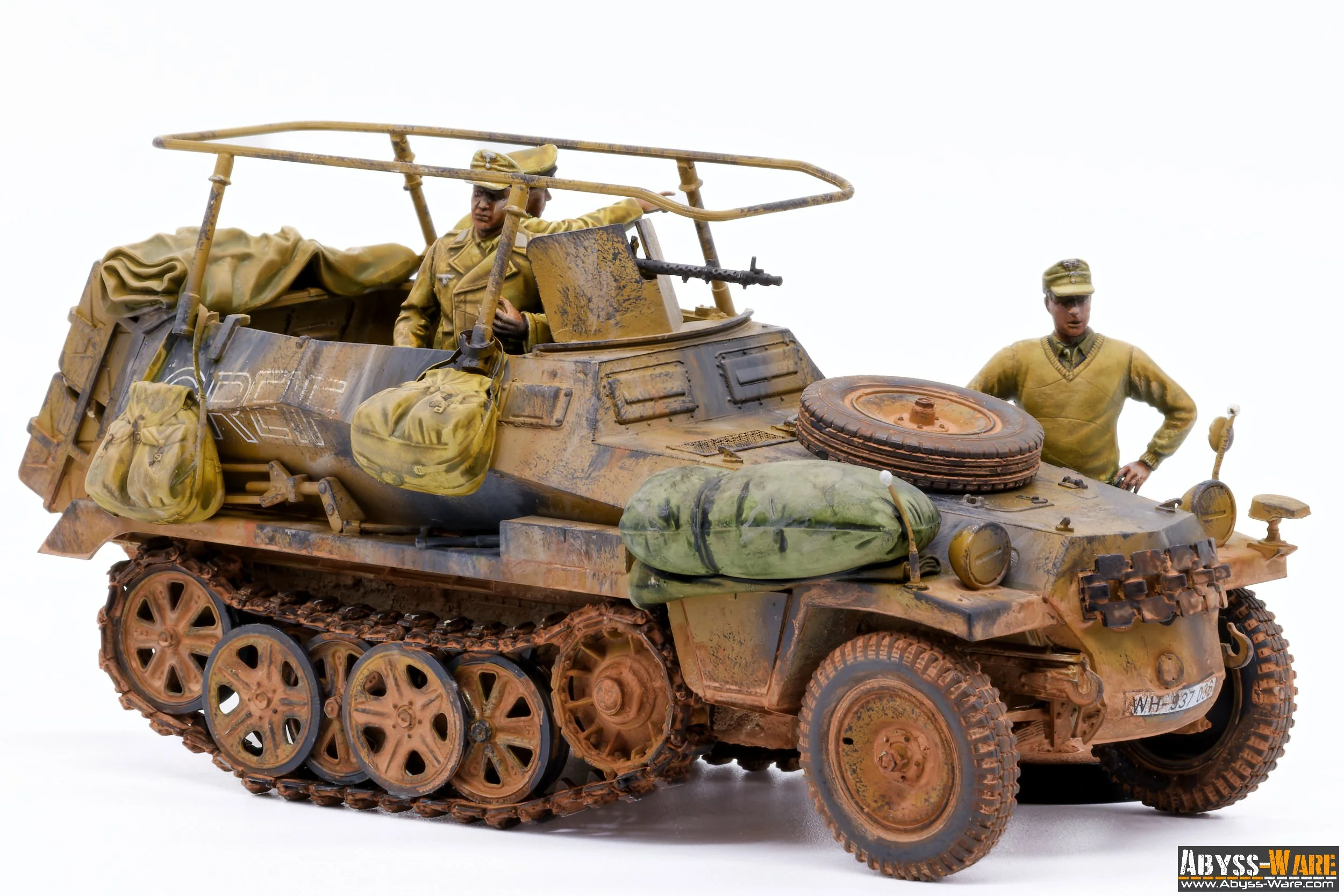
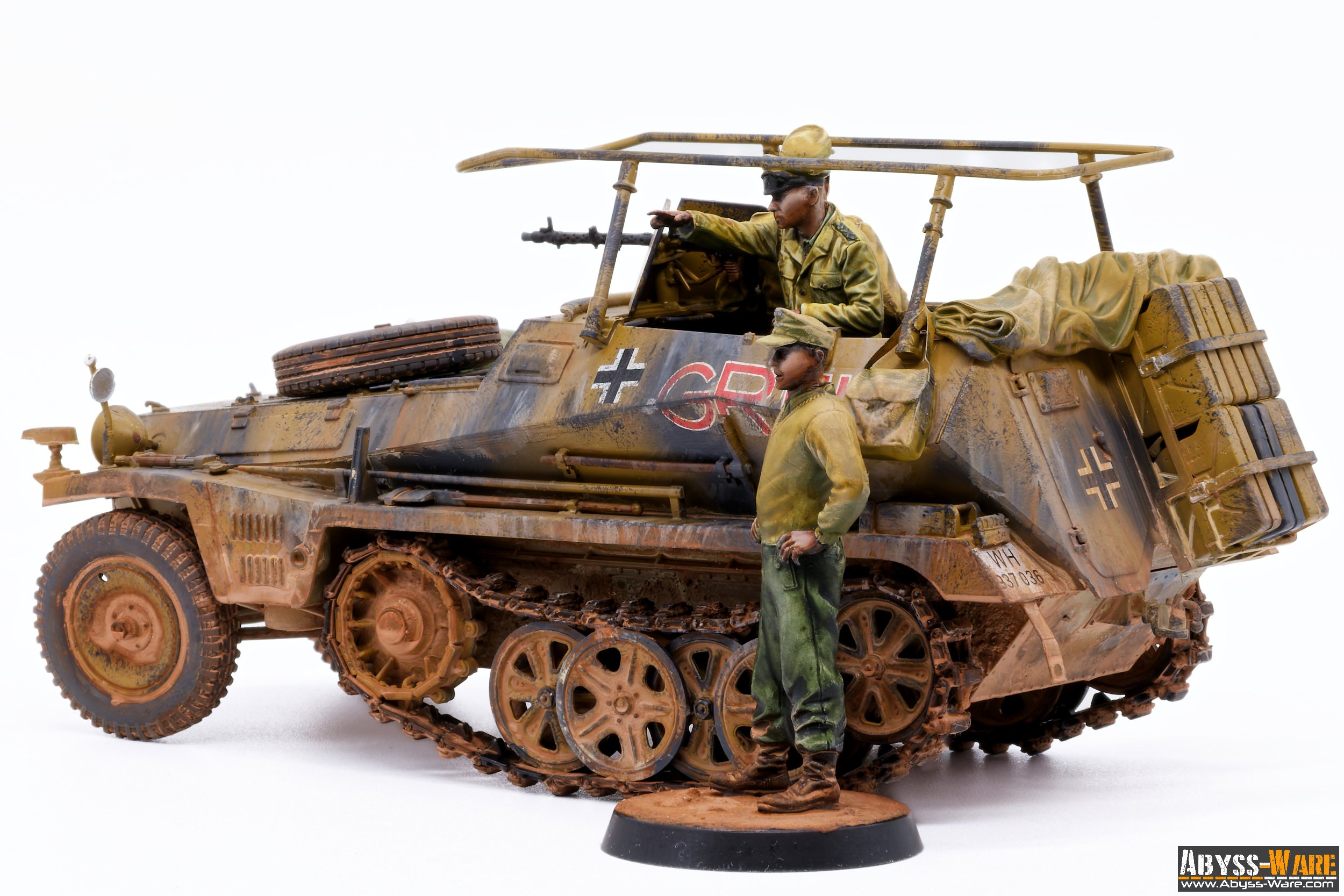
Note: The images presented bellow feature photographs of actual scale models, enhanced with AI-generated backgrounds and environments for visual effect. These visuals are intended for illustrative and artistic purposes only and should not be interpreted as real photographs or historical references.