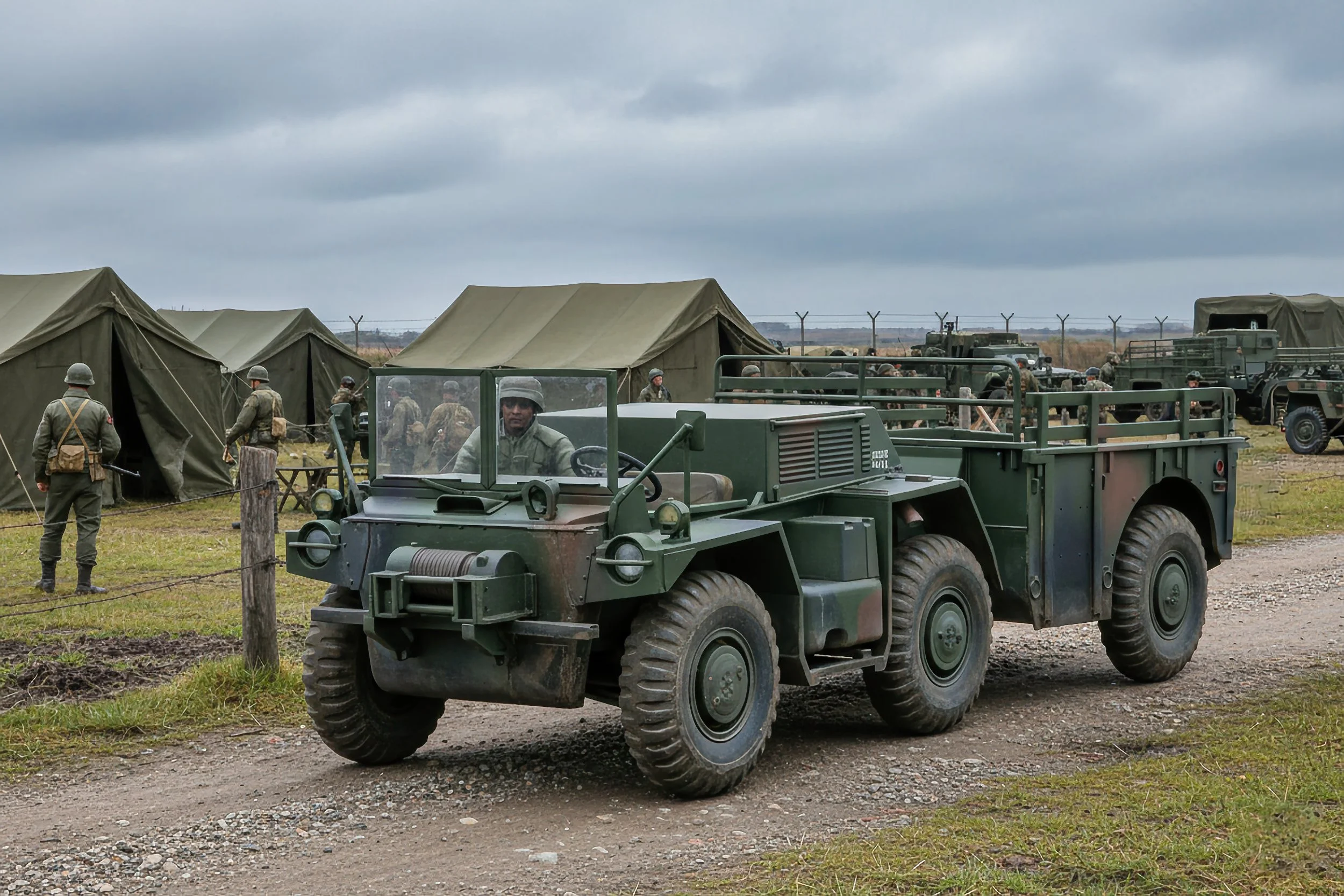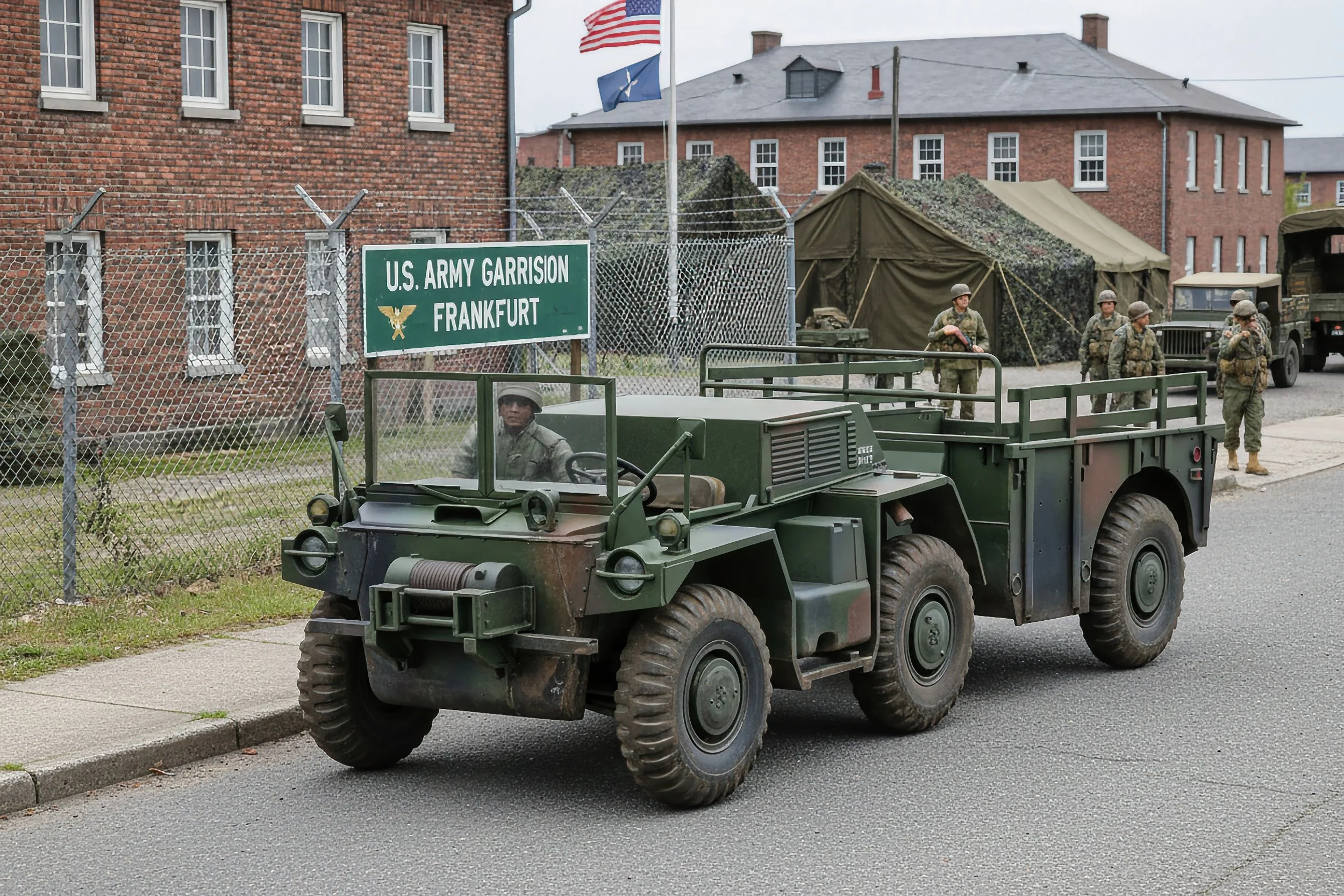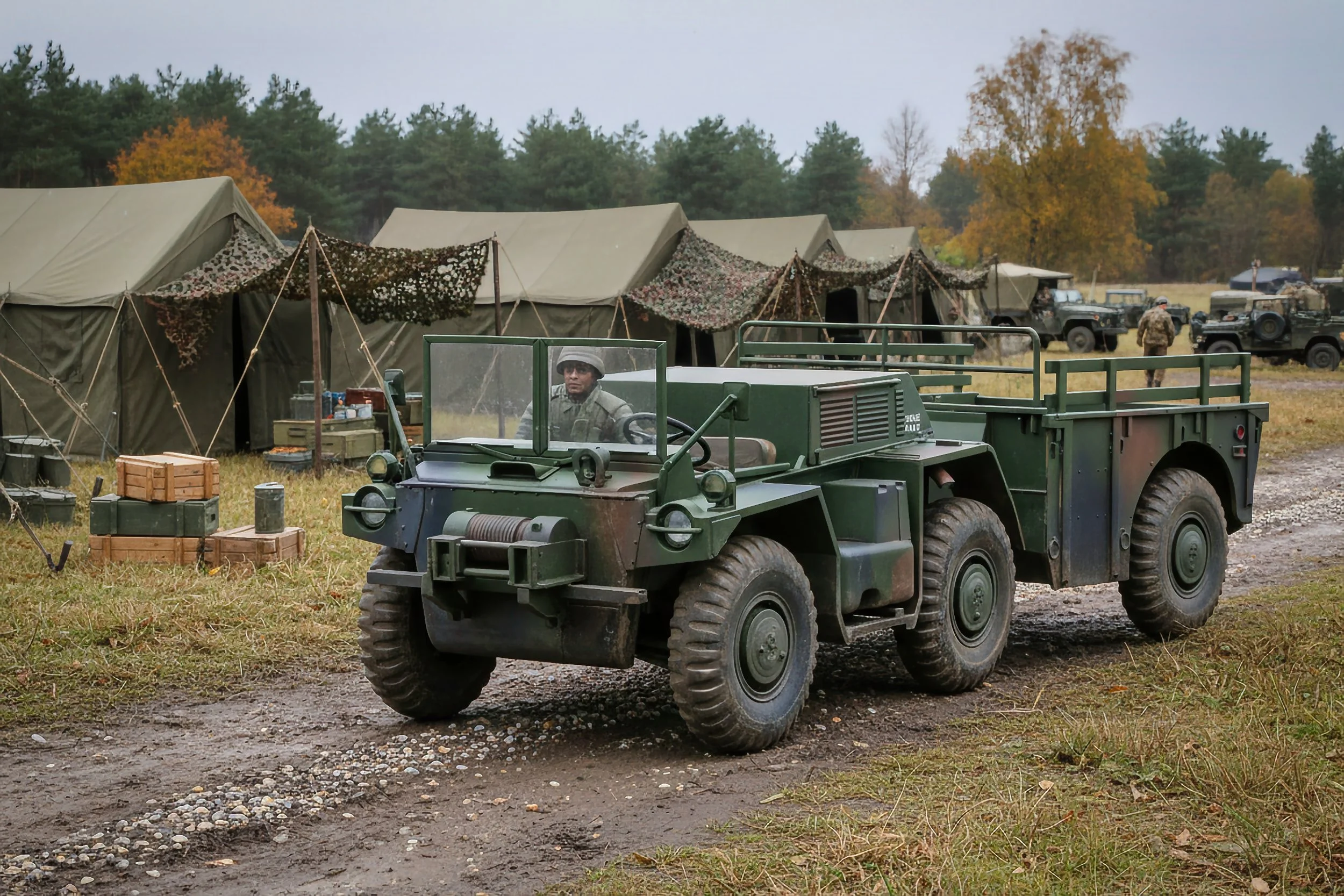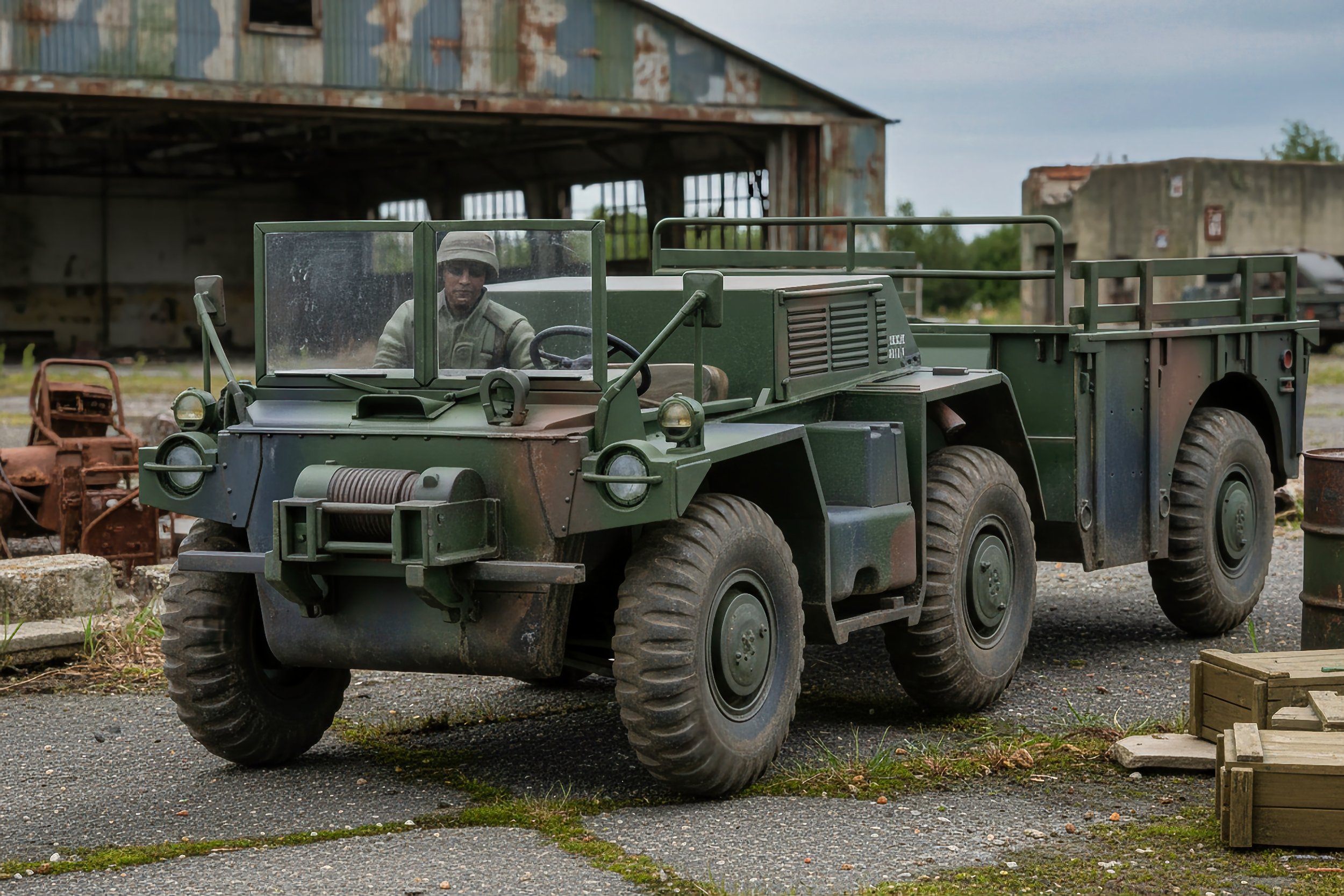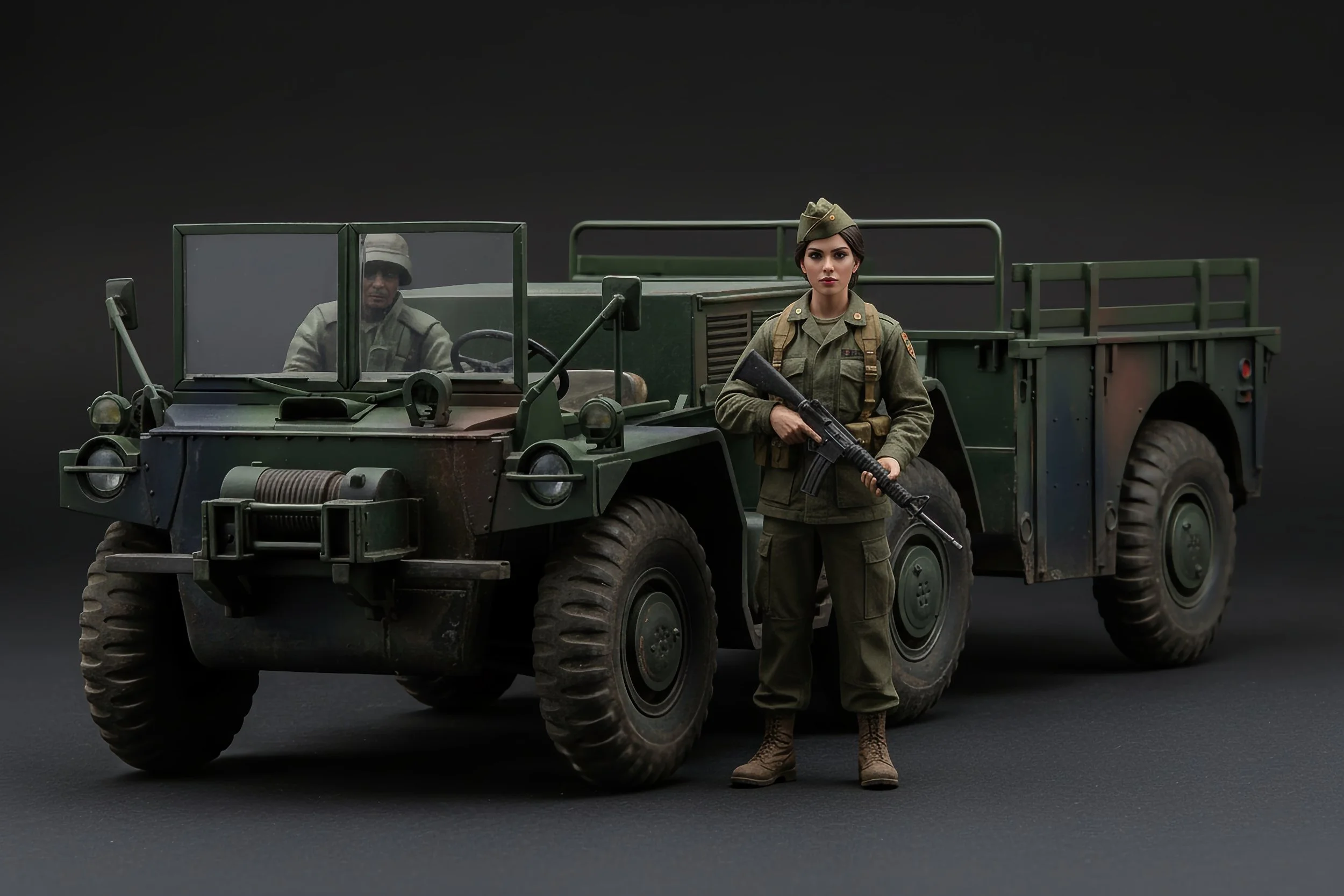
M561 GAMA GOAT
TAMIYA 35330
SCALE 1/35
.
;
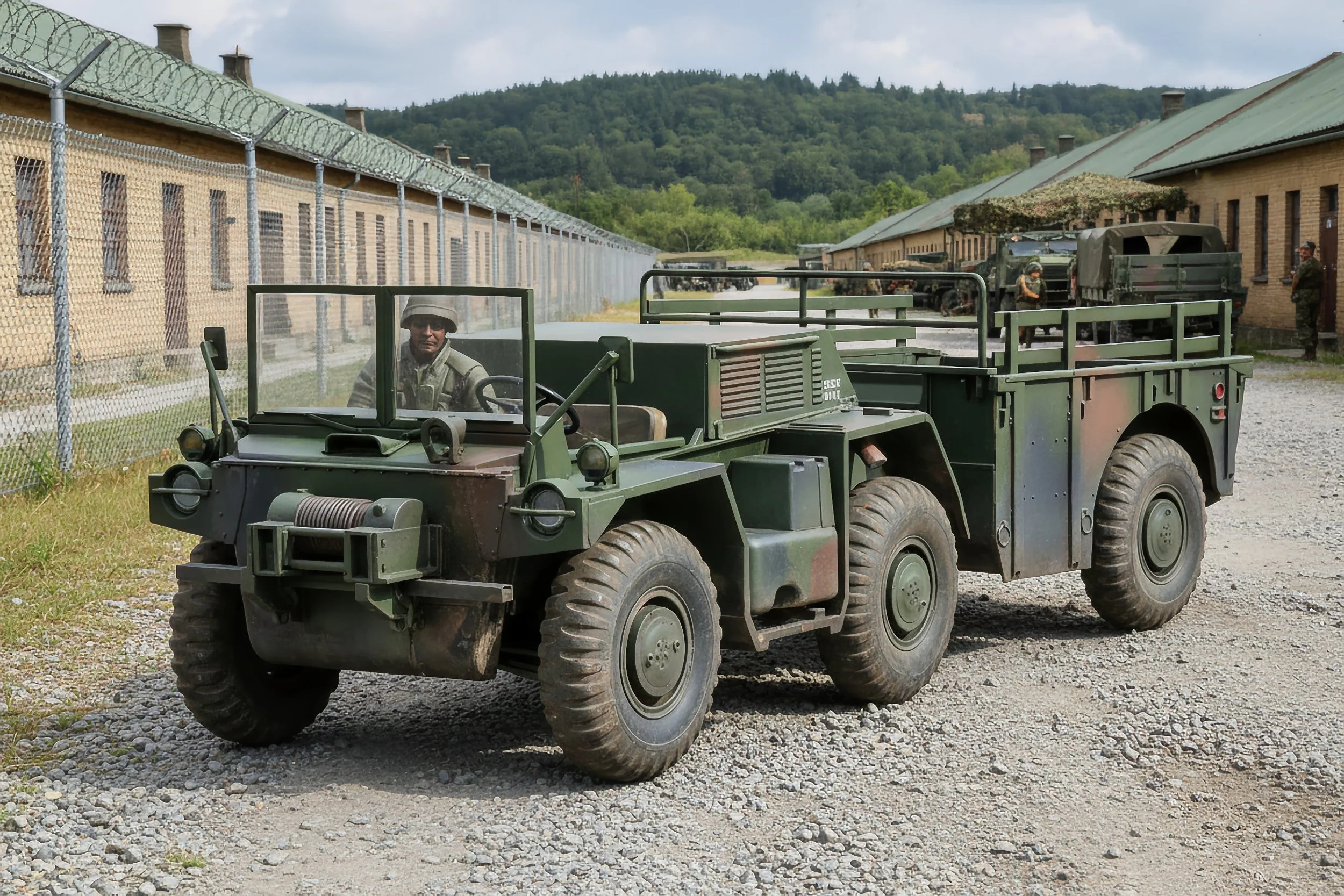
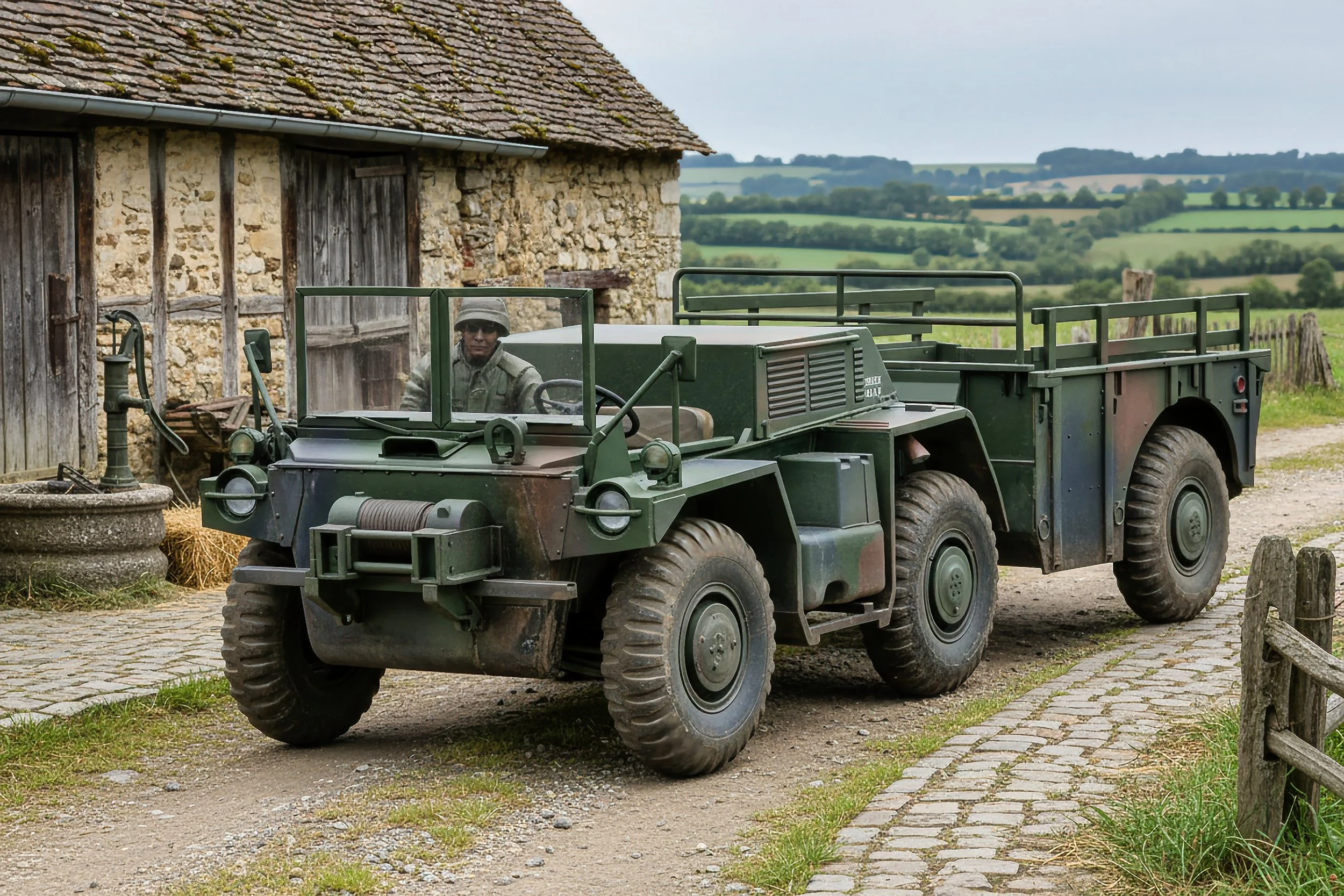
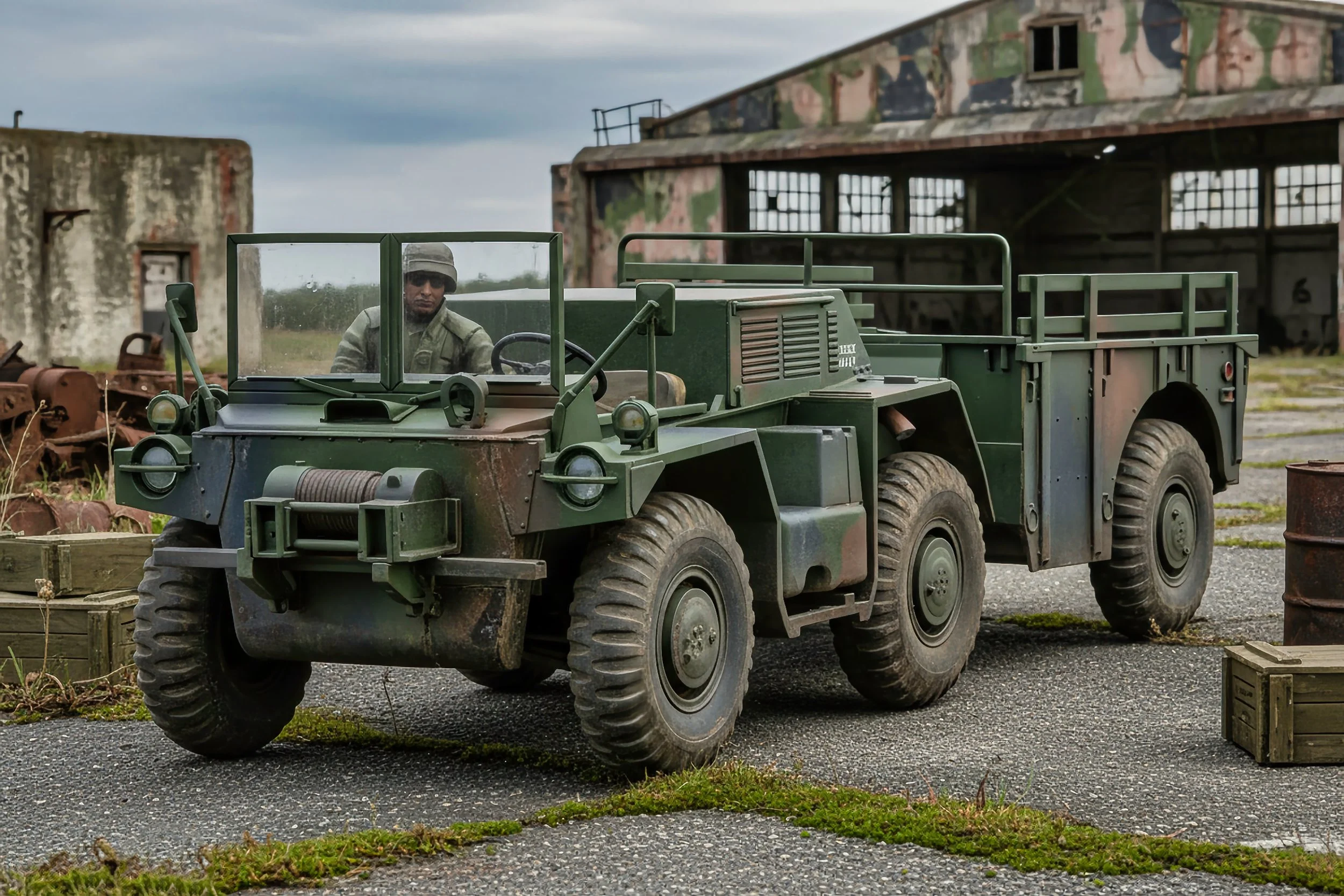
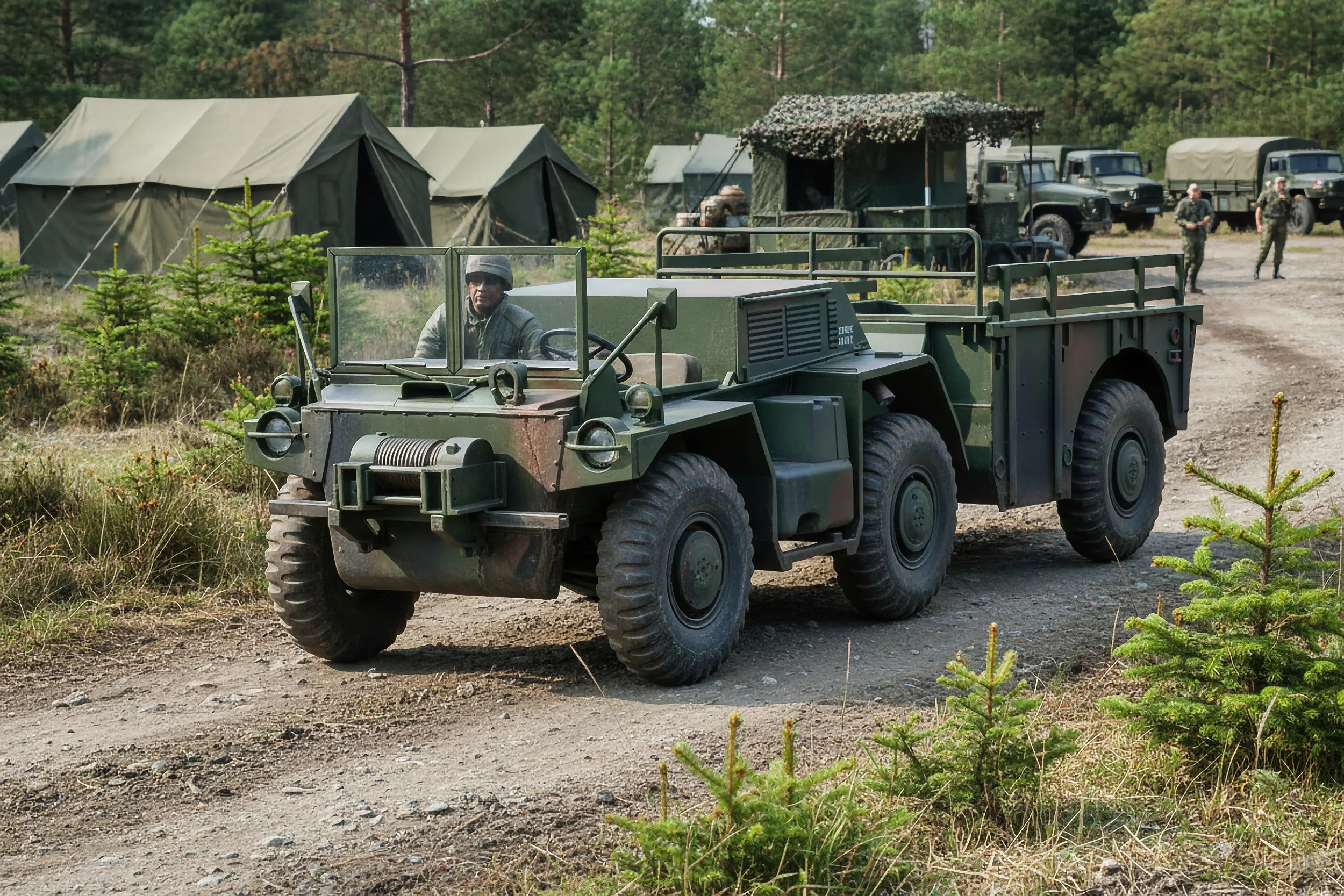
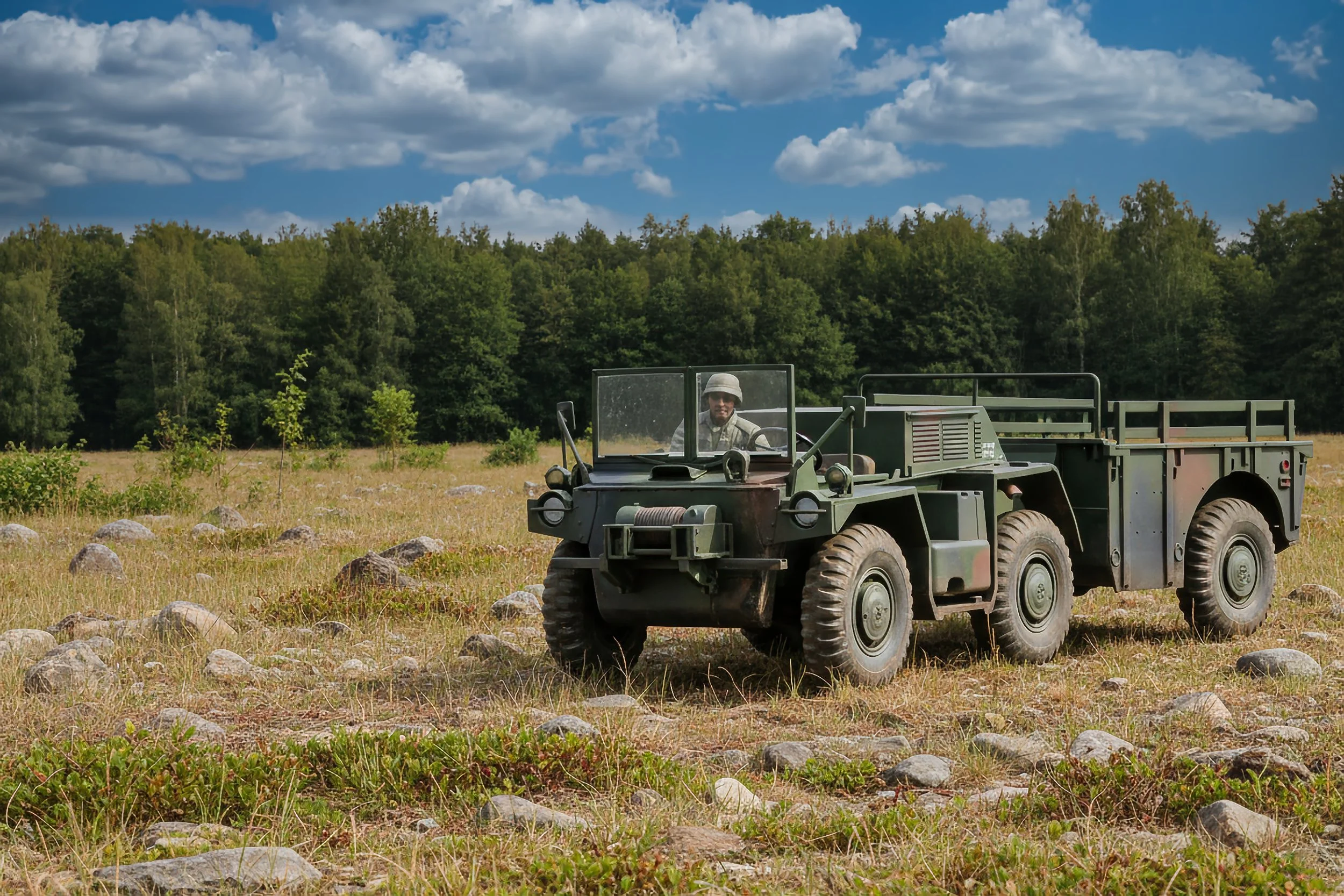
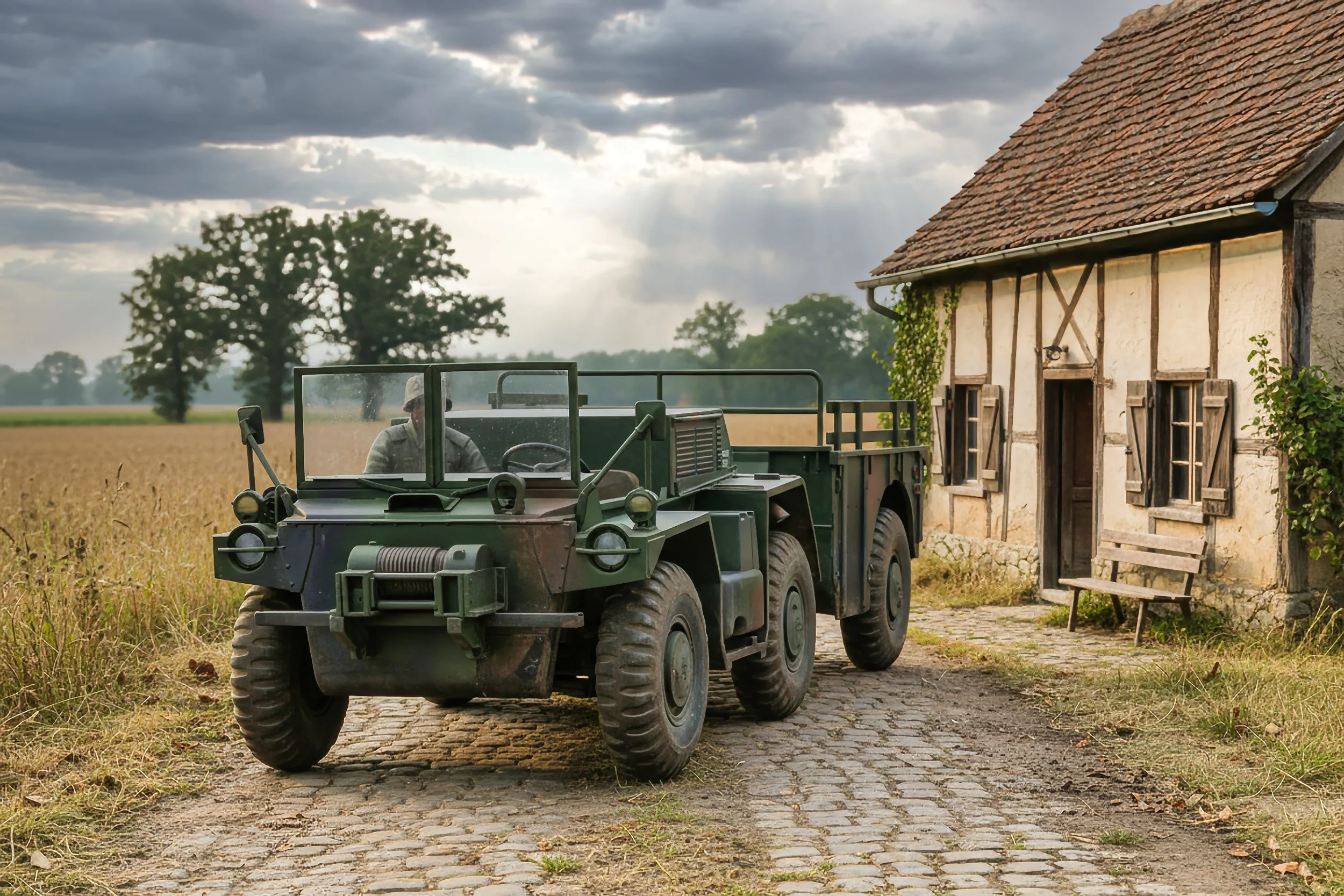
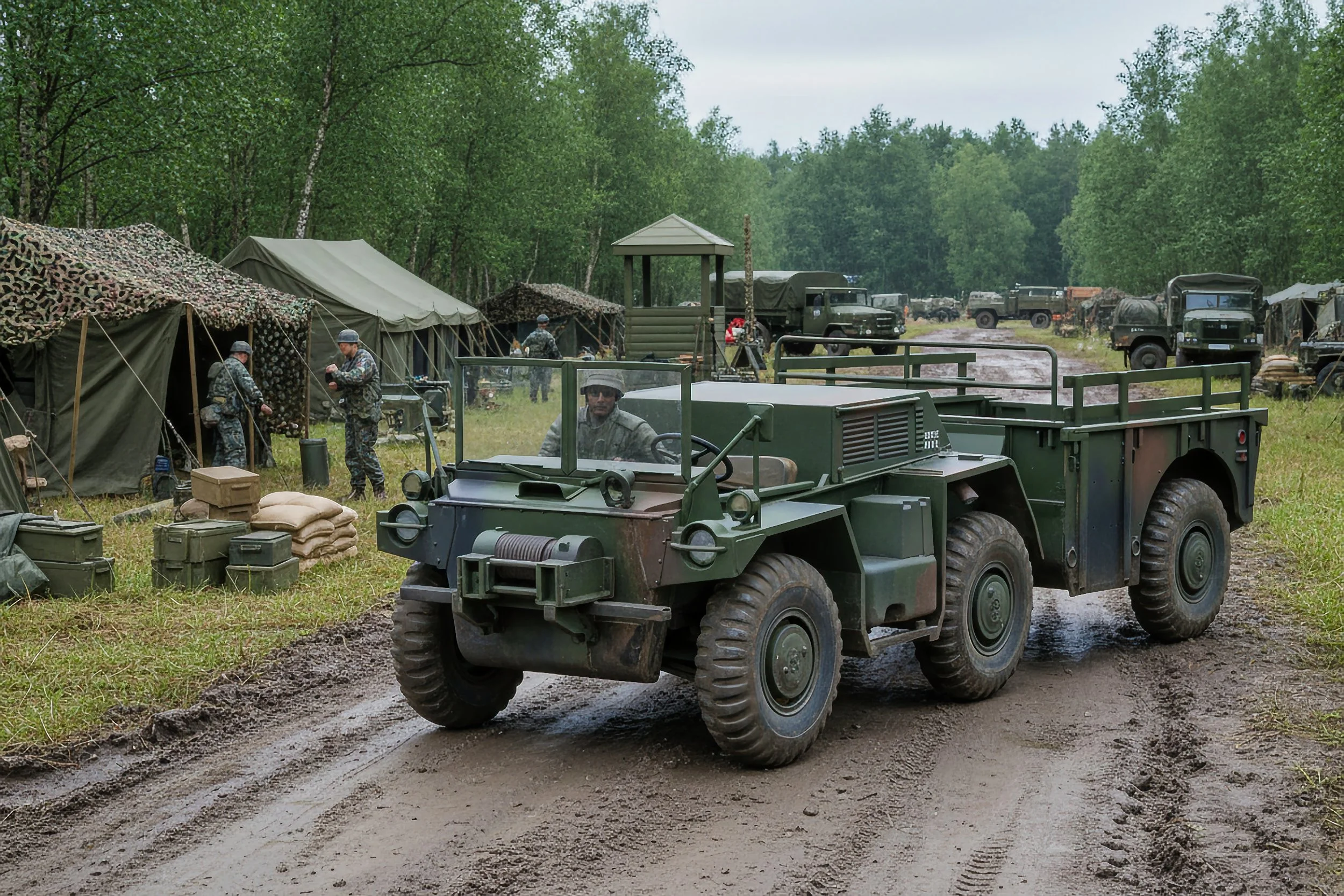
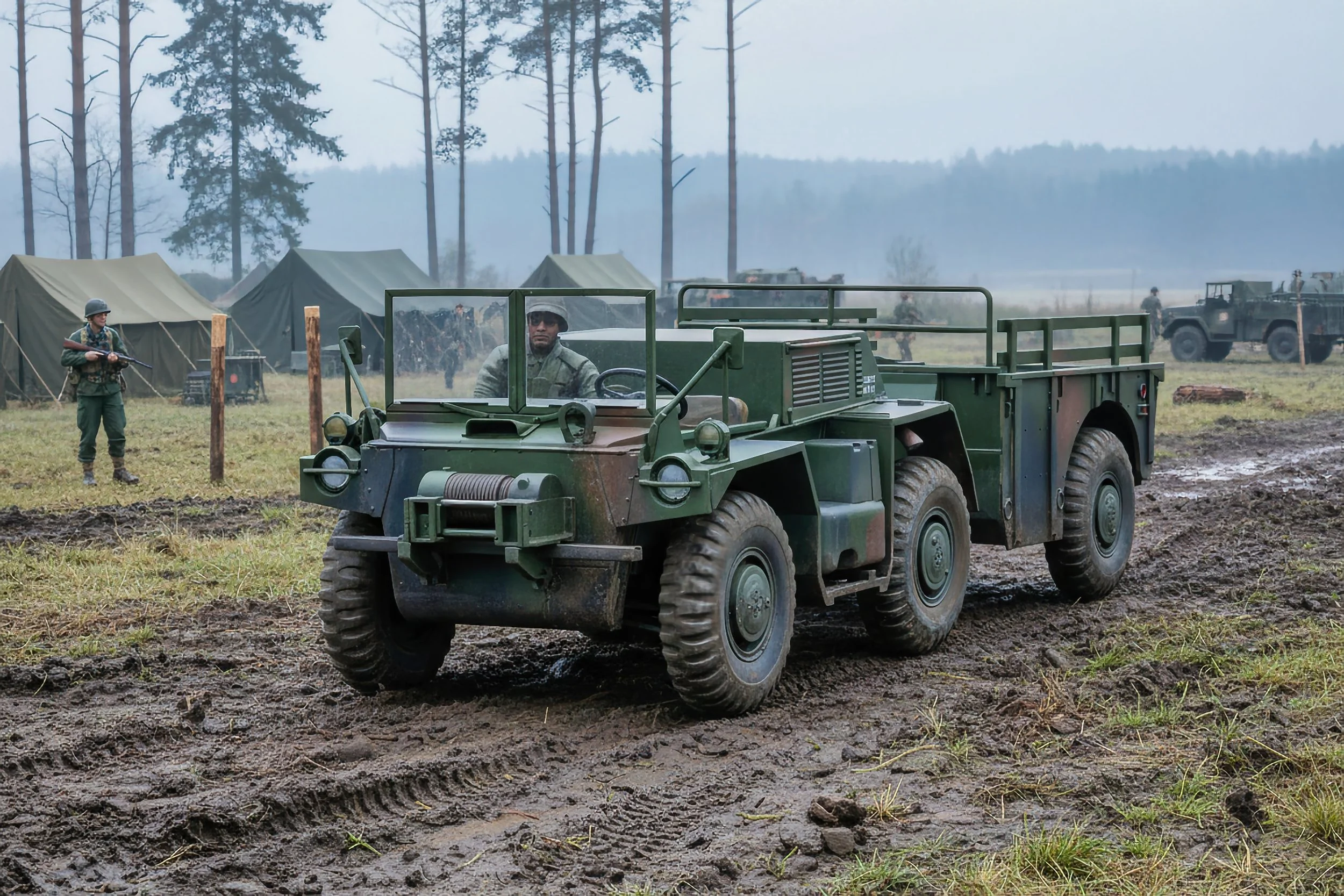
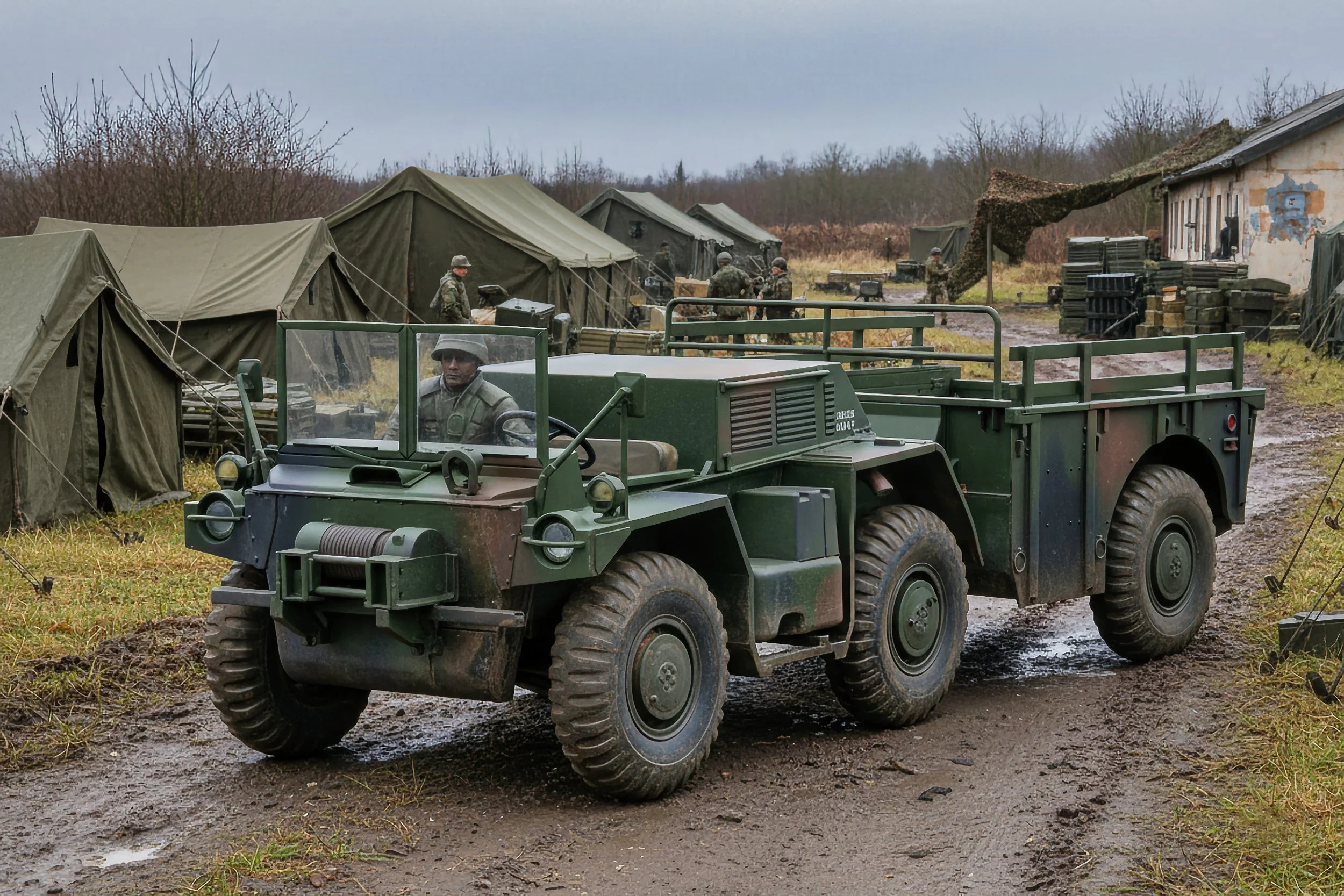
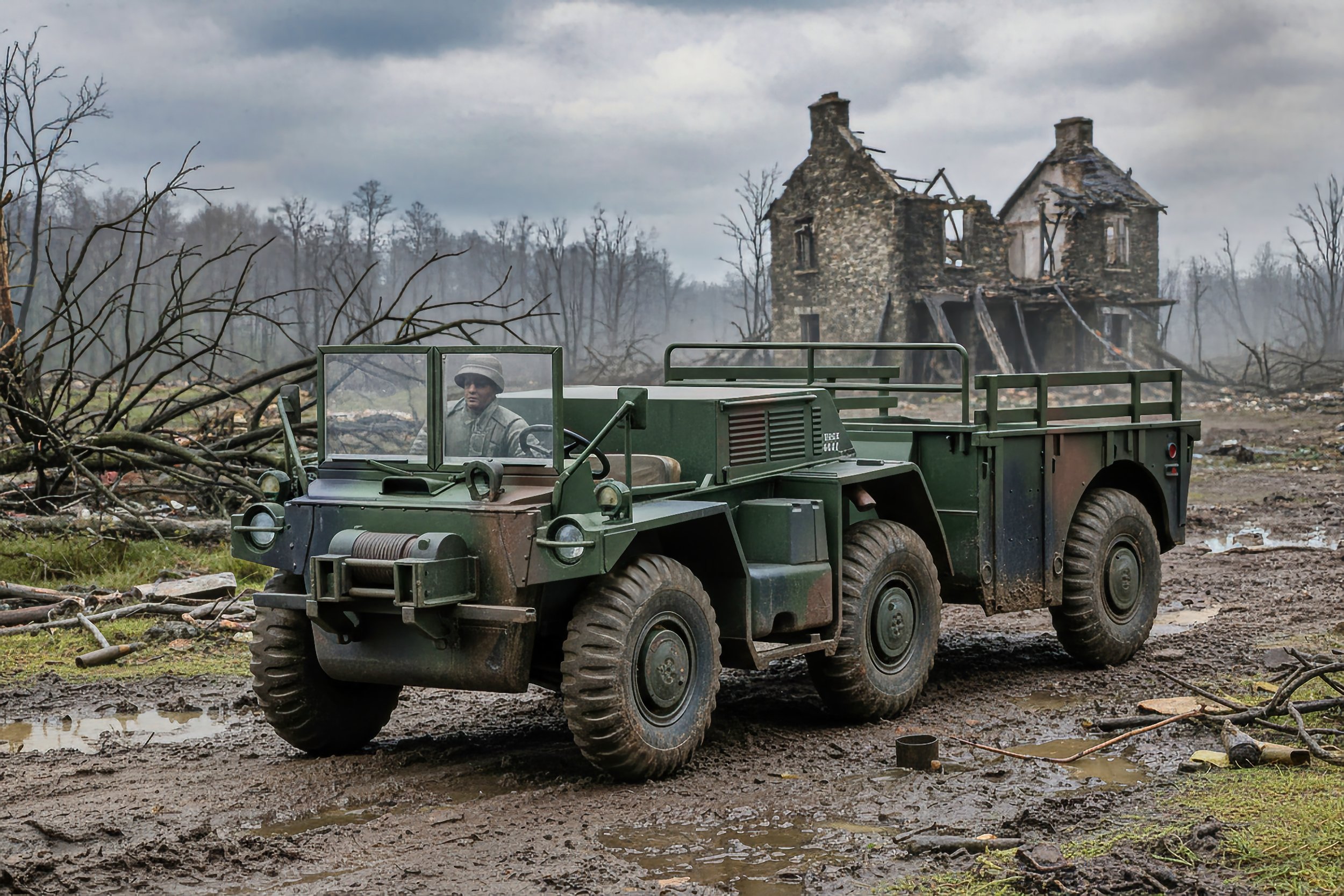
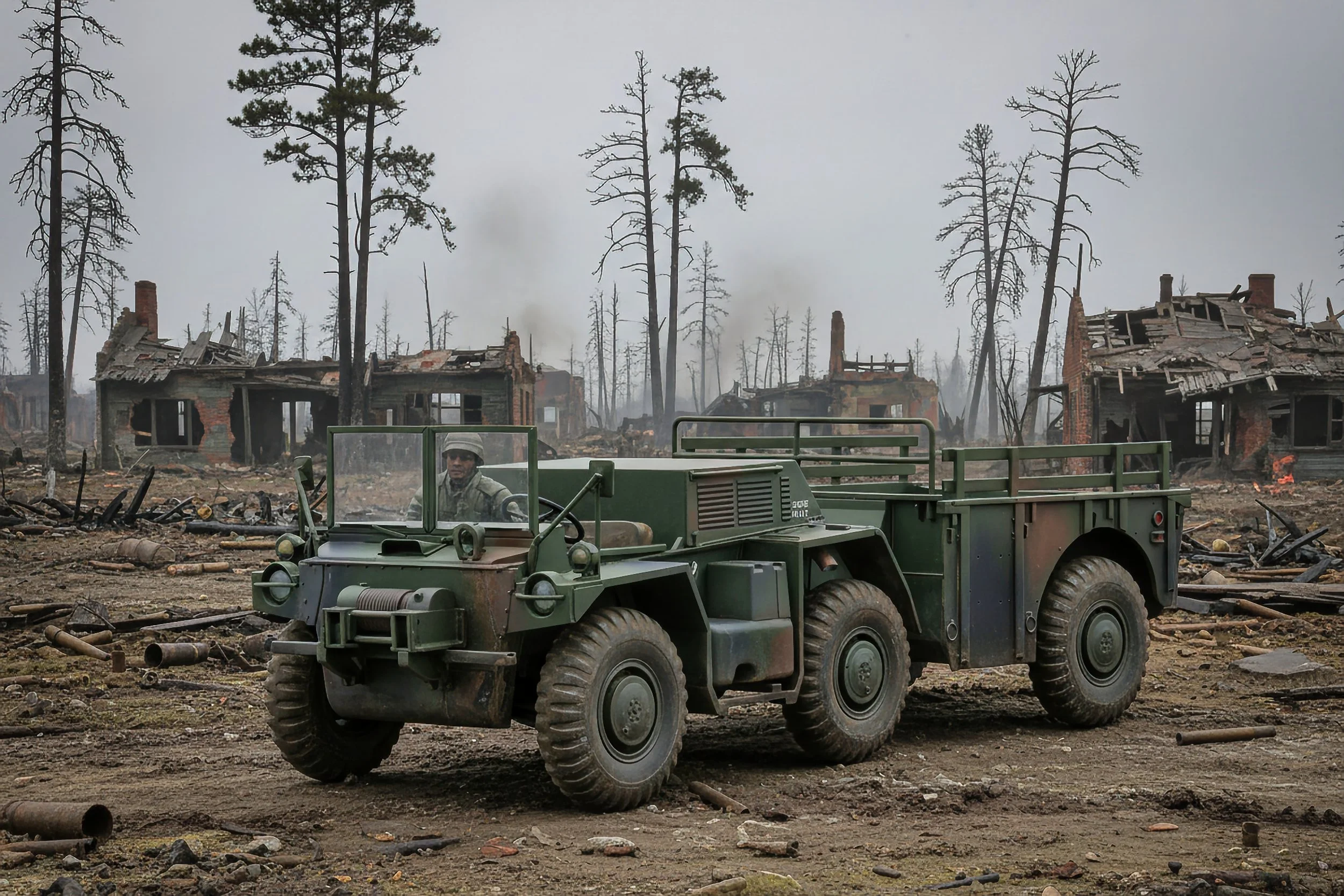
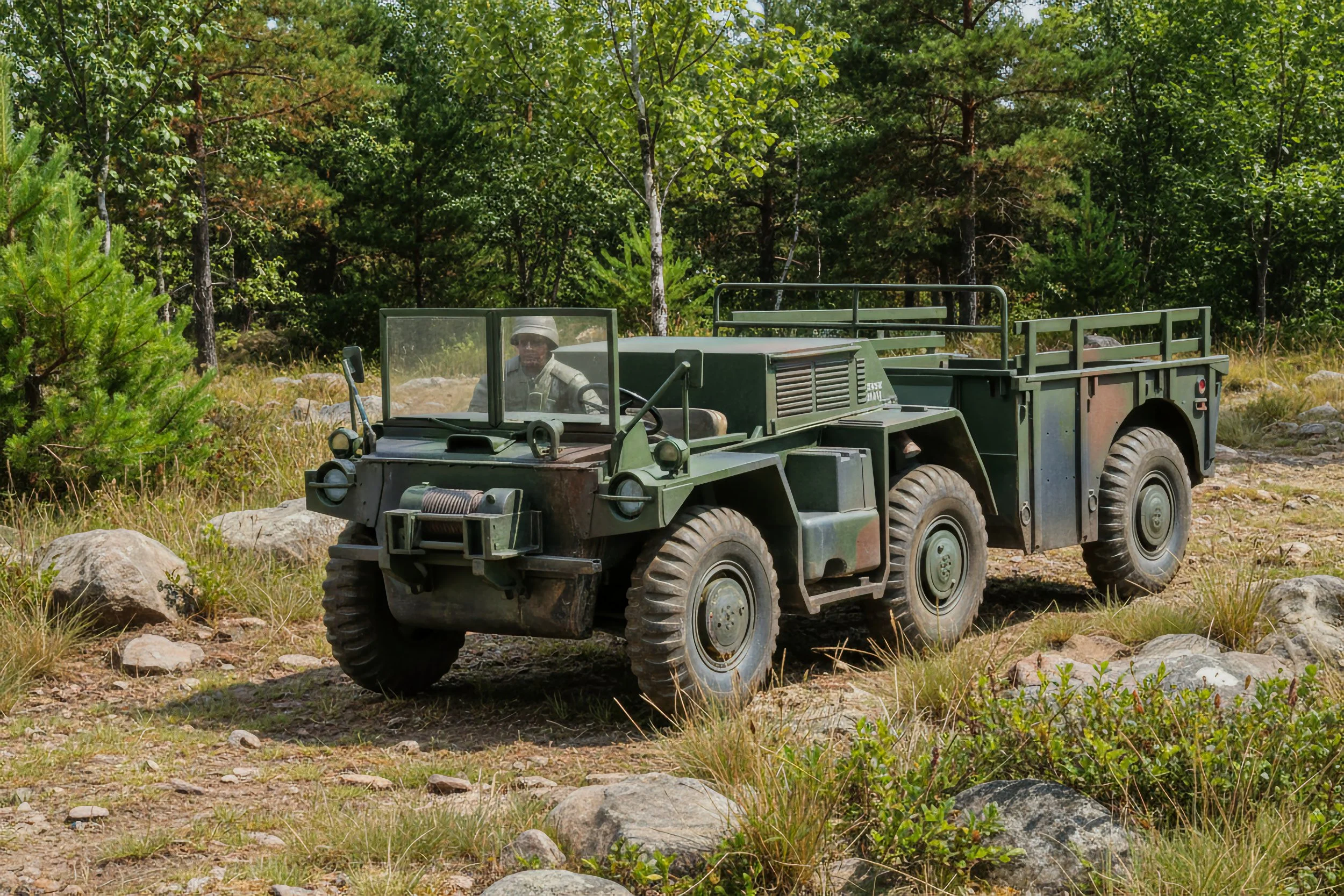
The M561 Gama Goat is a unique six-wheel-drive semi-amphibious off-road vehicle developed for the U.S. military during the Vietnam War era. Officially designated as the M561 6×6 tactical 1¼-ton truck, it earned its quirky nickname from Roger Gamaunt, the inventor of its innovative articulation joint, combined with its "goat-like" agility over rough terrain. An ambulance variant, the M792, was also produced for medical evacuations. Conceived in the early 1960s under Project Agile to address mobility challenges in jungles and wetlands, the Gama Goat was designed by Chance Vought (later LTV Aerospace) and manufactured by Consolidated Diesel Electric Corporation (CONDEC) from 1969 to 1973. Approximately 15,274 units were built, with the majority serving the U.S. Army and about 1,758 allocated to the Marine Corps. It replaced older vehicles like the M37 but was eventually succeeded by the Humvee in the 1980s.
The vehicle's articulated design features two aluminum bodies—a front tractor with four wheels and a rear carrier with two—connected by a joint that allows pitching and rolling for superior off-road performance, while providing power to all six wheels. Powered by a Detroit Diesel 3-53 three-cylinder engine producing 101 horsepower, it has a curb weight of about 7,300 pounds, a payload capacity of 2,900 pounds, and dimensions of 226.6 inches long, 83.8 inches wide, and 90.8 inches high. Top speed reaches around 56 mph, with a range of 420 miles.
Despite its exceptional cross-country mobility and air-transportability, the Gama Goat faced criticism for excessive noise, maintenance difficulties, and limited amphibious capabilities in calm waters only. Today, it remains a fascinating relic of military engineering, prized by collectors for its unconventional design and historical significance in tactical logistics.
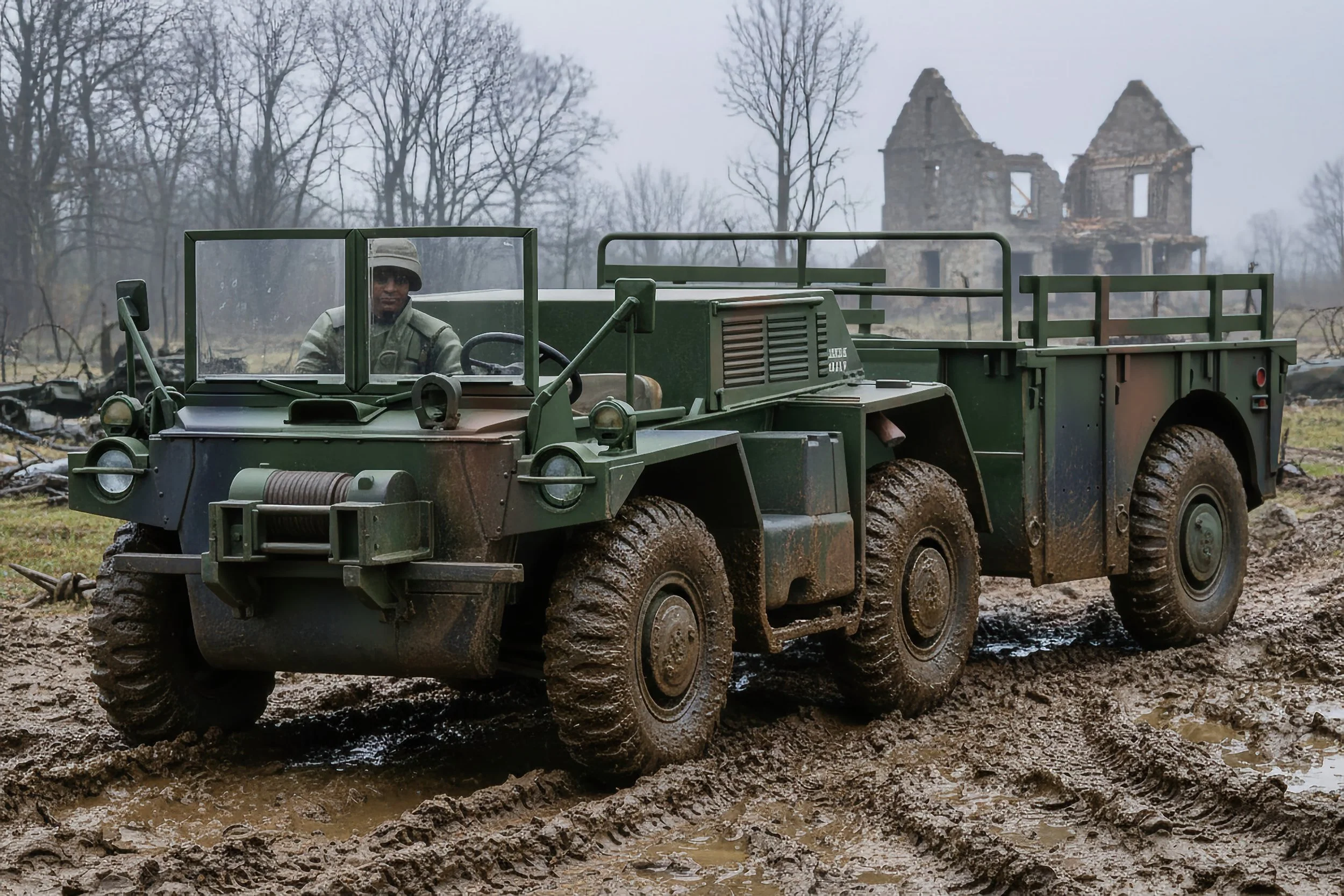
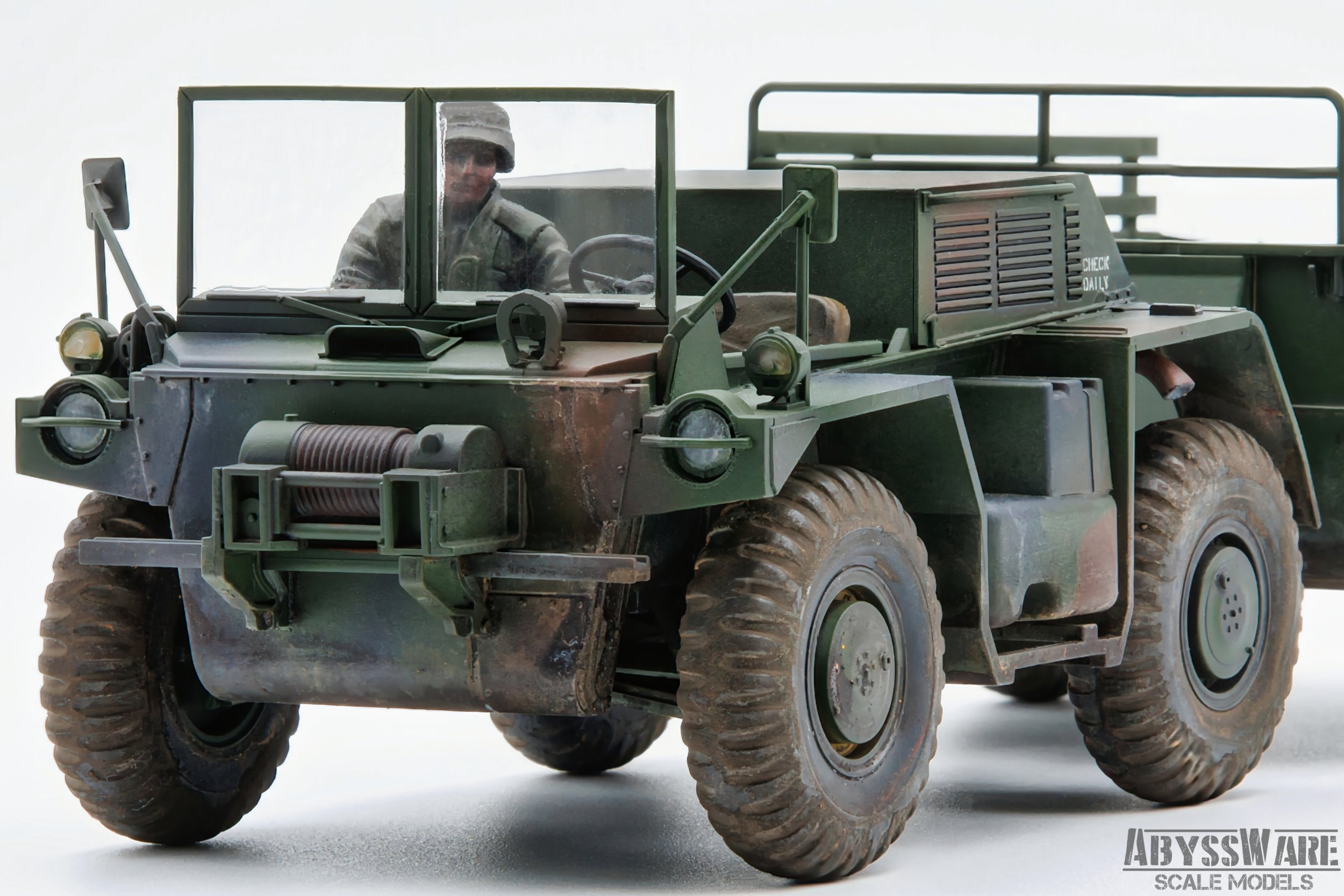
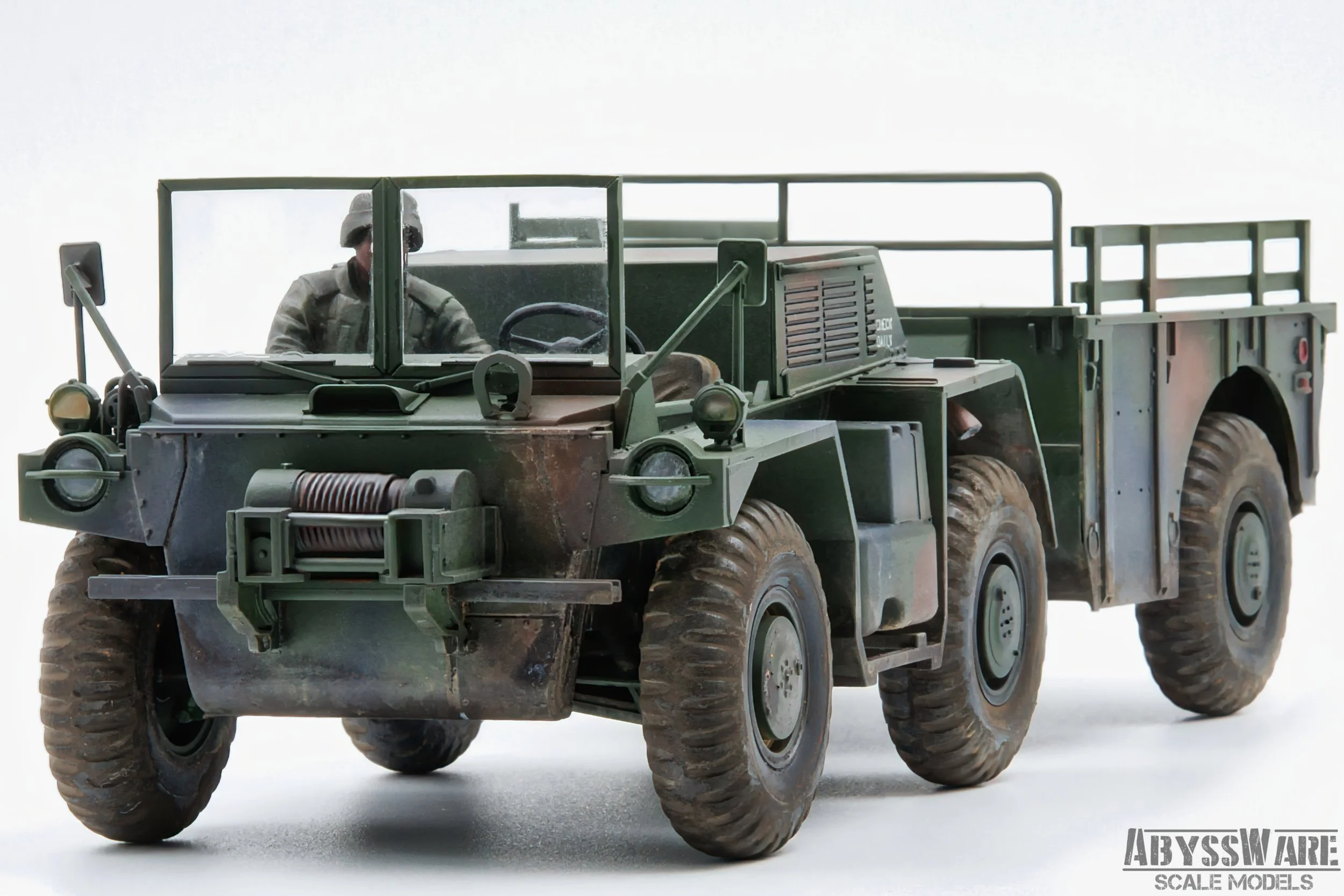
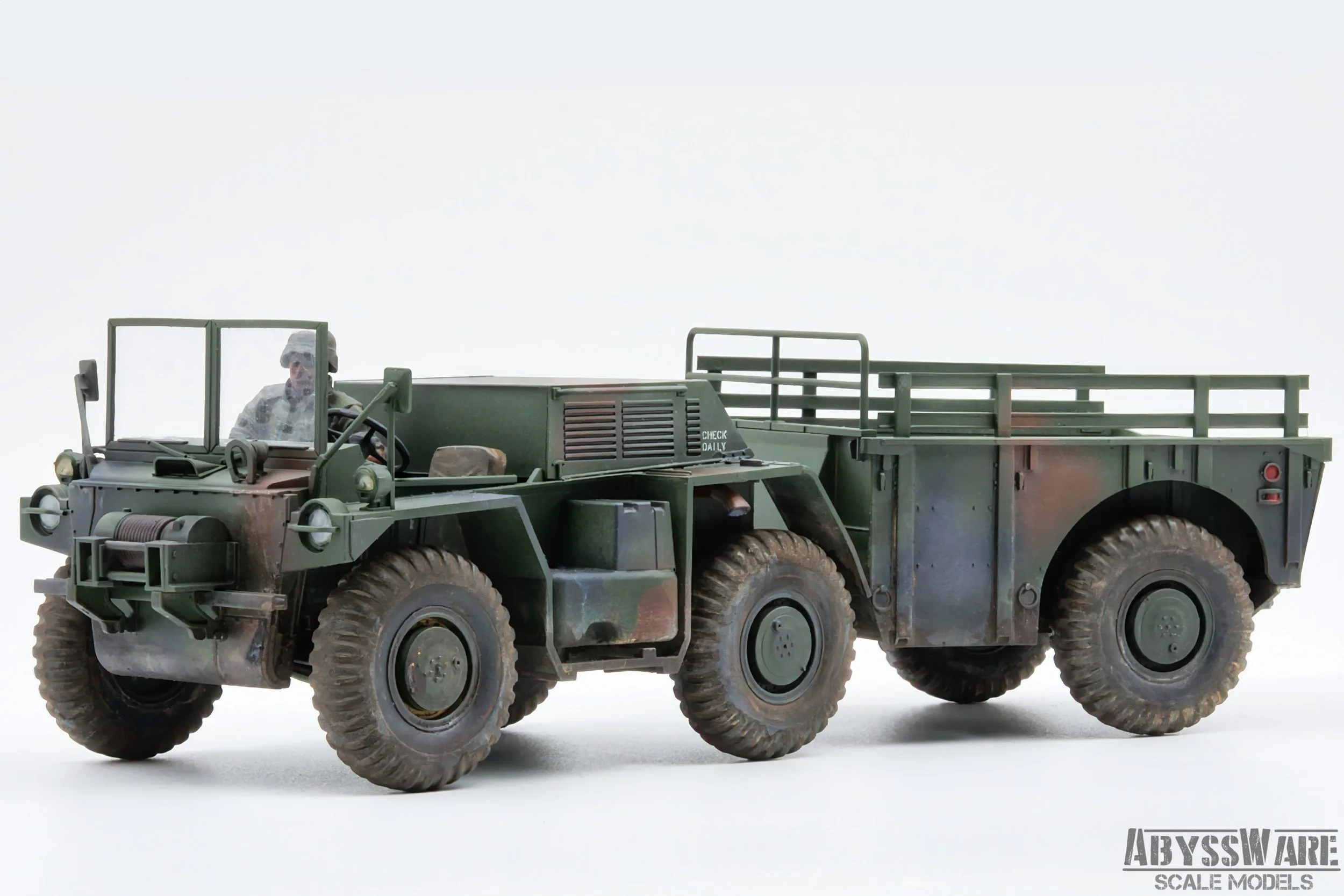
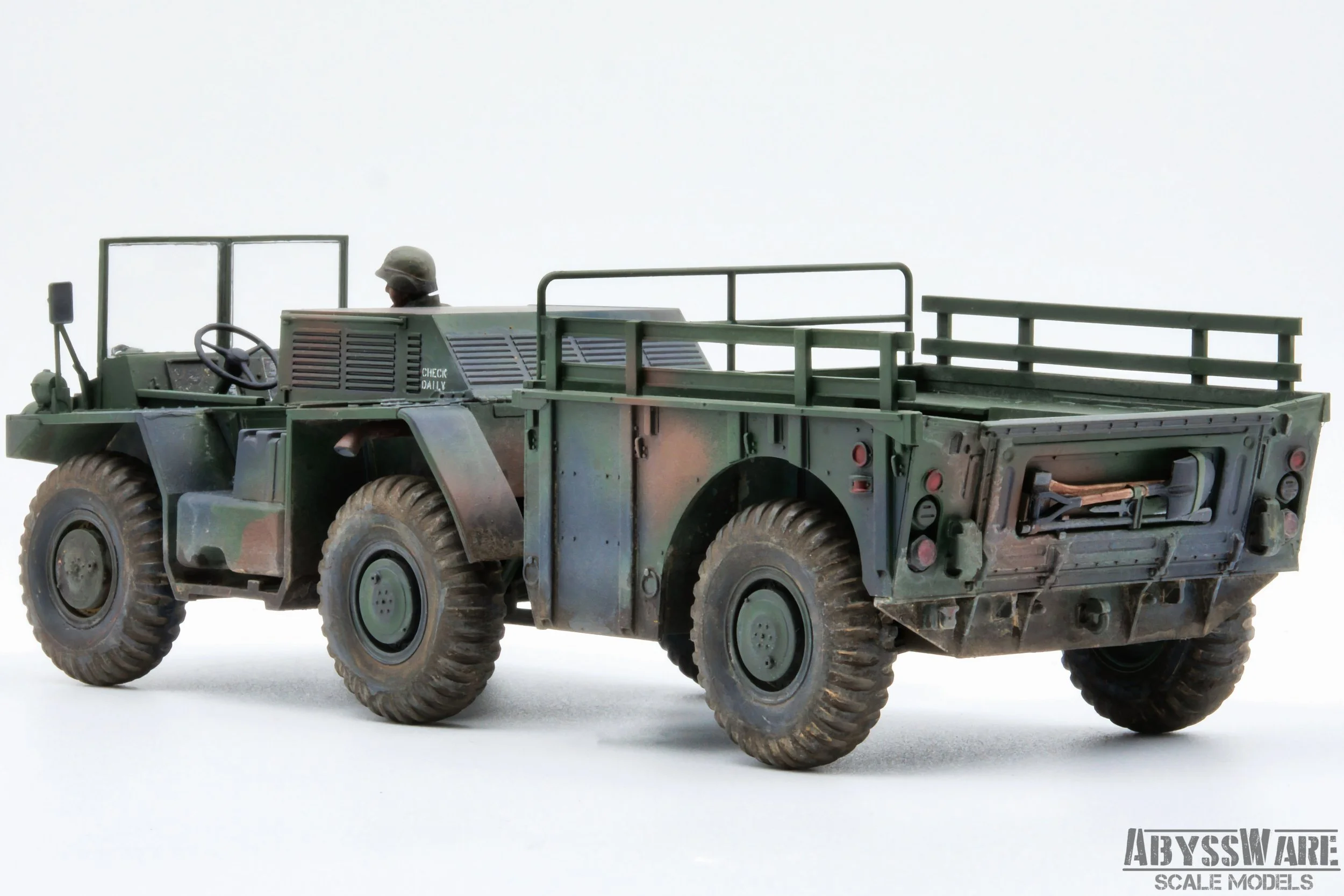
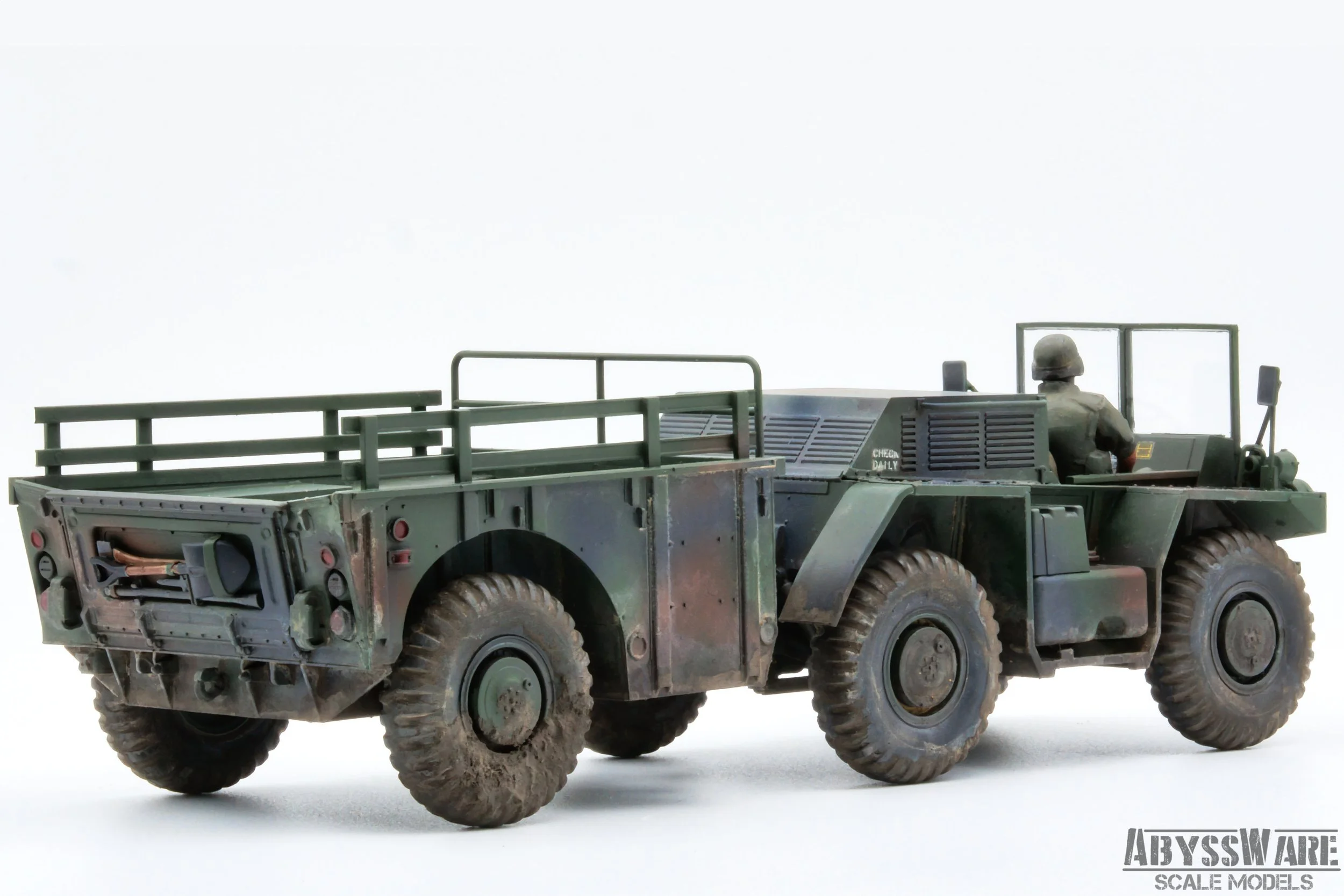
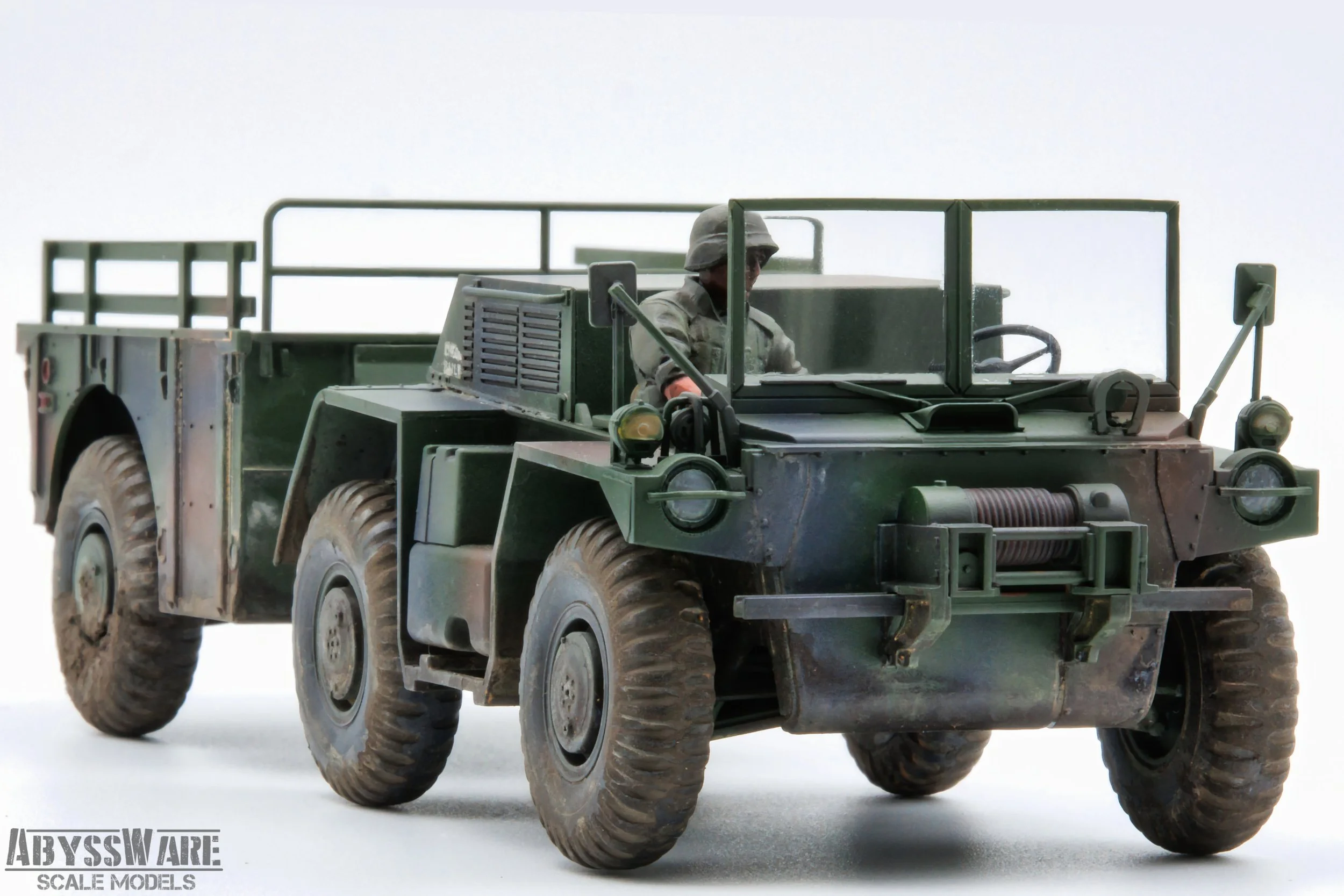
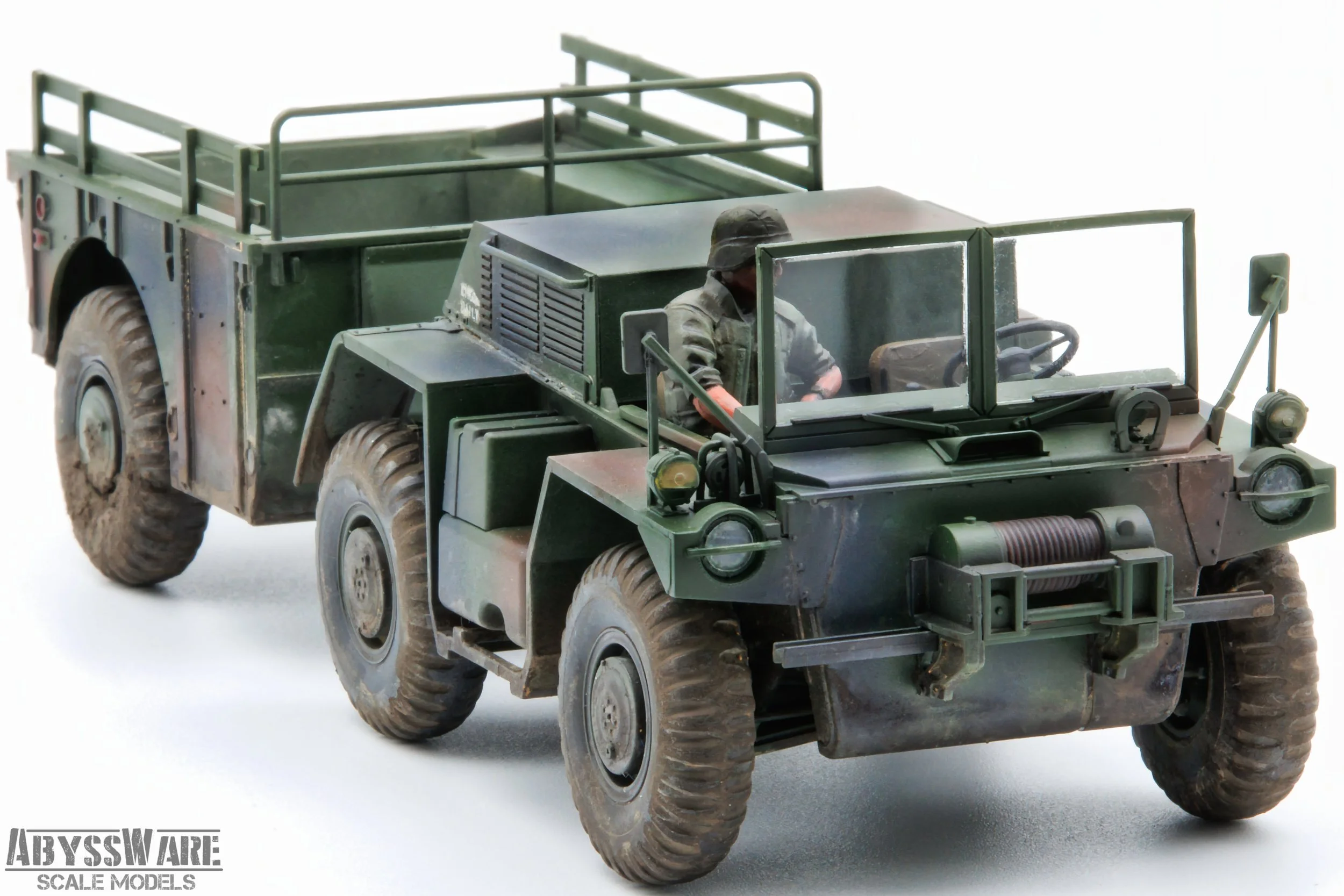
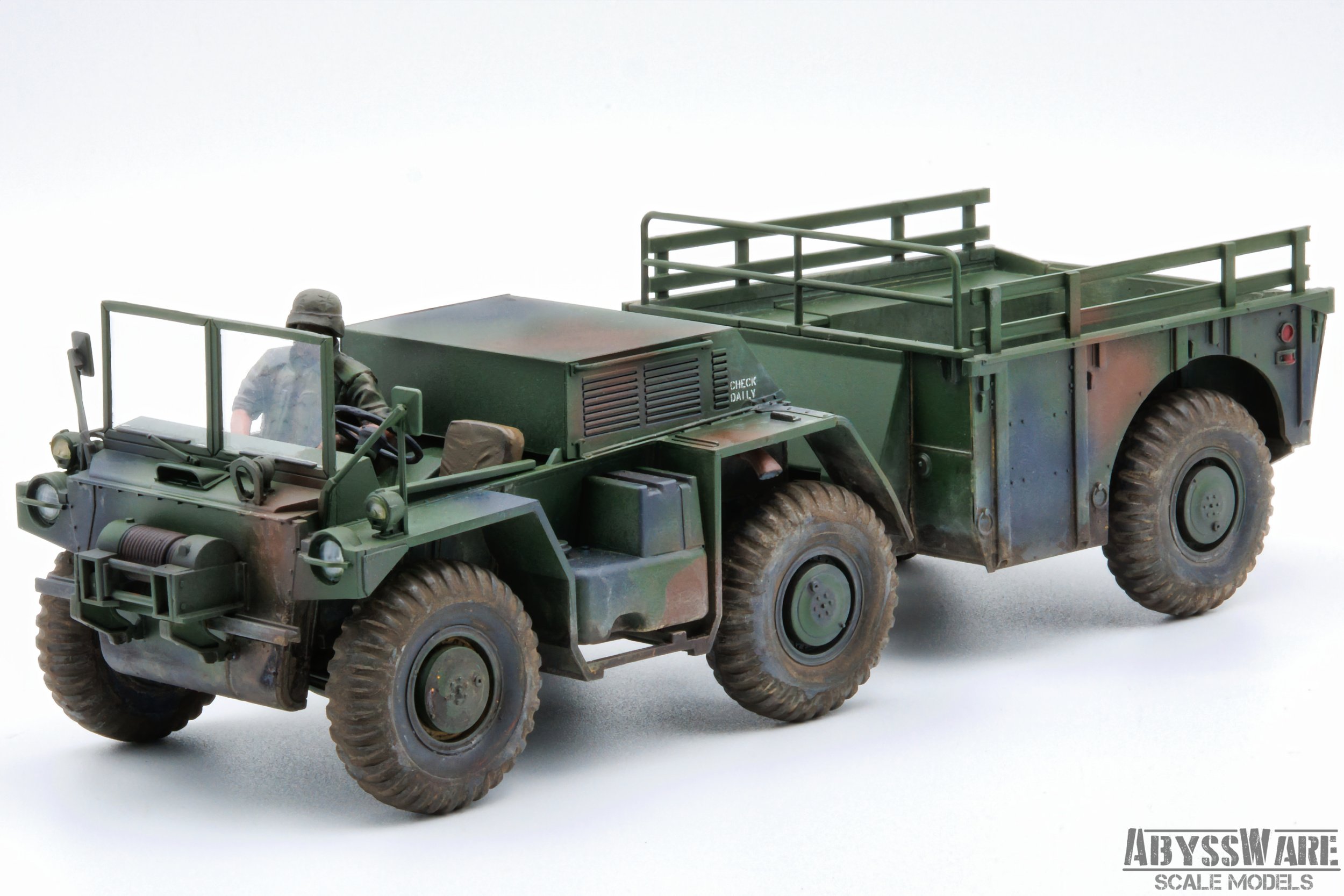
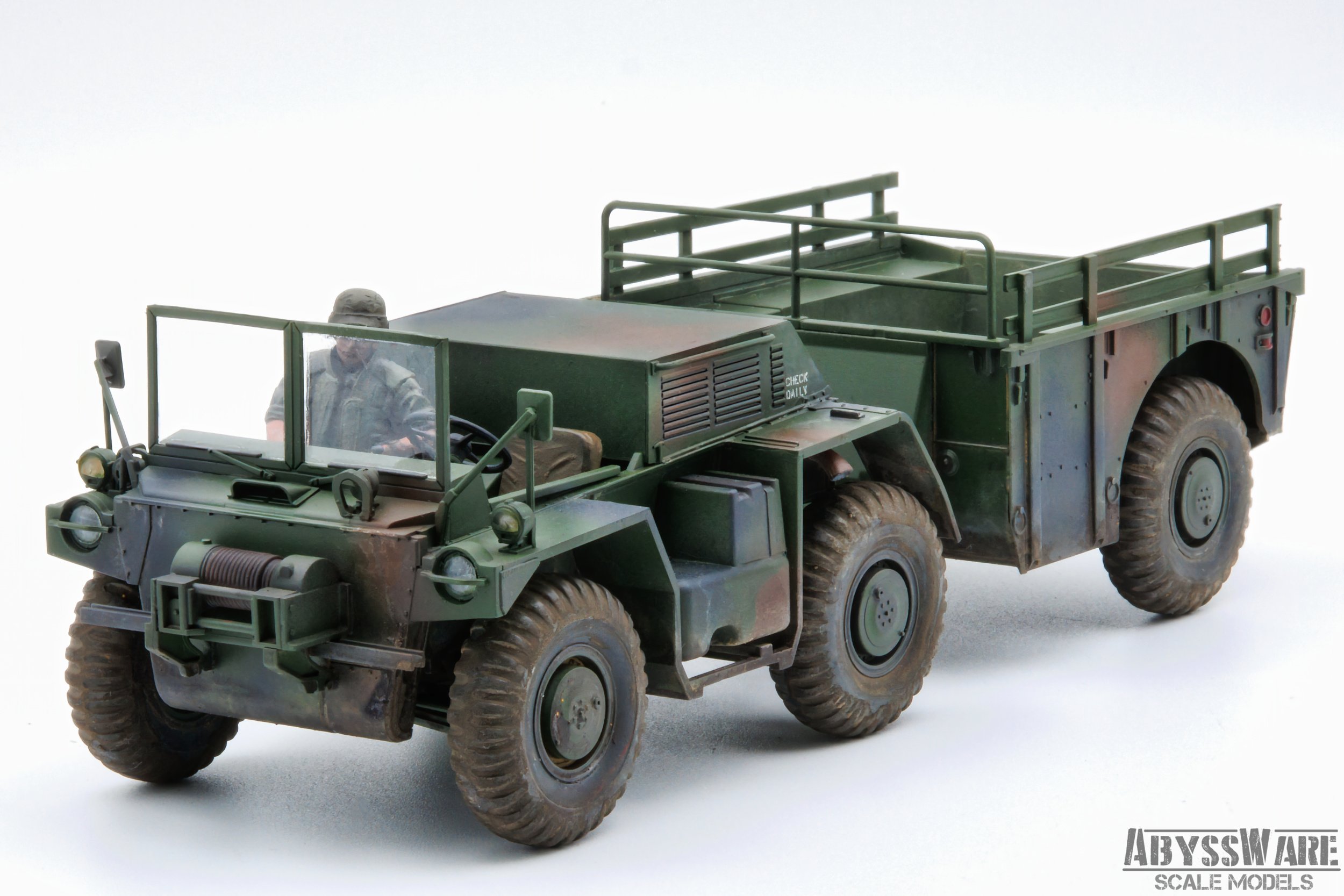
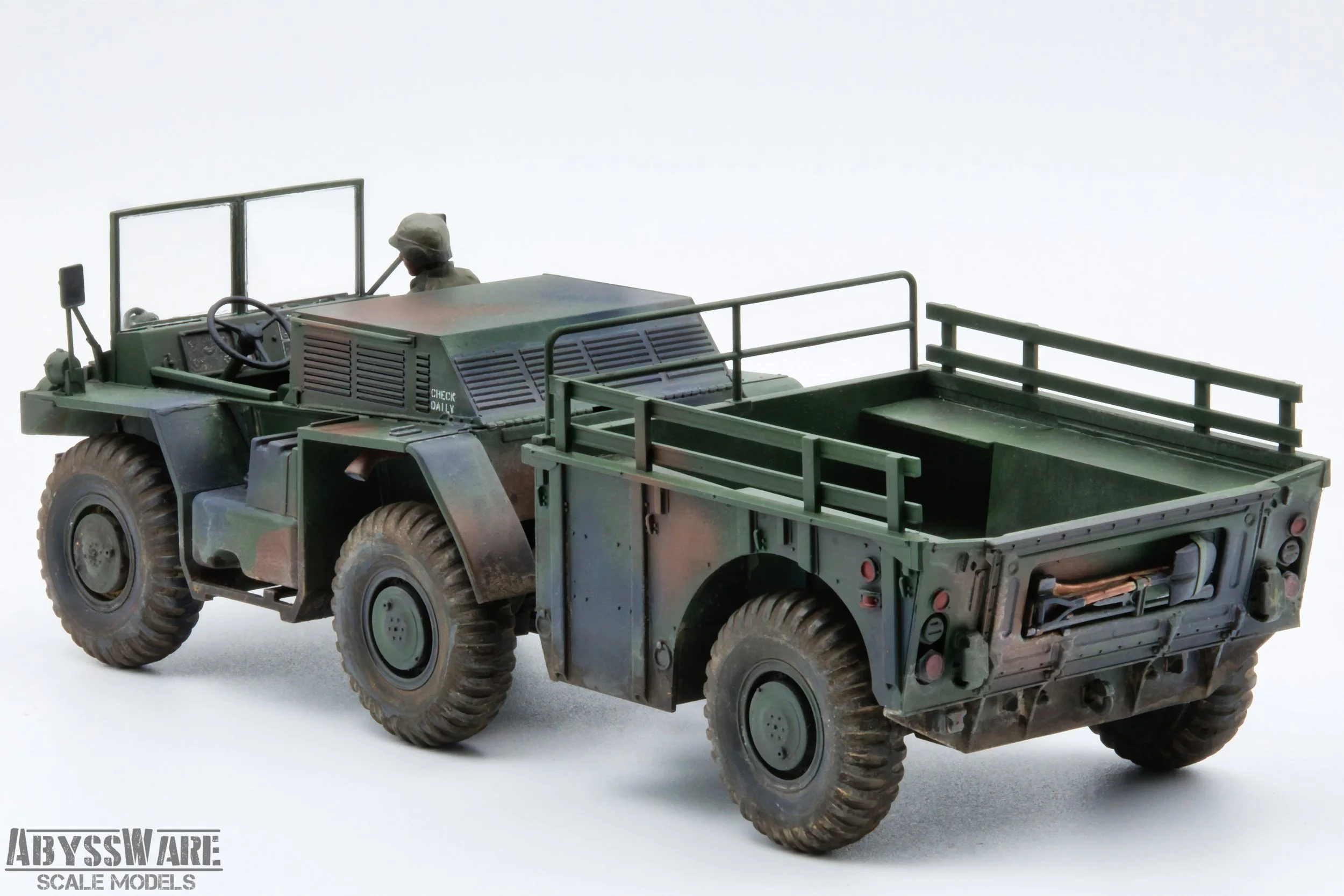
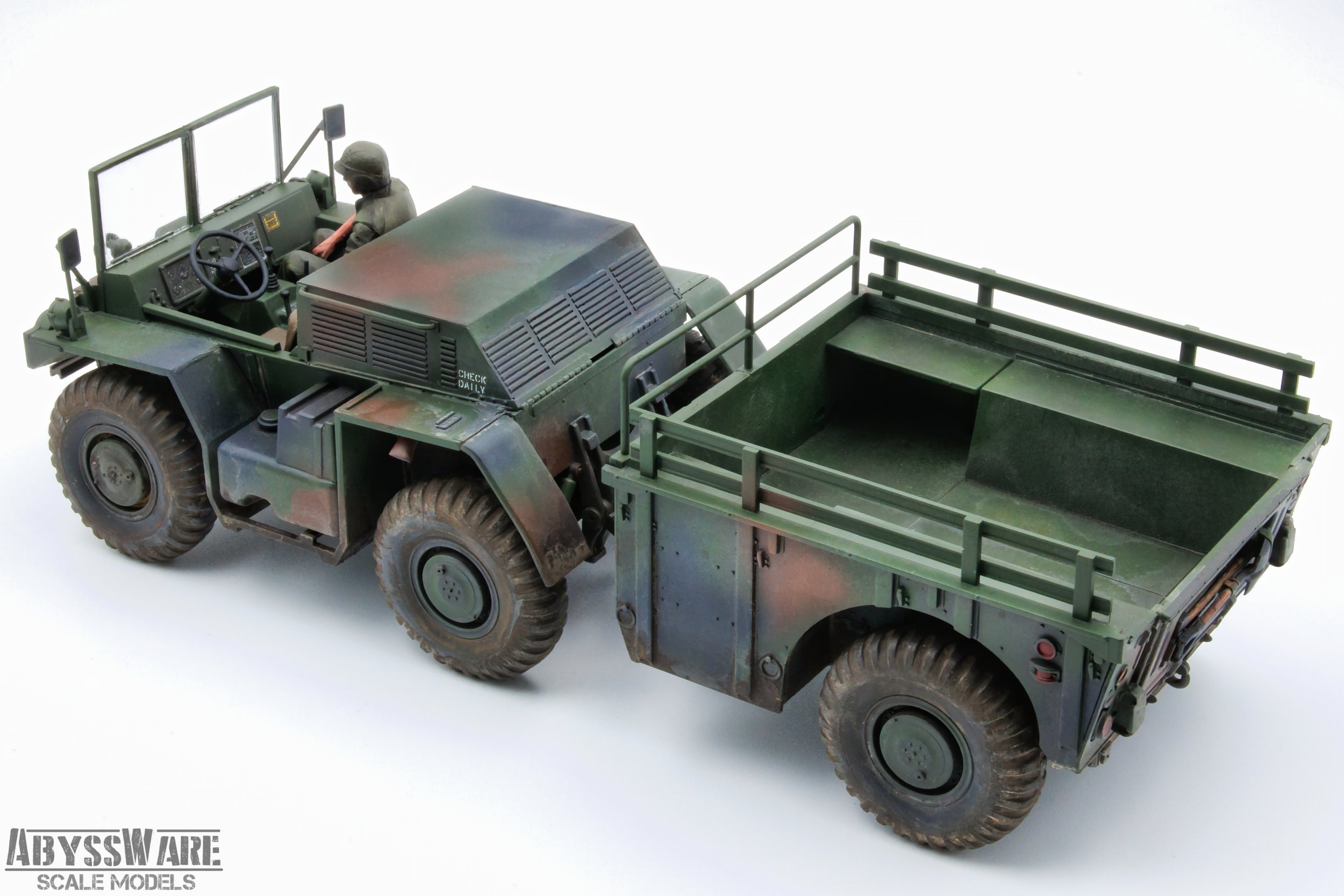
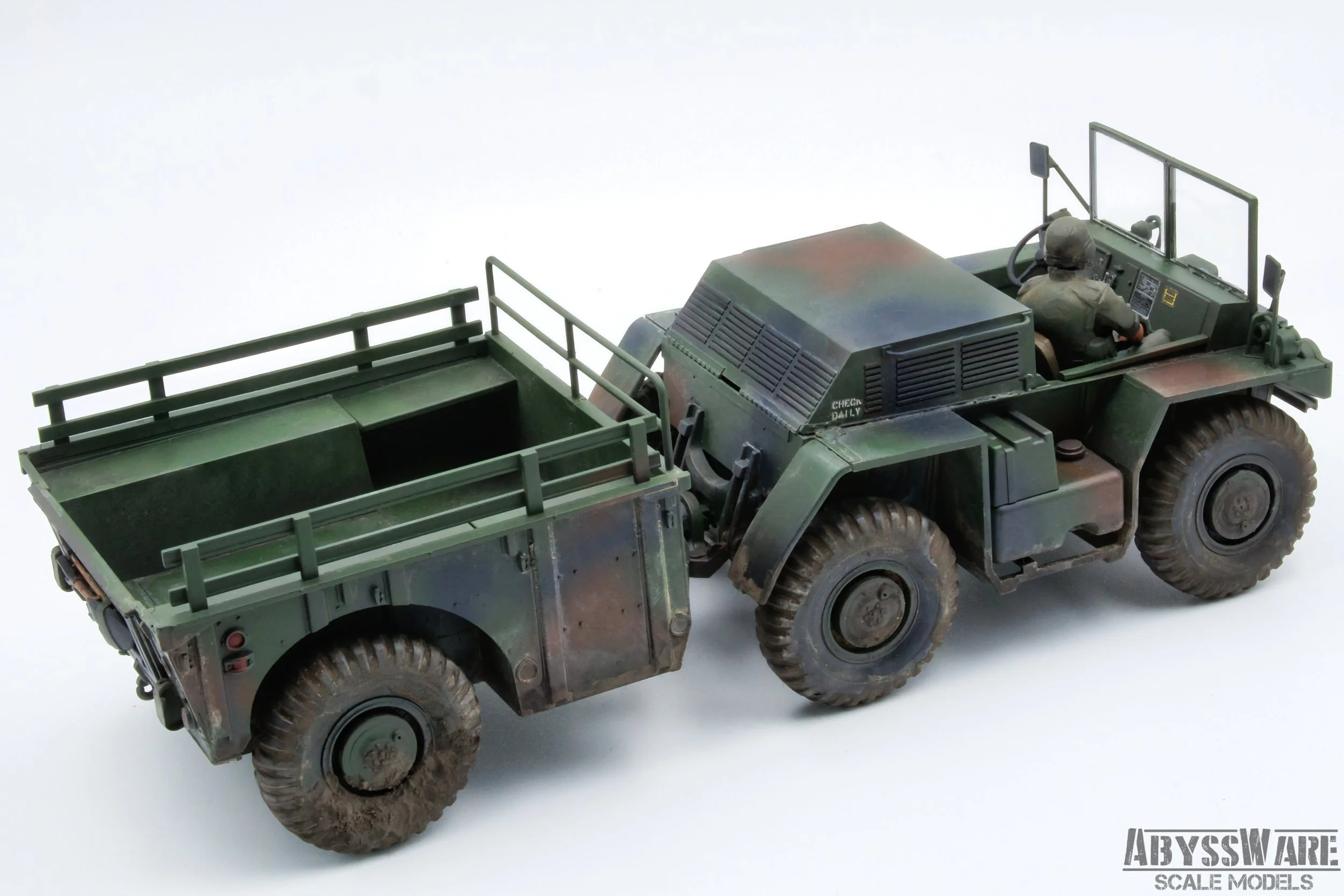
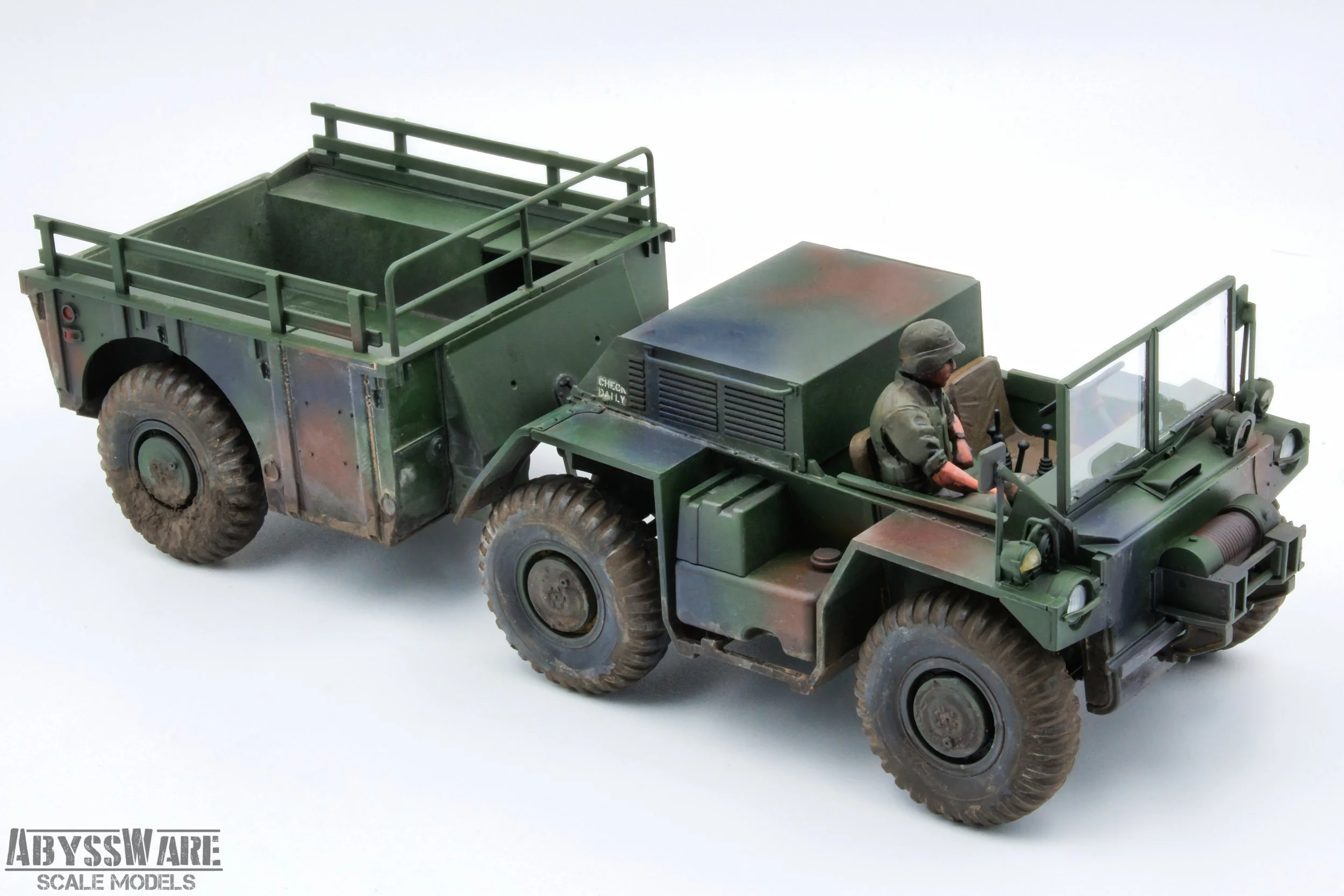
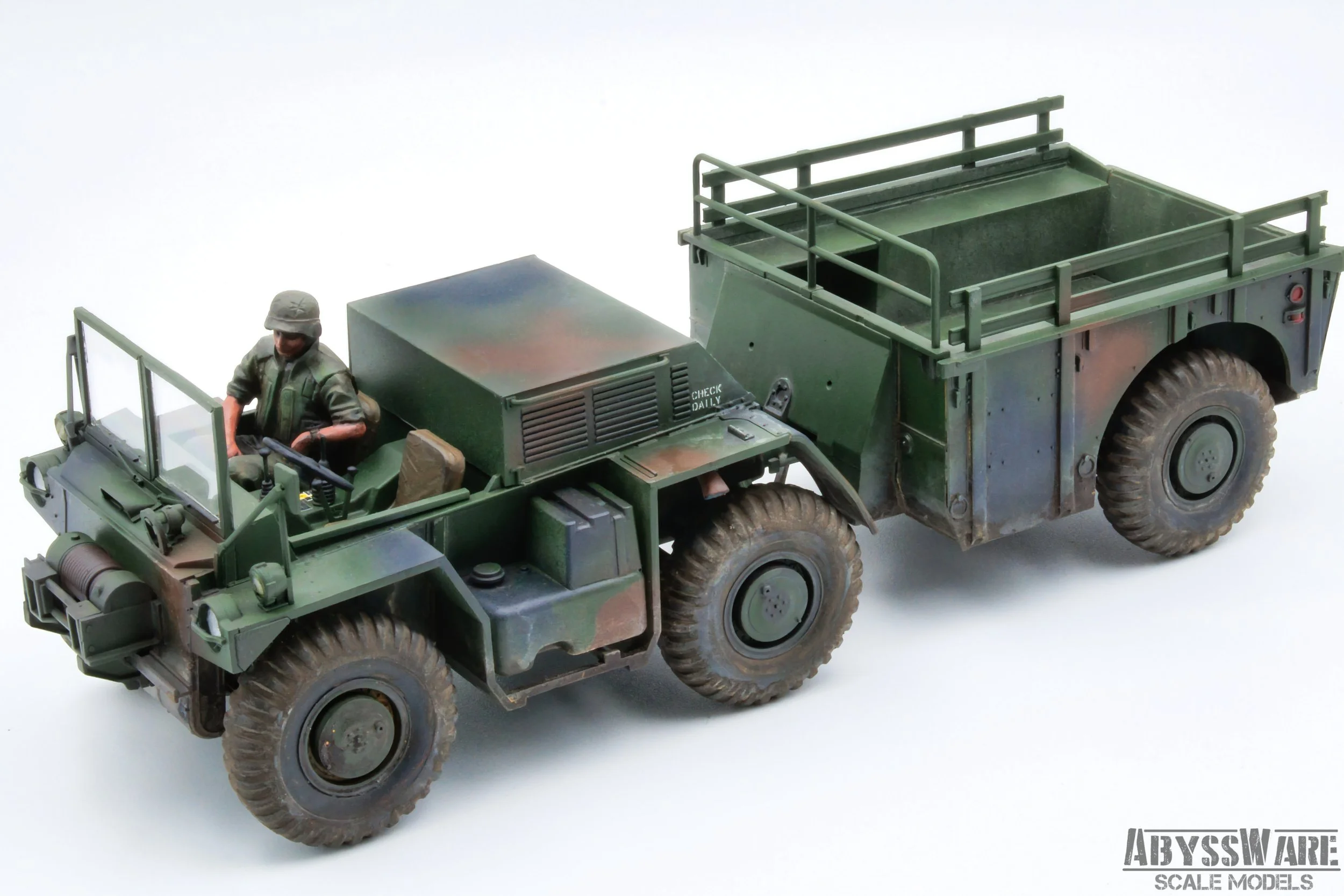
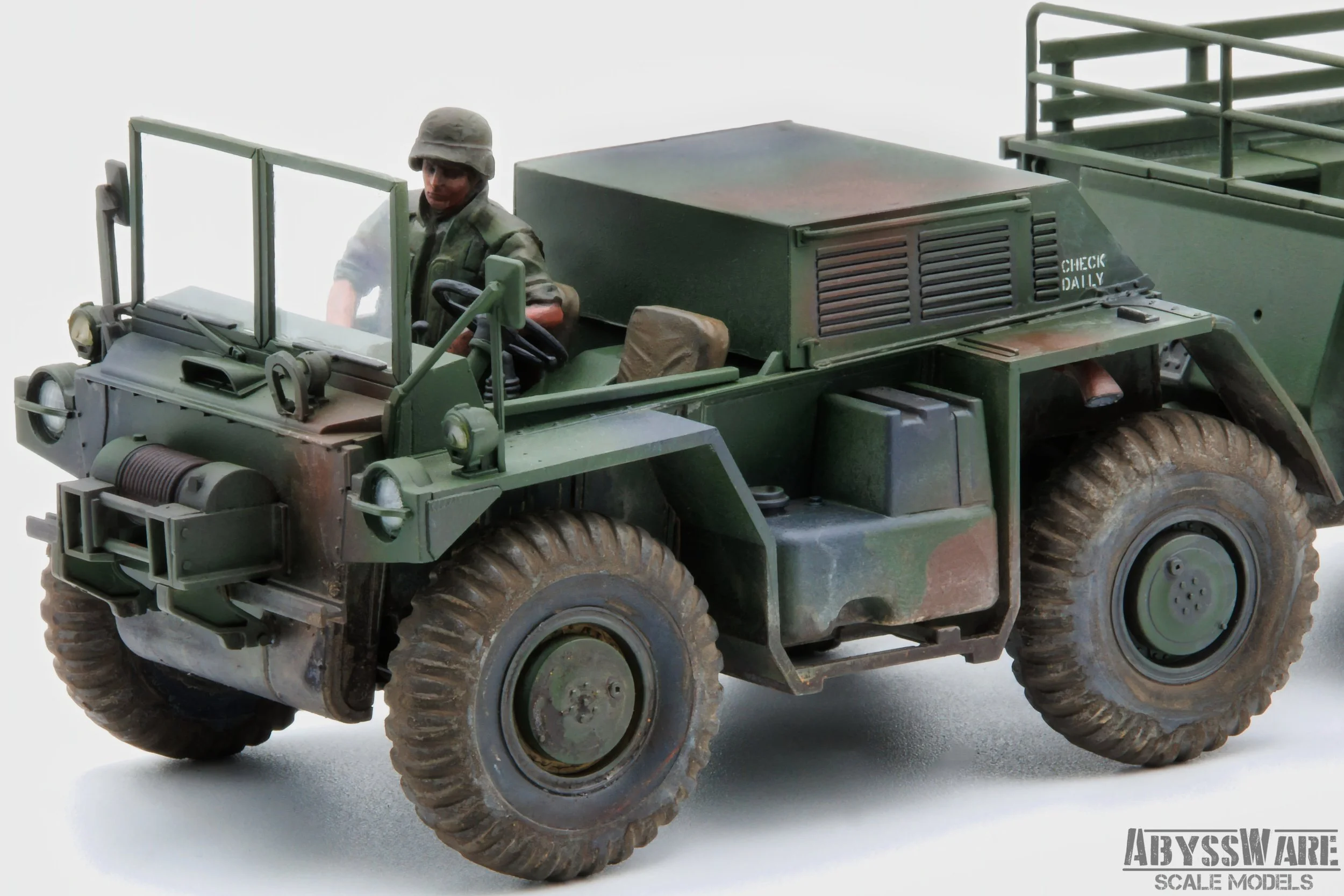
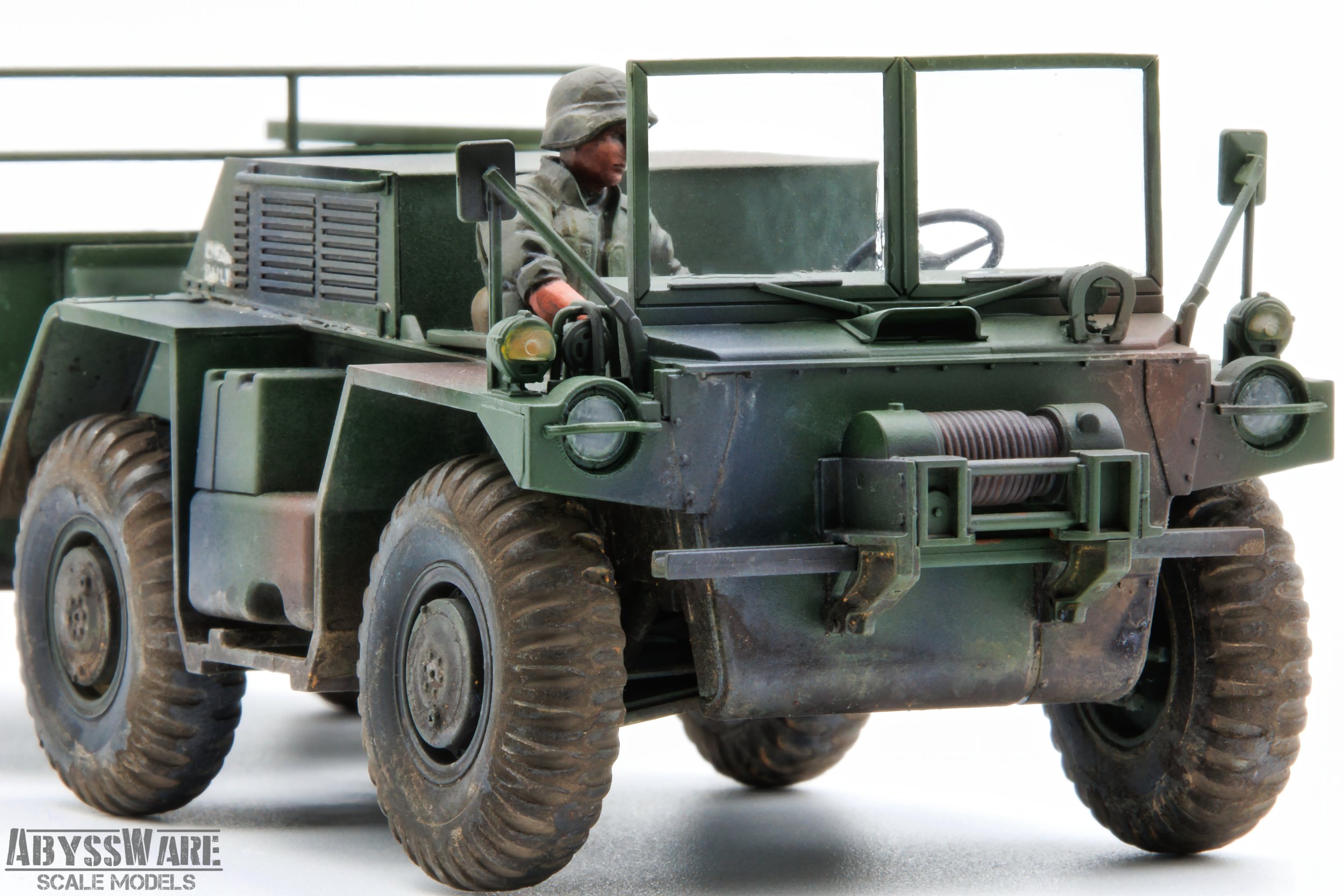
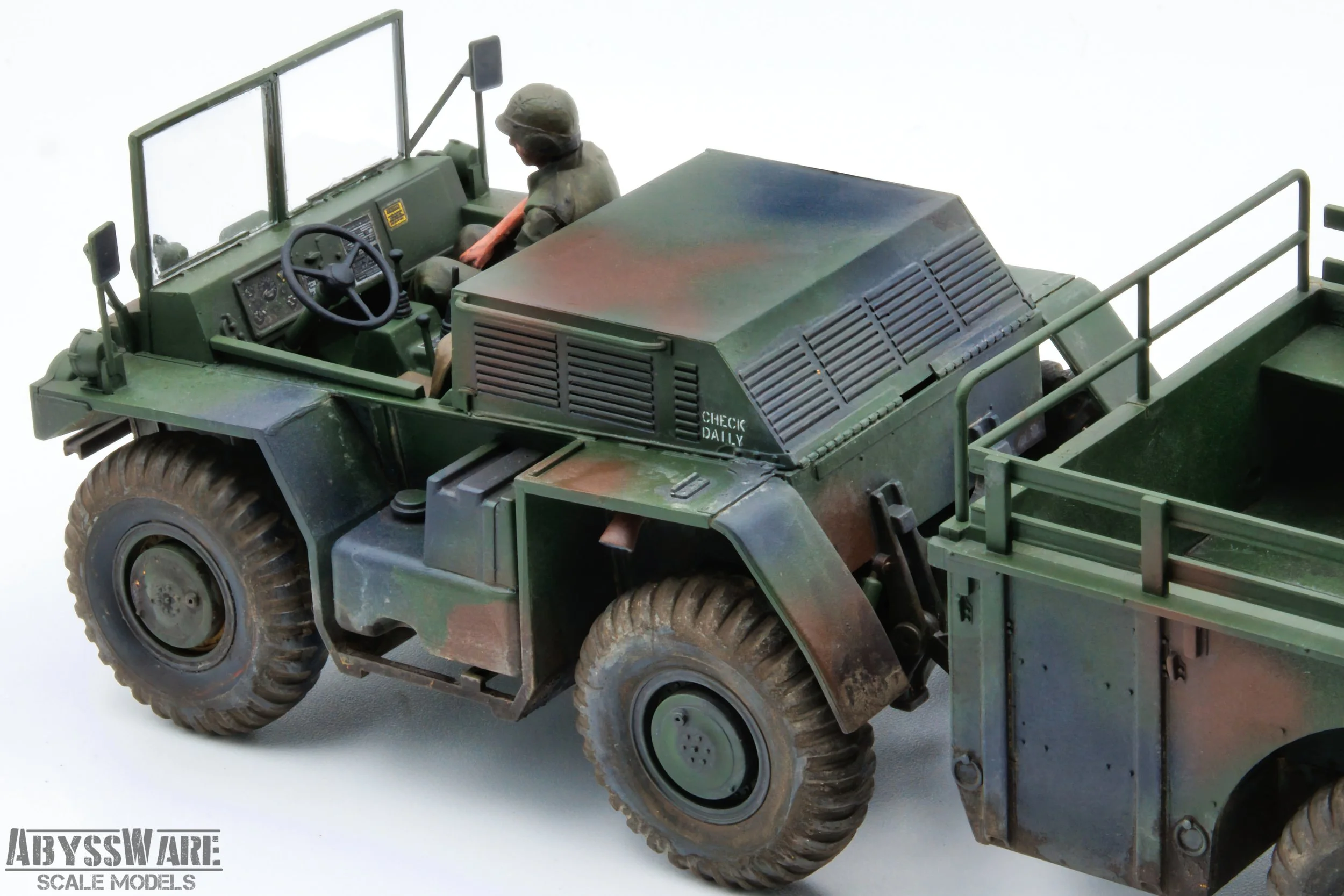
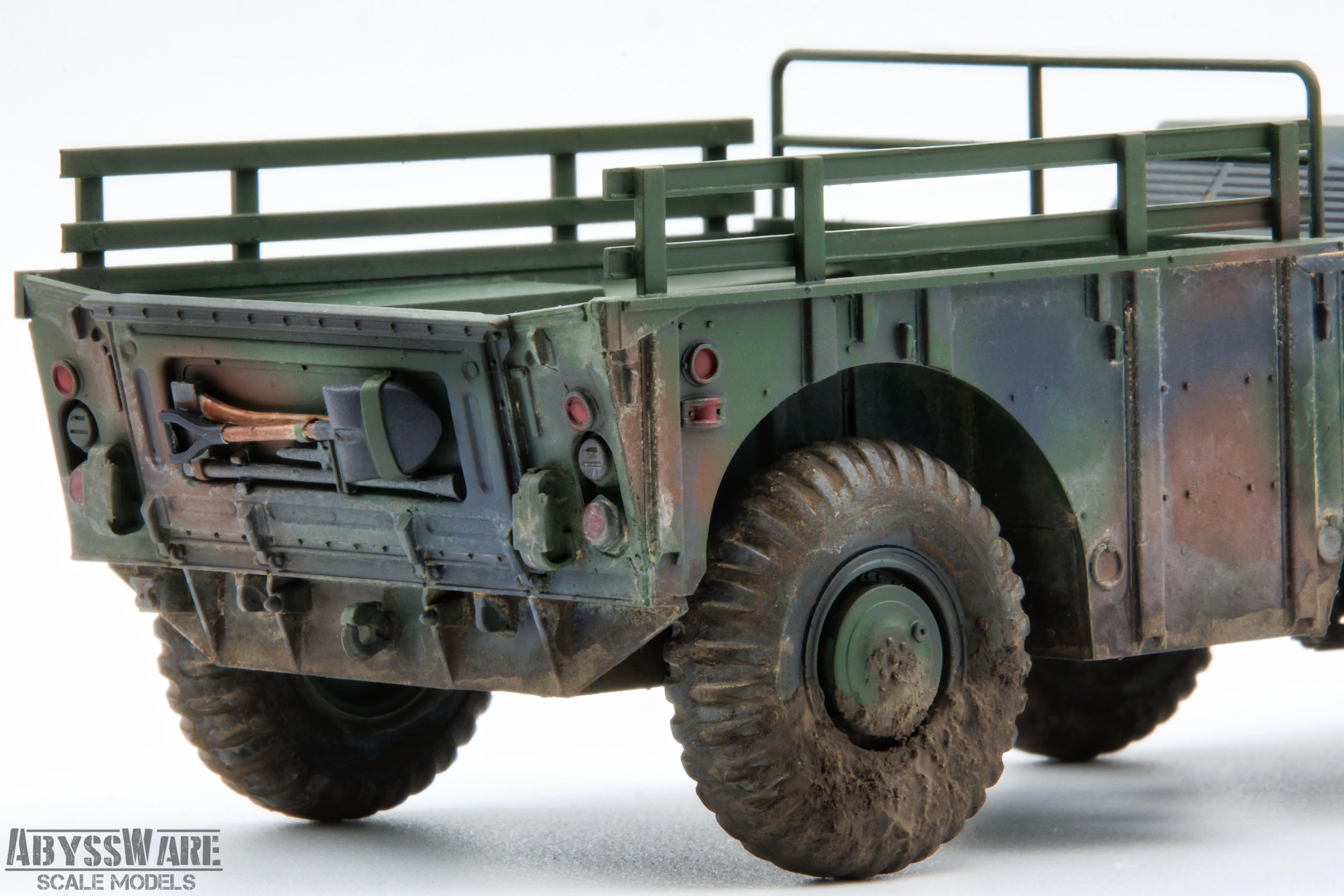
Note: The images presented bellow feature photographs of actual scale models, enhanced with AI-generated backgrounds and environments for visual effect. These visuals are intended for illustrative and artistic purposes only and should not be interpreted as real photographs or historical references.