
Jagdpanzer 38 (t) HETZER
TAKOM 2172X
SCALE 1/35
.
;
The Jagdpanzer 38(t), widely known by its post-war nickname "Hetzer" (meaning "baiter" or "chaser"), was a compact German tank destroyer developed during World War II and produced from 1944 to 1945. Built on the chassis of the Czechoslovak-designed Panzer 38(t), it emerged from the German military's urgent need for a cost-effective, easily mass-produced armored fighting vehicle capable of countering increasingly formidable Allied armor.
Measuring roughly 6.4 meters in length and weighing approximately 16 tons, the Hetzer was small, agile, and notably difficult to spot on the battlefield. Its heavily sloped frontal armor - up to 60mm thick - offered excellent protective qualities relative to its weight class, as the angled plates effectively increased the thickness an incoming shell had to penetrate. The vehicle's primary armament was a 7.5 cm PaK 39 L/48 anti-tank gun, mounted in a fixed casemate superstructure rather than a rotating turret. While this design choice limited traverse and necessitated aiming the entire vehicle at a target, it simplified manufacturing and allowed for a lower silhouette, making the Hetzer an effective ambush predator.
Powered by a Praga AC gasoline engine producing around 160 horsepower, it could reach road speeds of about 40 km/h. Crewed by four men - commander, gunner, loader, and driver - the Hetzer served primarily on both the Eastern and Western Fronts during the final year of the war. Despite cramped interior conditions and limited gun traverse, its combination of good firepower, strong frontal protection, low profile, and economical production made it one of the most successful German vehicle designs of the late war period. Approximately 2,800 units were manufactured, and some examples continued in military service decades after 1945.
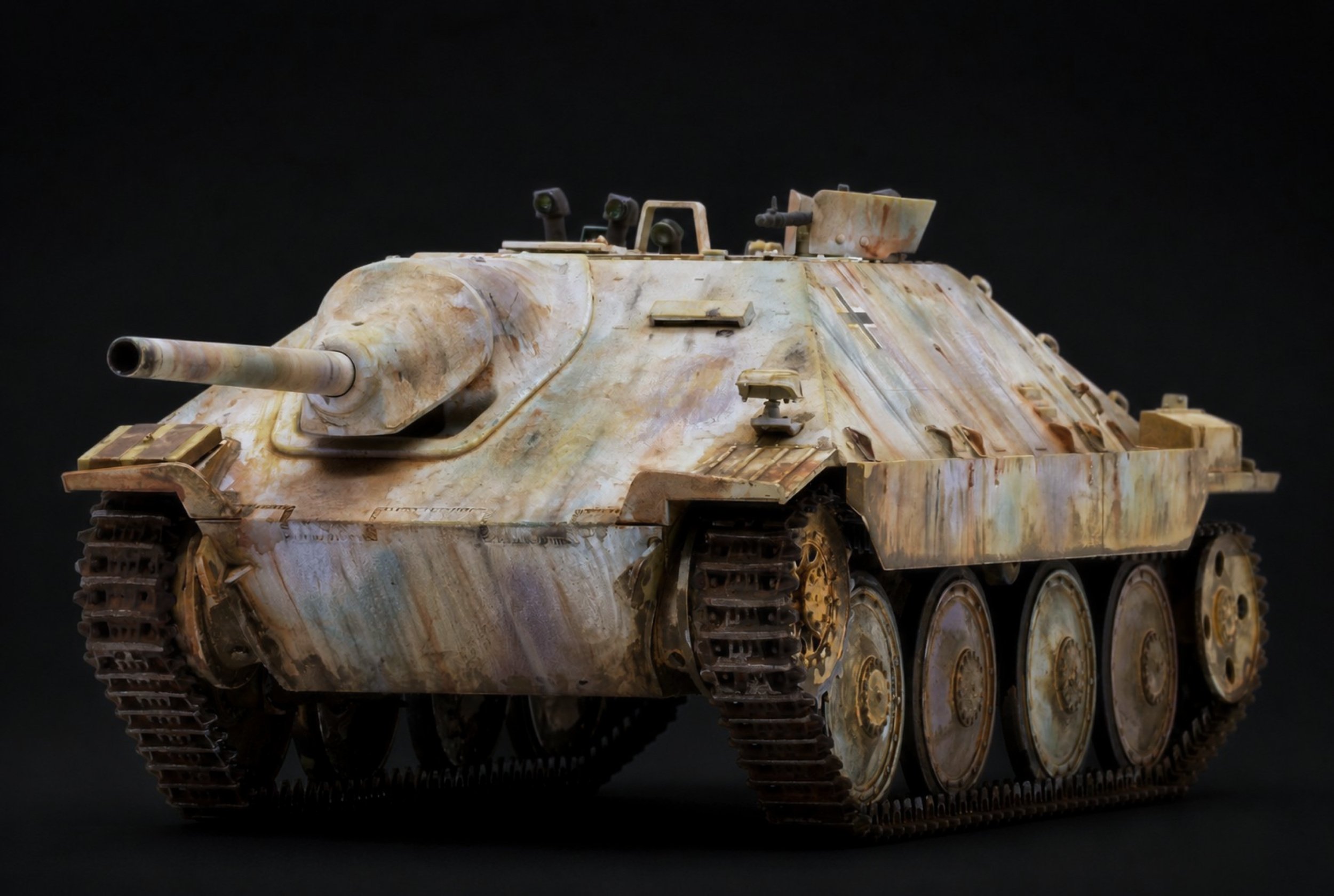
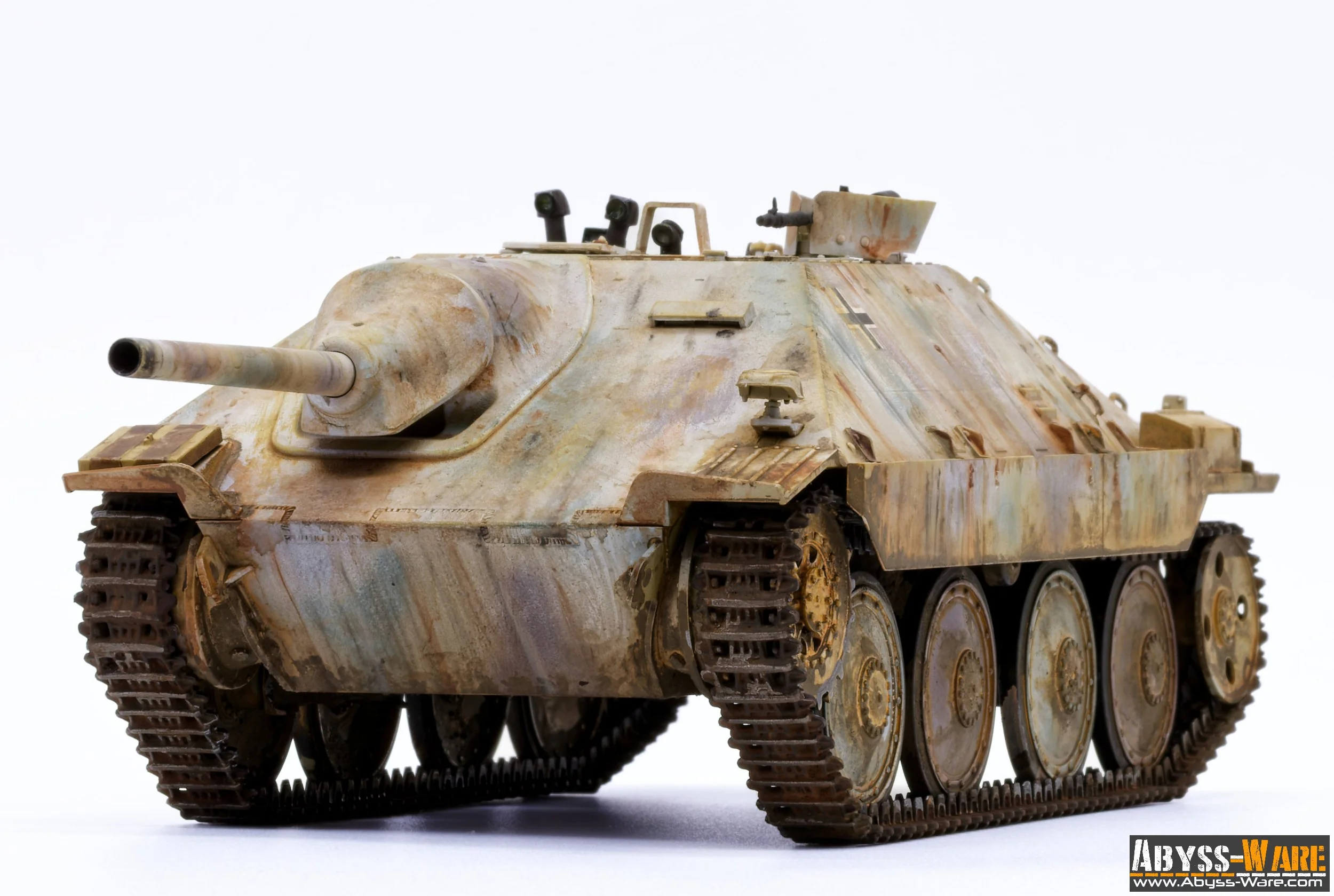
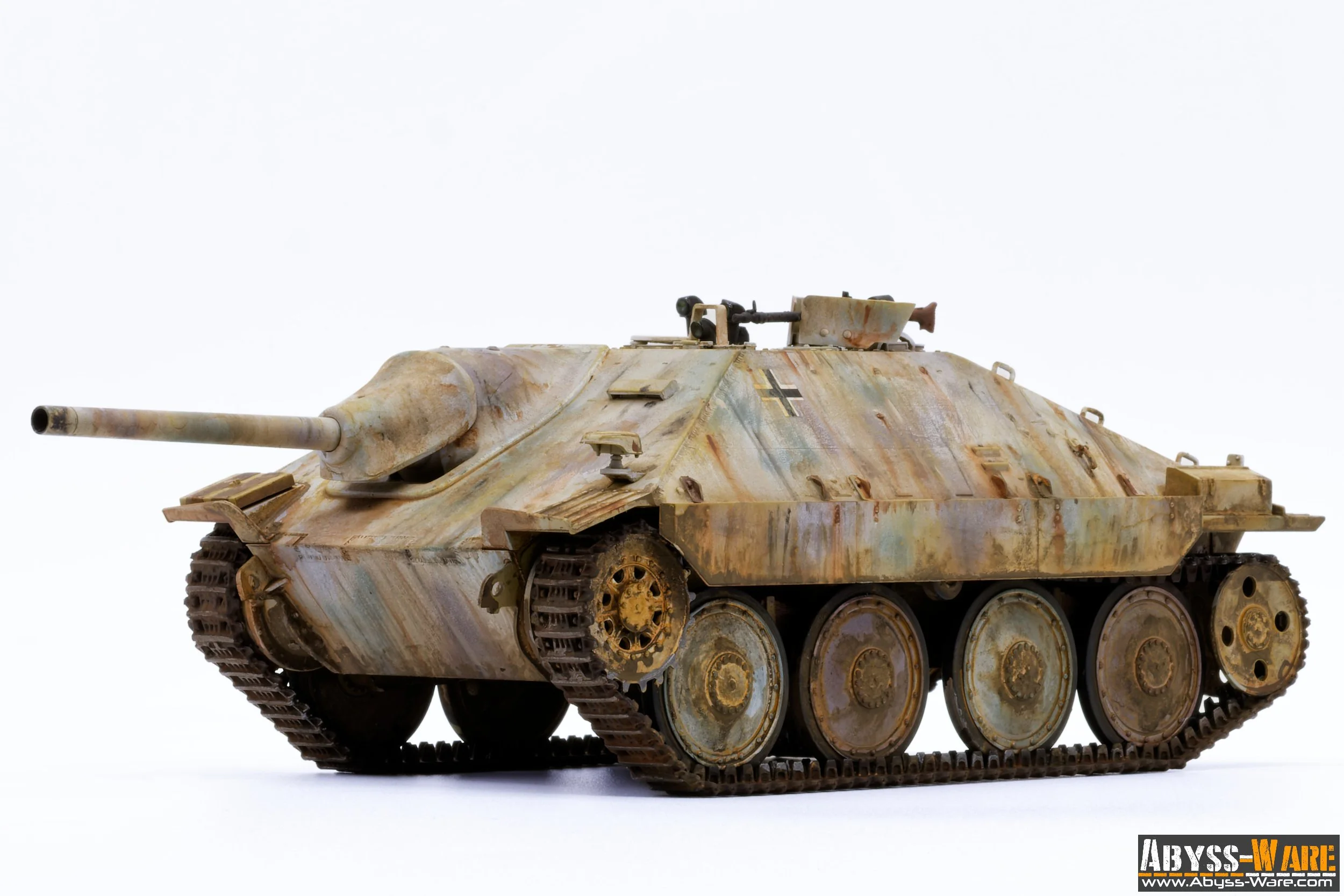
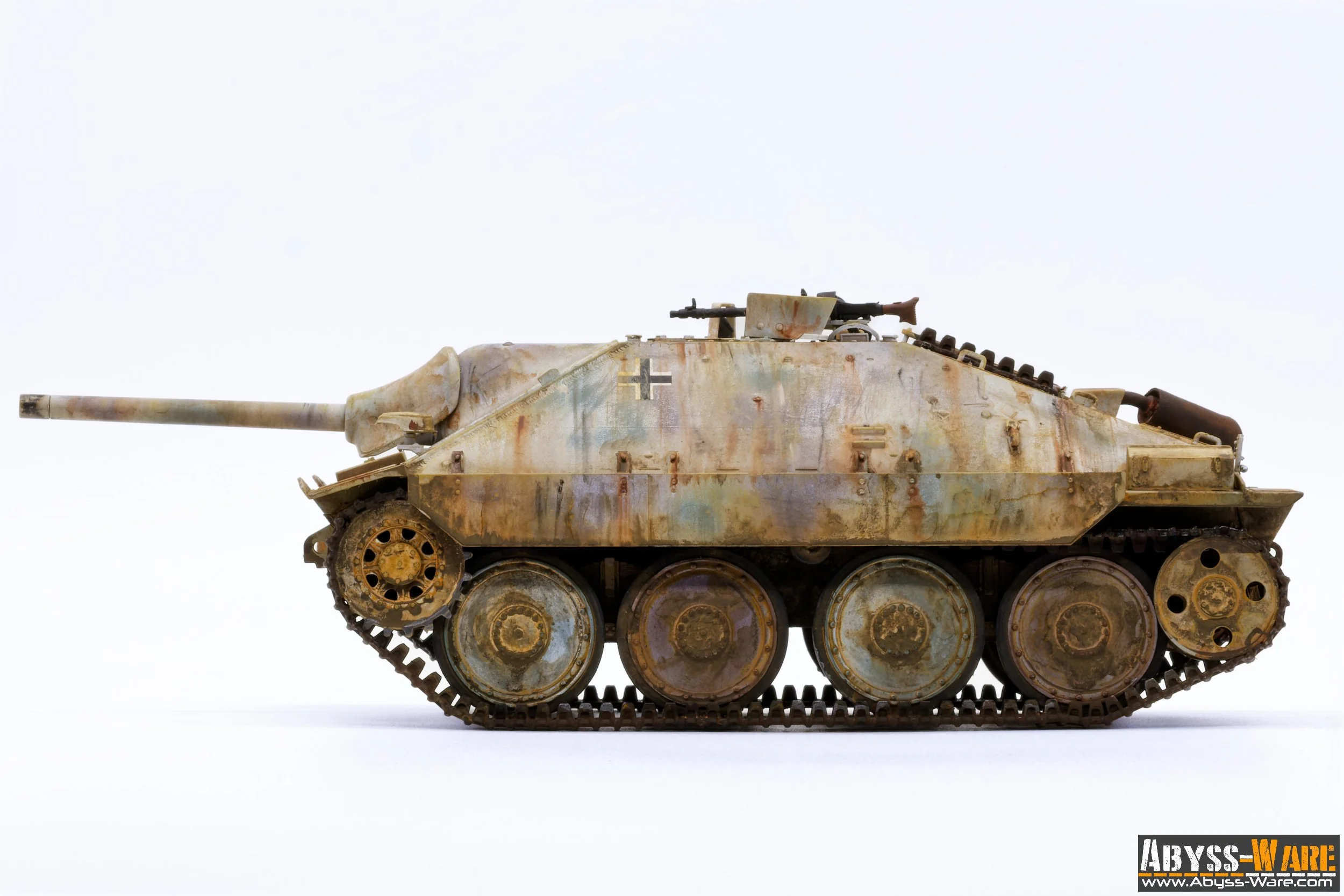
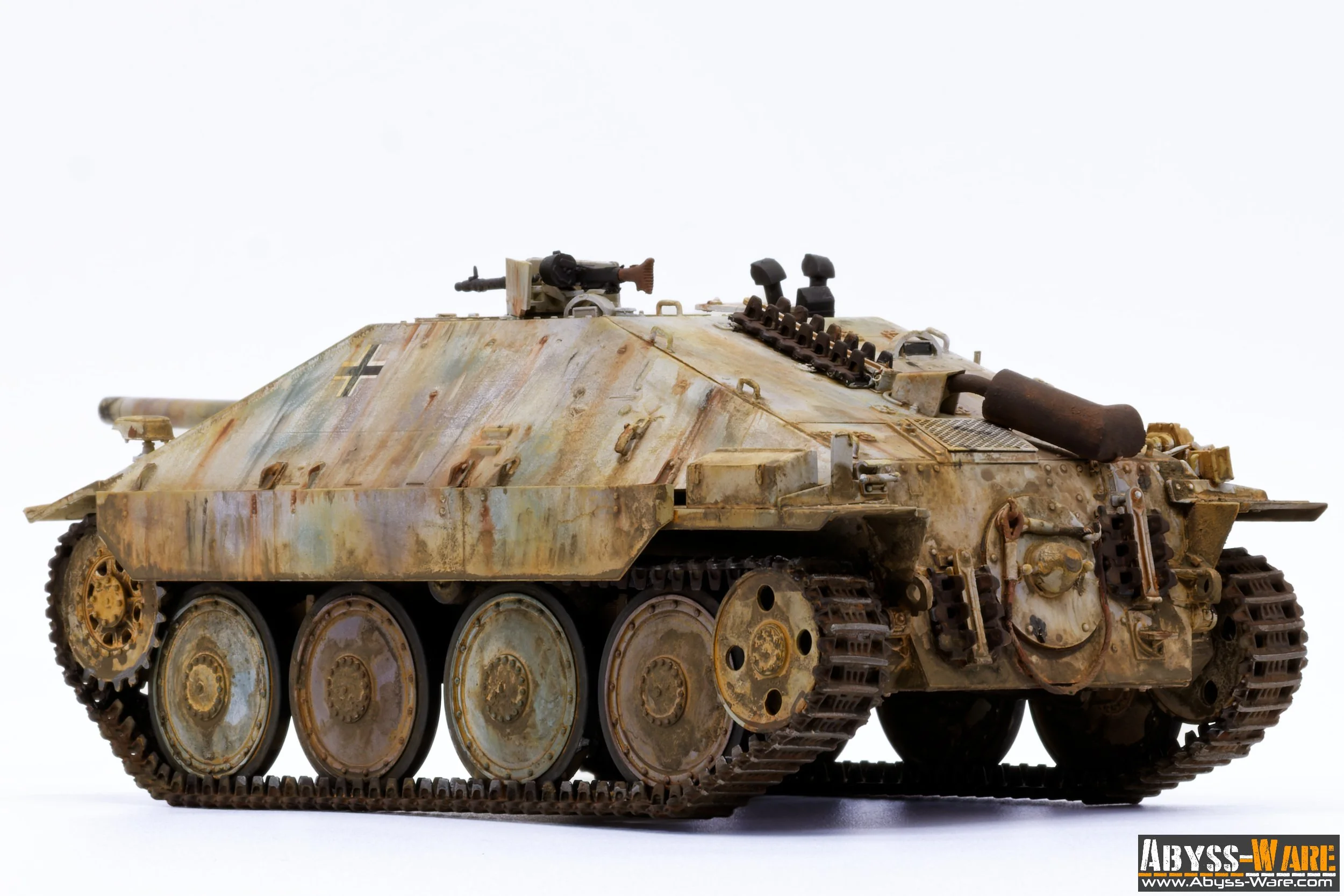
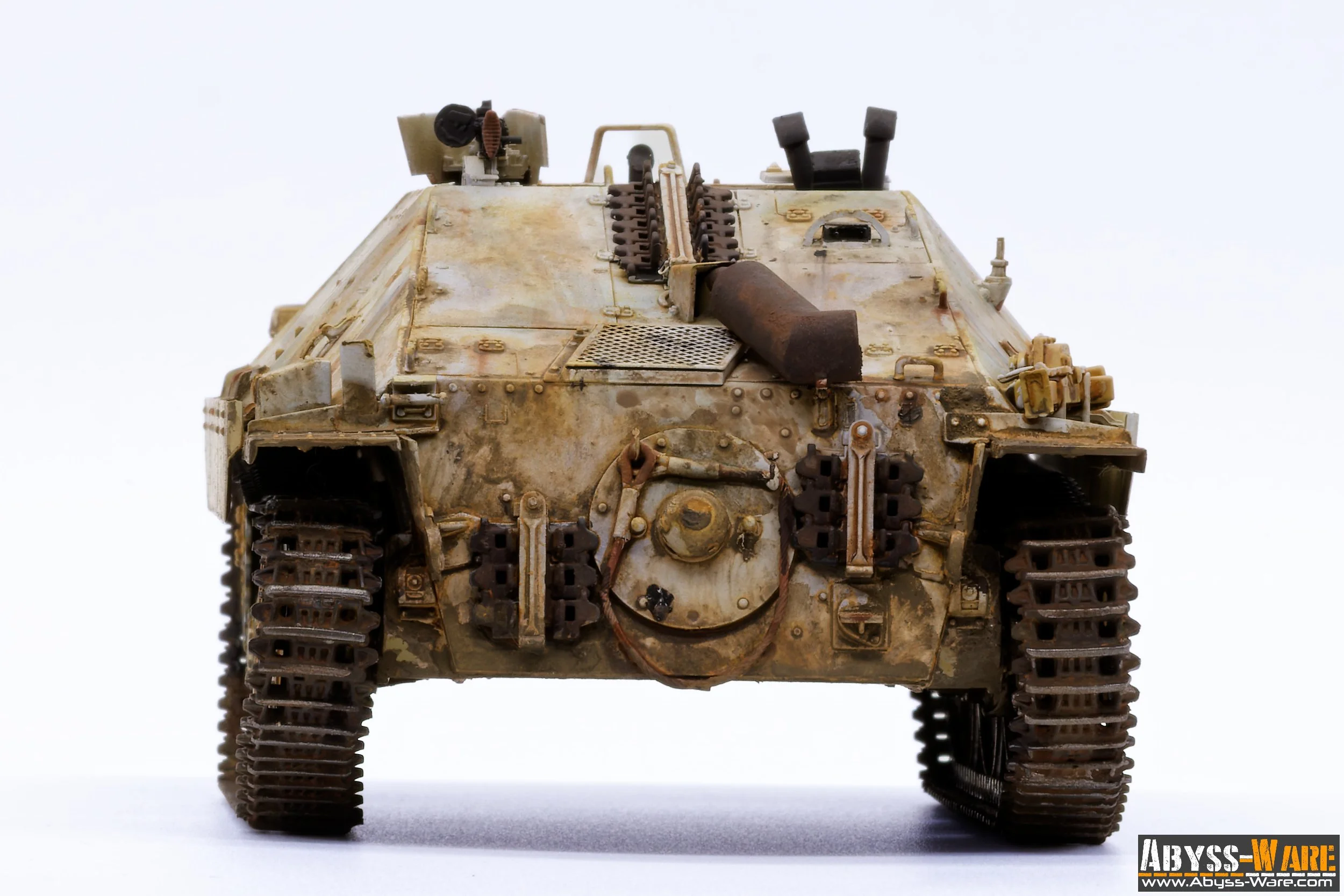
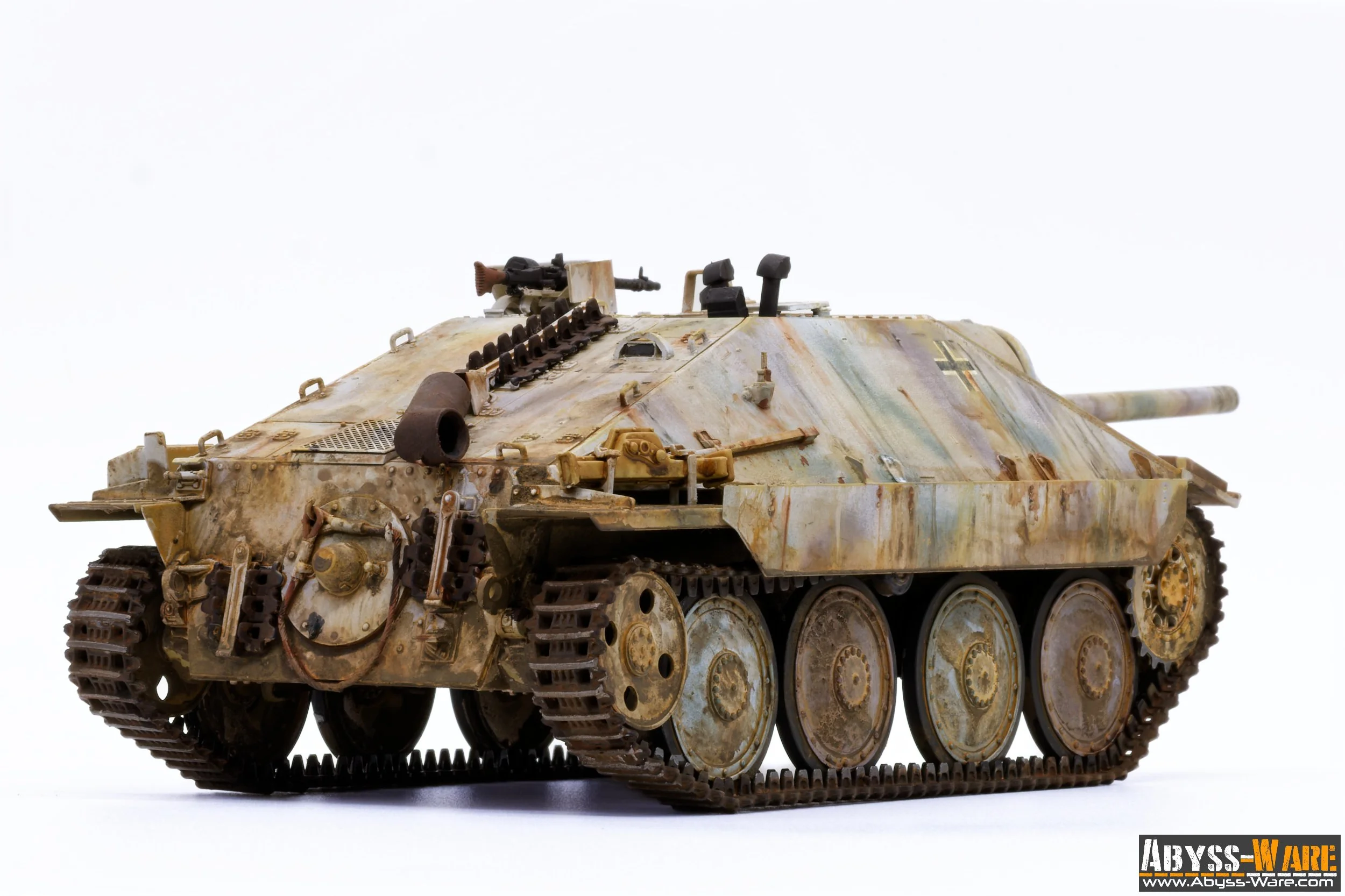
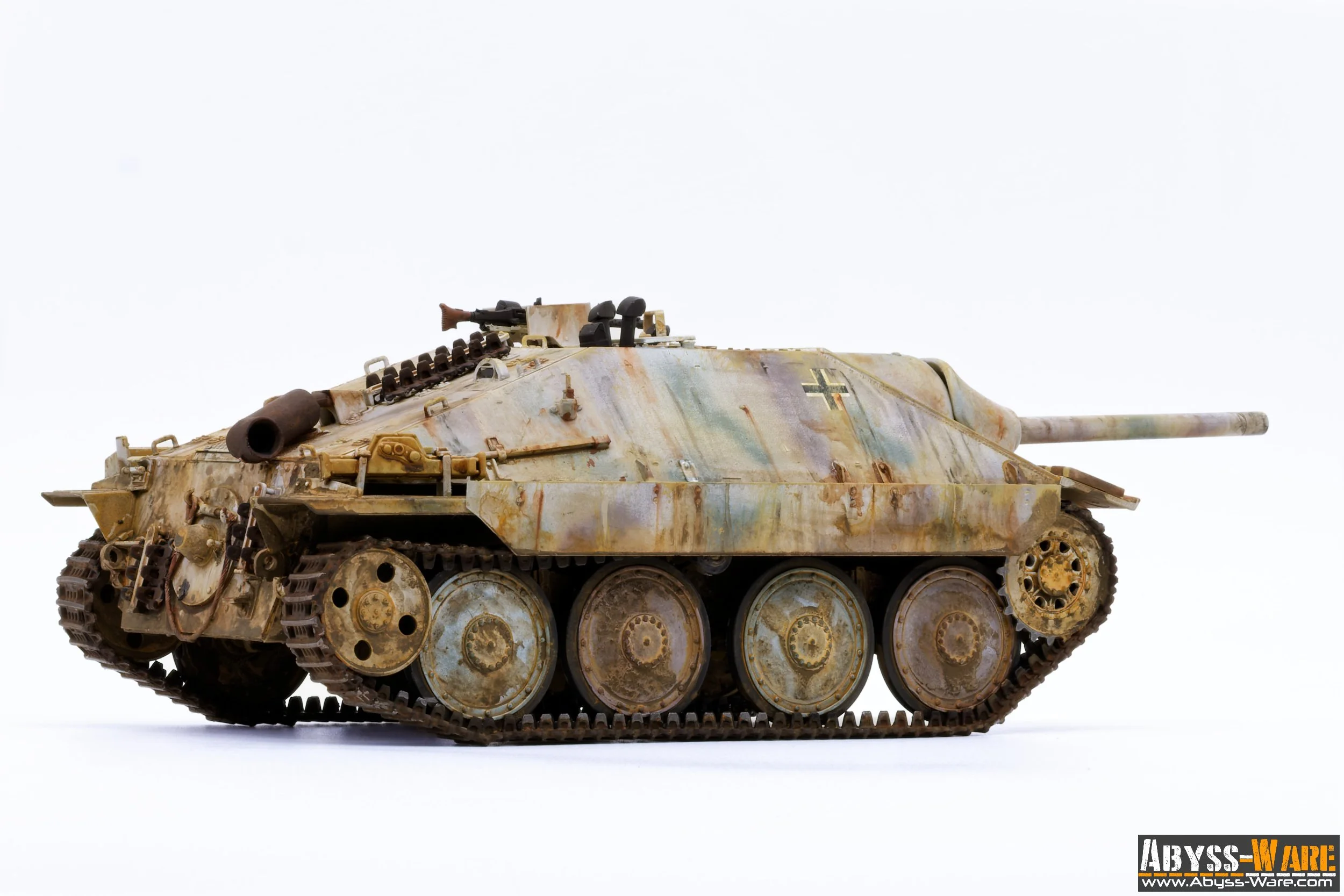
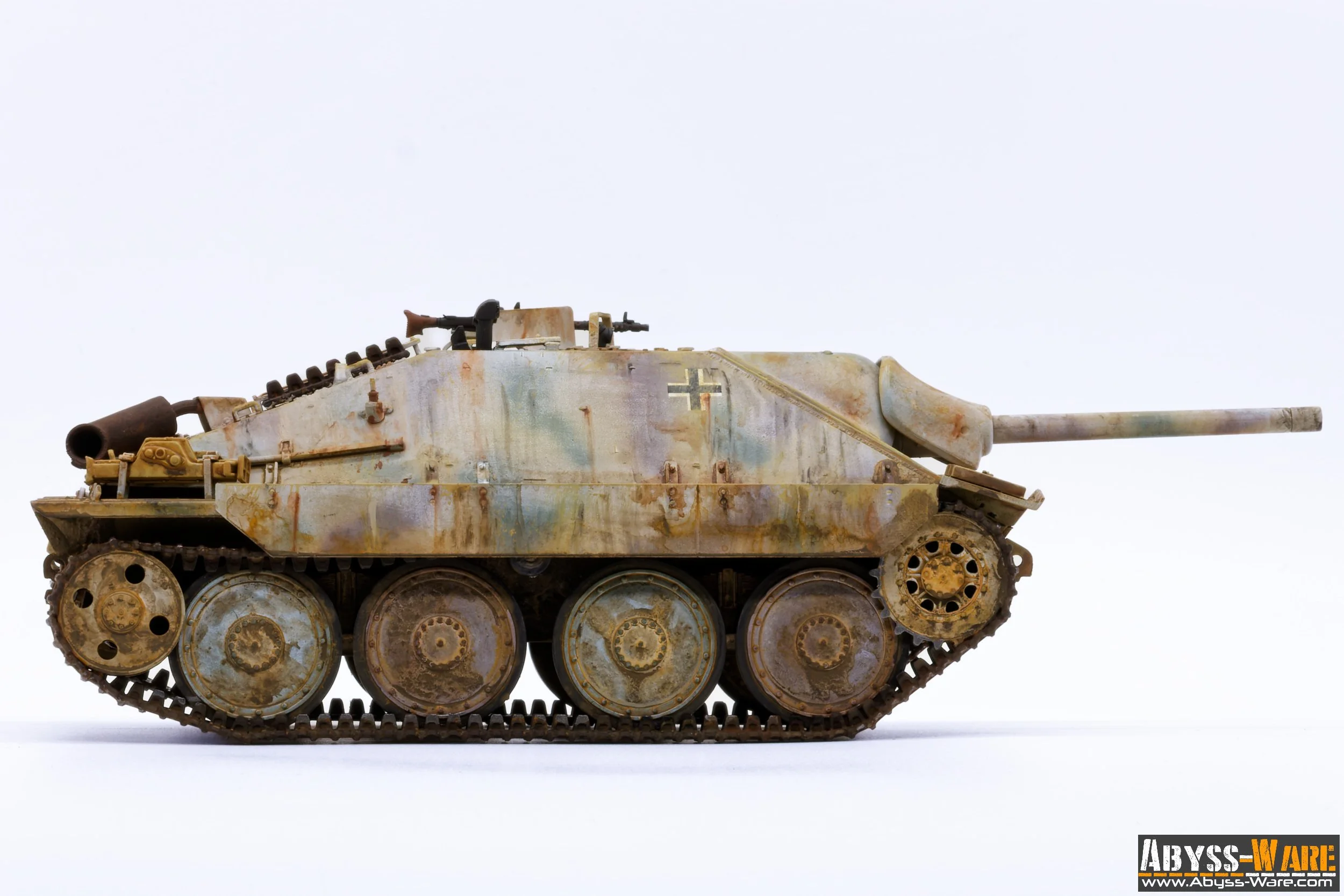
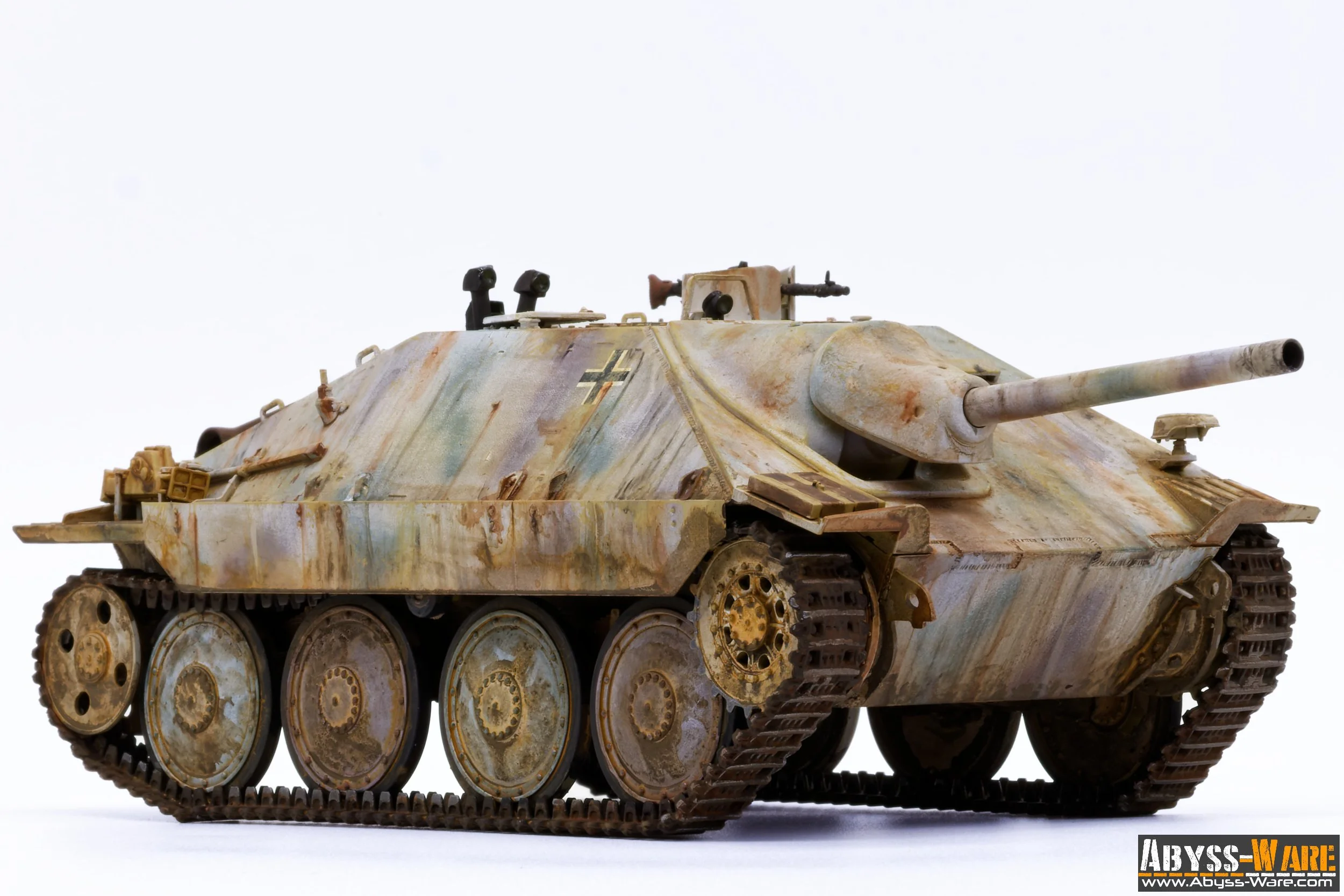
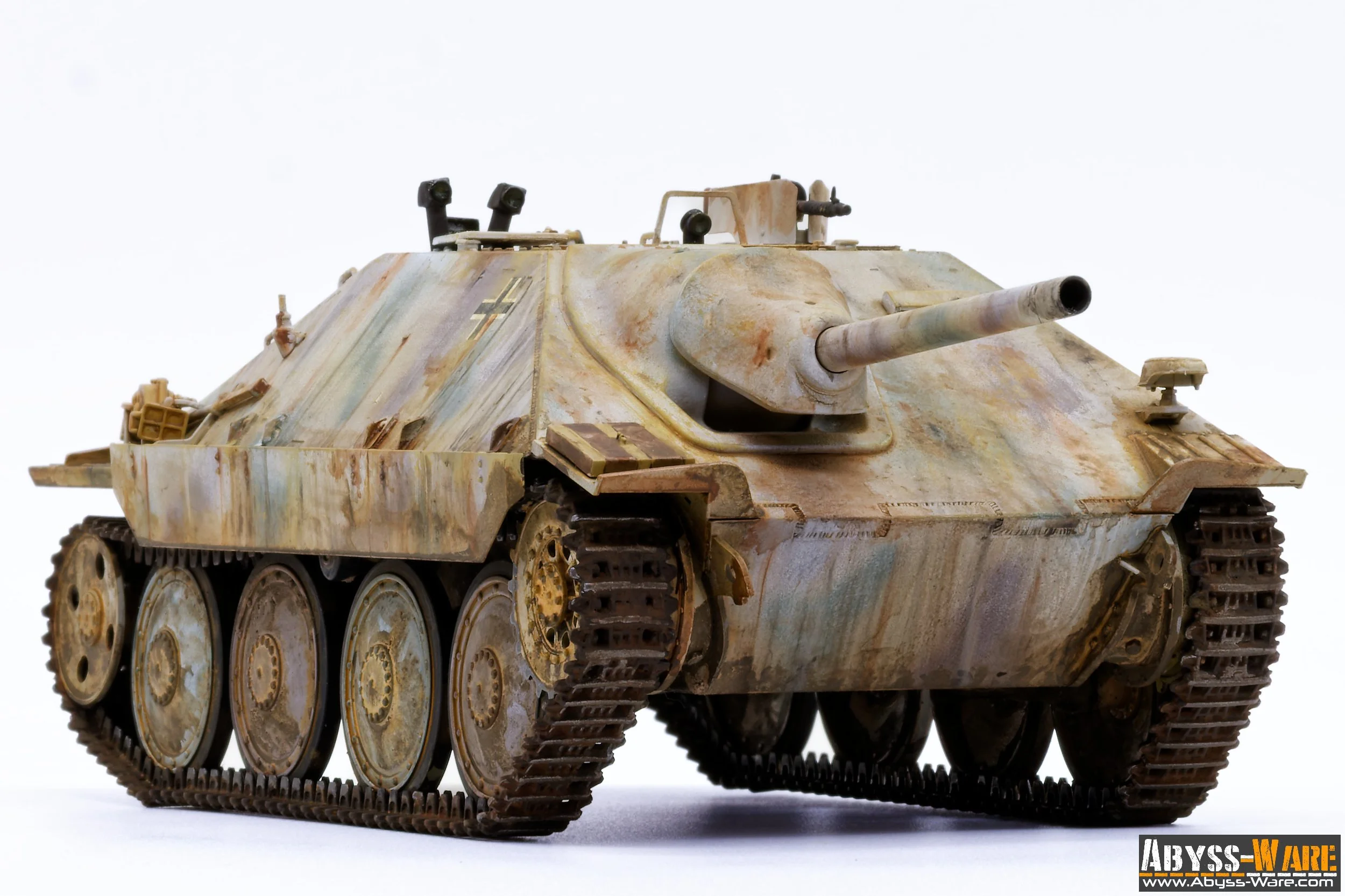
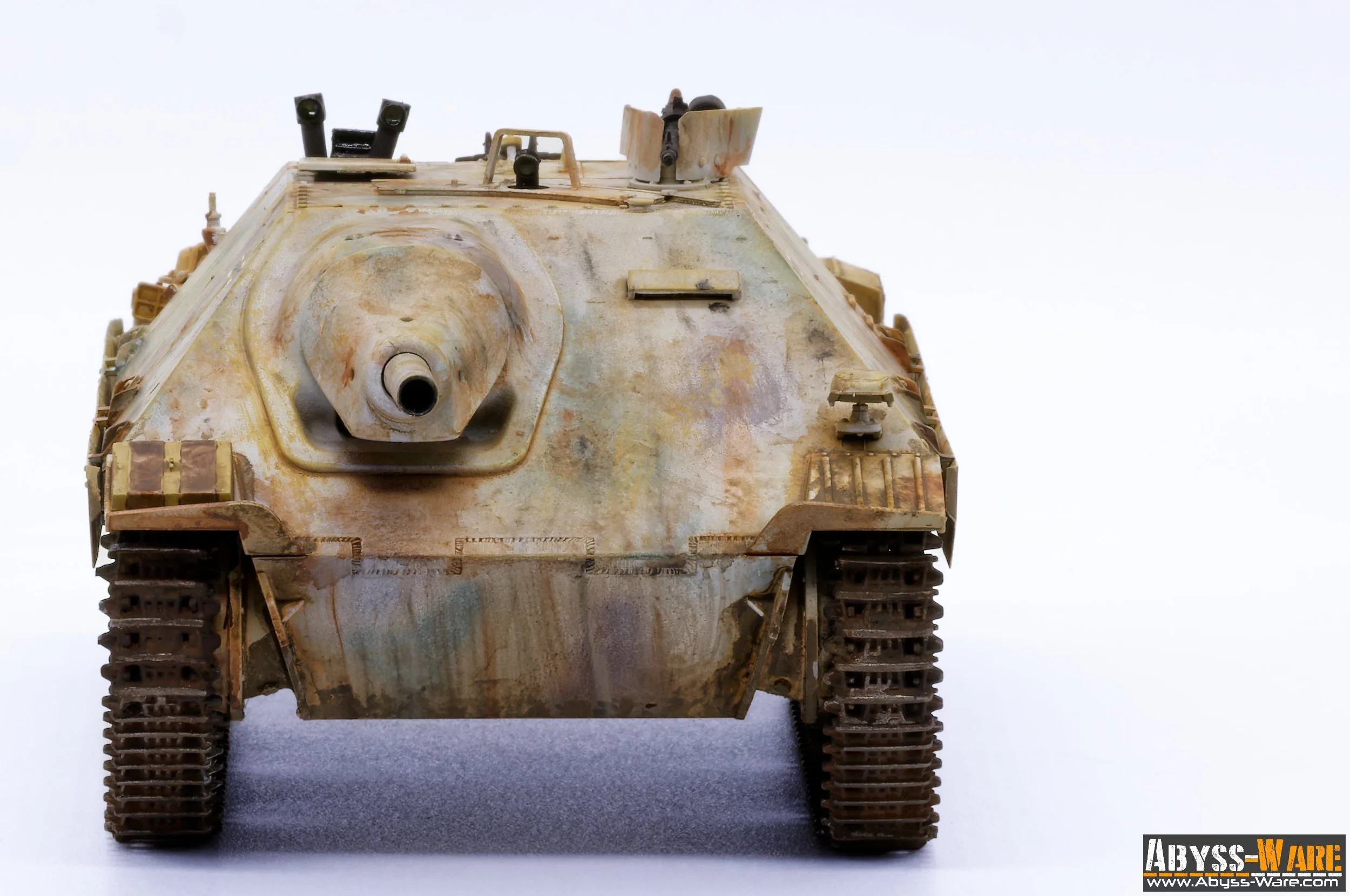
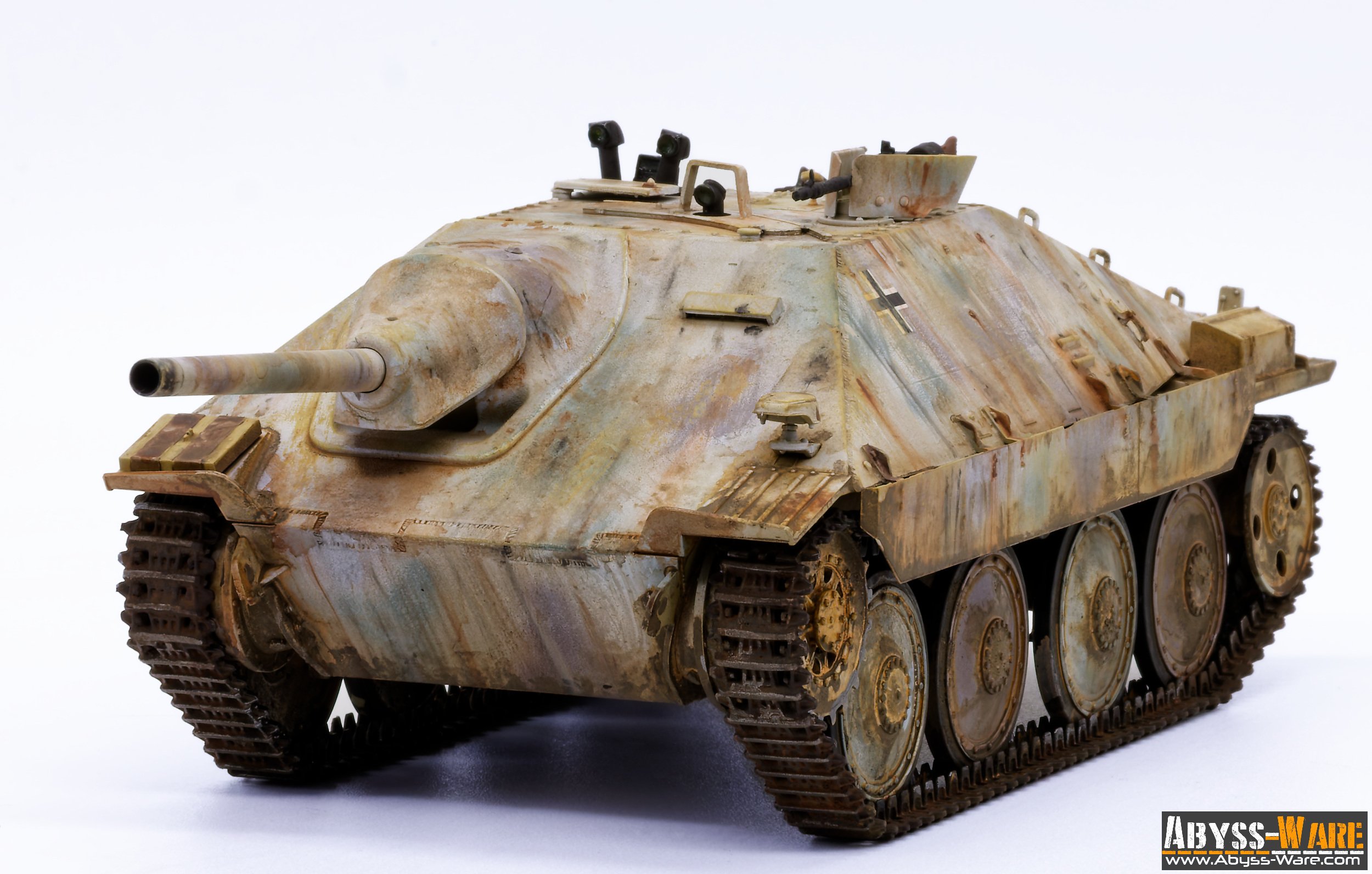
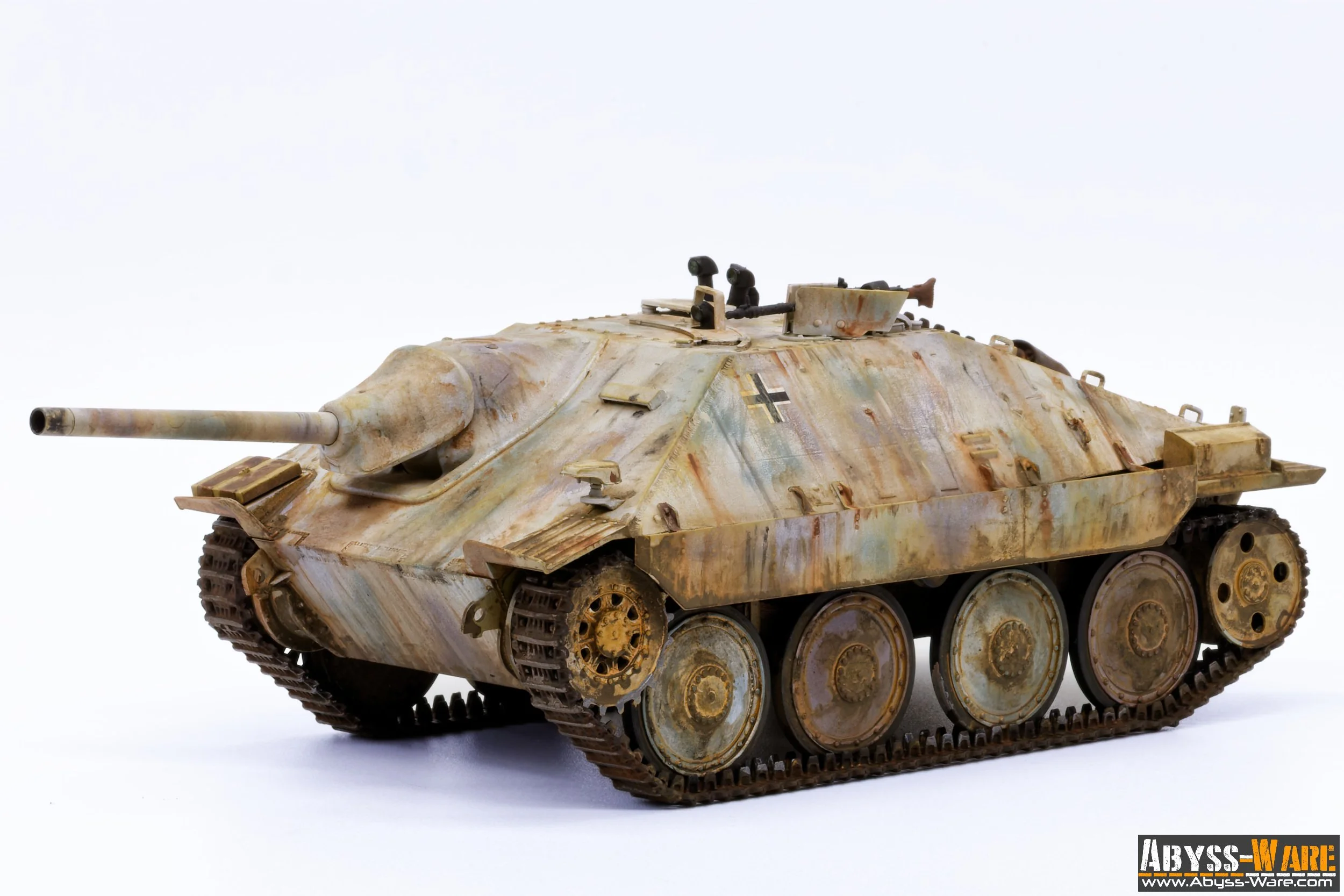
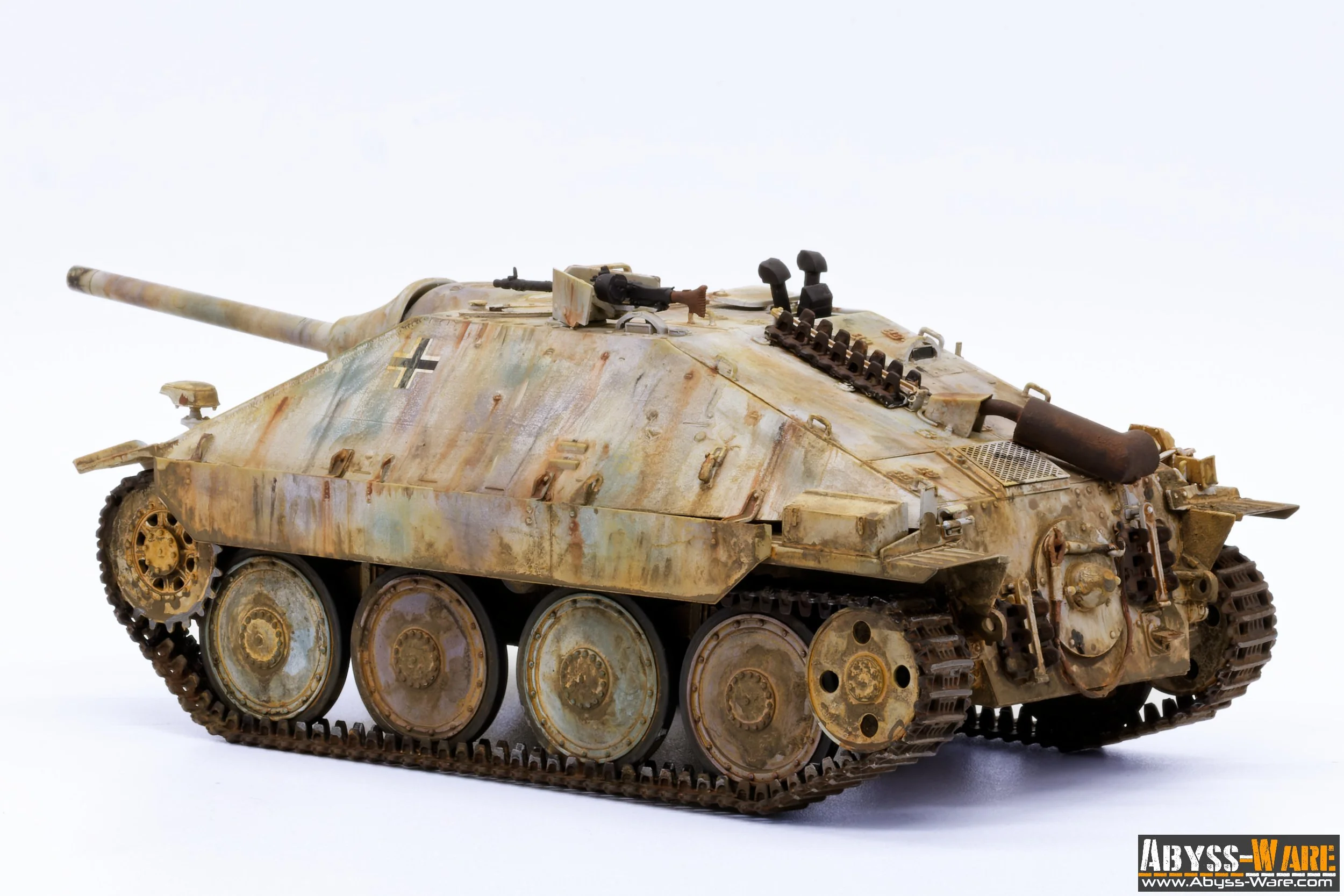
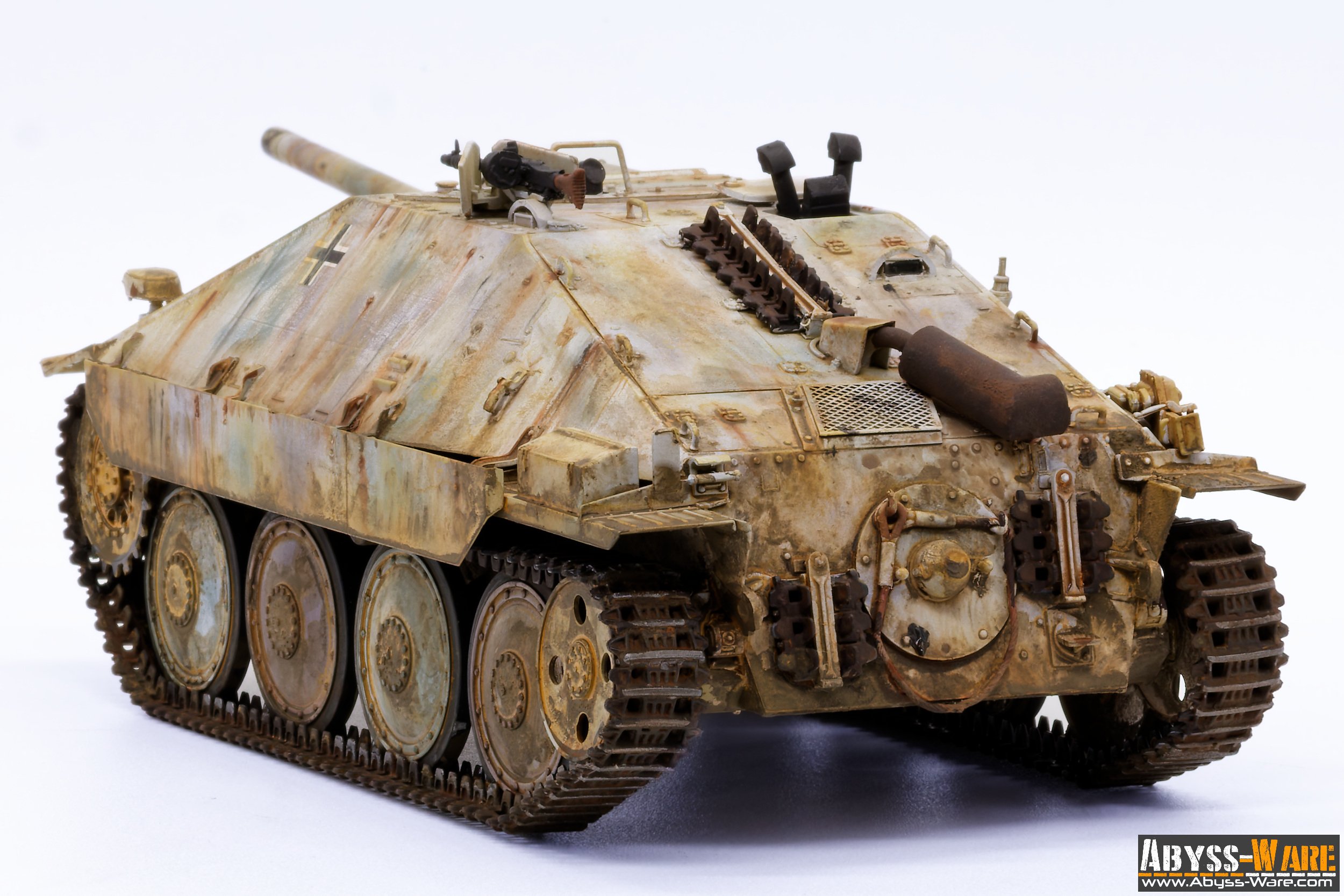
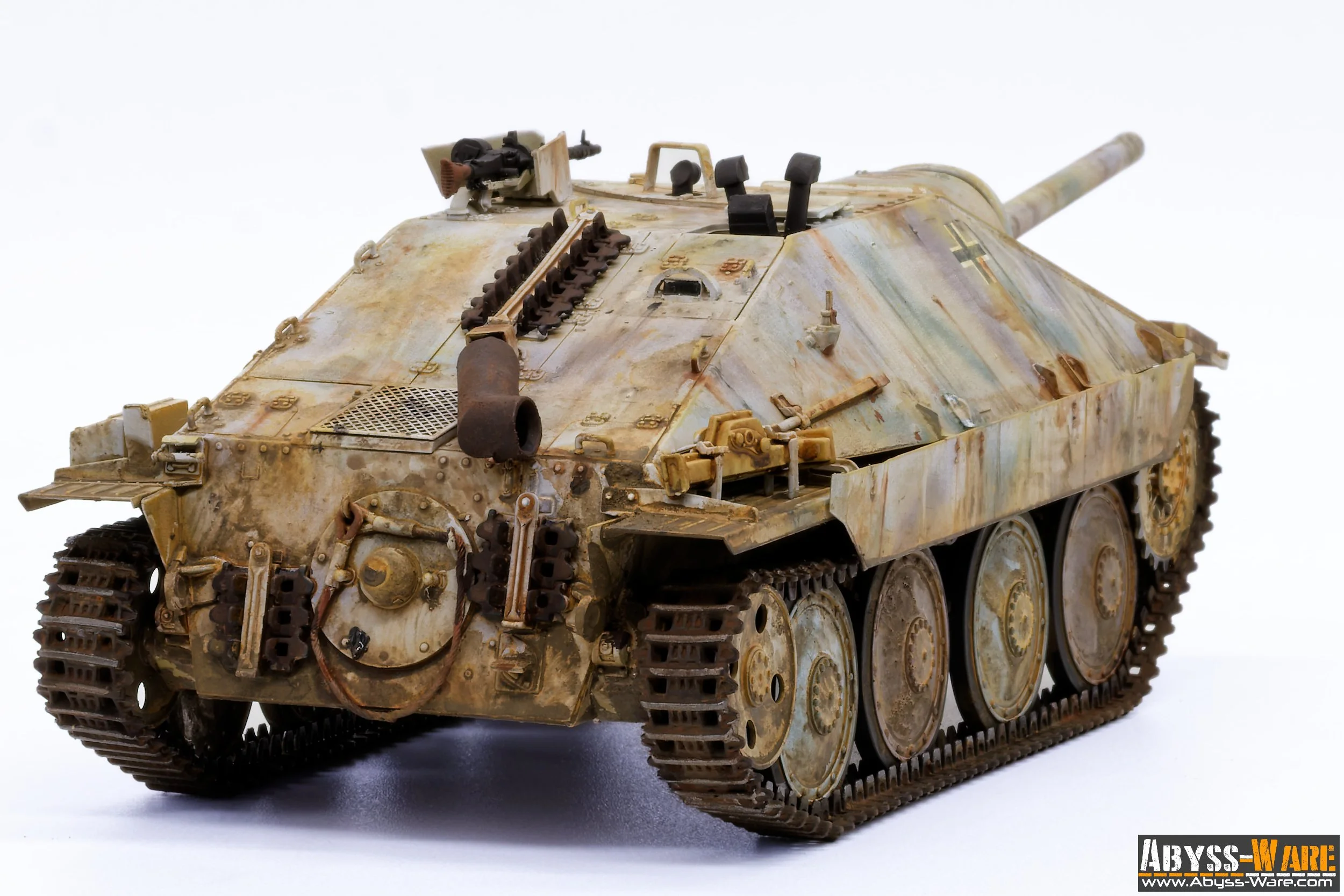
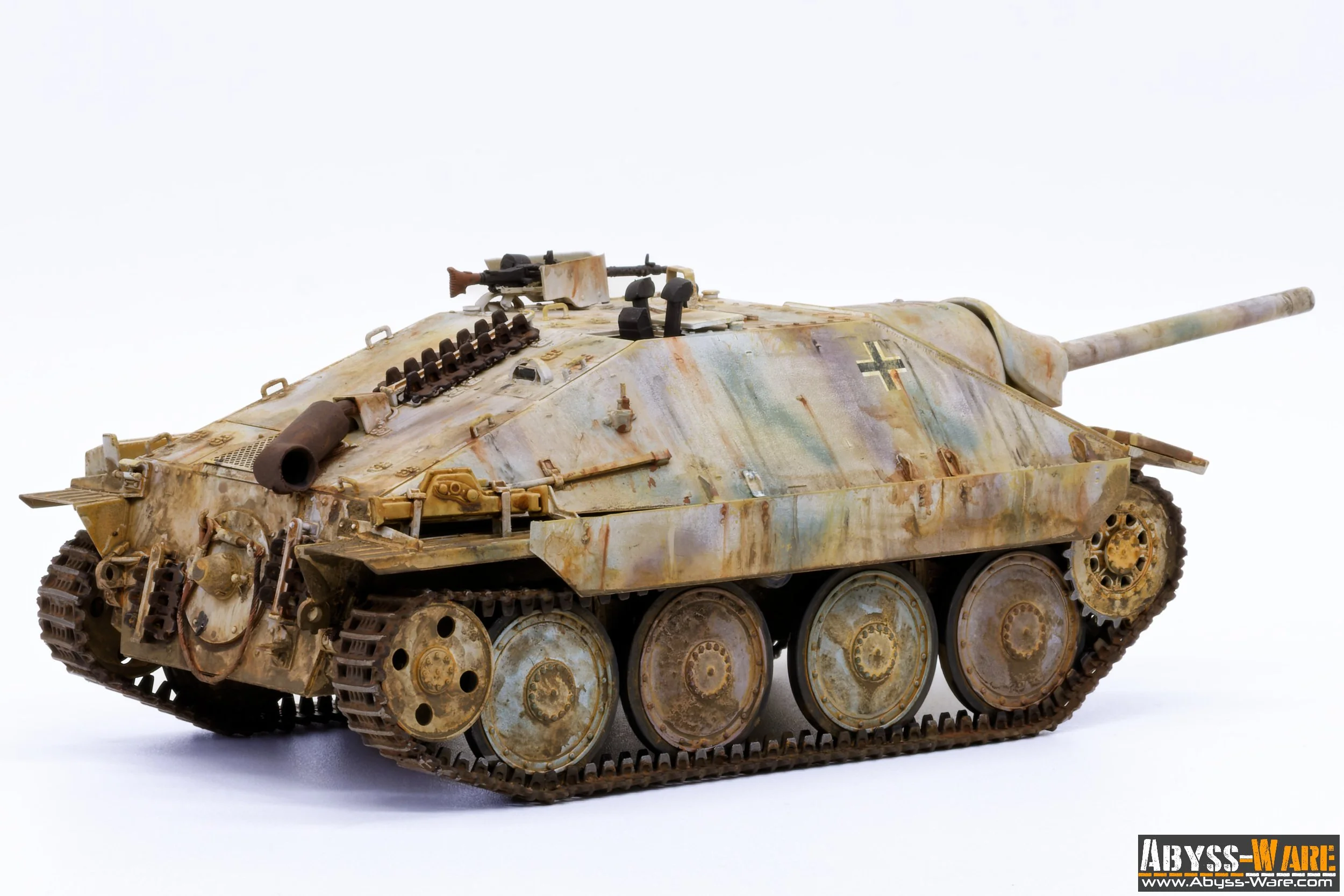
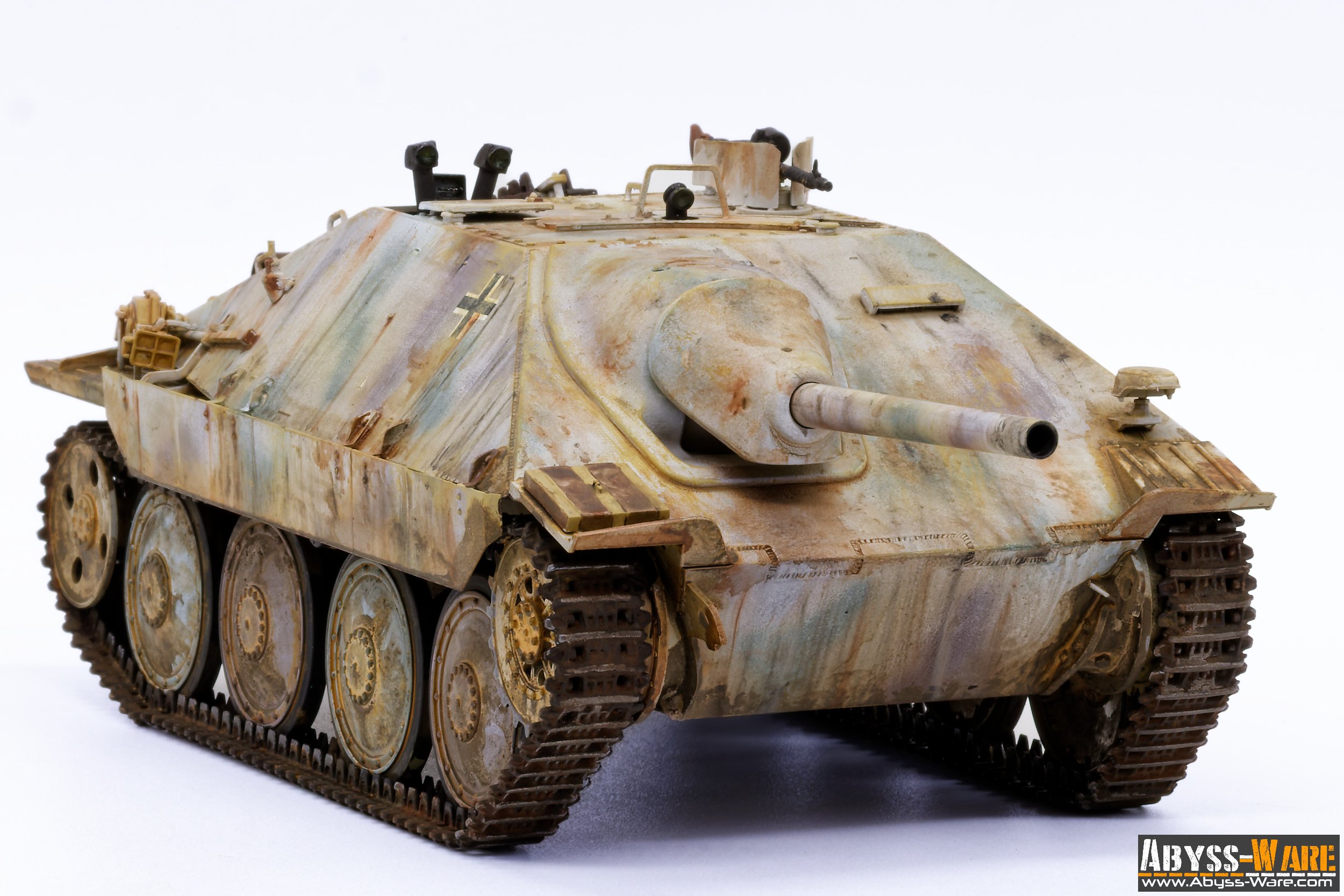
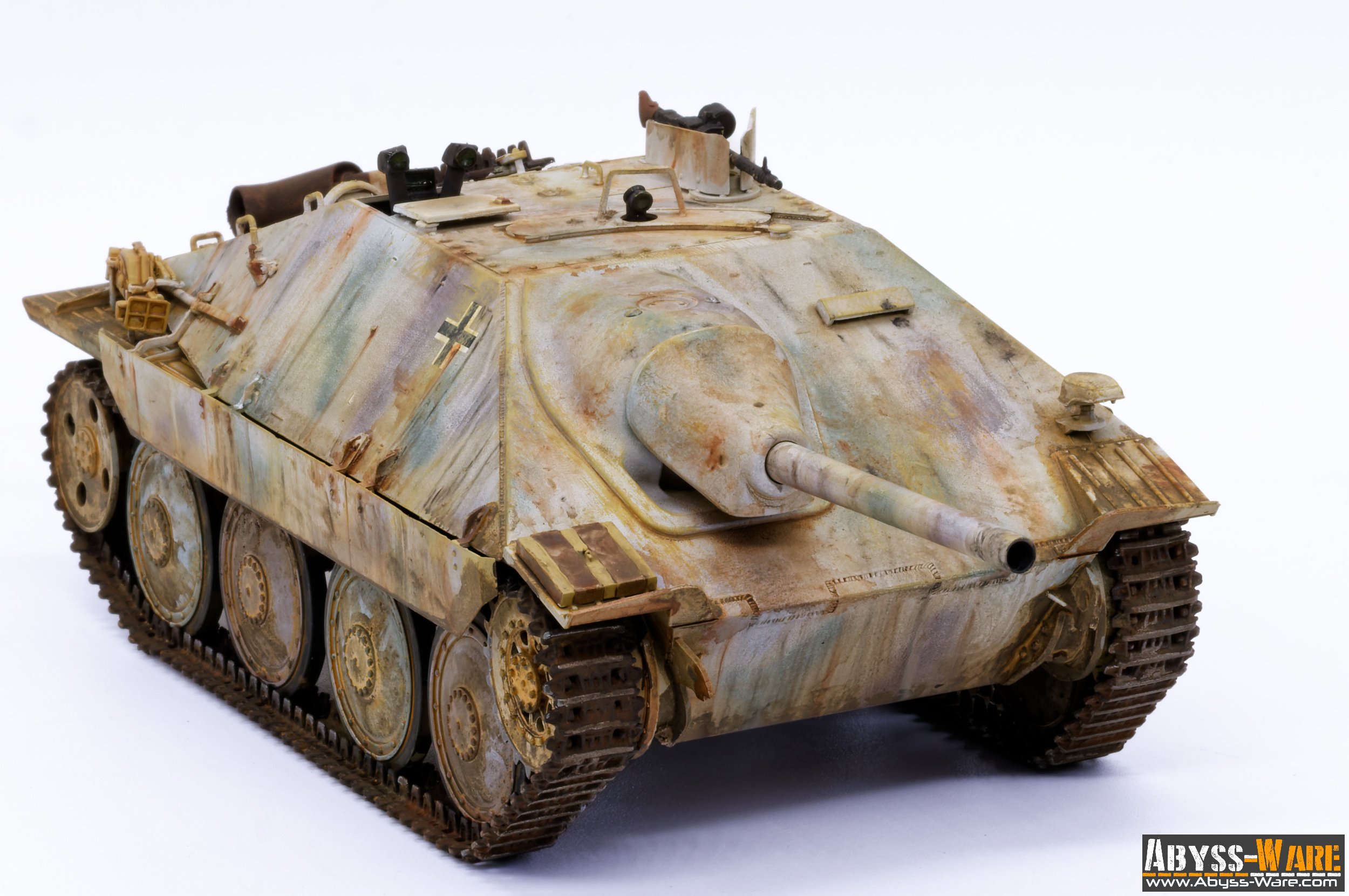
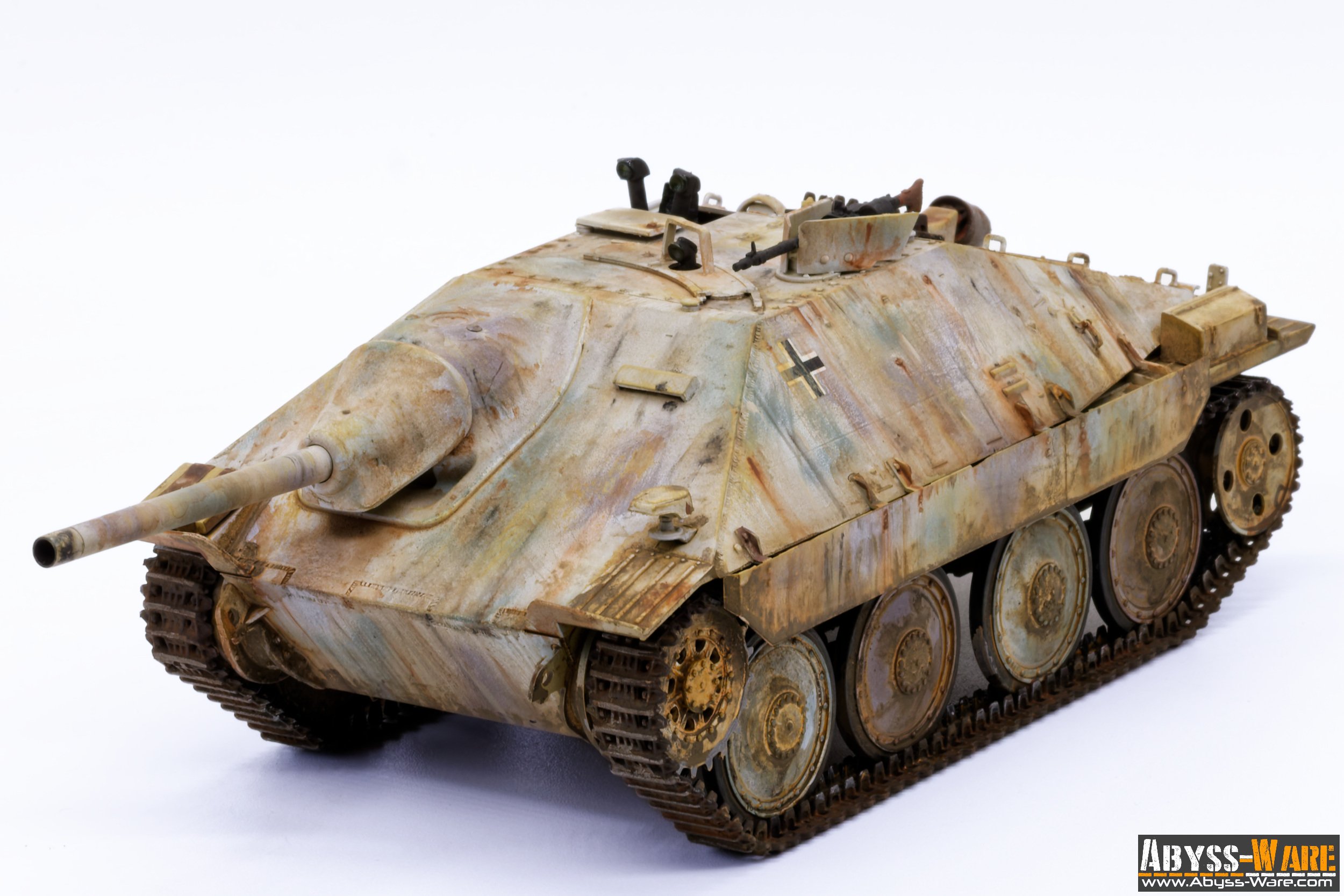
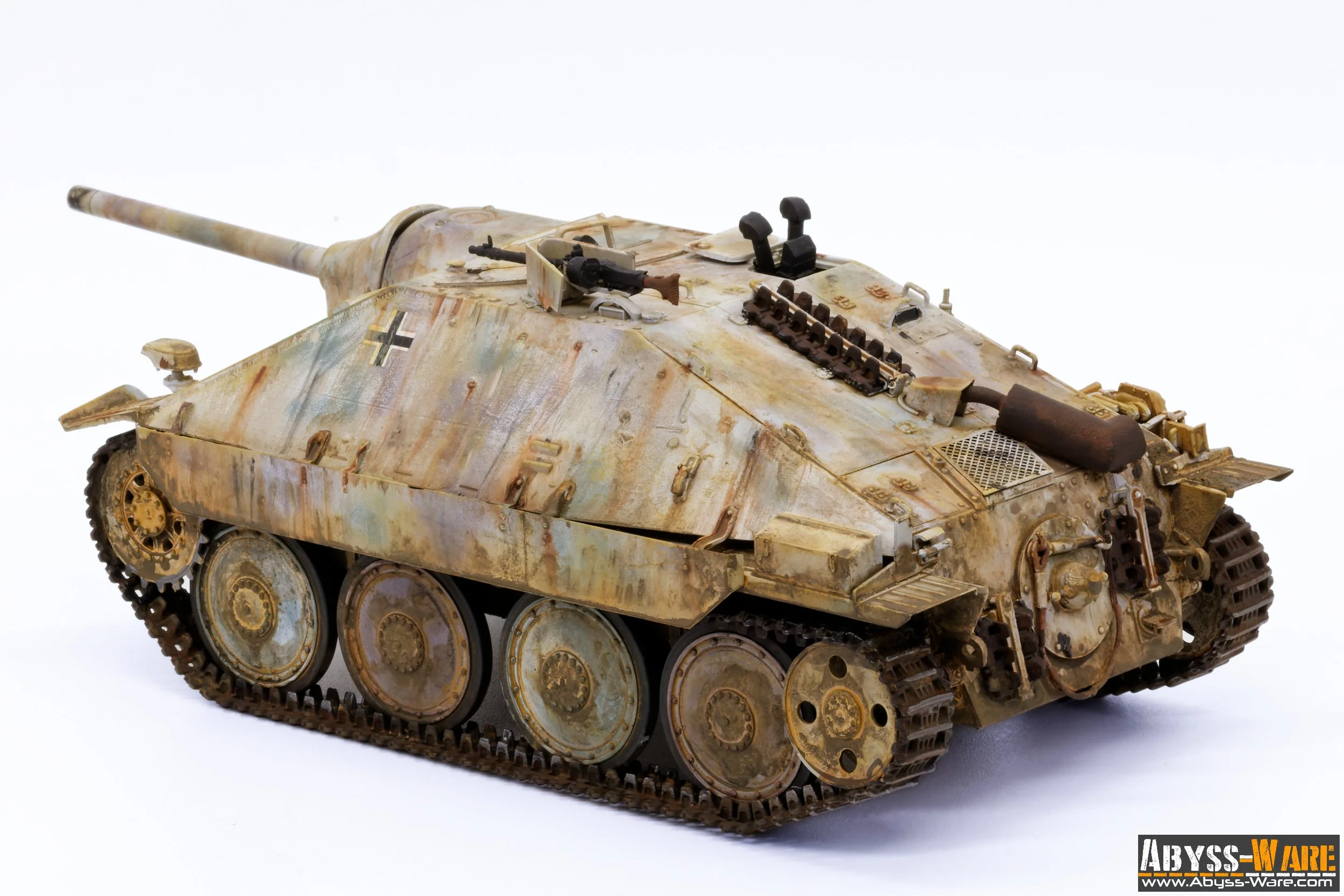
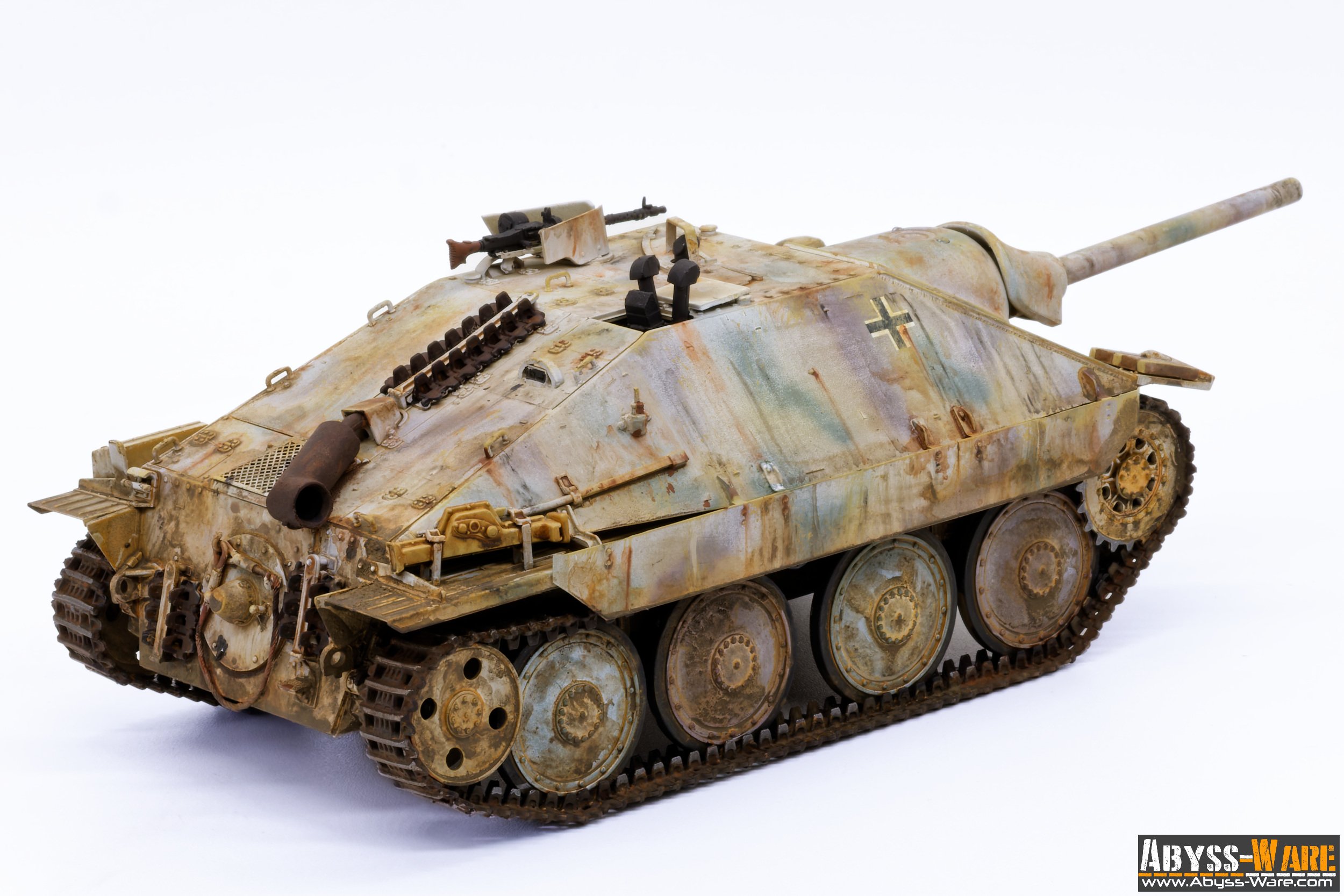
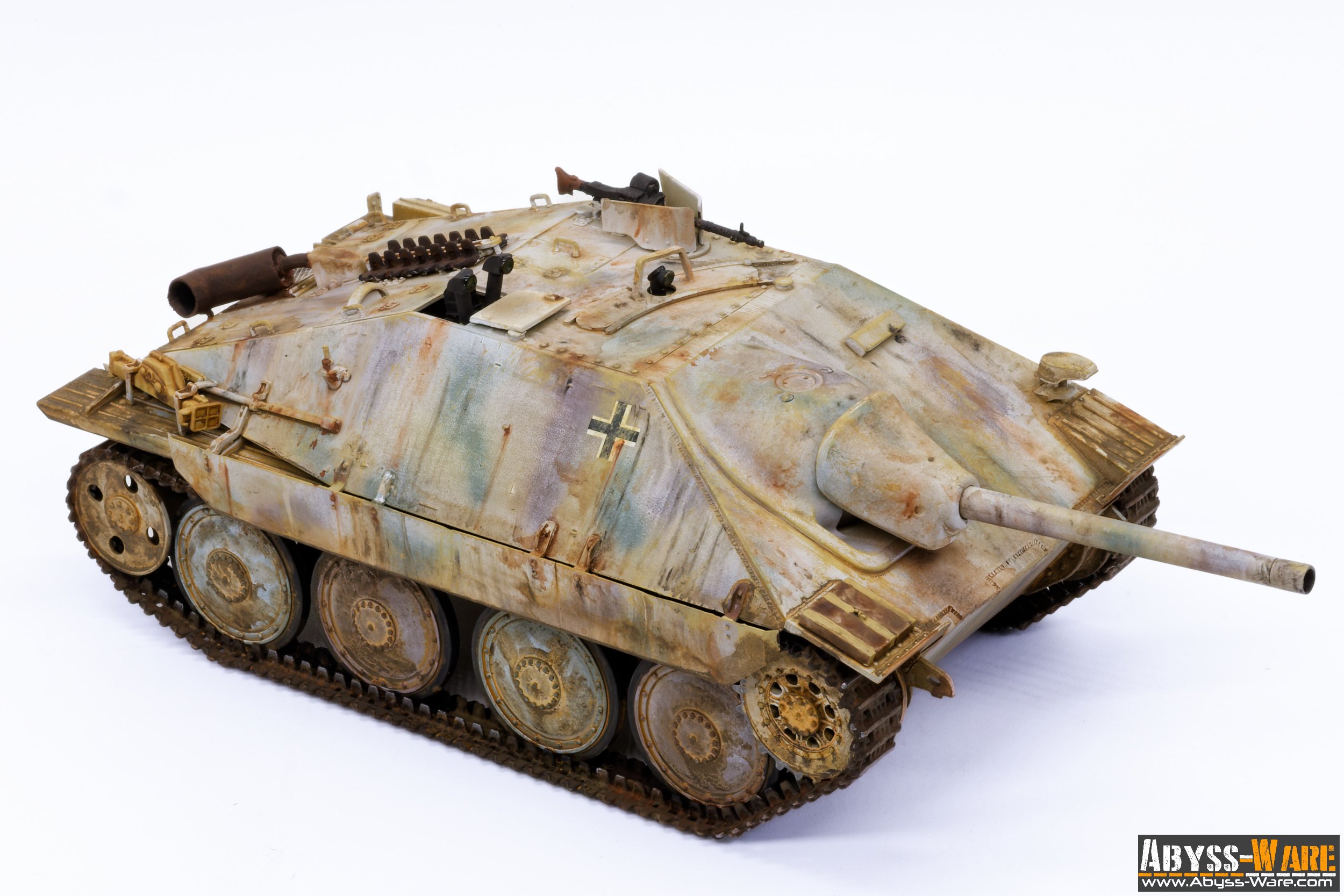
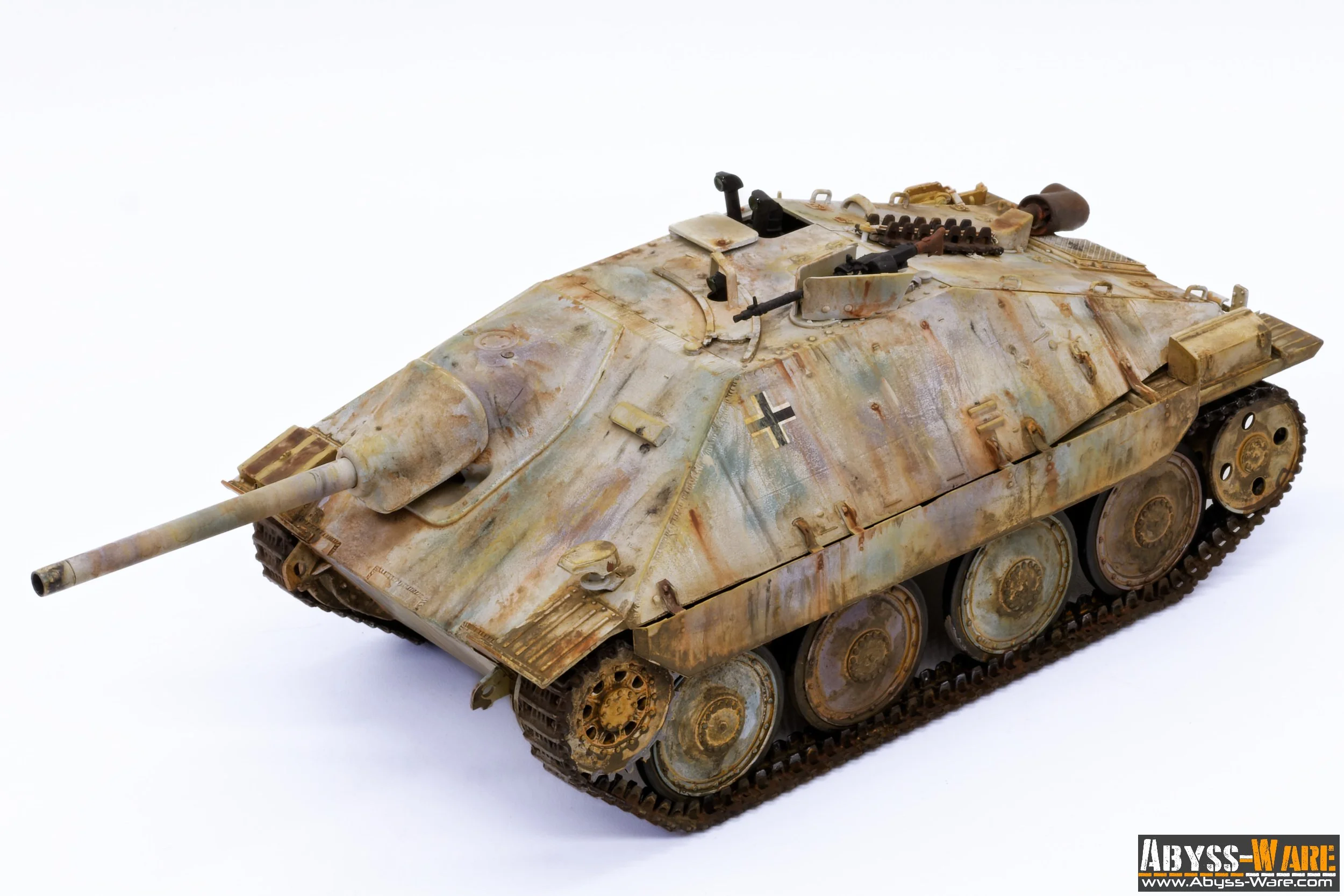
Note: The images presented bellow feature photographs of actual scale models, enhanced with AI-generated backgrounds and environments for visual effect. These visuals are intended for illustrative and artistic purposes only and should not be interpreted as real photographs or historical references.