
PANZER III Ausf. N
TAMIYA 35290
SCALE 1/35
.
;
The Panzerkampfwagen III, commonly known as the Panzer III, stands as a pivotal testament to German armored warfare doctrine during the early to mid-stages of World War II. While often overshadowed by its more heavily armored and gunned successors, the Panzer IV and the legendary Panther and Tiger tanks, the Panzer III was undeniably the workhorse that spearheaded the initial, devastatingly successful campaigns of the Wehrmacht. It embodied the very essence of the "Blitzkrieg" – lightning war – a doctrine reliant on speed, maneuverability, and coordinated combined-arms tactics.
Conceived in the mid-1930s, the Panzer III was designed specifically as a "medium tank" intended for anti-tank combat. Its initial armament reflected this purpose: a 3.7 cm KwK 36 L/46.5 main gun. While adequate against the light tanks and early anti-tank defenses of Poland and France, the limitations of this smaller caliber cannon would soon become glaringly apparent as the war progressed. However, what truly set the Panzer III apart from its contemporaries was its advanced design philosophy. Unlike many other tanks of the era, the Panzer III featured a spacious three-man turret (commander, gunner, loader). This seemingly minor detail had profound implications for combat effectiveness. The dedicated loader ensured a faster rate of fire, while the commander was freed from the task of loading or firing, allowing him to concentrate solely on situational awareness, target acquisition, and commanding the tank and its platoon. This superior crew ergonomics provided a significant tactical advantage, enabling Panzer III crews to react quicker and fight more effectively than their adversaries. Early campaigns, from the invasion of Poland in 1939 to the Battle of France in 1940, saw the Panzer III perform admirably. Its speed, reliable radio communications (another German innovation that allowed for superior tactical coordination), and the tactical proficiency of its crews allowed German armored divisions to punch through enemy lines, bypass strongpoints, and wreak havoc on the enemy's rear. The sight of these fast-moving, relatively modern tanks, often supported by Stuka dive bombers, was a terrifying harbinger of a new kind of warfare.
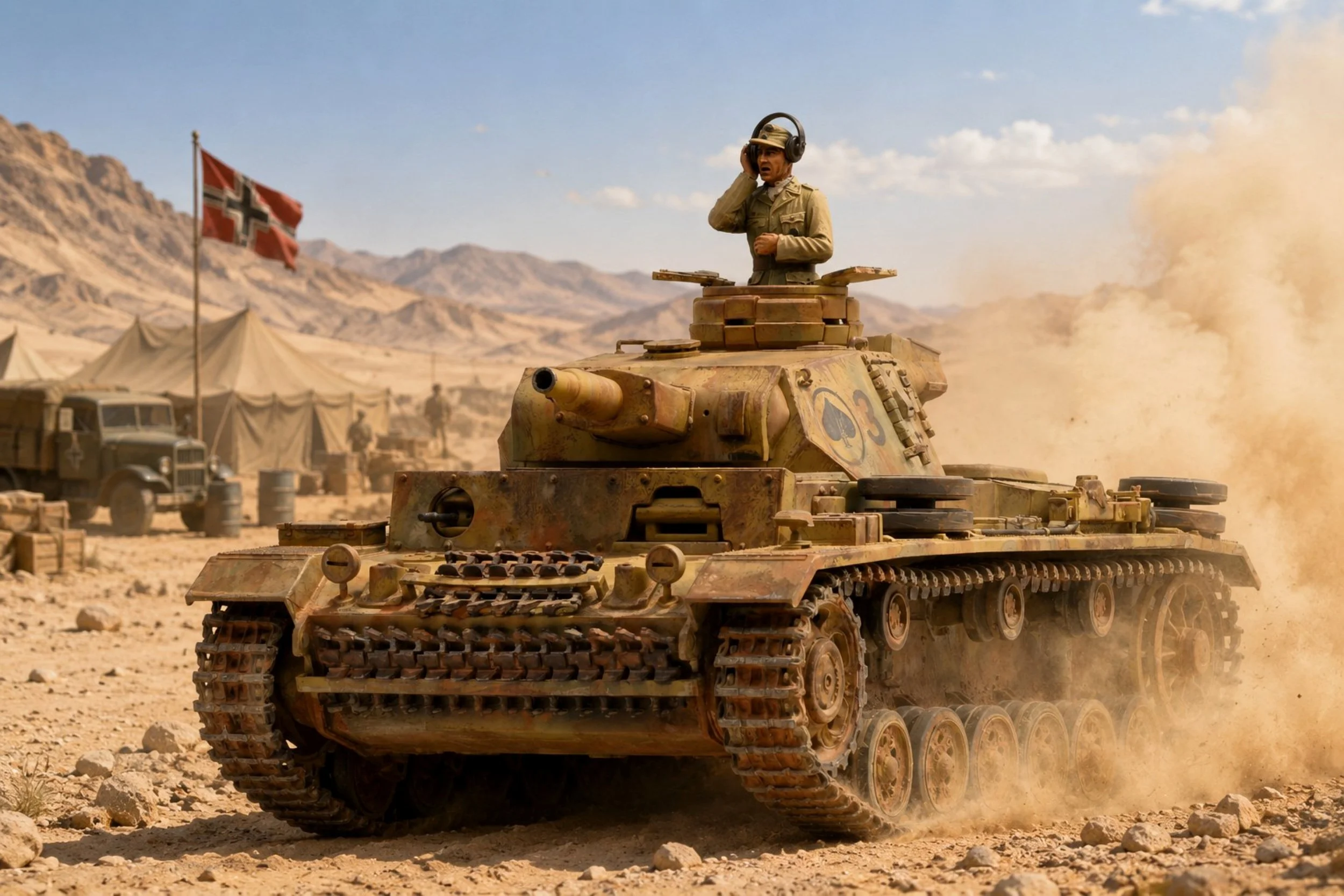

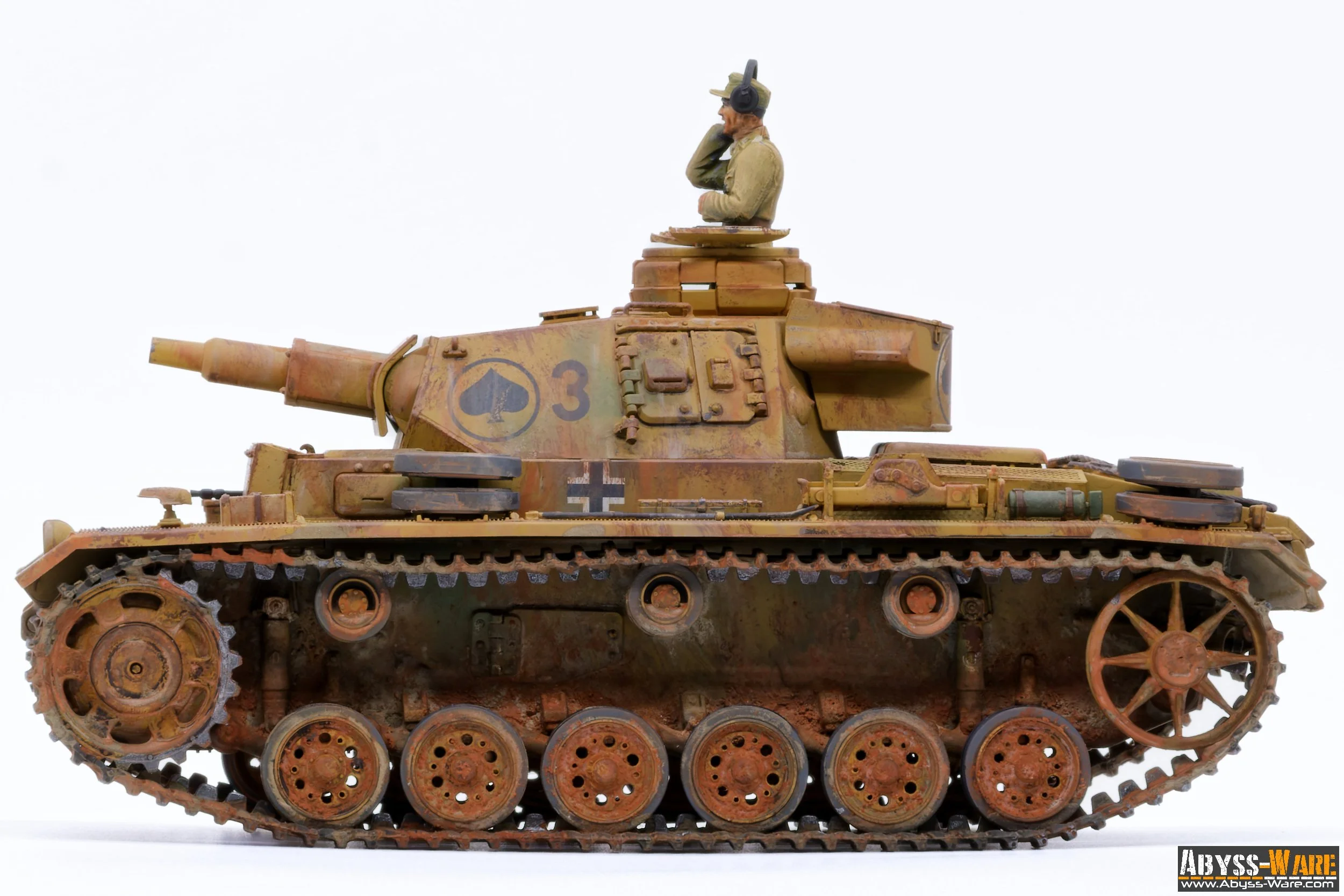
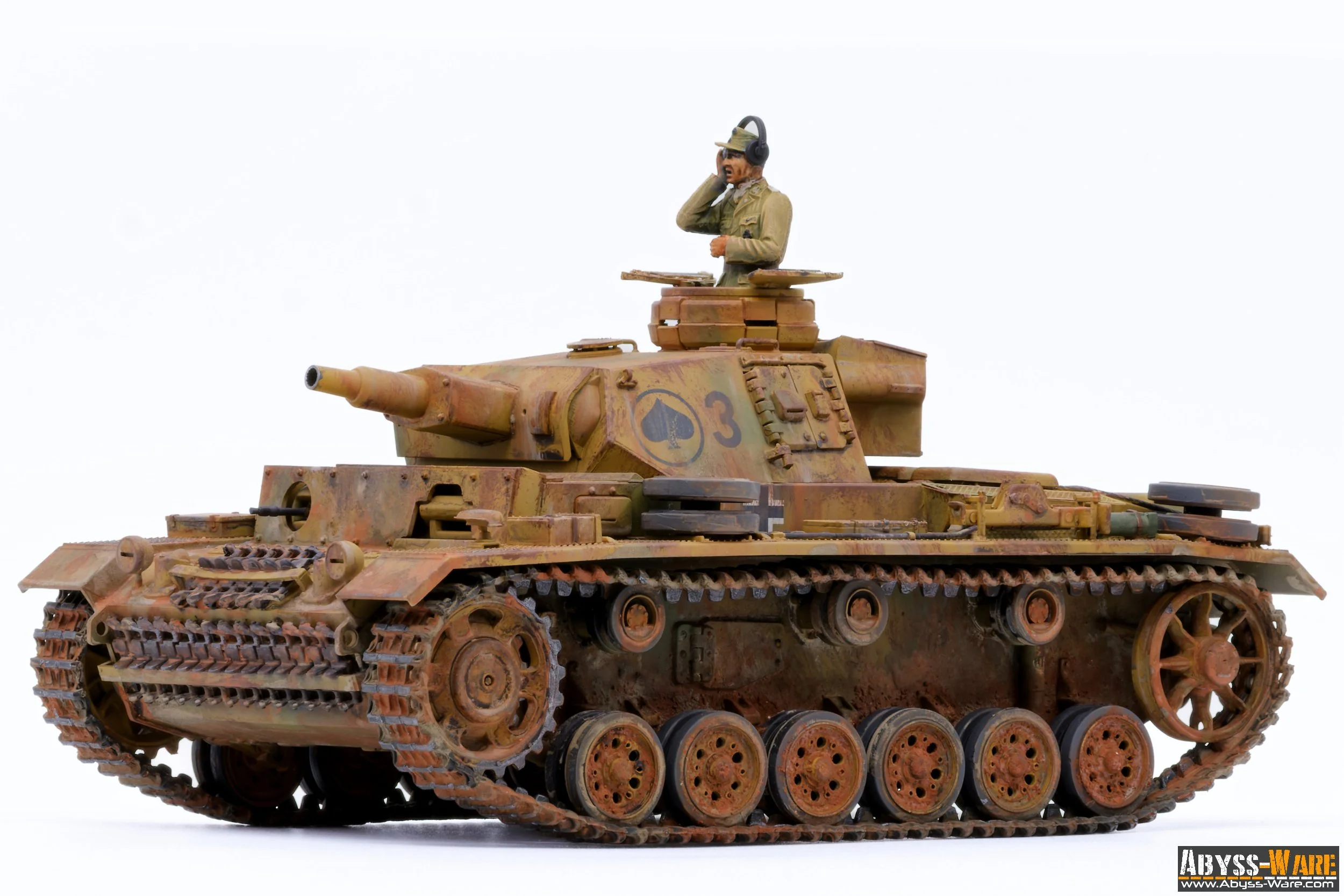
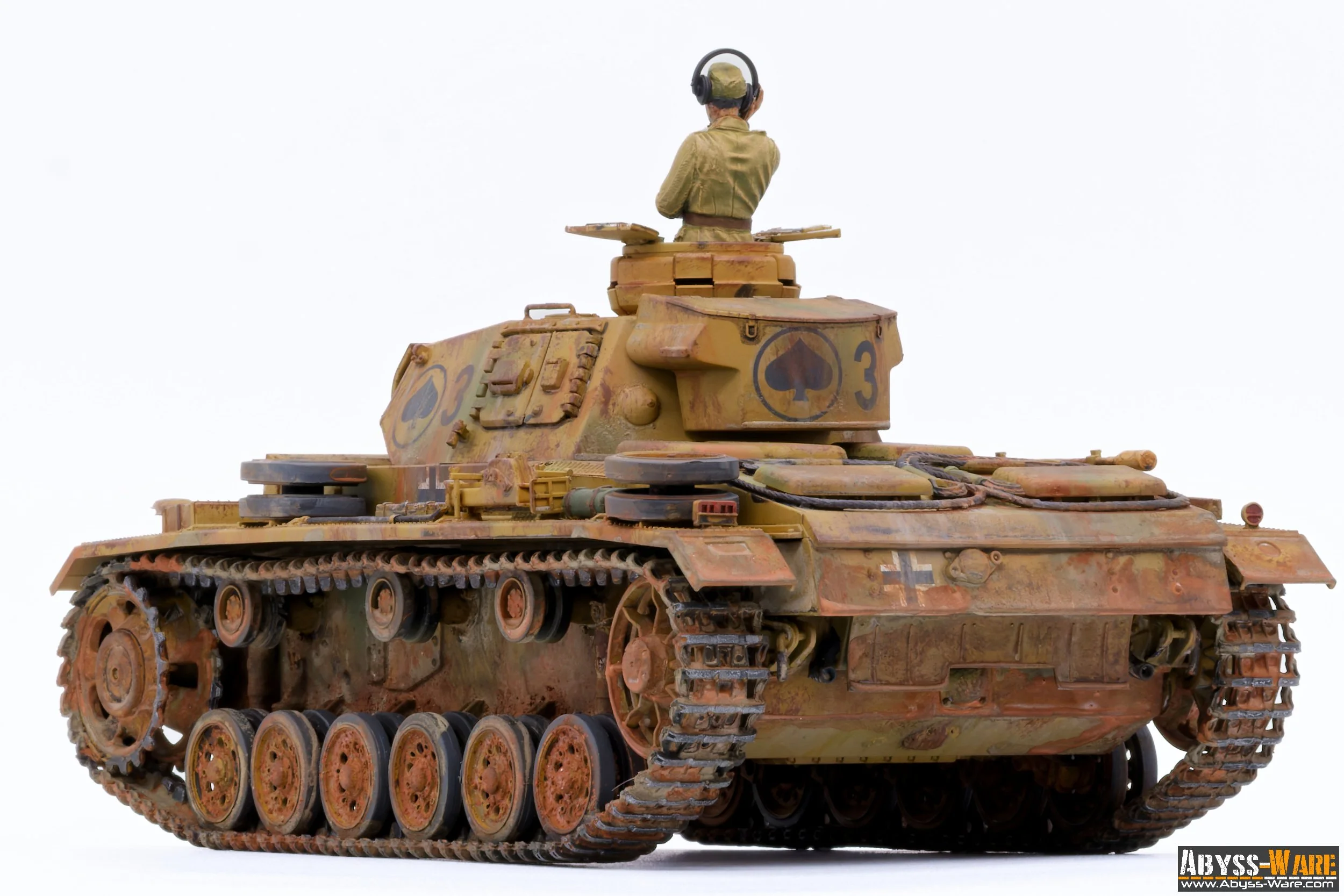
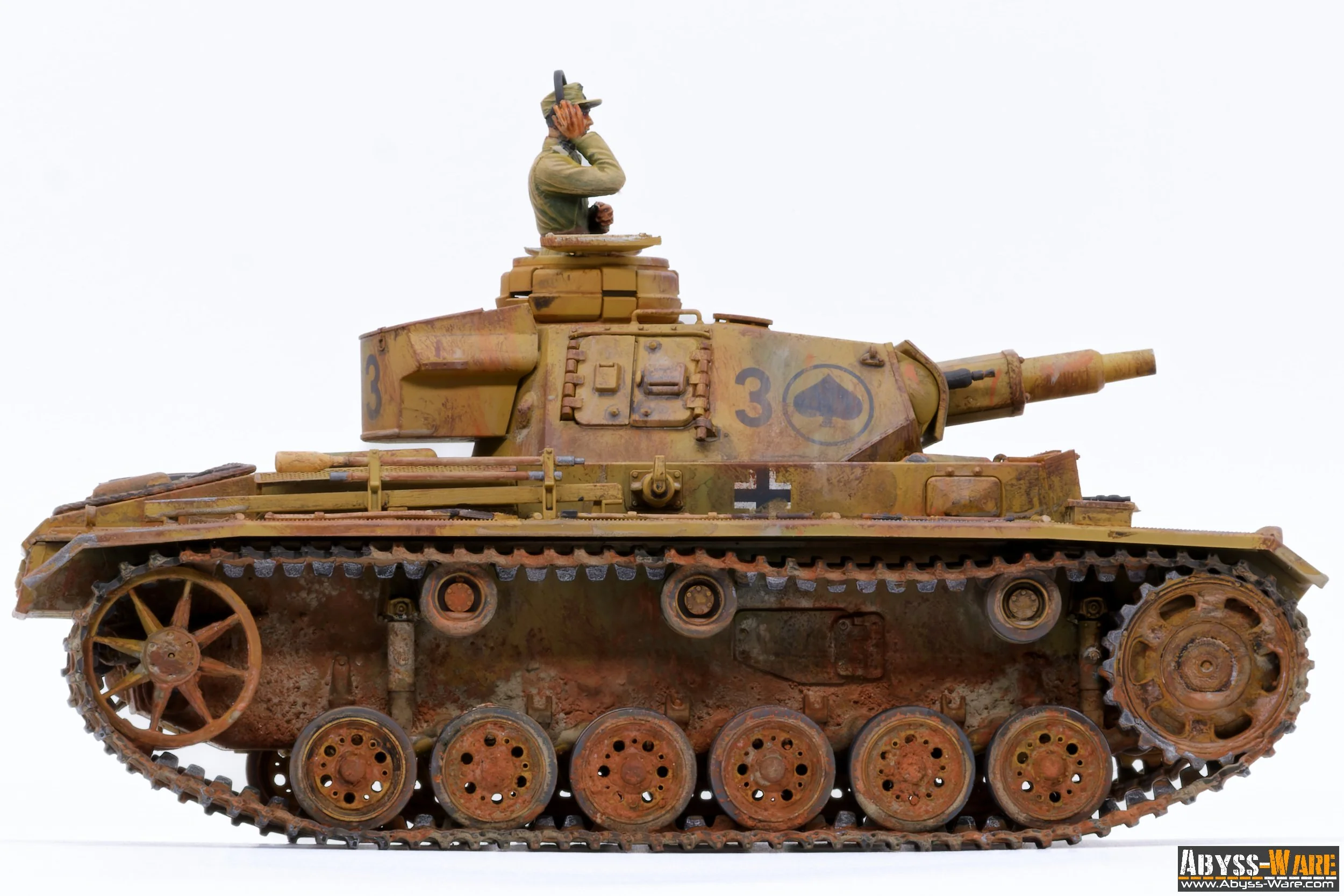
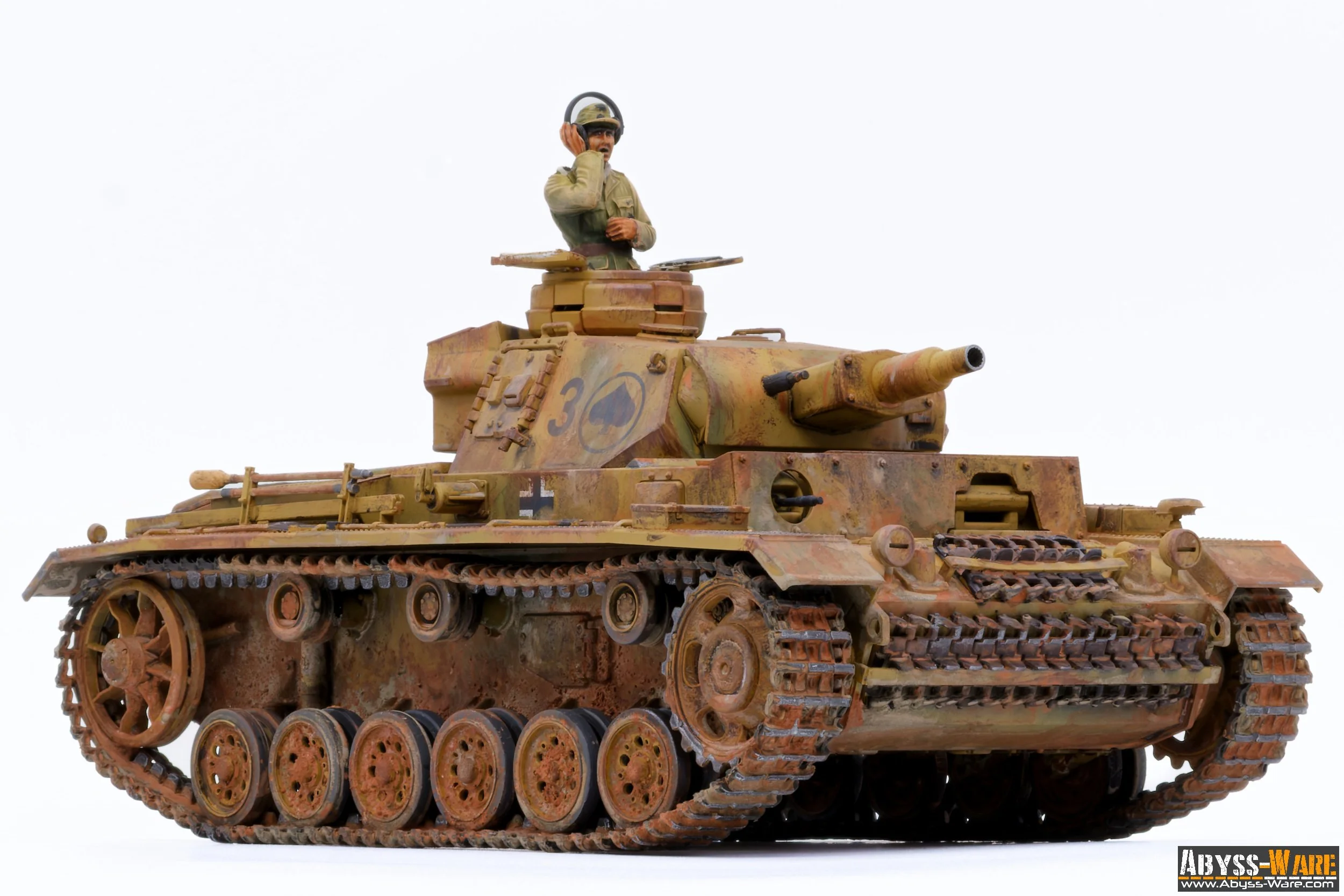
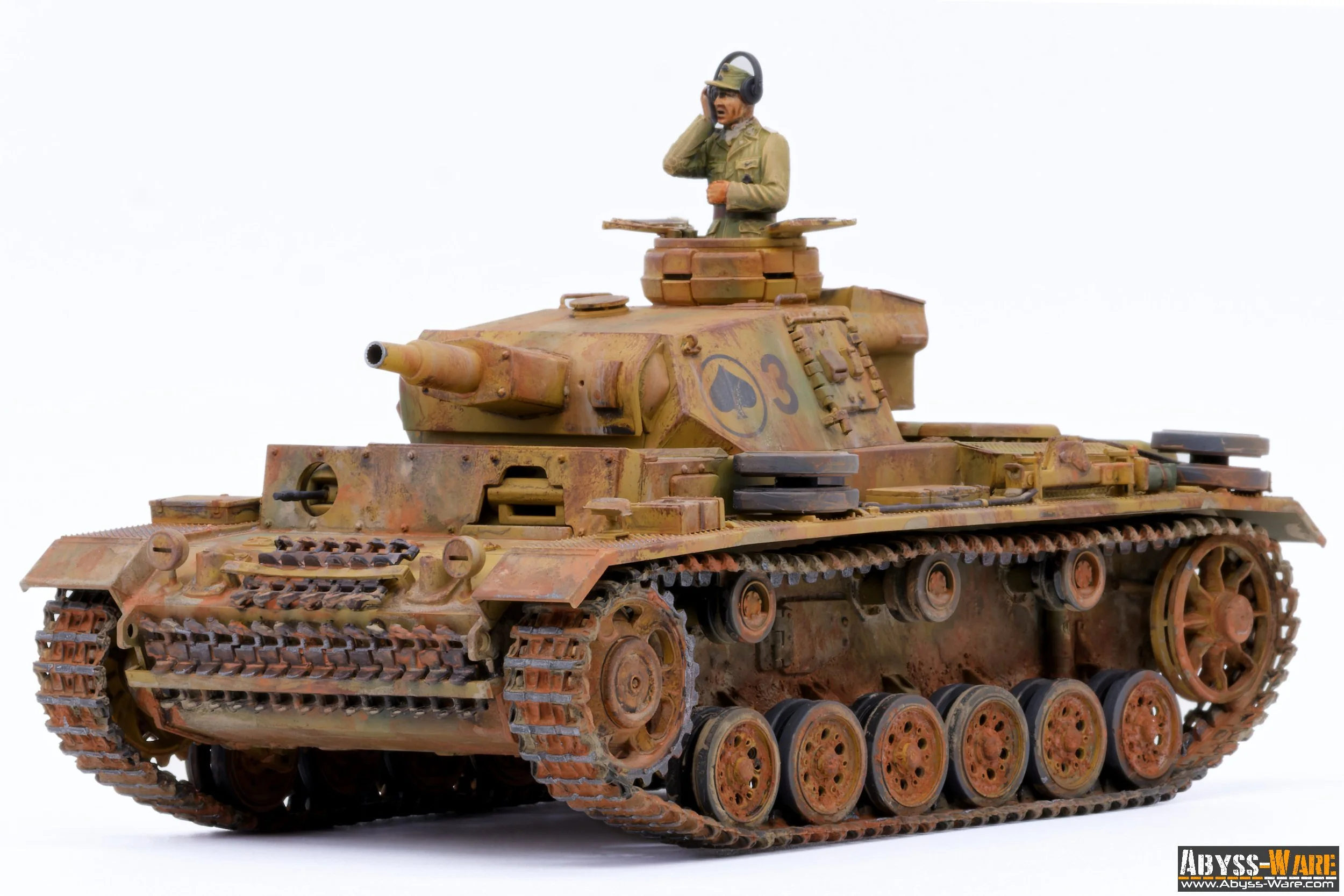
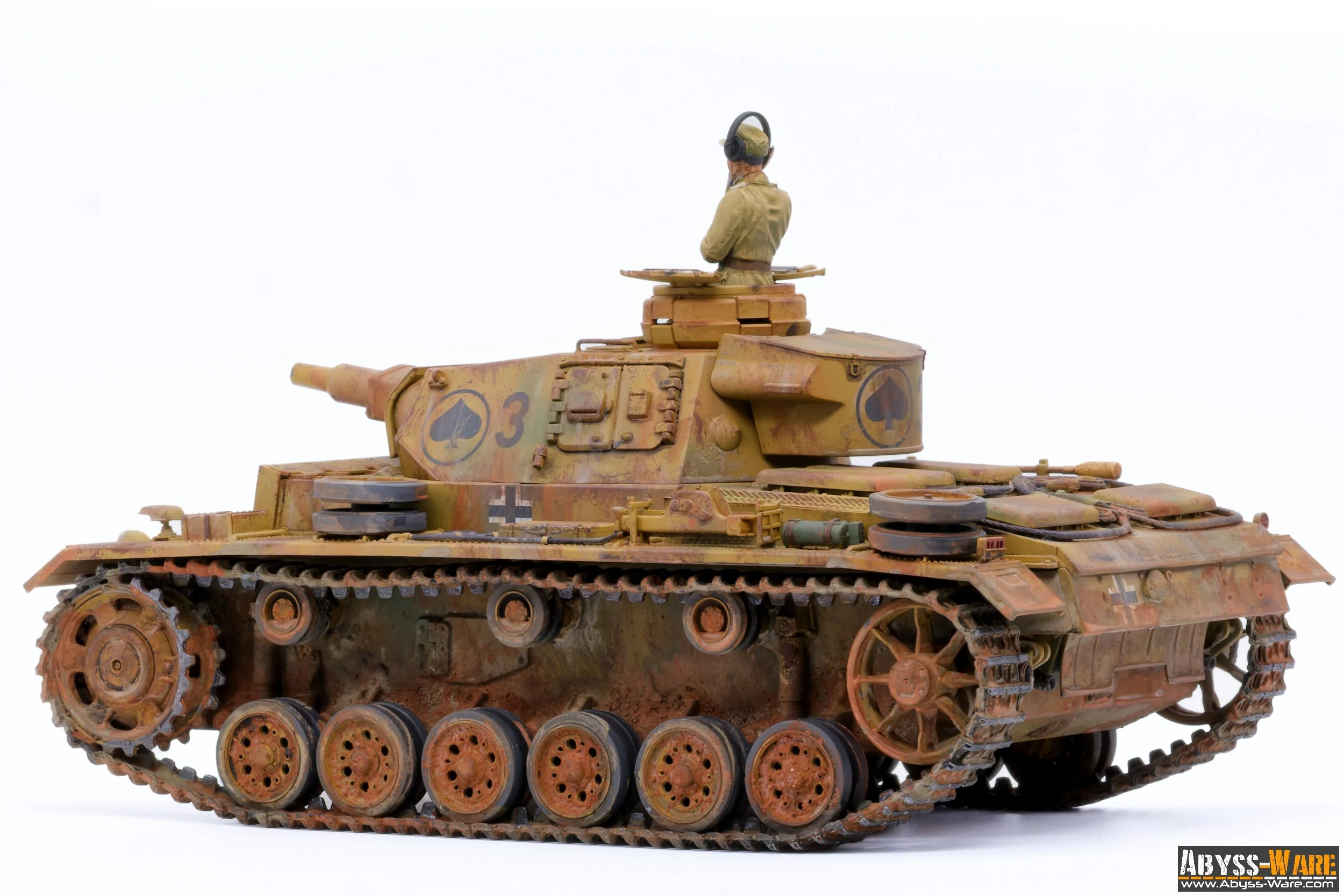
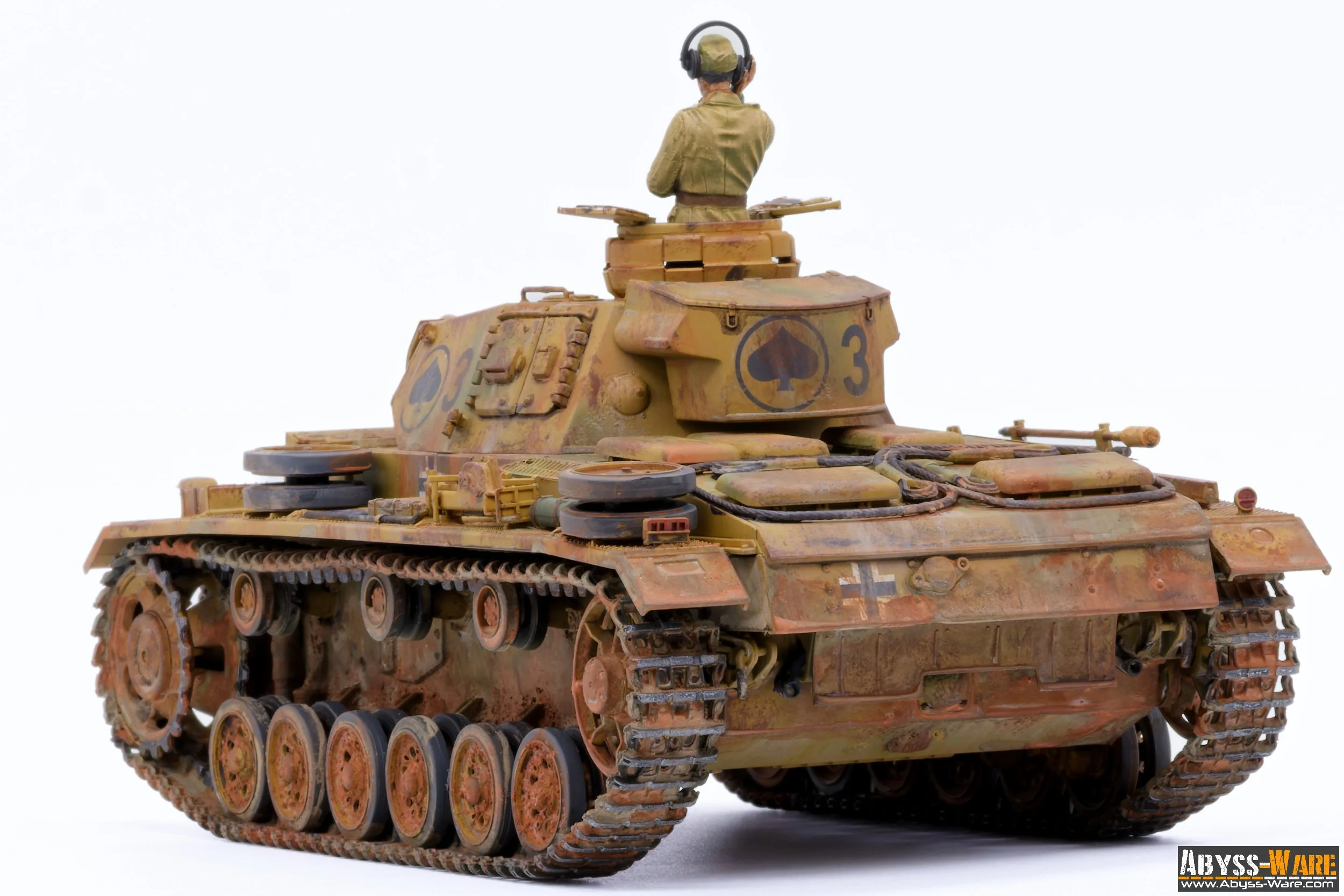

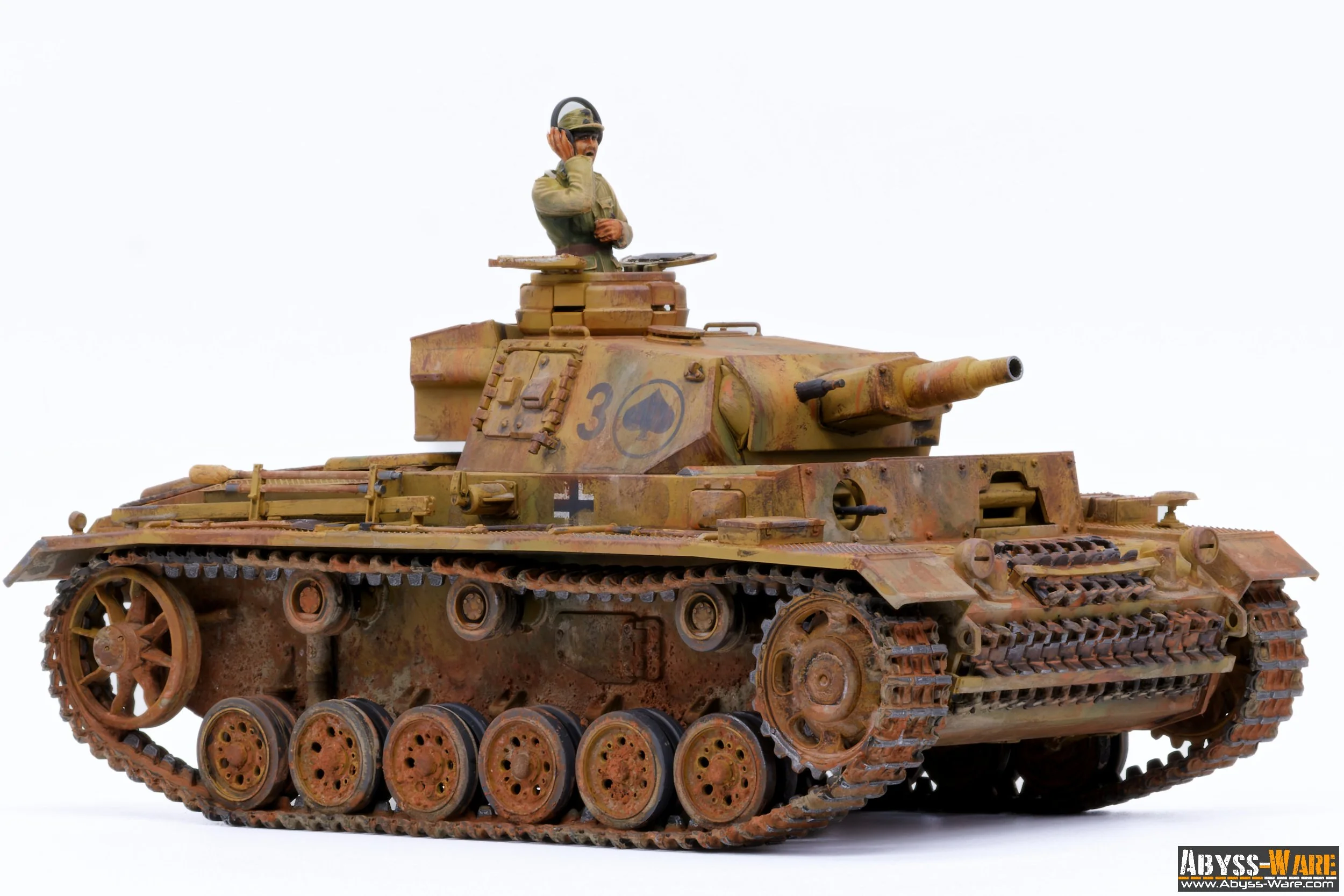
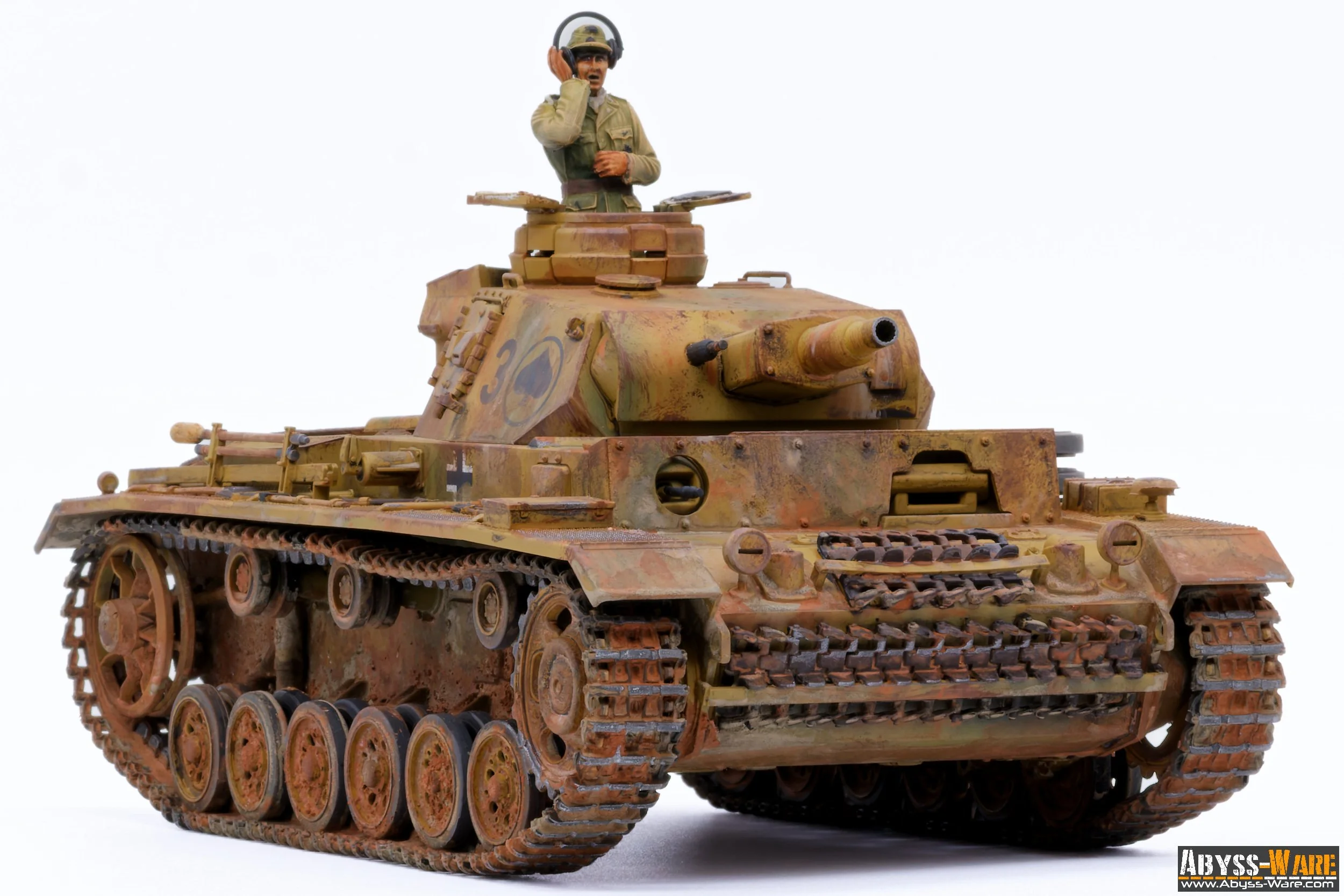
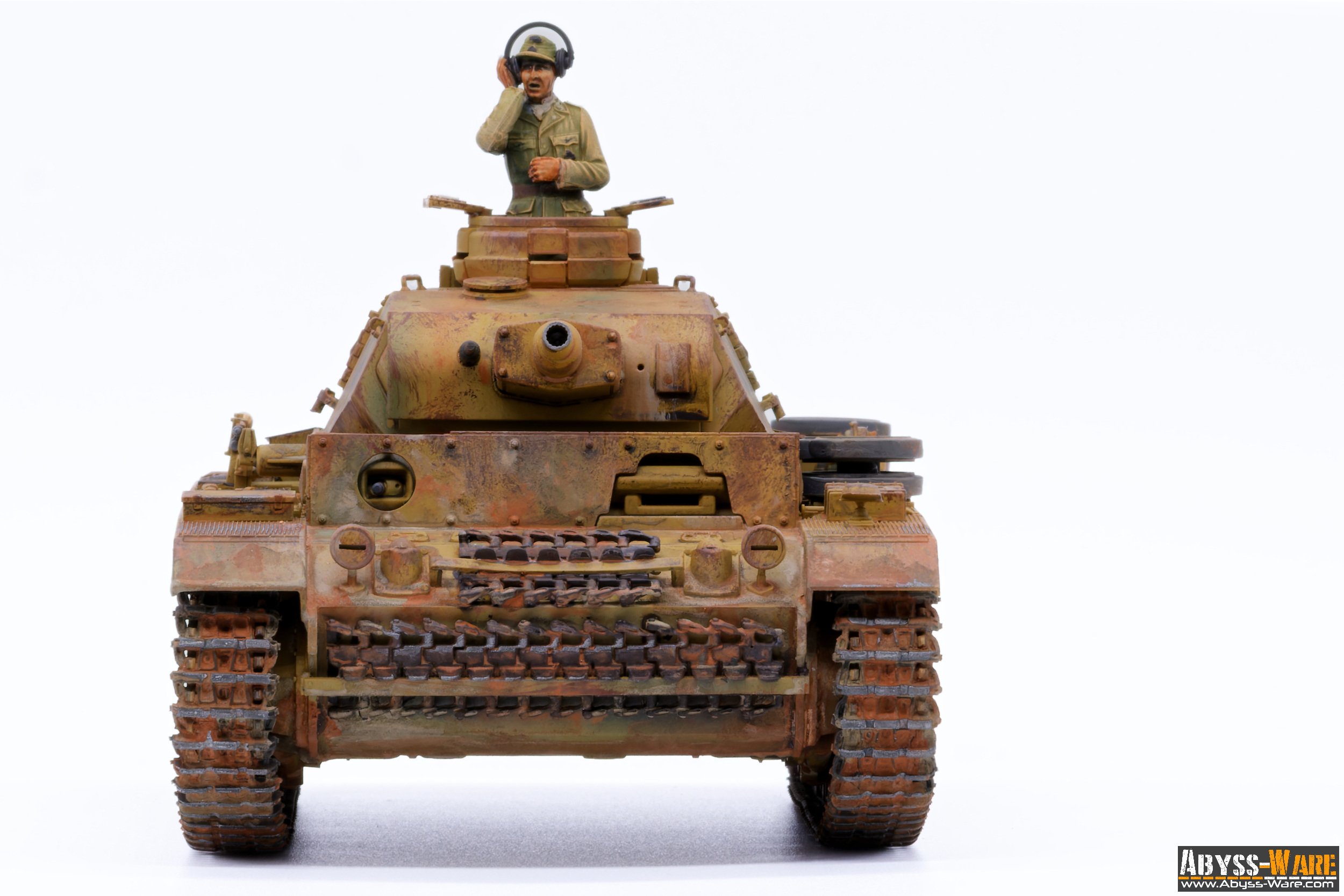
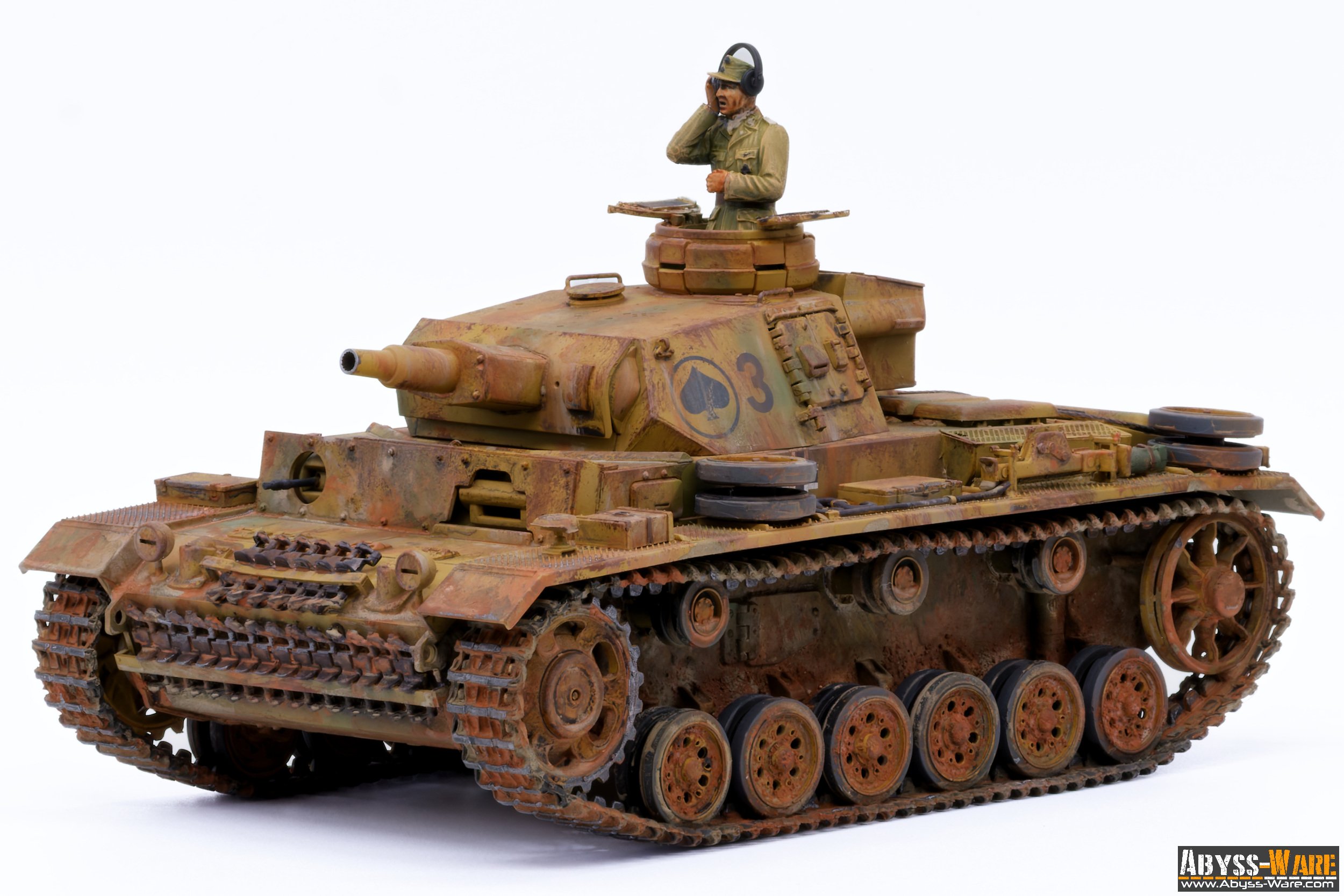
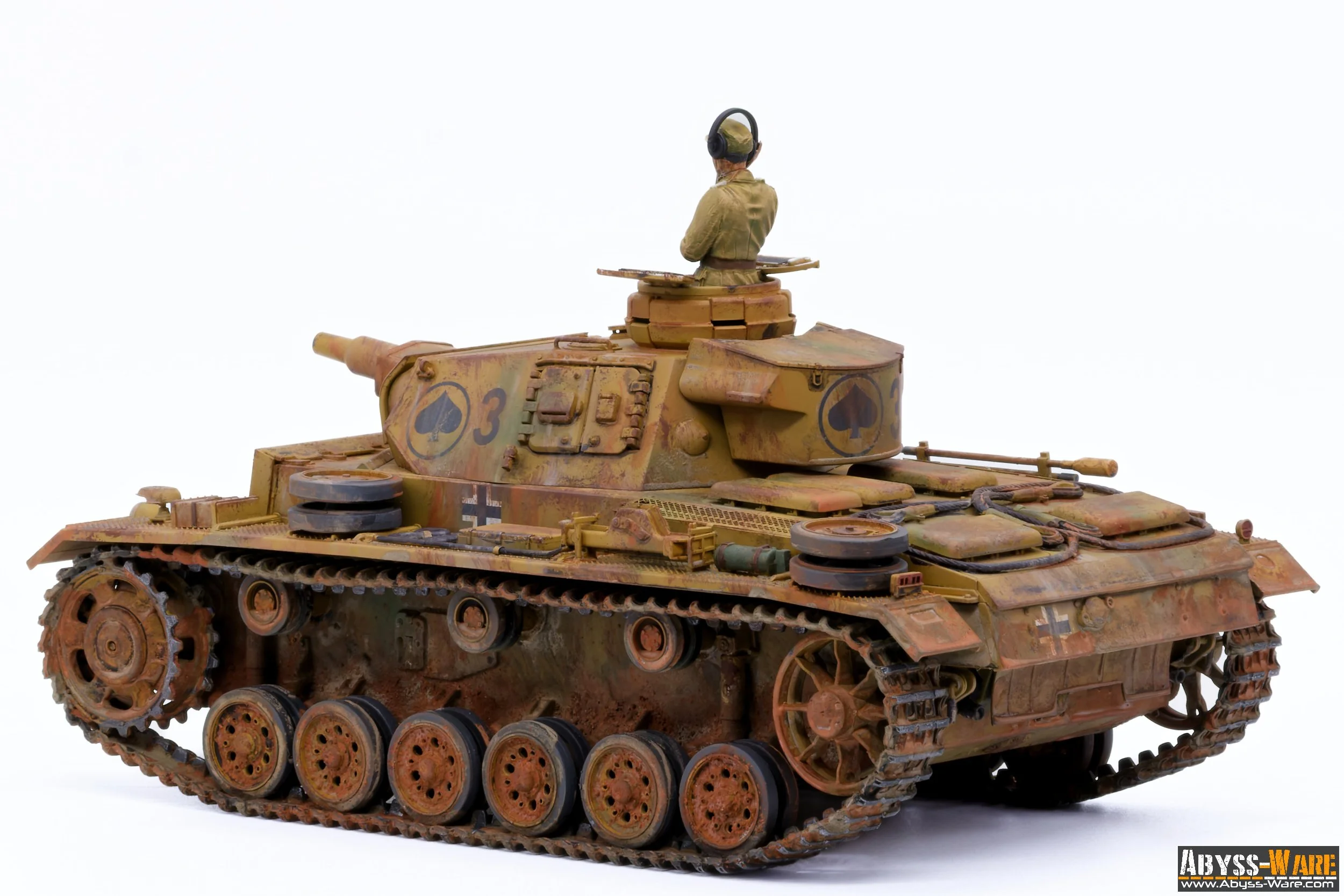
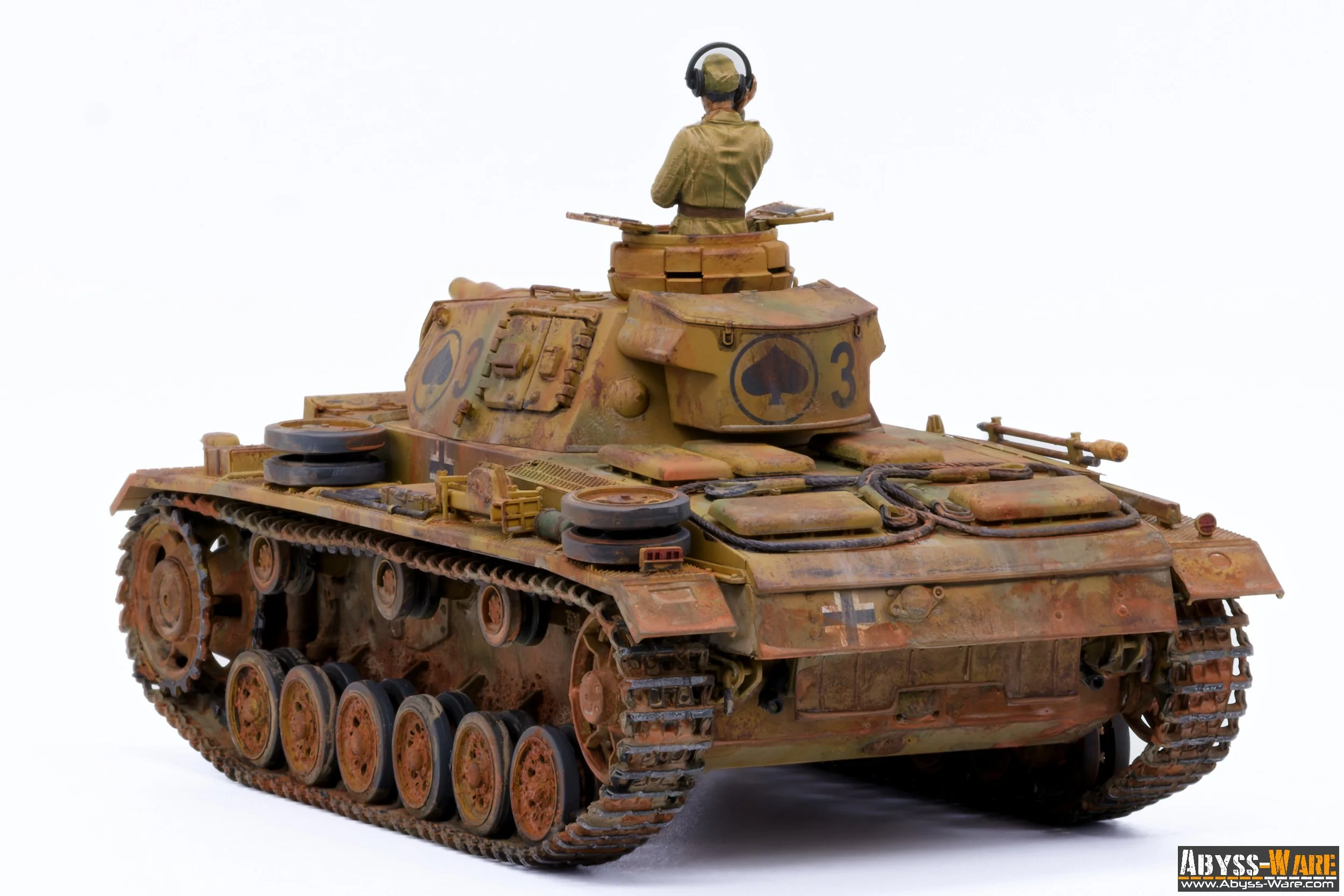
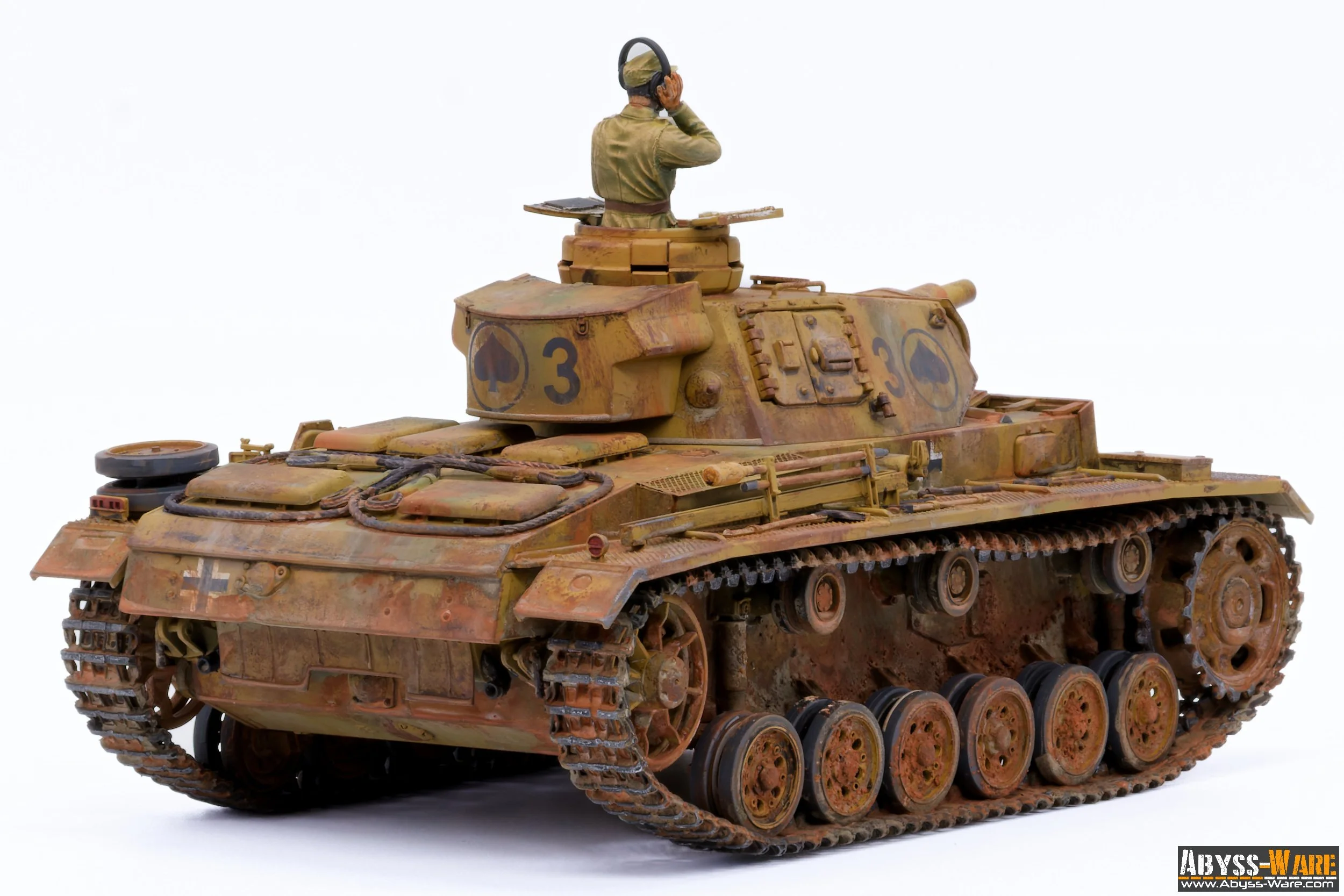
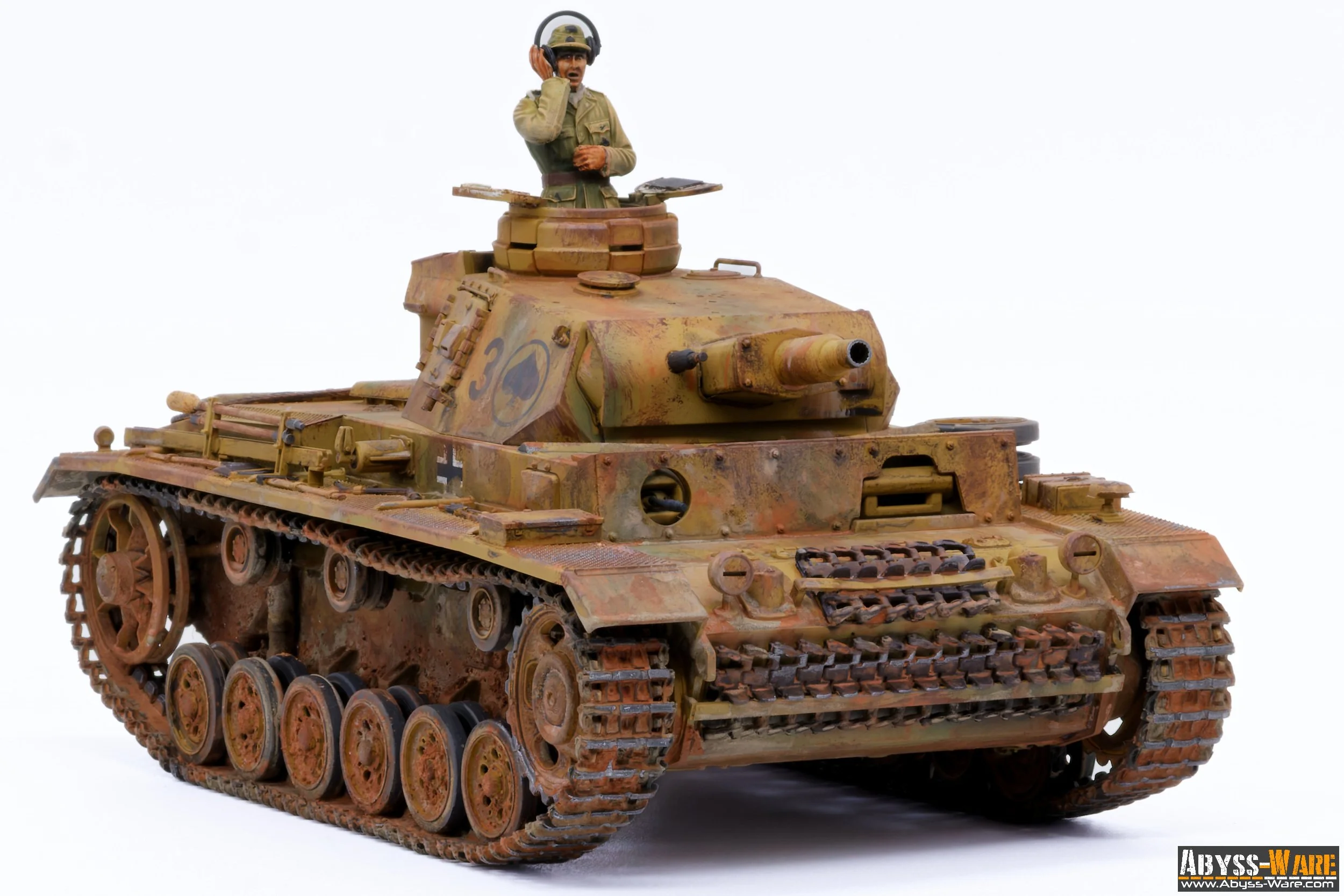

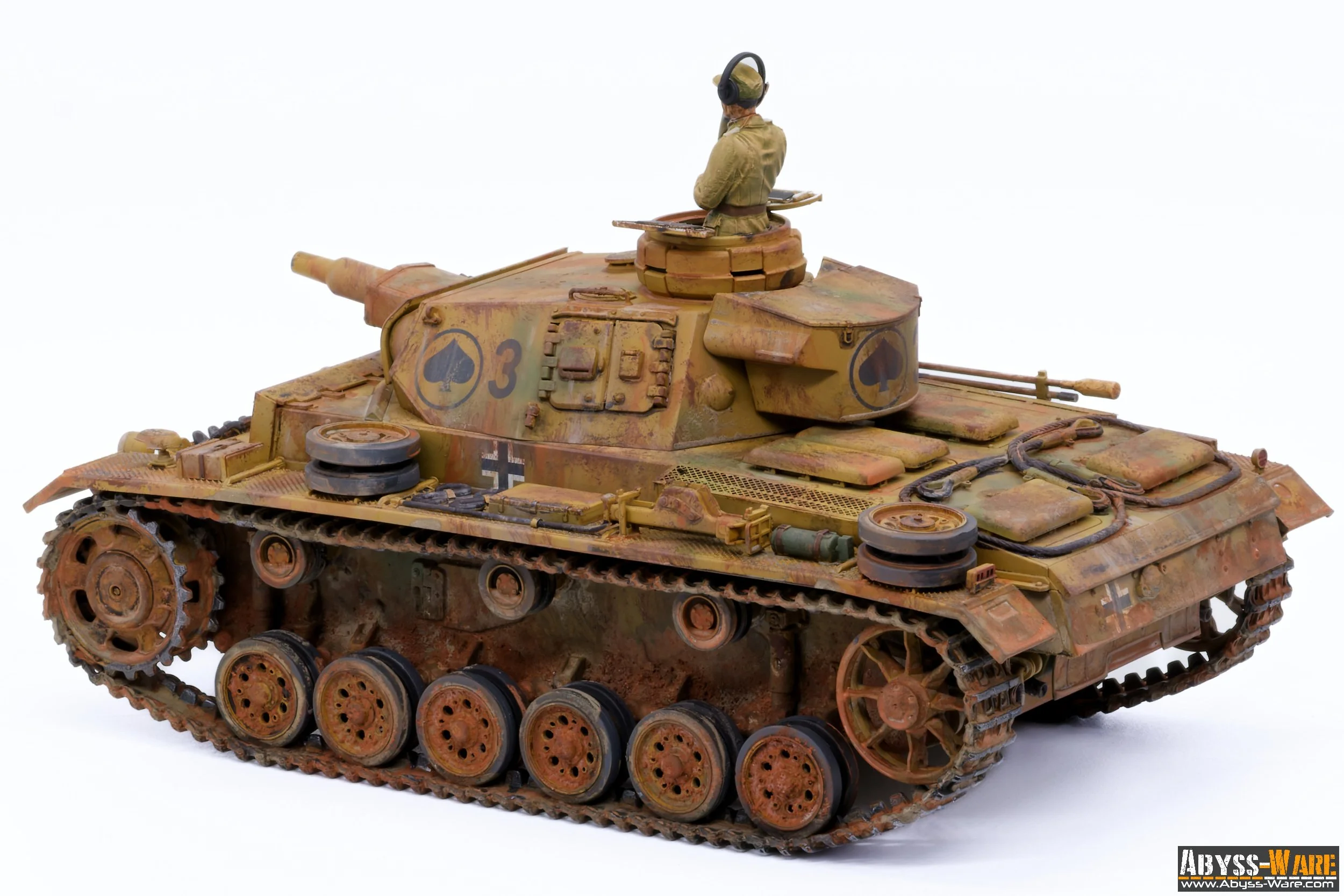
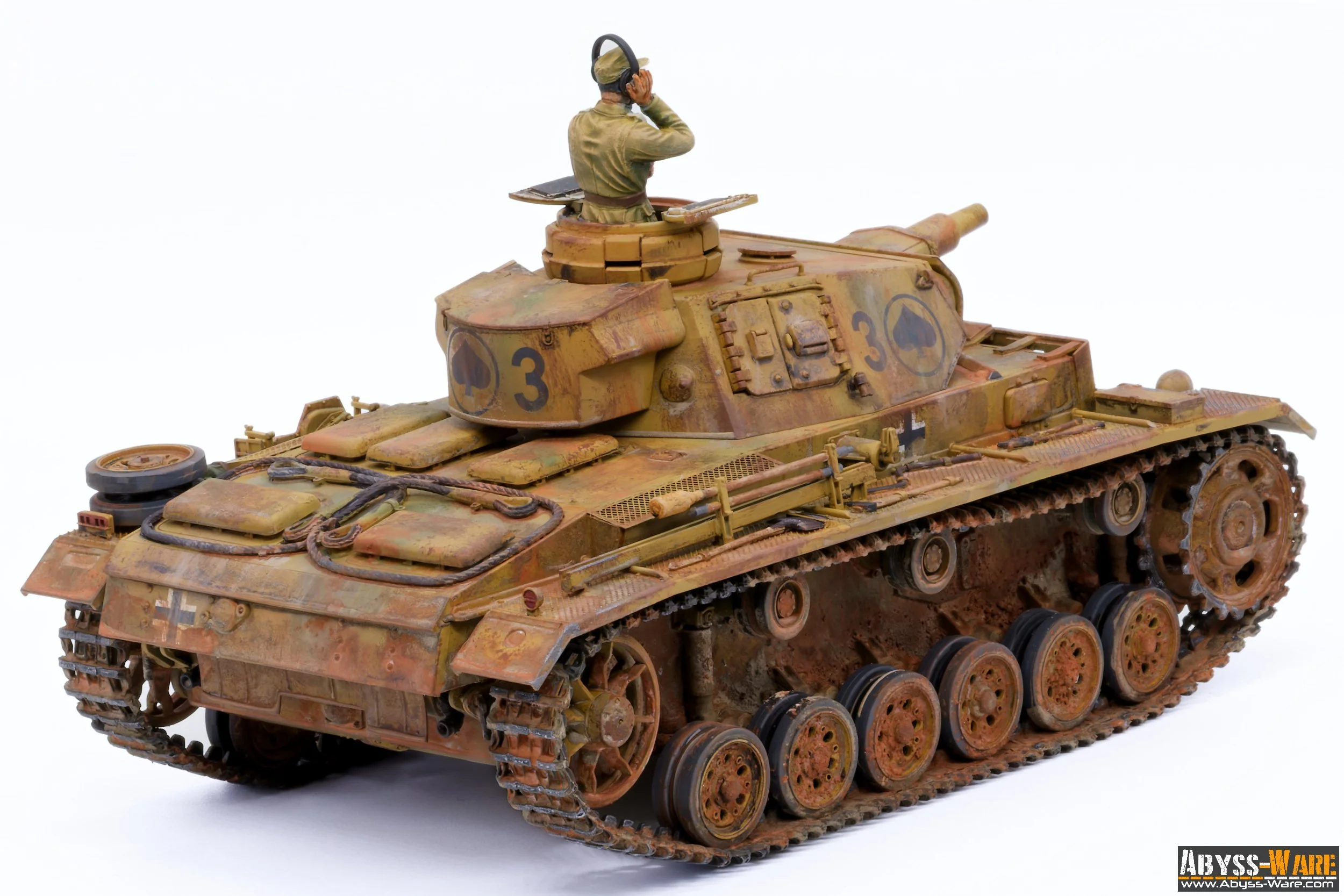
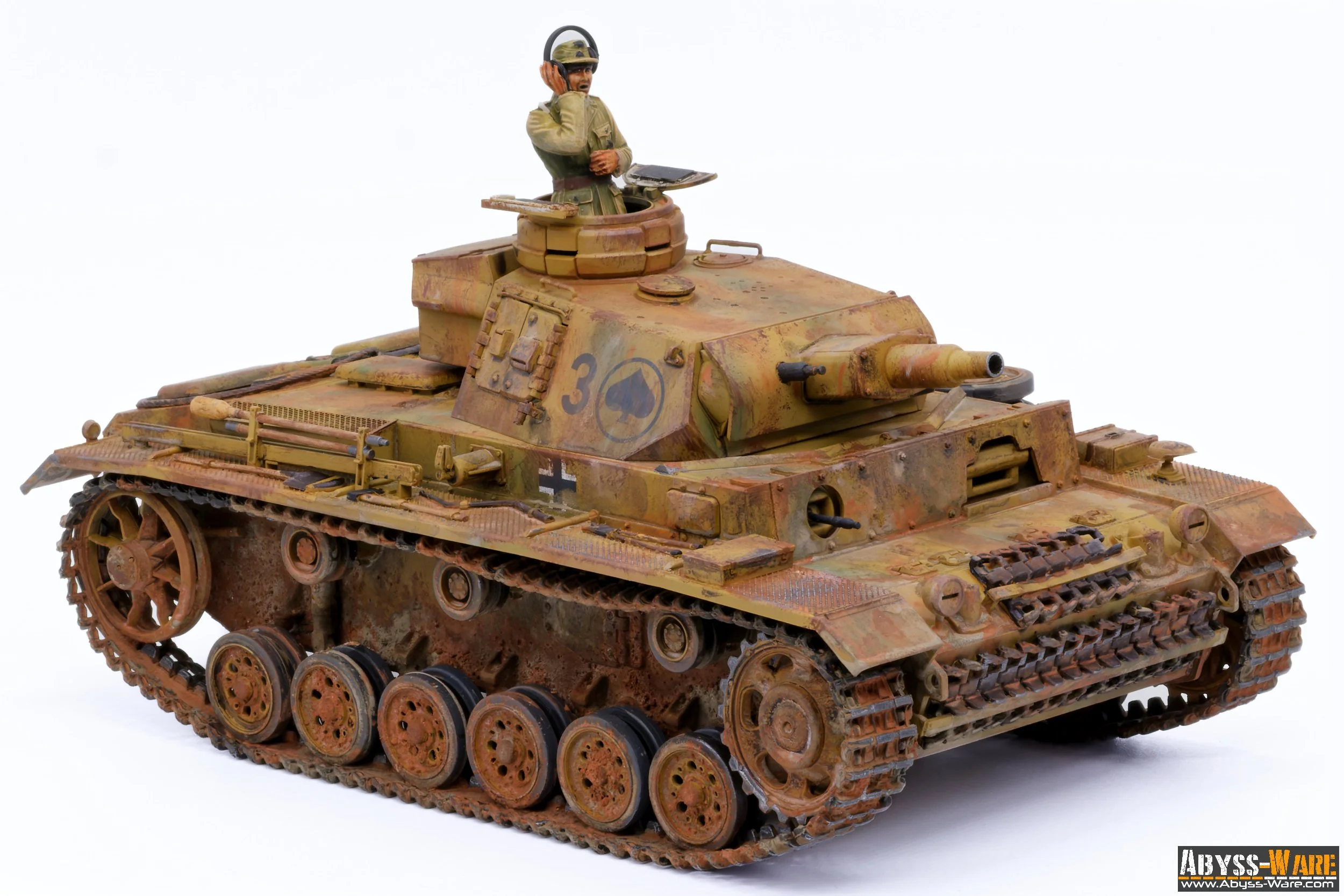
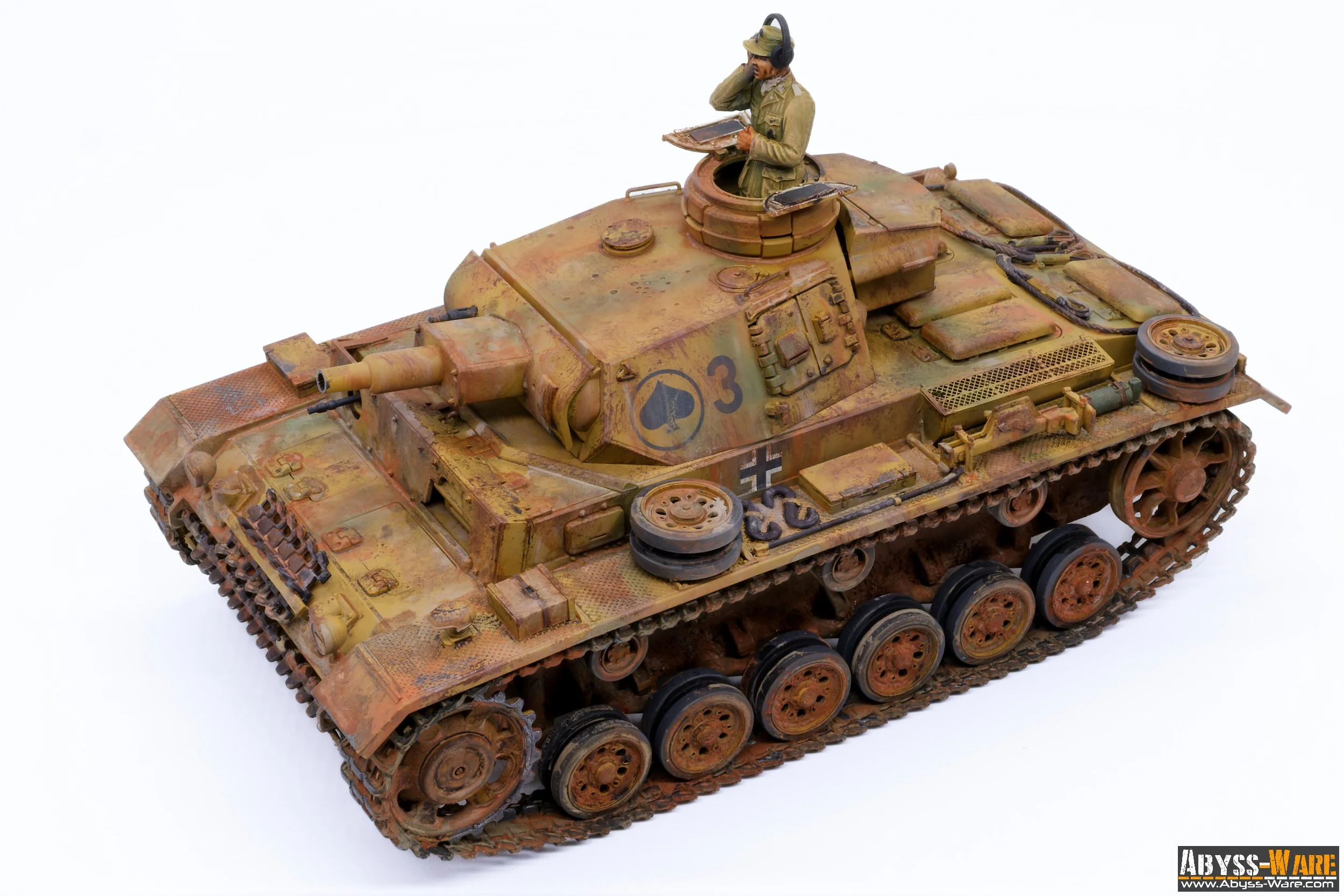
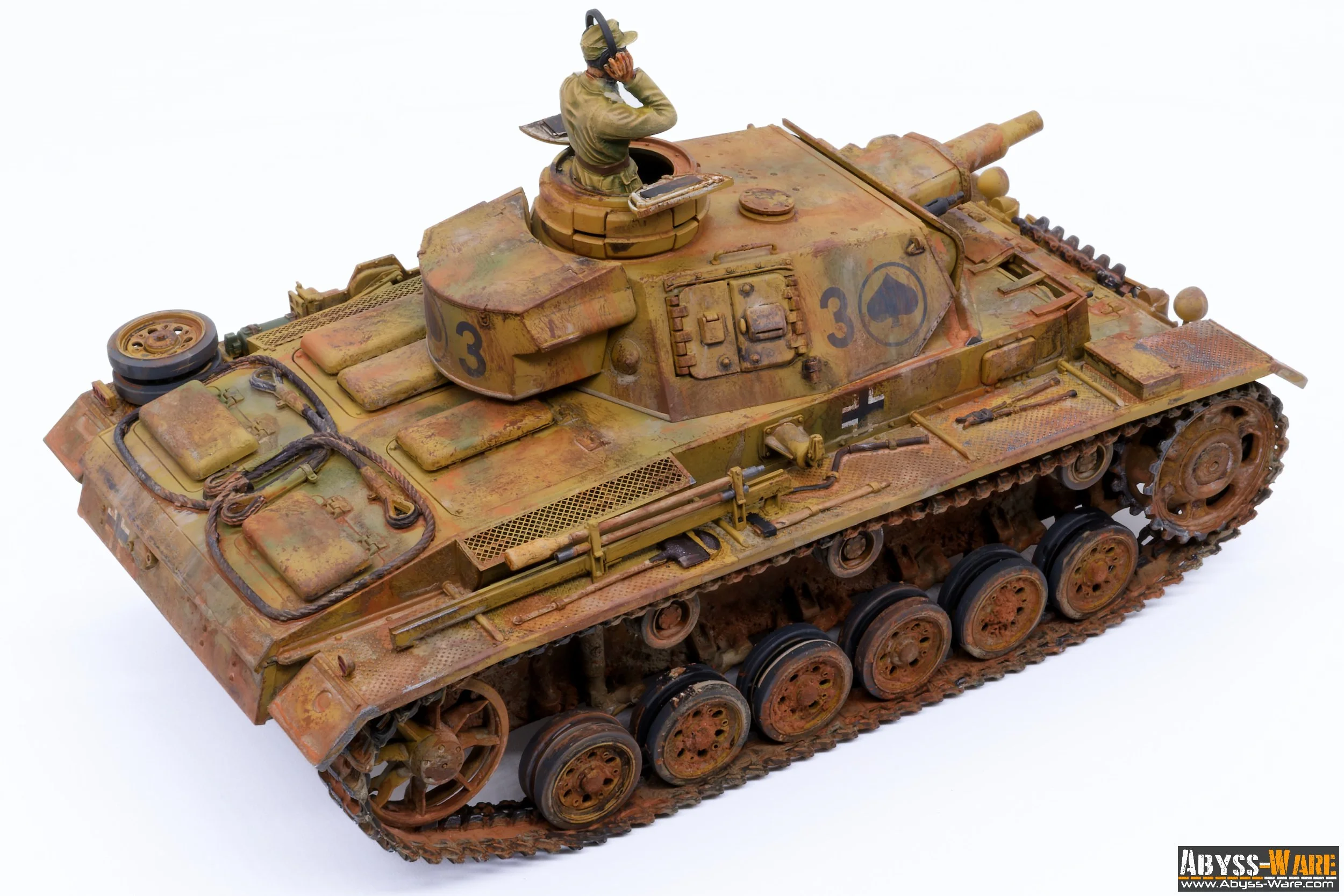
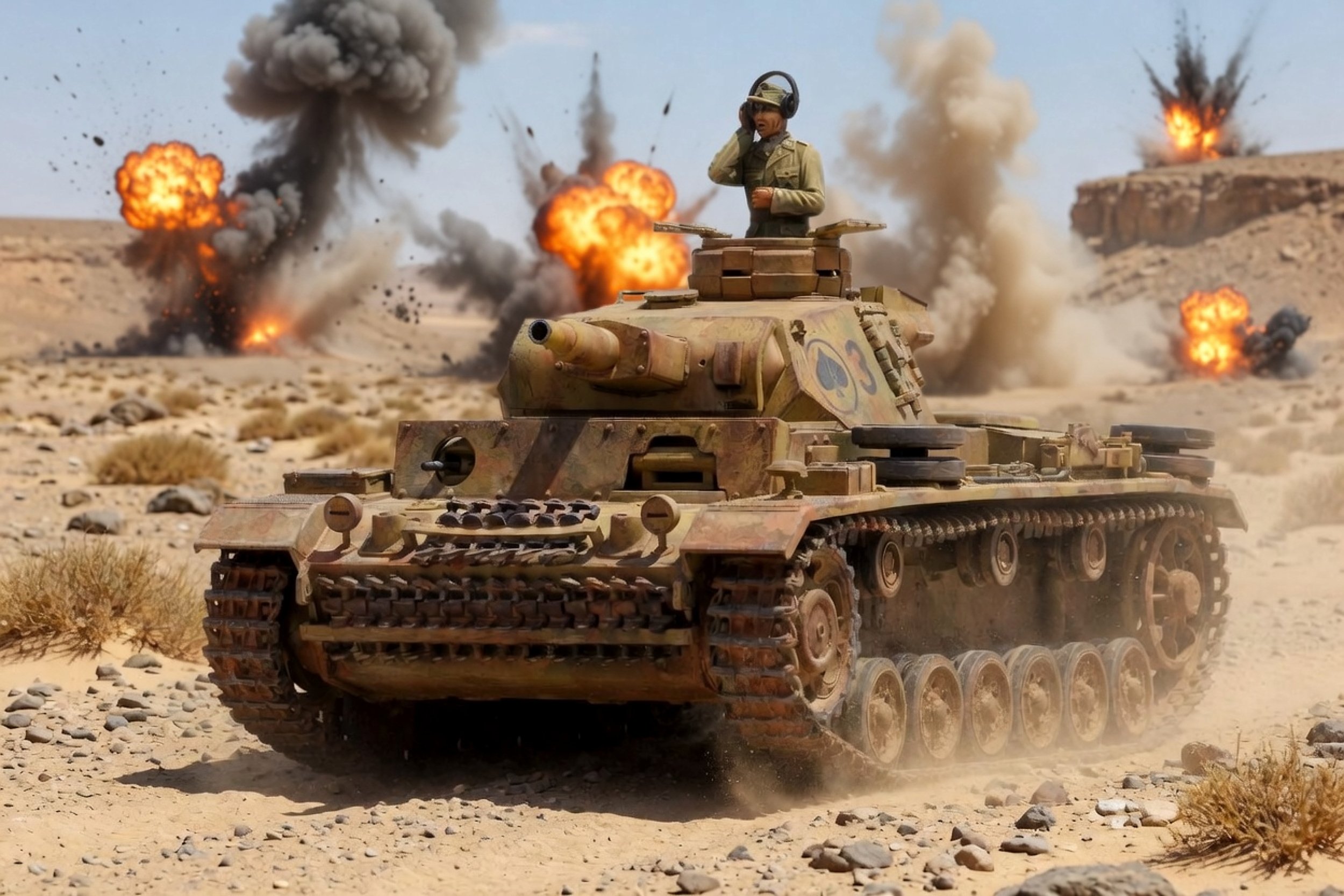
Note: The images presented bellow feature photographs of actual scale models, enhanced with AI-generated backgrounds and environments for visual effect. These visuals are intended for illustrative and artistic purposes only and should not be interpreted as real photographs or historical references.
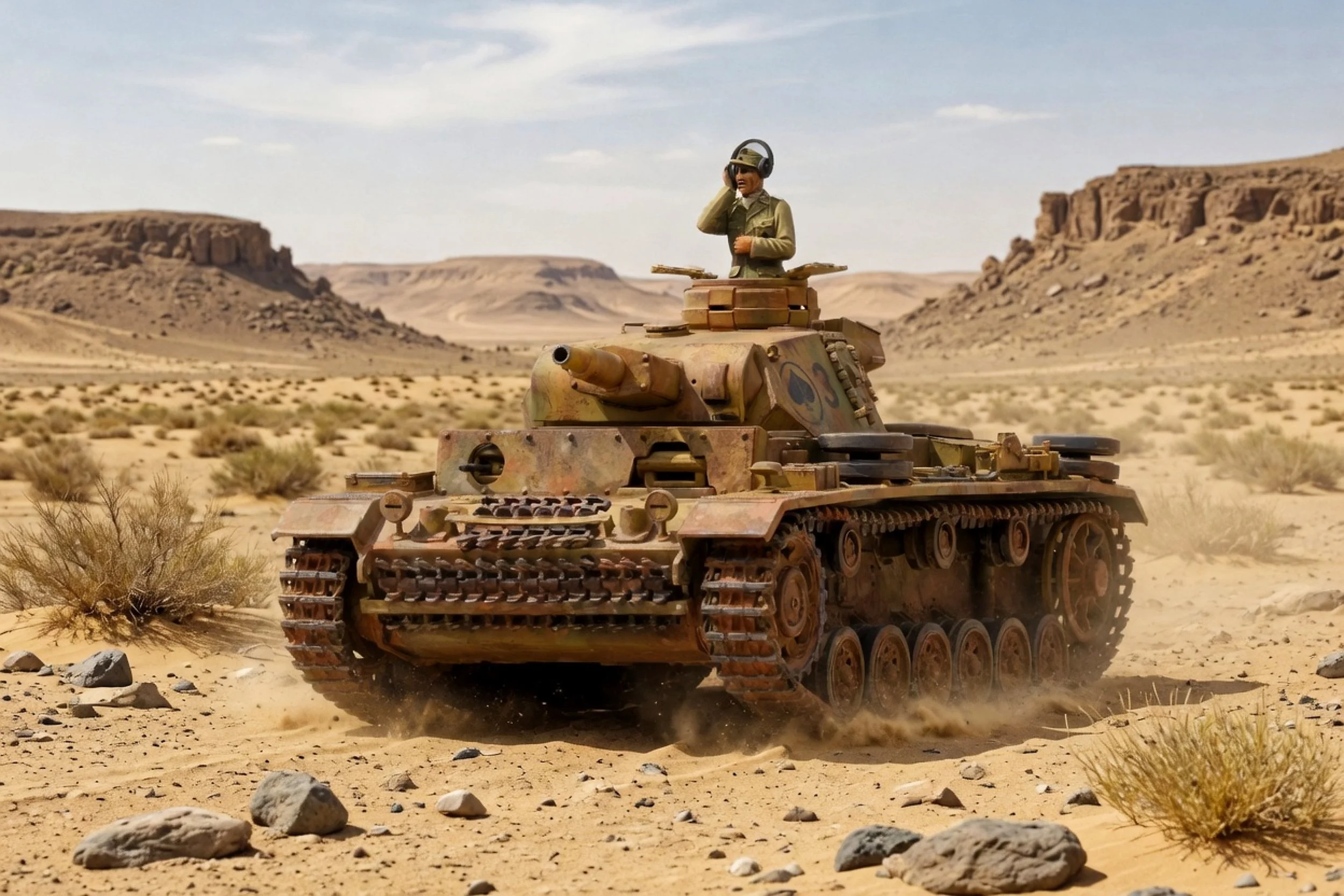
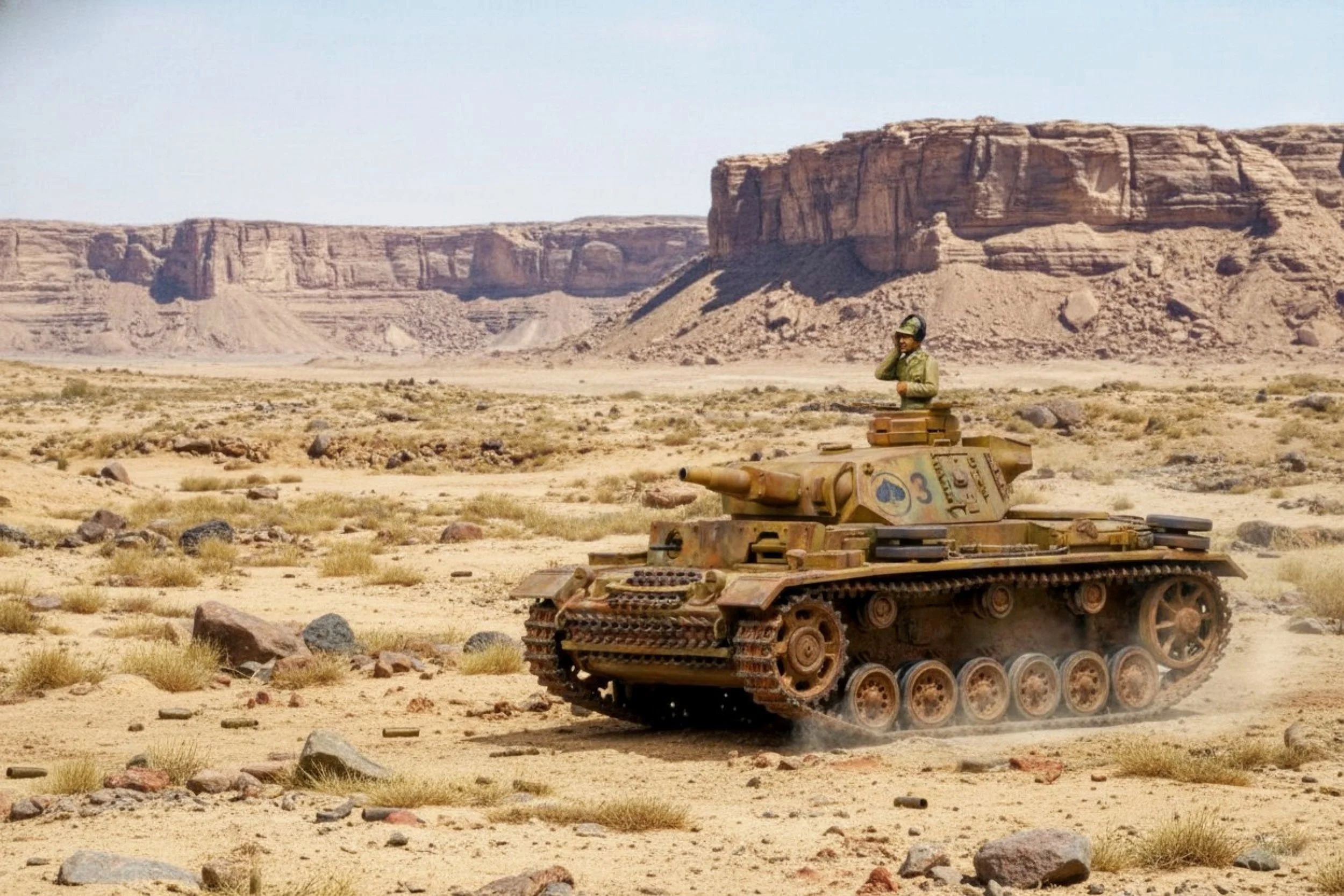
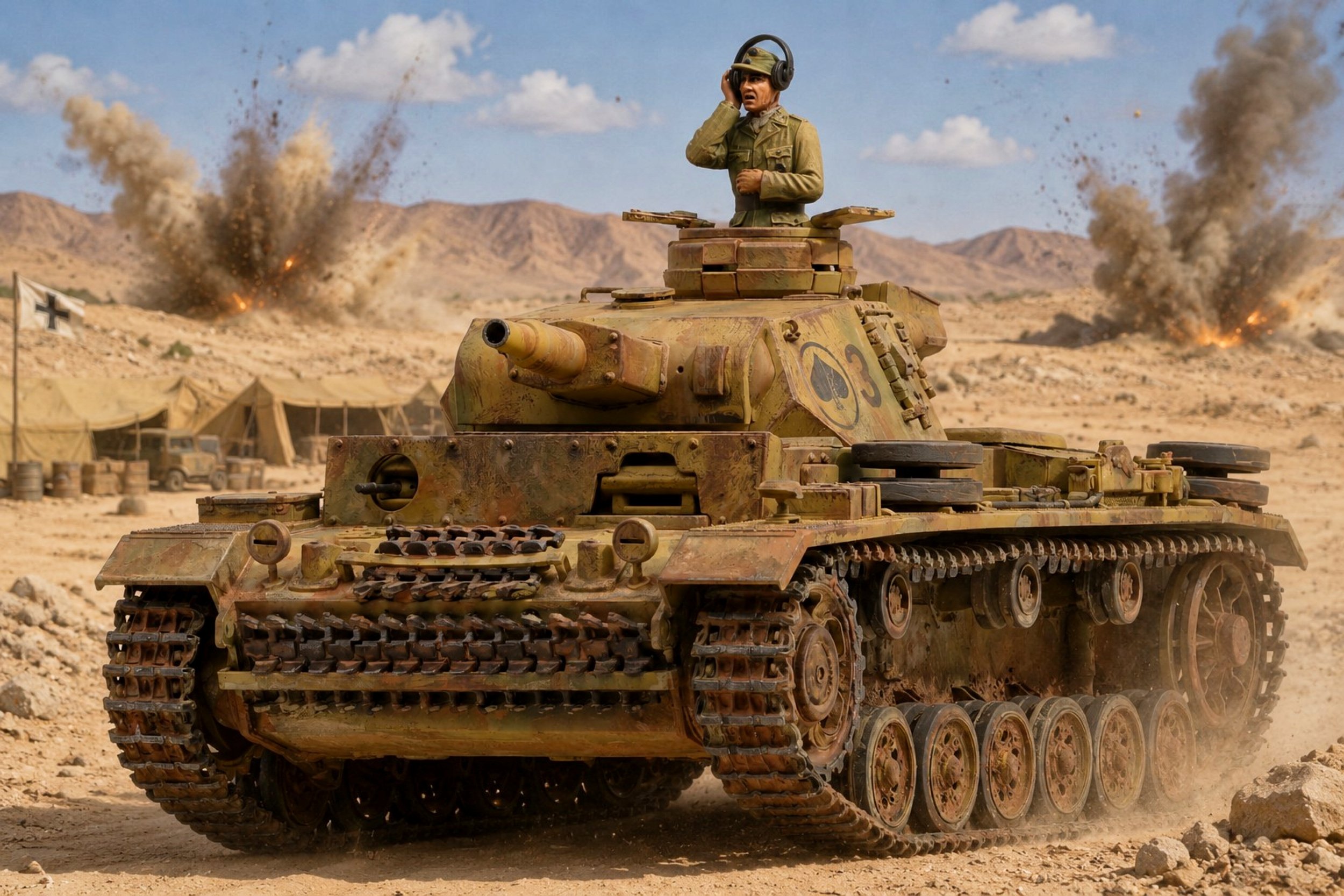
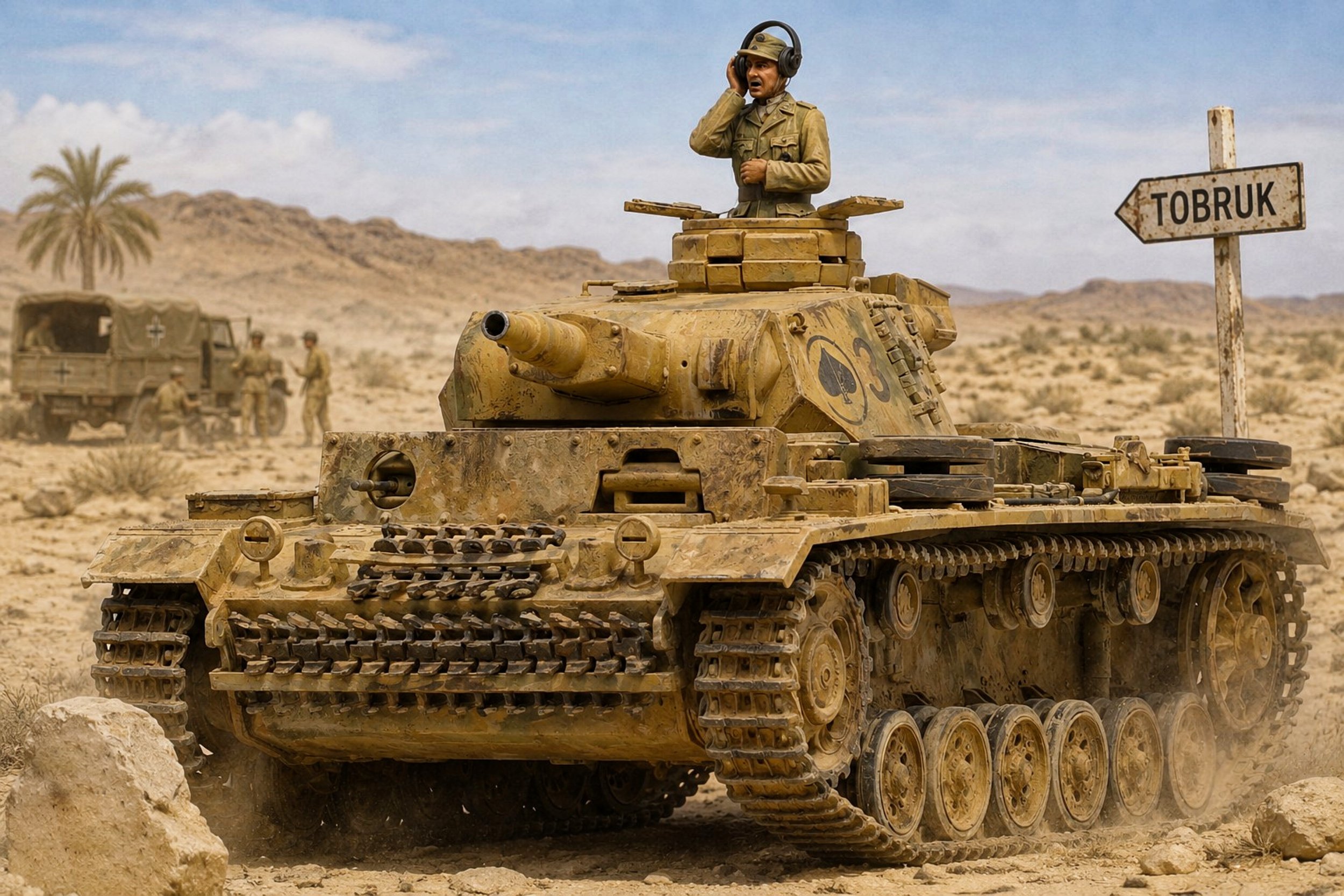
The Panzer III: Germany's Backbone of Blitzkrieg
Introduction: Iron Spine of the Wehrmacht
In the annals of armored warfare, few vehicles have occupied as pivotal a role as the Panzerkampfwagen III - commonly known as the Panzer III. Neither the largest nor the most powerful tank of the Second World War, it nonetheless served as the essential foundation upon which Germany built its armored doctrine and won its earliest, most spectacular victories. For three years, from the lightning conquest of Poland in 1939 to the grinding furnace of North Africa and the vast Eastern steppes, the Panzer III was the Wehrmacht's primary medium tank - the weapon around which divisions were organized, tactics refined, and ambitions projected. To understand the Panzer III is to understand something fundamental about how Nazi Germany intended to fight, and why that vision ultimately collided with the harder realities of a war that refused to end on schedule. The story of this tank is a story of innovation, adaptation, obsolescence, and the relentless pressure of industrial-age warfare. It is the story of how a nation's strategic gamble was mounted on thirty tons of steel, diesel fuel, and doctrine.
Origins: A Tank for a New Kind of War
The conceptual roots of the Panzer III reach back into the mid-1920s, when Germany, stripped of its armored forces by the Treaty of Versailles, began quietly rethinking what a modern armored vehicle should be. While German officers theoretically studied tanks, they also observed the British and Soviet experiments of the late 1920s with great interest. Thinkers like Heinz Guderian were absorbing the works of J.F.C. Fuller and Basil Liddell Hart on mechanized warfare, and translating those ideas into German operational doctrine. By 1934, with the Nazi regime openly violating Versailles, the Army Weapons Office issued a specification for a new class of medium tank. The Germans organized their armored force around two complementary vehicles: a support tank armed primarily with a large-caliber, low-velocity gun intended to suppress infantry and destroy field fortifications (this became thePanzer IV), and a true fighting tank armed with a high-velocity gun capable of defeating enemy armor. The latter requirement would become the Panzer III.
The specification called for a vehicle of approximately 15 tons, capable of speeds up to 35 km/h, and armed with a 37mm high-velocity cannon - the standard anti-tank weapon of the mid-1930s - as well as two coaxial machine guns. Crucially, the designers were instructed to build the turret ring wide enough to accept a larger gun in the future. This single decision, often overlooked in accounts of the tank's early history, would prove to be one of the most consequent engineering choices of the war. Four manufacturers - Daimler-Benz, MAN, Rheinmetall, and Krupp - submitted prototypes between 1936 and 1937. After competitive trials, Daimler-Benz was selected as the primary manufacturer, largely on the strength of their suspension design and the overall robustness of their engineering. The design that emerged was designated the Panzerkampfwagen III (SdKfz141) and would go through an extraordinary thirteen major production variants over itsoperational life.
Anatomy of the Machine: Design and Engineering
The Panzer III was a five-man tank, which gave it a significant tactical advantage over contemporary designs that forced the commander to double as gunner. The crew consisted of a commander, a gunner, a loader, a driver, and a radio operator who also managed the hull machinegun. This division of labor allowed each man to specialize, and it freed the commander from the distraction of firing the weapon, permitting him to observe the battlefield and direct both the tank and his unit. The tank's hull was of welded steel construction, with vertical armor plates that, while simpler to produce than sloped designs, were thicker than those of most contemporaries. Early production models carried 15mm of armor on all sides - adequate in 1936 but already marginal by the outbreak of war. Successive variants would see this figure climb dramatically: the Ausf. E and F models introduced 30mm frontal armor, and later the addition of 30mm appliqué plates on many models brought effective frontal protection to 60mm, though this field modification added unwanted weight. The suspension was a torsion bar system, modified from the Ausf. E onwards into the distinctive six-road-wheel arrangement with three return rollers that became the hallmark of the Panzer III's profile. This independent torsion bar suspension gave the tank a smoother ride over rough terrain than the leaf-spring systems used by many contemporaries, and it proved durable enough to survive the punishing conditions of Russian mud and desert sand.
Power was provided by a Maybach HL 120 TRM twelve-cylinder water-cooled petrol engine developing 300 horsepower. This engine was shared with the Panzer IV and became one of the standard powerplants of the German armored force, which simplified logistics considerably. The engine drove the tank through a ZF SSG 77 synchromesh gearbox offering ten forward gears and four reverse gears - an advanced transmission that gave drivers fine control over speed and helped the tank perform well in the variable conditions of cross-country movement. Maximum road speed was approximately 40 km/h, and cross-country speed a more modest 15-20 km/h depending on terrain. The turret was electrically traversed, a feature that again gave the Panzer III an edge overcompetitors whose crews had to crank their turrets by hand. Electrical traverse was faster and smoother, allowing the gunner to track moving targets with greater precision. The commander'scupola was a distinctive feature: a low, circular structure with five periscopes providing all-round observation. In conjunction with a dedicated radio set - a feature that German tanks carried as standard equipment from the beginning of the war, unlike their opponents - this gave the Panzer III commander an awareness of the battlefield that proved decisive in early engagements.
The Gun Question: A Story of Calibers and Compromise
No aspect of the Panzer III's history generated more controversy, or more consequence, than the evolution of its main armament. The original specification had called for a 50mm gun, which German ballistics experts knew would provide superior penetration performance. However, the German Army's infantry branch, which controlled the supply of anti-tank ammunition, used the 37mm Pak 36 as their standard weapon, and they insisted on standardizing the tank's gun with that caliber to simplify the logistics chain. The result was a compromise that almost everyone in the armor branch knew was inadequate. The 3.7cm KwK 36 L/46.5, while accurate and reliable, lacked the punch to deal confidently with heavier enemy armor even in 1939. Guderian and others lobbied hard for the 50mm gun but were overruled. It was only after the Polish campaign revealed the deficiencies of the 37mm round that authorization was given to rearm the Panzer III with the 5cm KwK 38 L/42, a 50mm gun thatdramatically improved penetration performance. The rearming began with the Ausf. F and accelerated through the G, H, and J variants. The 50mm gun transformed the Panzer III's anti-tank capability: it could now comfortably defeat the T-34's frontal armor at combat ranges in 1941, though this margin of superiority would erode as Soviet tank design improved. A longer-barrelled version, the 5cm KwK 39 L/60, was introducedon the Ausf. J (late production), L, and M variants. This gun, with its higher muzzle velocity, extended the tank's effective engagement range and substantially improved penetration against sloped armor.
The final major armament change came with the Ausf. N, which received the short 7.5cm KwK 37L/24 gun - the same weapon used on early Panzer IV models. This transformation turned the Ausf. N into an infantry support vehicle, giving up anti-tank capability in exchange for a devastating high-explosive shell. These vehicles were primarily used to support Tiger I heavy tank battalions, providing close-in protection against enemy infantry while the heavy tanks dealt with armored threats. The gun story encapsulates a broader truth about the Panzer III: it was always being asked to do more than its original design intended, and it was perpetually being modified to keep pace with awar that kept evolving faster than peacetime planners had anticipated.
Combat Debut: Poland and the Lessons of Battle
The first operational use of the Panzer III came in the invasion of Poland in September 1939. Atthis stage, only a small number of Ausf. A through D models were available - perhaps 98 Panzer IIIs out of a total German armored force of around 2,800 vehicles. The vast majority of German tanks in Poland were the light Panzer I and Panzer II, supplemented by Czech-built Pz.38(t) andPz.35(t) tanks. The Polish campaign, while swift, was not without lessons. German armor encountered several situations where the 37mm gun proved disappointing against Polish armored cars and the handful of more modern tanks the Poles deployed. More significantly, the campaign validated the concept of combined arms warfare - tanks working in close concert with motorized infantry, artillery, engineers, and aircraft - that lay at the heart of what the world was beginning to call Blitzkrieg. The Panzer III's five-man crew and standard radio fit contributed to the tactical flexibility this doctrine demanded.
The campaign also exposed problems with reliability. Early Panzer III variants suffered from mechanical teething troubles, particularly with their complex suspension and transmission systems. Post-campaign analysis drove a series of engineering refinements that improved durability in subsequent production batches. The Germans took the lessons of Poland seriously, and the Ausf. E that entered production in late 1939 incorporated numerous improvements to address the deficiencies revealed in combat.
The Western Campaign: Triumph of Doctrine
By May 1940, the German armored force had grown substantially and the Panzer III had matured as a design. The assault on France, Belgium, and the Netherlands - Operation Fall Gelb - saw around 350 Panzer IIIs in action, now rearmed with the 50mm gun in many cases, operating alongside Panzer IVs, Czech tanks, and the still-numerous lighter vehicles. The French possessed tanks that were in many ways technically superior to the German machines. The Char B1 bis heavy tank and the Matilda II infantry tank both carried armor that the standard German guns of 1940 struggled to penetrate. Yet the German armor triumphed comprehensively in a six-week campaign that stunned the world. The explanation lies not in the quality of individual vehicles but in the superiority of German command and communications, the flexibility of their operational doctrine, and the paralyzing effect of the Ardennes breakthrough on French strategic coherence.
The Panzer III was central to this triumph not because it was the best tank on the battlefield, but because it was used in the right way. Commanders in Panzer IIIs could communicate instantaneously with each other and with higher headquarters. They could respond to opportunities faster than their opponents could formulate orders. They could concentrate and disperse rapidly. The five-man crew meant that the tank commander could focus entirely on thetactical situation, directing his vehicle and coordinating with neighboring tanks rather than wrestling with the gun. The fall of France and the Low Countries in forty-six days validated German armored doctrine so spectacularly that it obscured a number of uncomfortable truths about German tank quality. Those truths would become impossible to ignore a year later, on the steppes of Russia.
North Africa: The Desert War
While preparations for Operation Barbarossa consumed most of Germany's armored resources through 1940 and into 1941, a smaller but vivid drama was playing out in the deserts of Libya and Egypt. Following the near-collapse of the Italian position in North Africa, Germany dispatched the Afrika Korps under Erwin Rommel in February 1941, and with it a substantial force of Panzer IIIs. The desert proved to be, in many ways, ideal tank country. The vast, open spaces allowed for the long-range gunnery at which the Panzer III's well-trained crews excelled. The hard-packed sand and gravel of the Libyan desert, while harsh on mechanical systems, was far more hospitable than the bottomless mud of Russia. Visibility was excellent, logistics were comprehensible if demanding, and the scale of the conflict - while intense - was manageable compared to the titanic collision that was developing further east.
Rommel's Afrika Korps developed a highly effective combined arms style that exploited the Panzer III's communication capabilities to the full. Anti-tank guns, particularly the legendary 88mm Flak gun used in the anti-tank role, were integrated with the armored advance in a way that made attacking German positions extraordinarily costly. The Panzer III worked in concert with these guns, using mobility to draw enemy armor onto prepared killing grounds. Against the early British forces, the Panzer III armed with the 50mm gun performed well. The British Cruiser tanks of the period were thinly armored and often mechanically unreliable, and German gunnery training gave the Wehrmacht crews a consistent edge in accuracy. However, the arrival of the Matilda II and later the American-supplied Grant and Sherman tanks complicated matters. The Grant's 75mm gun outranged the short 50mm, and the Sherman's combination of firepower, reliability, and armor pushed the Panzer III toward its operational limits. The long-barrelled 50mm gun of the Ausf. L and M models restored a degree of parity, but by late 1942 the Panzer III was increasingly supplemented by the Panzer IV with its long 75mm gun, which would become the dominant German medium tank in the theater. The final Panzer III variants fought through the Tunisian campaign until the Axis surrender in May 1943, by whichtime many crews had accumulated two years of desert combat experience of extraordinary intensity.
Barbarossa and the Eastern Front: Meeting the T-34
Nothing in the experience of the previous two years fully prepared the Panzer crews for what they encountered when Operation Barbarossa began on June 22, 1941. The sheer scale of the Soviet Union dwarfed every previous campaign. The distances were staggering, the roads often non-existent, and the enemy numbered in the millions. And then, in the opening days of the invasion, German tank crews began encountering a vehicle that should not, by the calculationsof pre-war intelligence, have existed. The T-34 was a shock. Its sloped armor, which dramatically reduced the effectiveness of Germananti-tank rounds, its wide tracks that gave it superior cross-country mobility, and its 76mm gun that could penetrate the Panzer III's frontal armor at combat ranges - all of these characteristics made it a technically superior vehicle. Similarly, the KV-1 heavy tank was all but immune to the standard 50mm gun at any practical combat range, requiring direct hits on the tracks or rear armor to disable it.
Yet the German army continued to win enormous victories in 1941. Hundreds of thousands of Soviet prisoners were taken in vast encirclement battles. Entire armies were destroyed. How was this possible when German tank technology was, in important respects, inferior? The answers are several, and they illuminate something important about the nature of armored warfare. First, Soviet tank crews in 1941 were often poorly trained and suffered from atrocious command and communication systems. Many Soviet tanks lacked radios entirely, forcing unit commanders to control their formations by flag signals - a system wholly inadequate for the fluid, fast-moving combat that the Germans imposed. Second, Soviet mechanized units were frequently committed piecemeal, without adequate infantry, artillery, or air support, and were destroyed in detail. Third, the Luftwaffe's dominance of the air in 1941 imposed enormous costs on Soviet armored formations moving by day. The Panzer III crews, by contrast, were professional, experienced, superbly trained, and led by officers with genuine tactical flexibility and initiative. The quality of German leadership at every level from squad to corps compensated substantially for the technical inferiority of their equipment. But this was a compensating factor, not an indefinitely sustainable advantage. As Soviet crews gained experience and Soviet industry cranked up production of T-34s, the balance would shift.
The long-barrelled 50mm gun introduced on late Ausf. J models and standardized on the Ausf. L gave the Panzer III the ability to penetrate the T-34's frontal armor under favorable conditions -a frontal shot at relatively close range in good visibility. The gun was, however, still at the edge of its capabilities against sloped Soviet armor, and the growing prevalence of the T-34/76 Model 1942 with its improved armor castings made engagements increasingly dicey. The winter of 1941-42 was catastrophic for German armor. The Soviet road network dissolved into mud in the autumn rains (the famous Rasputitsa, or "mud season"), bringing mechanized movement to a crawl. Then temperatures plunged to minus forty degrees Celsius, freezing engine lubricants solid and making the metal of tracks and suspension brittle. German equipment, designed for the temperate European climate, was not winterized. Soviet equipment, designed from the outset for Russian conditions, continued to function. The human cost to the Wehrmacht in that first Russian winter was enormous, and the material losses to German armor- from cold, mud, and combat - were severe.
The Decline: When the Panzer III Became Obsolete
The year 1942 marked the beginning of the end for the Panzer III as a front-line combat tank. The introduction of the long 50mm gun had bought time, and skilled crews continued to achieve impressive results, but the fundamental architecture of the vehicle was reaching its limits. The hull and turret ring could not accommodate a gun larger than 50mm without major structural redesign, and by 1942 a 50mm gun was no longer adequate to deal with Soviet armor at battlefield ranges. The decision was made to shift production emphasis to the Panzer IV, which had always had a wider turret ring and could accommodate the long 75mm gun that was now recognized as the minimum acceptable anti-tank weapon. The Panzer IV with the 7.5cm KwK 40 L/48 became the standard German medium tank, capable of defeating any Soviet tank in service at practical combat ranges. The Panzer III continued in production, but increasingly in the Ausf. N configuration - the infantry support variant with the short 75mm gun - and in the Sturmgeschütz configuration.
By the time of the great tank battle at Kursk in July 1943, Panzer IIIs were present but played a secondary role. The main striking power of the German armored forces at Kursk came from the Panzer IV, the Panther (making its combat debut, not without teething problems), and the Tiger I. Panzer III Ausf. Ns provided close-in infantry support for the heavier vehicles, and StuG IIIs in large numbers served as mobile anti-tank assets, but the era of the Panzer III as a tank-versus-tank fighter was essentially over. Production of Panzer IIIs ceased in August 1943, though vehicles already in the inventory continued to serve in secondary theaters, in training roles, and as the basis for specialist vehicles. The StuG III continued in production until the end of the war, and the chassis itself lived on in various configurations until 1945, a remarkable testament to the soundness of the original engineering.
Commanders and Crews: The Human Element
To speak of the Panzer III only in terms of specifications and production numbers is to miss something essential about what made it effective. The tank was a tool, and like any tool, its value was determined largely by the skill and courage of those who wielded it. German Panzer crews in the first years of the war were, by any measure, an elite. The Wehrmacht's pre-war training program had emphasized gunnery, tactical decision-making, and vehicle maintenance to a degree unmatched by any other army. Commanders were trained to exercise initiative - to identify and exploit opportunities without waiting for orders from above. This philosophy, rooted in the Prussian tradition of Auftragstaktik (mission tactics), was particularly well-suited to the fast-moving, fluid character of armored warfare. Many of the war's most celebrated tank commanders fought in Panzer IIIs. Rommel himself commanded from a Panzer III command variant in North Africa, using its radios to orchestrate his operations with a speed and directness that repeatedly confounded British commanders. Walter Model, Paul Hausser, and scores of less-famous officers built their reputations in these vehicles, developing the tactical instincts that would serve them throughout the war.
The crew's experience inside the tank was demanding. The interior was cramped, loud, and subject to extremes of temperature - freezing cold in Russian winters, oven-like heat in the African desert. The smell of diesel fuel, gun propellant, and unwashed bodies was omnipresent. Visibility from inside the vehicle, despite the commander's all-round periscopes, was limited, and the sudden transition from the noise and confusion of battle to the terrifying stillness of aburning or disabled tank was an experience that left permanent marks on those who survived it. Casualty rates among tank crews were high, particularly on the Eastern Front. A penetrating hit from an anti-tank round could kill the entire crew instantly, or trap them inside aburning vehicle. The proximity of so much fuel and ammunition meant that many disabled tanks became pyres. Crews who survived developed bonds of extraordinary intensity, the kind of comradeship forged only in circumstances where survival depends on complete mutual trust.
Production and Industrial Context
The Panzer III was manufactured primarily by Daimler-Benz, with additional production contracted to MAN, Henschel, Alkett, MIAG, and several other firms. Total production across all variants reached approximately 5,774 tanks, plus an additional 10,086 StuG III assault guns onthe same chassis - making the Panzer III hull one of the most-produced armored fighting vehicle platforms in German service. These numbers, while substantial, need to be seen in context. Soviet production of the T-34 alone reached around 57,000 vehicles during the war. American production of the Sherman exceeded 49,000. German industry, constrained by resource shortages, bombing, and - until 1943 - a deliberate policy of maintaining a "peacetime economy" rather than full wartime mobilization, could not match the output of the Allied powers. The quality of German armored vehicles was generally high, but quality could not indefinitely compensate for the overwhelming weight of numbers that the Allied industrial complex was capable of generating. The shift of production focus from the Panzer III to the Panzer IV and then to the Panther represented sound tactical thinking but imposed transition costs. Each new vehicle required tooling changes, new supply chains, and retraining of crews and maintenance personnel. The German preference for qualitative superiority over quantitative sufficiency was a rational response to the industrial asymmetry of the war, but it was ultimately a losing strategy against opponents whose factories were beyond the reach of German air power.
Strategic Significance: What the Panzer III Meant for the War
The Panzer III must be assessed not merely as a weapons system but as a strategic instrument - a means by which Germany prosecuted its vision of rapid, decisive warfare. In the period from 1939 to 1942, it served that purpose effectively. The victories in Poland, France, the Balkans, and the opening phase of Barbarossa were not won by the Panzer III alone, but the Panzer III was the vehicle that embodied the tactical approach that made those victories possible. It demonstrated that a numerically inferior force, equipped with good communications, trained to exercise initiative, and organized around a coherent combined arms doctrine, could defeat larger forces that lacked those qualities. This was not a lesson unique to World War II - it echoes through military history - but the Panzer III illustrated it with particular clarity and at particularly enormous scale. It also demonstrated the limits of that approach. When opponents learned from defeat, when their industry produced more tanks than German fire could destroy, when their commanders developed the flexibility to respond to fast-moving situations, and when their soldiers found the determination to hold ground at terrible cost, the German advantages eroded. The Panzer III's decline mirrors the decline of German strategic fortunes: gradual, then accelerating, then irreversible.
Legacy: Echoes in Modern Armored Doctrine
The Panzer III's influence on subsequent armored vehicle design and doctrine extends well beyond the war in which it fought. Several of its design principles became standard features of post-war tanks.
The five-man crew arrangement - separating the commander from the gunner - was adoptedby most major tank-producing nations, though the trend toward automation has since reducedcrew sizes. The emphasis on crew communication and situational awareness, embodied in the commander's periscope cupola and standard radio fit, anticipated the digitally networked battlespace of modern armored operations. The torsion bar suspension, refined and strengthened, remains in widespread use.
The doctrinal lessons were perhaps even more enduring. The German experience with combined arms warfare - integrating tanks, infantry, artillery, engineers, and air power into mutually supporting teams - became the template for post-war NATO doctrine. The Panzer III was the primary vehicle through which that doctrine was validated, tested, and refined under the most demanding conditions imaginable. The tank also serves as a reminder of how quickly military technology can become obsolete. A vehicle that was the most capable instrument of its class in 1940 was a liability in a head-on tank engagement by 1943. The pace of technological change during the Second World War was extraordinary, compressing into a few years developmental cycles that might in peacetime have taken decades. The Panzer III's trajectory - from cutting edge to obsolete in four years of combat- illustrates the brutal demands that war places on engineering and industry.
Conclusion: The Tank That Defined an Era
The Panzerkampfwagen III was not the largest, not the most powerfully armed, and not the most heavily armored tank of the Second World War. Measured against the later products of German industry - the Panther, the Tiger - it appears almost modest. Set beside the Soviet T-34/85 or the American Sherman, it looks like what it was: a vehicle conceived in the mid-1930s that fought a war it was not designed to win. Yet to judge the Panzer III by the standards of 1944 is to miss the point entirely. Judged by the standards of the war it actually fought - the war of 1939 to 1942 - it was an instrument of extraordinary effectiveness. It won campaigns that reshaped the map of Europe and penetrated deeper into Russia than any invading force in history. It did so because it was part of a system: a system of doctrine, training, communications, and command that used the tank's genuine qualities - mobility, firepower adequate for its opponents, and above all, superior crew communication and tactical flexibility - to maximum effect. The Panzer III was the backbone of the Blitzkrieg. Its silhouette - angular hull, rounded turret, the distinctive smoke dischargers on the turret sides - became the visual symbol of German armored power in the early war years. Thousands of its crews did not survive the war. Many of those who did carried their experiences for the rest of their lives: the smell of burning diesel, the sound of a round striking the armor plate inches from their heads, the particular quality of lightin a Russian summer morning seen through the narrow aperture of a vision block.
The tank stands today in museums in Moscow, Aberdeen, Saumur, and Bovington - mute steel monuments to a time when the world's fate was decided in large part by machines like this one, and by the men who drove, loaded, aimed, and commanded them. It is a complex object: a symbol of military brilliance and strategic catastrophe alike, of tactical innovation in service of ideological horror. To understand it fully is to understand something about the terrible ingenuity of which human beings are capable, and about the way that technology, doctrine, and human will intersect in the crucible of total war. The Panzer III's story is ultimately a story about limits - the limits of technology, the limits ofdoctrine, the limits of a nation's strategic vision - and about the price that is paid when those limits are exceeded. It is a story that rewards careful study, not because its battles were glorious, but because they were real, and because the lessons they contain remain relevant as long asnations arm themselves and prepare for war.