
M4A3E8 SHERMAN "EASY EIGHT"
TAMIYA 35346
SCALE 1/35
.
;
The M4A3E8 Sherman, affectionately nicknamed the "Easy Eight," stands as one of the most iconic and effective variants of the American M4 Sherman medium tank during World War II. Developed in response to the evolving demands of armored warfare, this model entered production in late 1944 and addressed many shortcomings of earlier Shermans, earning its moniker from the "E8" designation for its advanced Horizontal Volute Spring Suspension (HVSS) system. At its core, the M4A3E8 featured a powerful Ford GAA V8 gasoline engine, delivering 500 horsepower for improved speed and reliability, reaching up to 26 mph on roads. Its most notable upgrade was the wider 23-inch tracks paired with the HVSS, which enhanced cross-country mobility, reduced ground pressure, and provided a smoother ride over rough terrain—crucial for operations in Europe's muddy fields and forests. Armament included the high-velocity 76mm M1A1 or M1A2 gun, capable of penetrating thicker German armor like that of the Panther or Tiger at reasonable ranges, supplemented by a .50 caliber anti-aircraft machine gun and two .30 caliber guns for infantry support. Weighing around 35 tons with sloped frontal armor up to 2.5 inches thick (often augmented with sandbags or extra plating by crews), the Easy Eight balanced protection, firepower, and maneuverability. It saw extensive action in the final push through Western Europe, including the Battle of the Bulge, where its reliability shone against superior Axis tanks. Post-WWII, it served in the Korean War, proving its versatility in diverse climates.
Today, the M4A3E8 symbolizes American industrial might and adaptability, with surviving examples in museums worldwide. Its legacy endures in military history, wargaming, and scale modeling, reminding us of the tank that helped turn the tide of war through sheer numbers and continuous improvement.
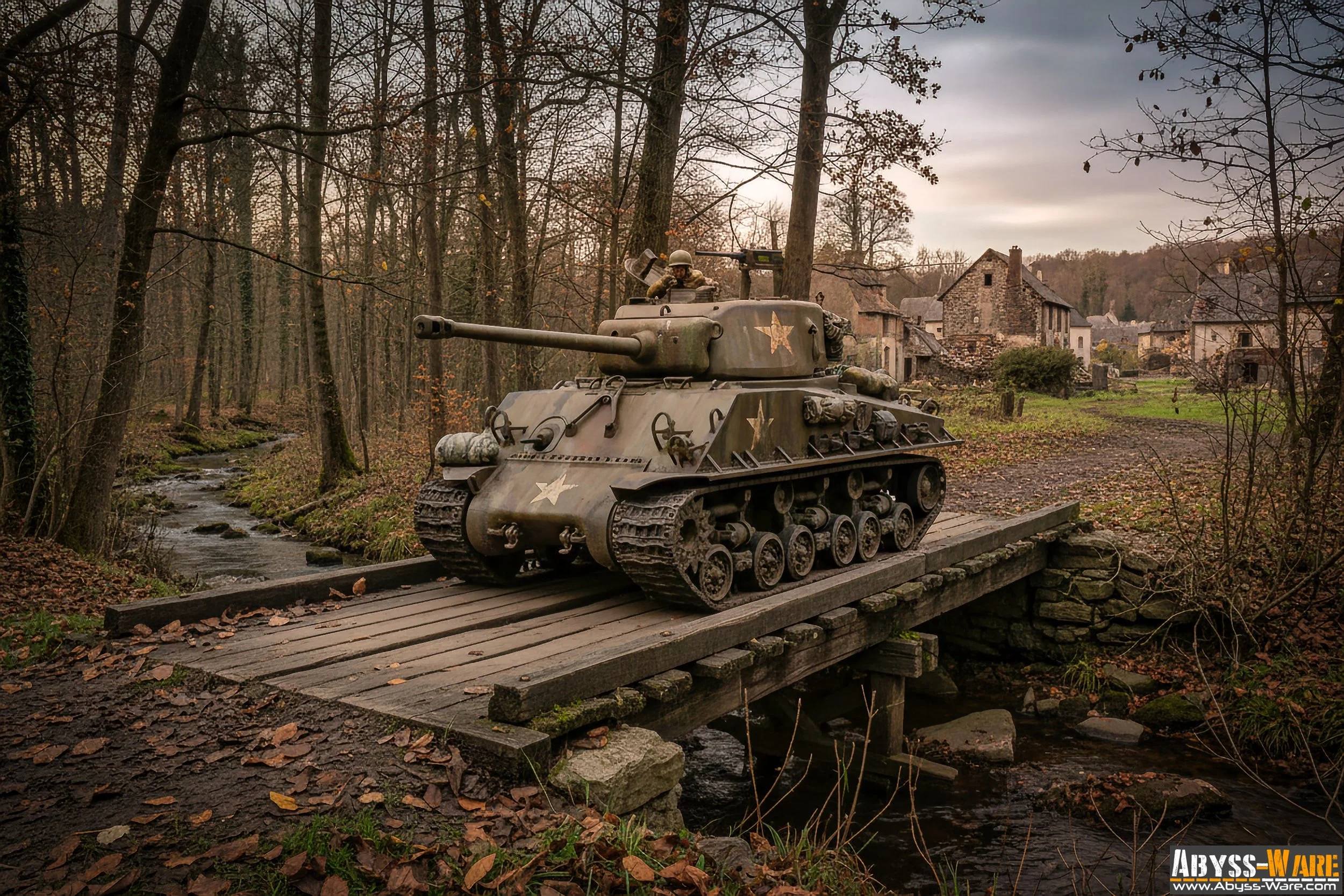
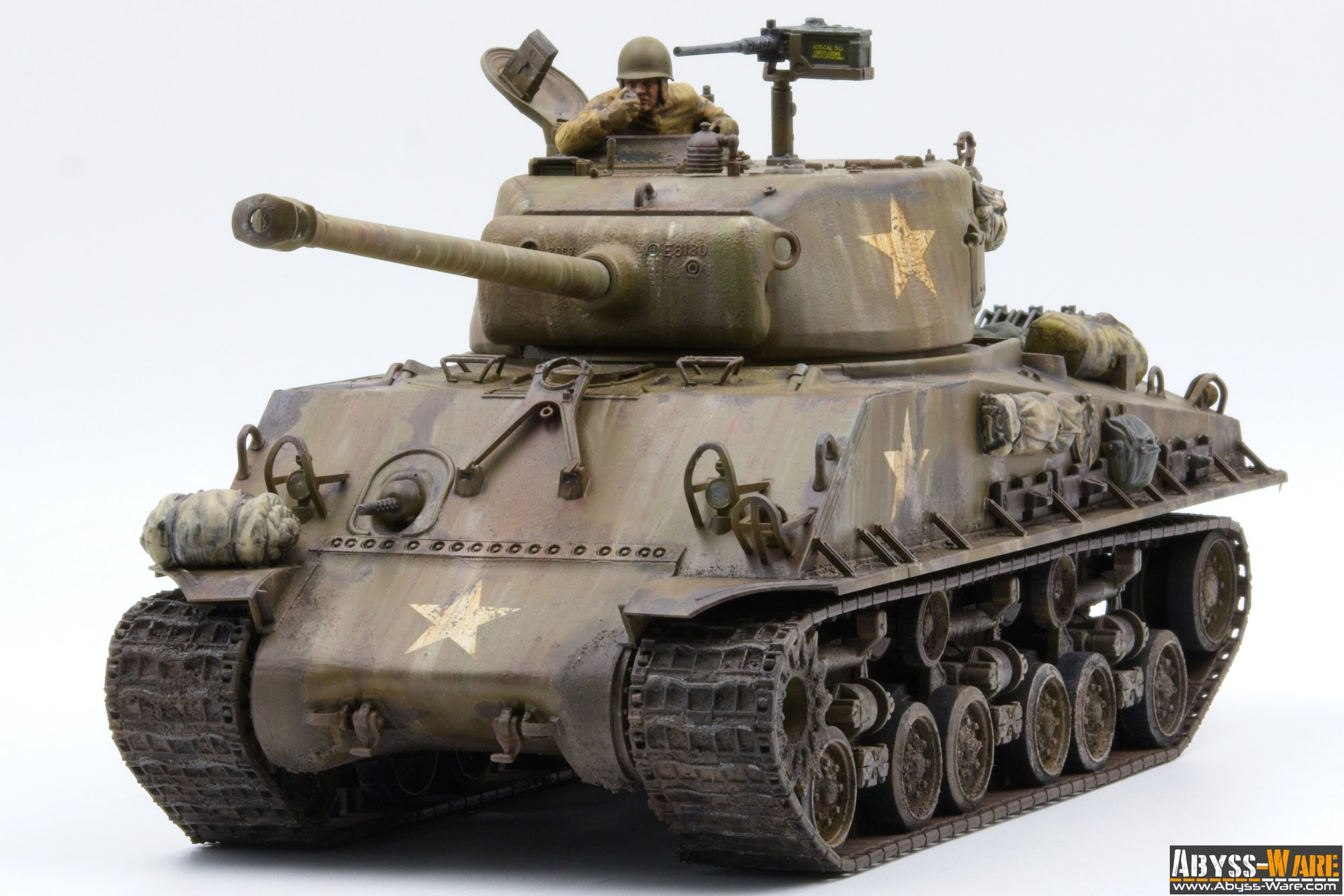
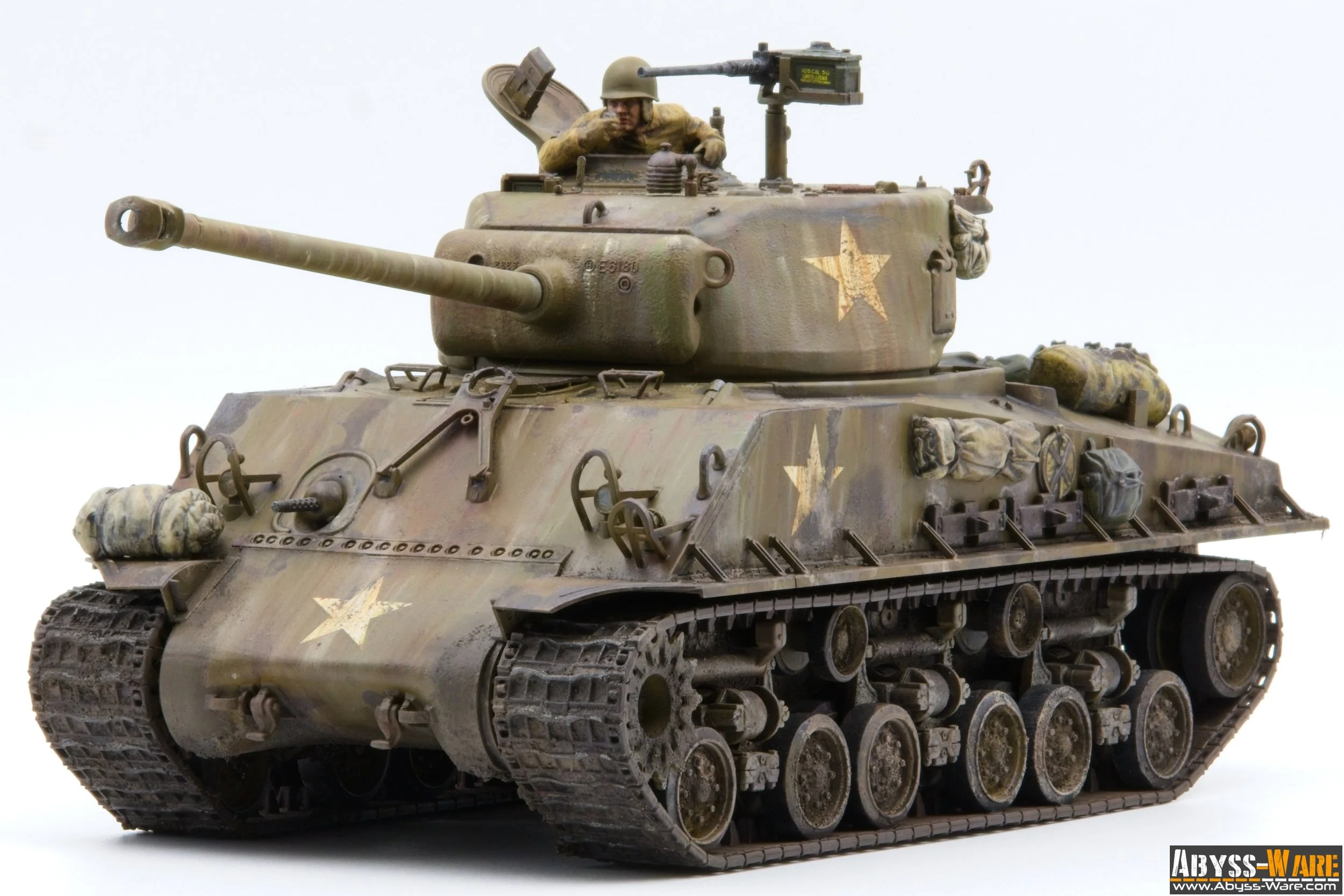
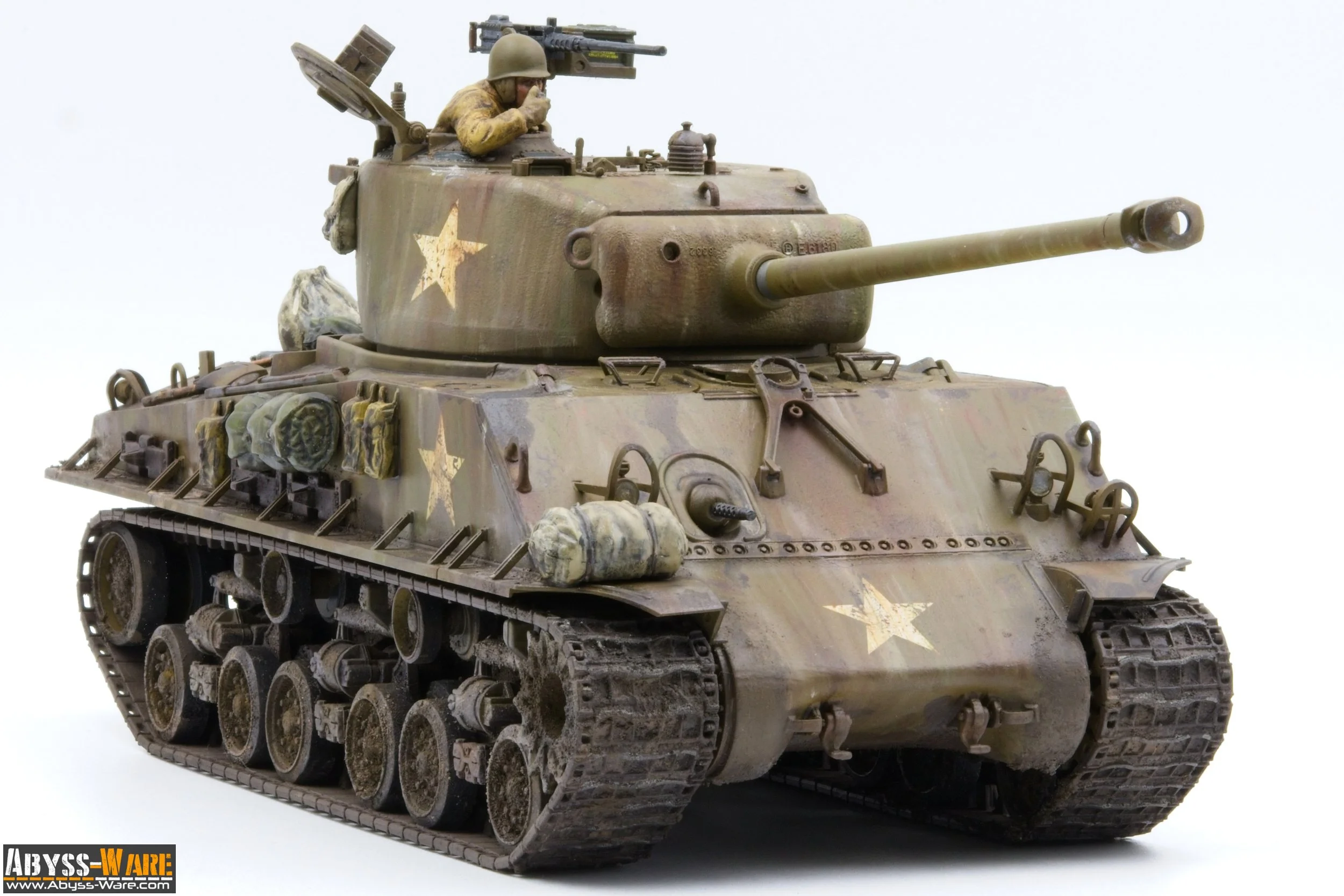
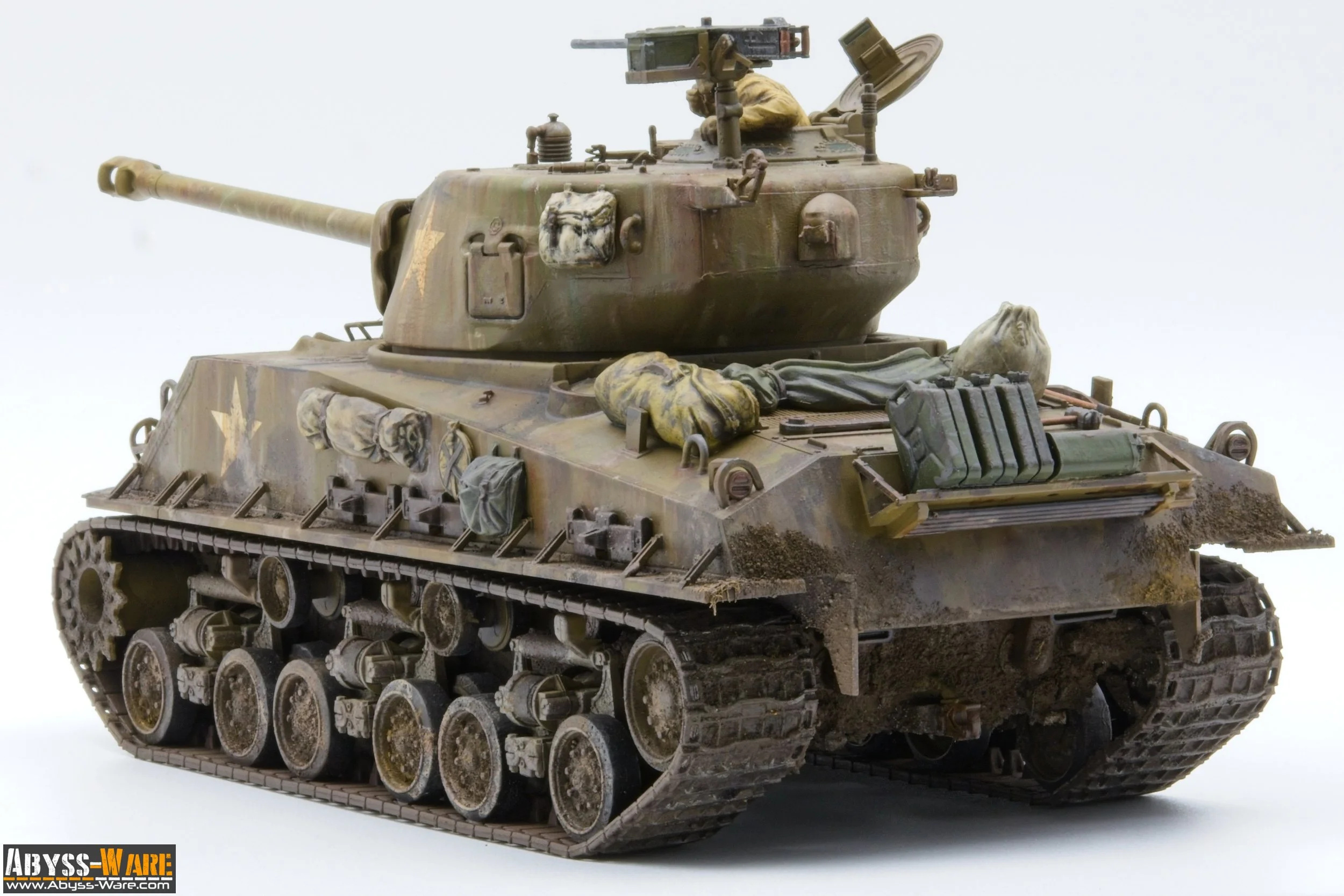
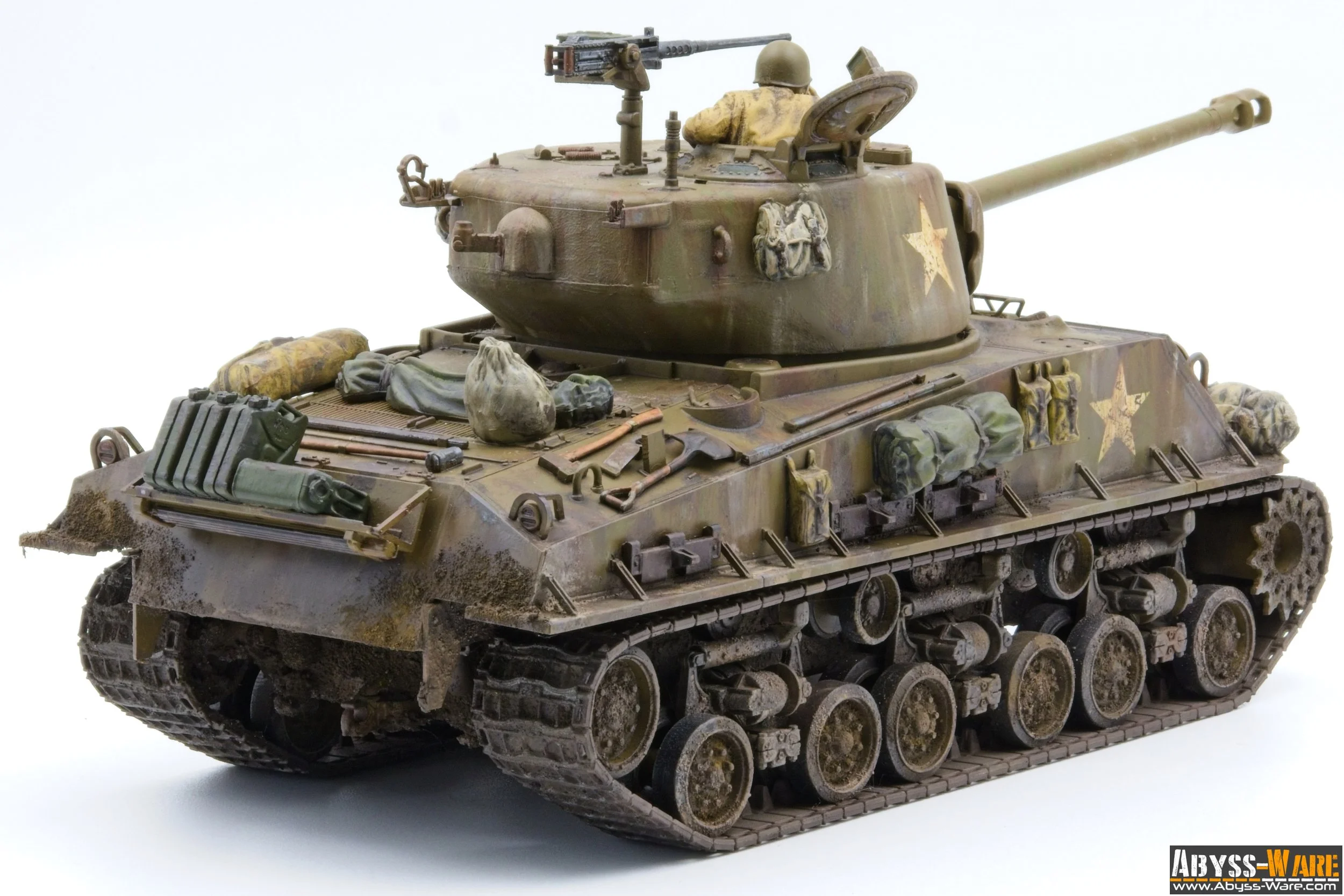
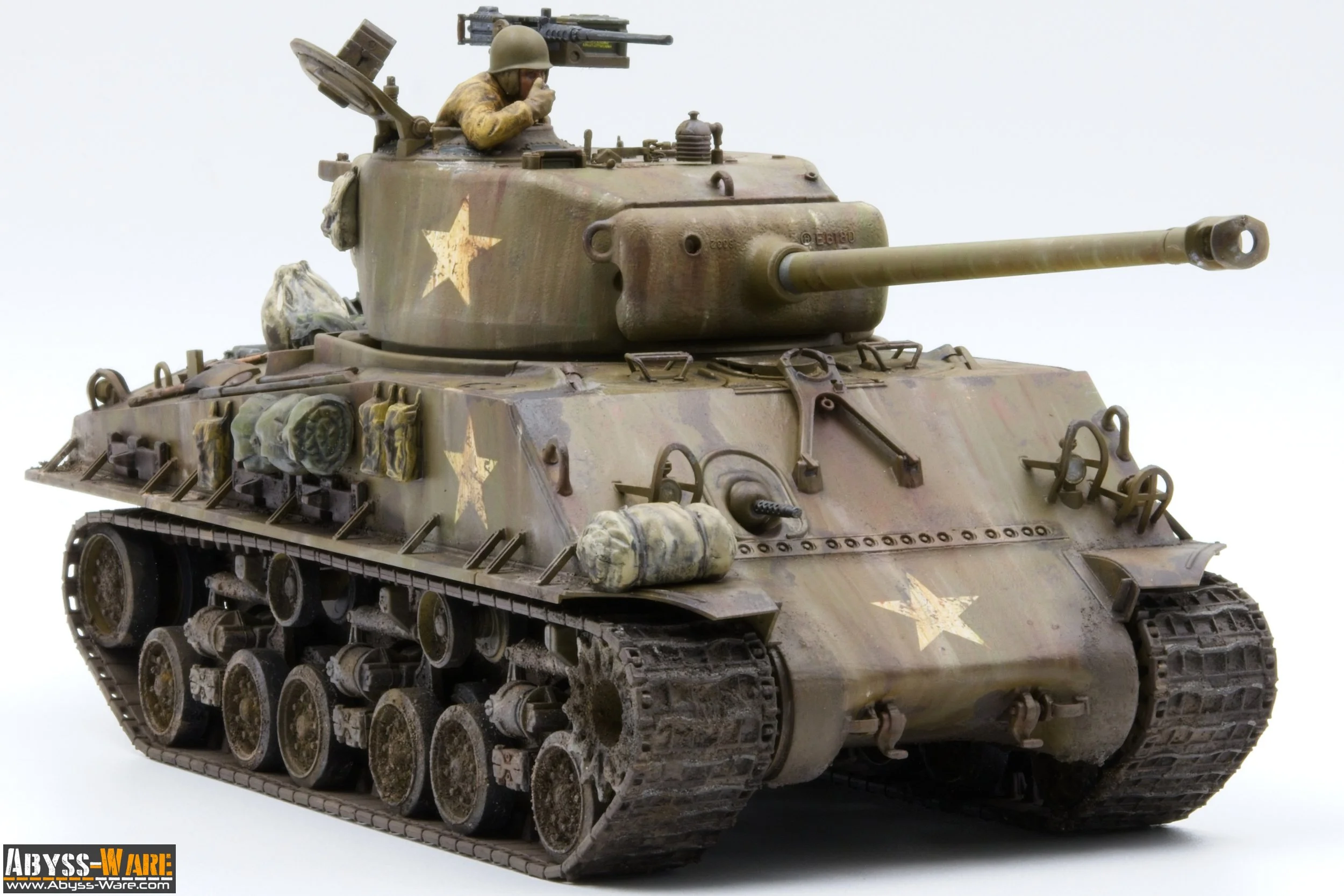
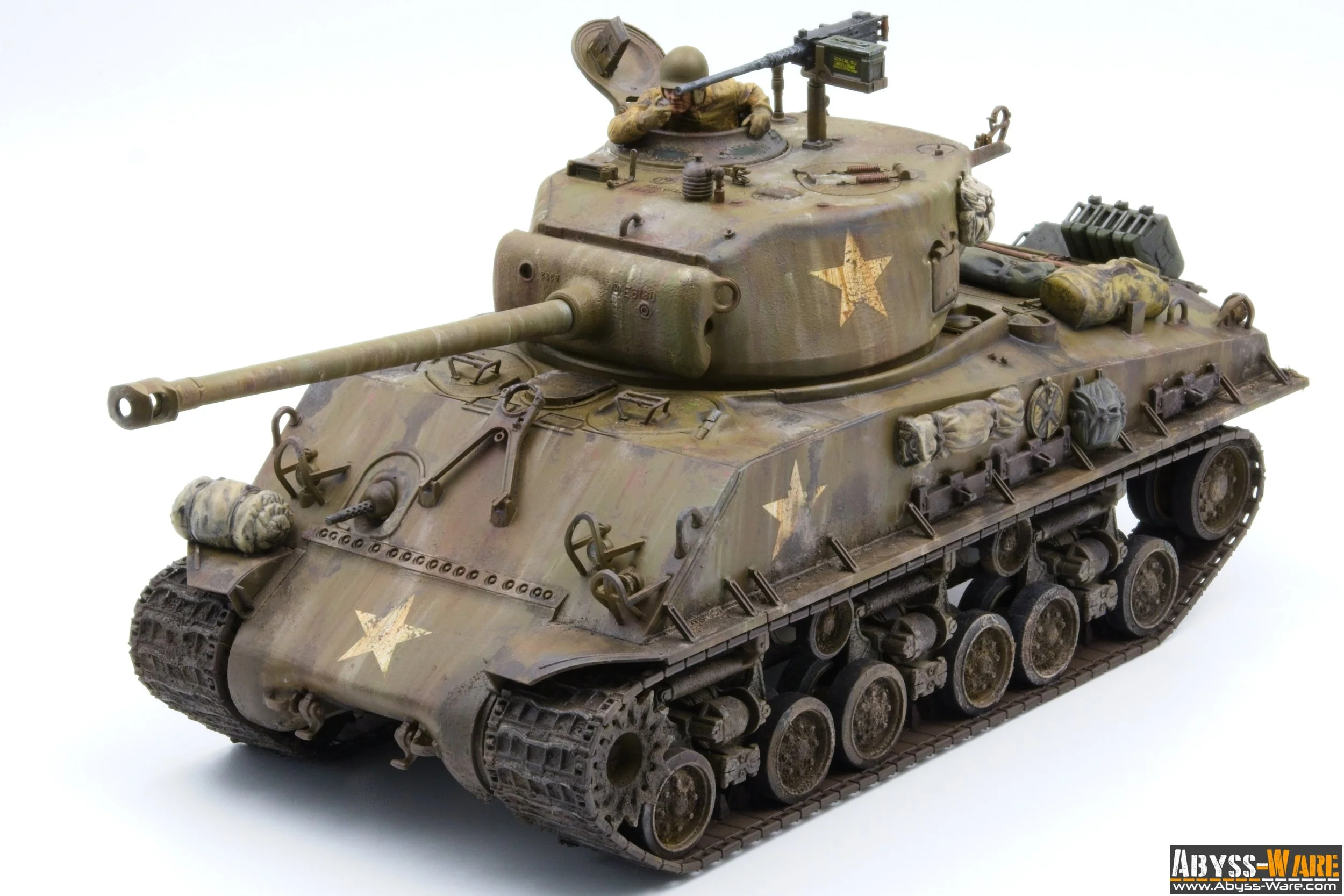
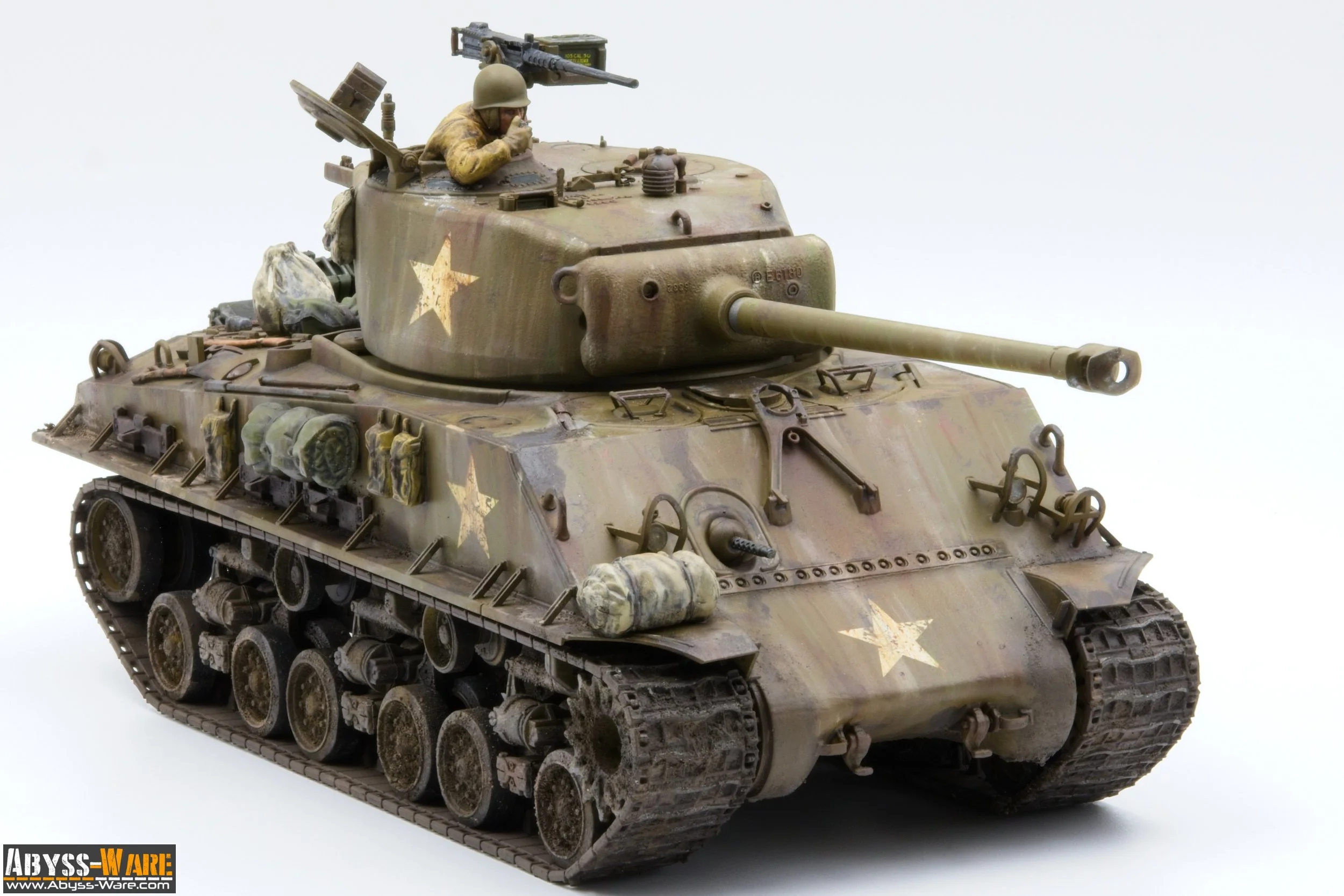
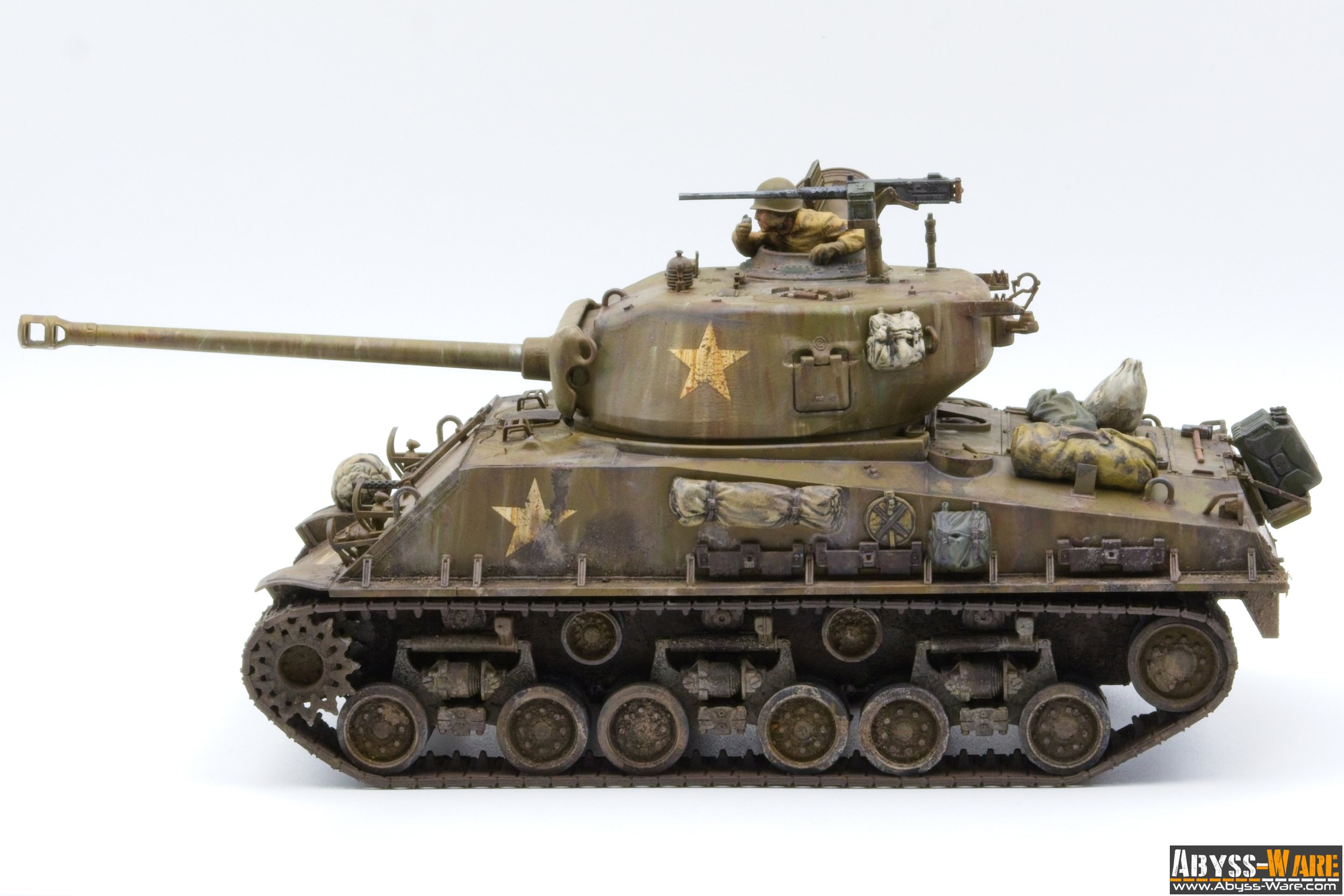
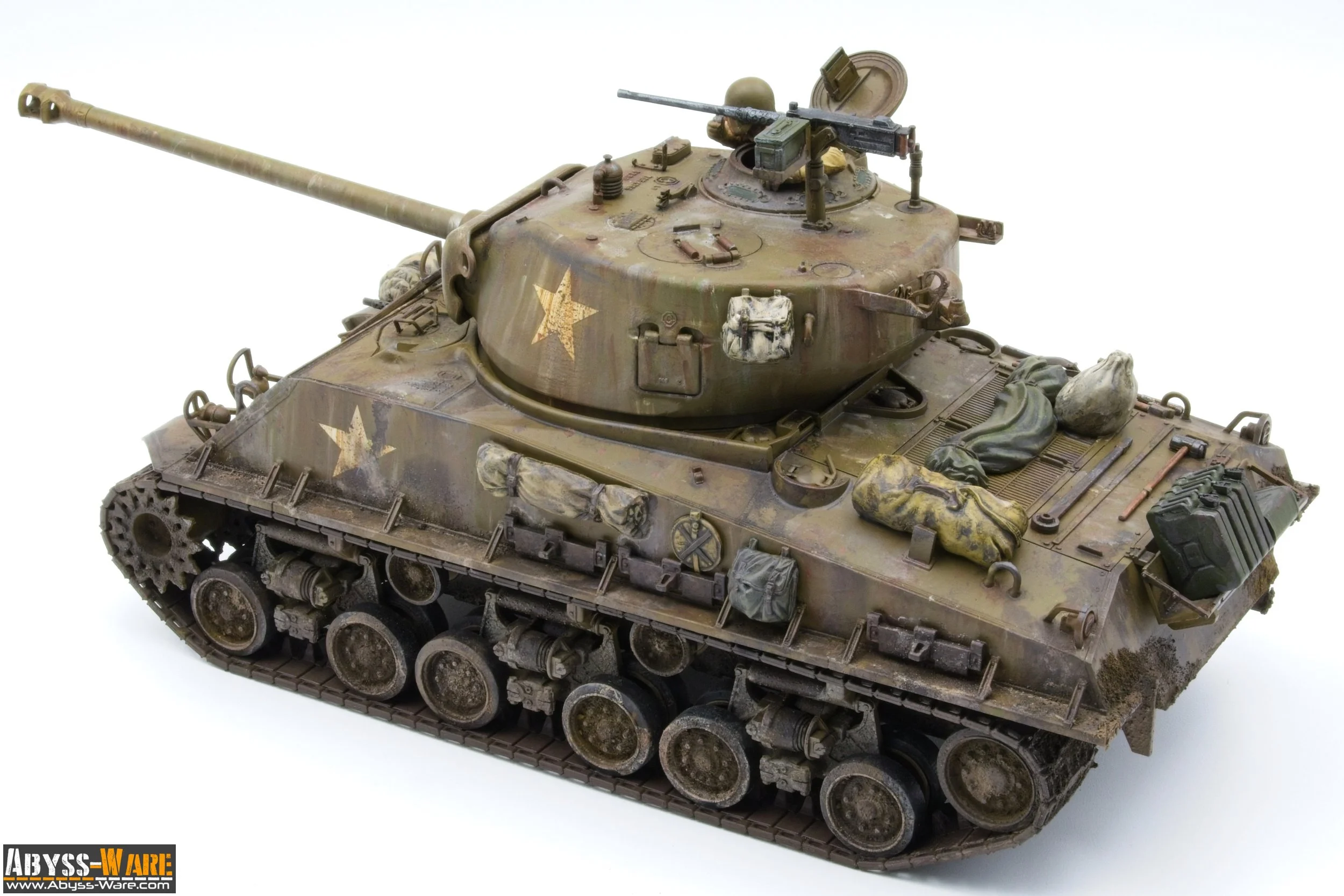
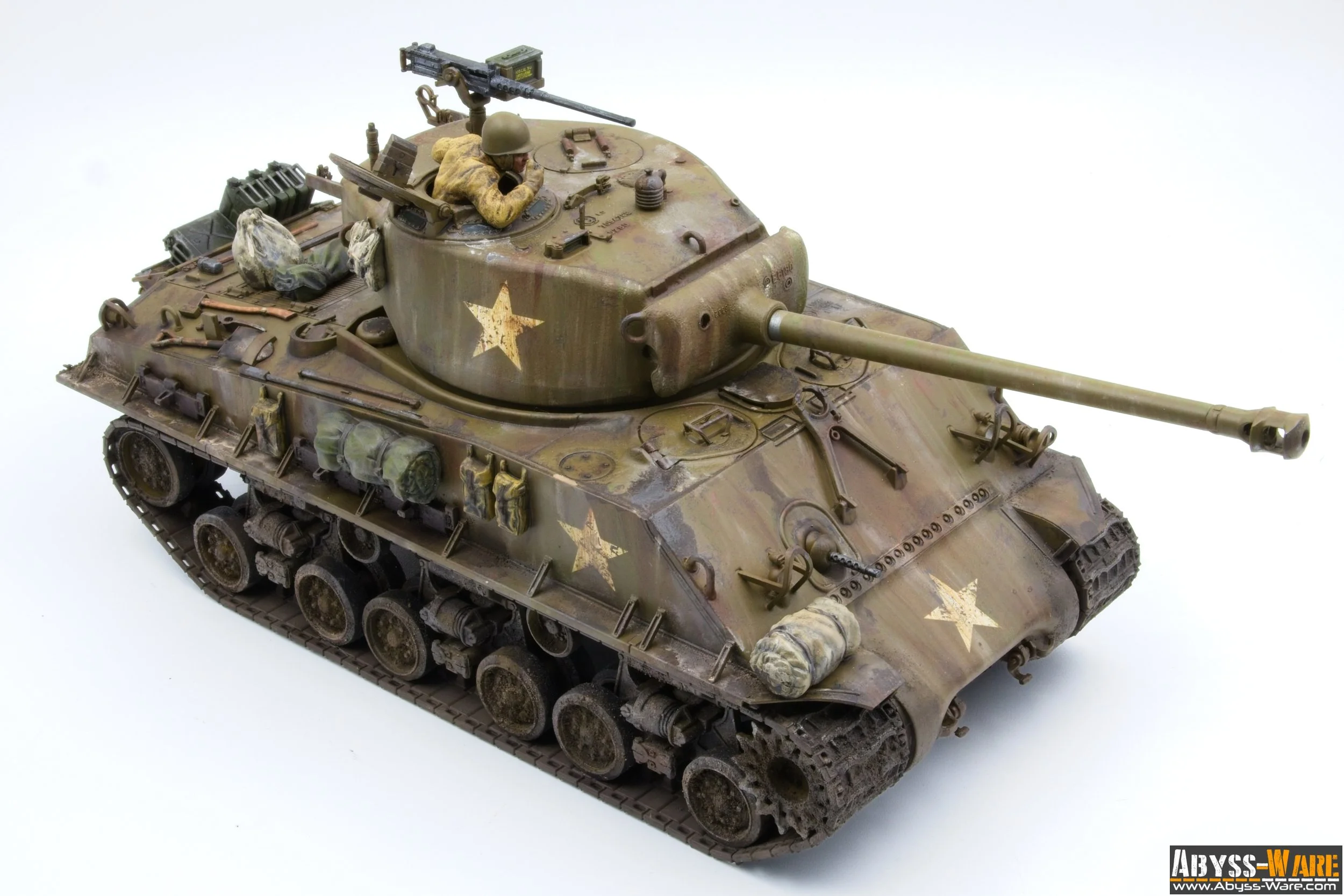
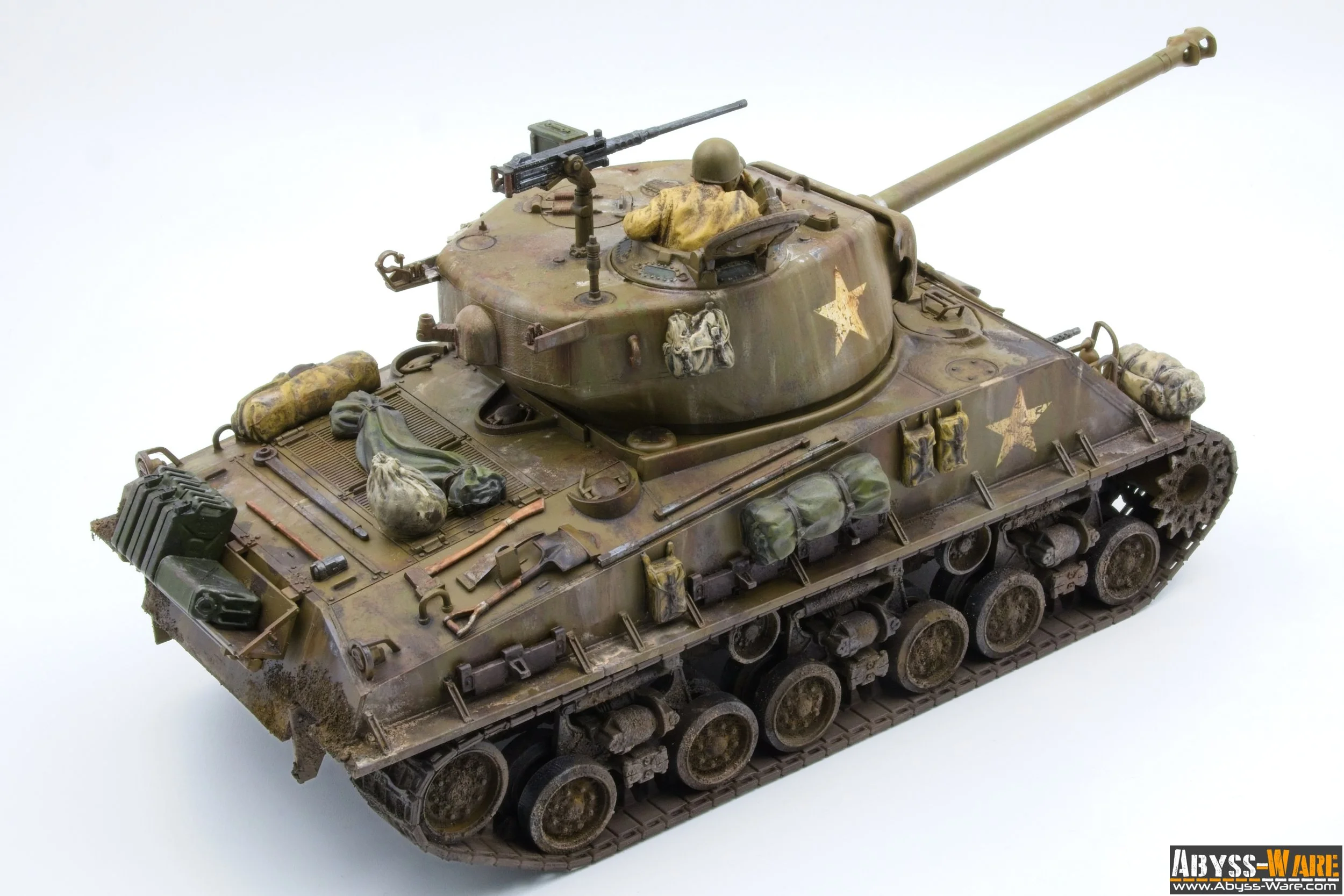
Note: The images presented bellow feature photographs of actual scale models, enhanced with AI-generated backgrounds and environments for visual effect. These visuals are intended for illustrative and artistic purposes only and should not be interpreted as real photographs or historical references.
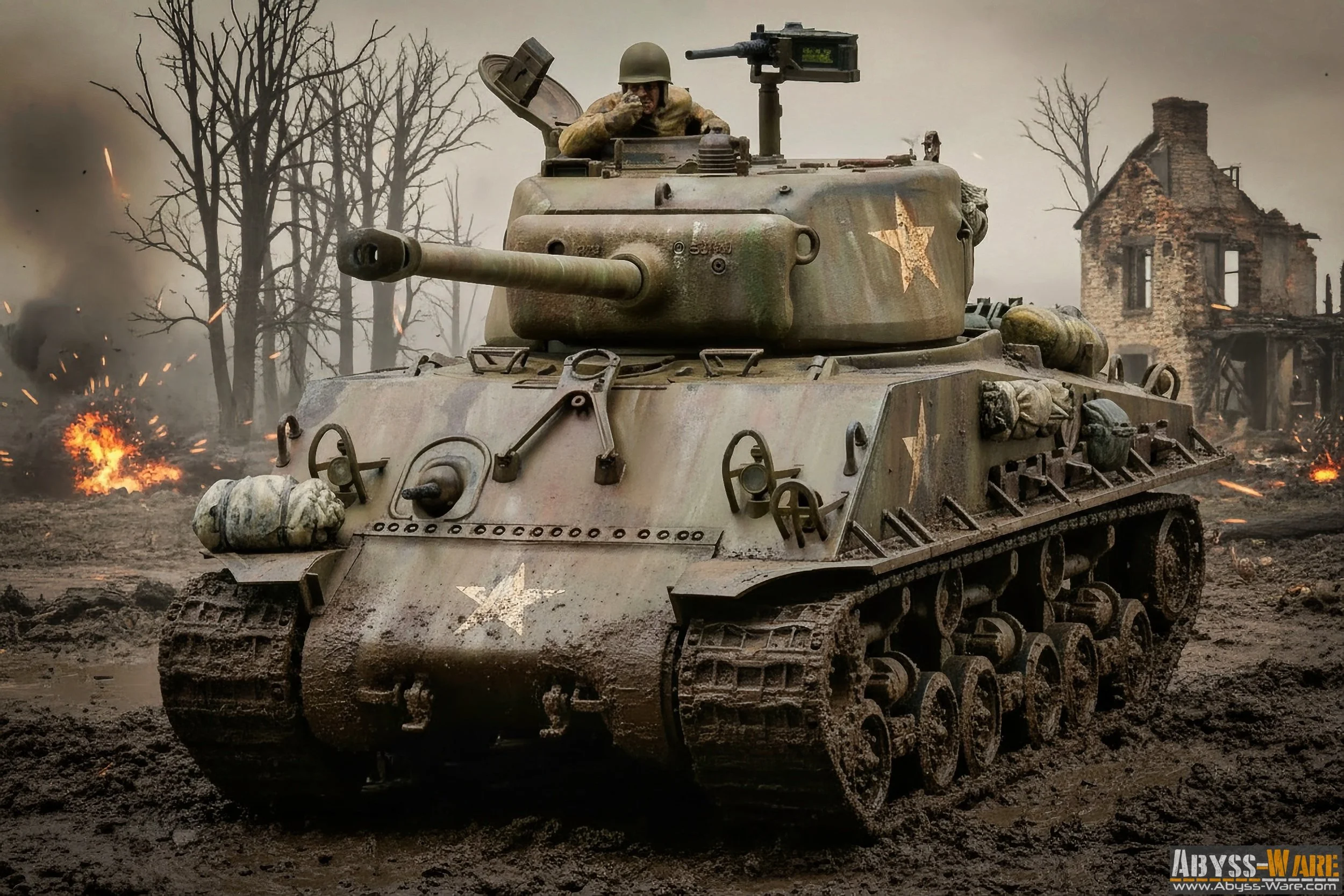
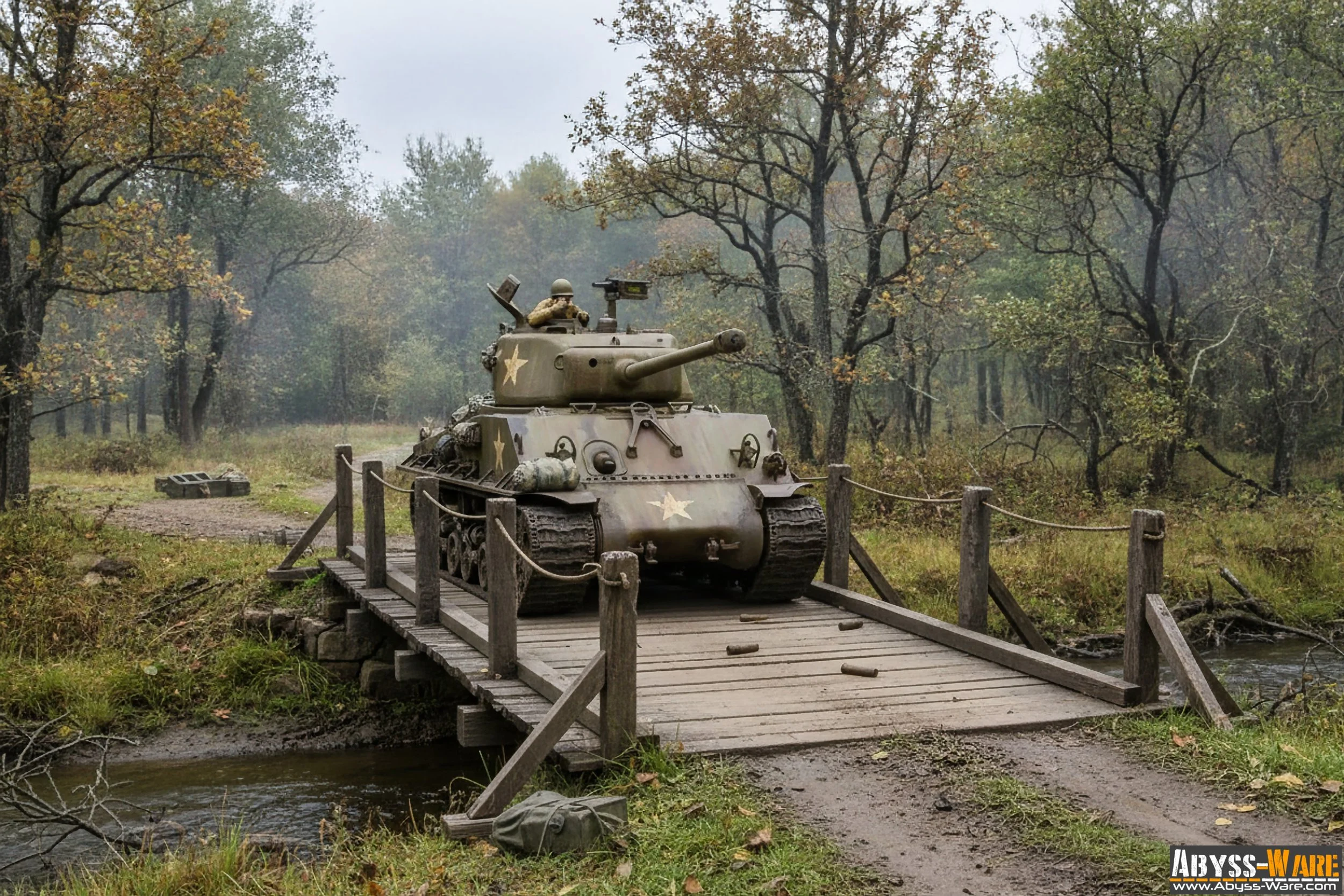
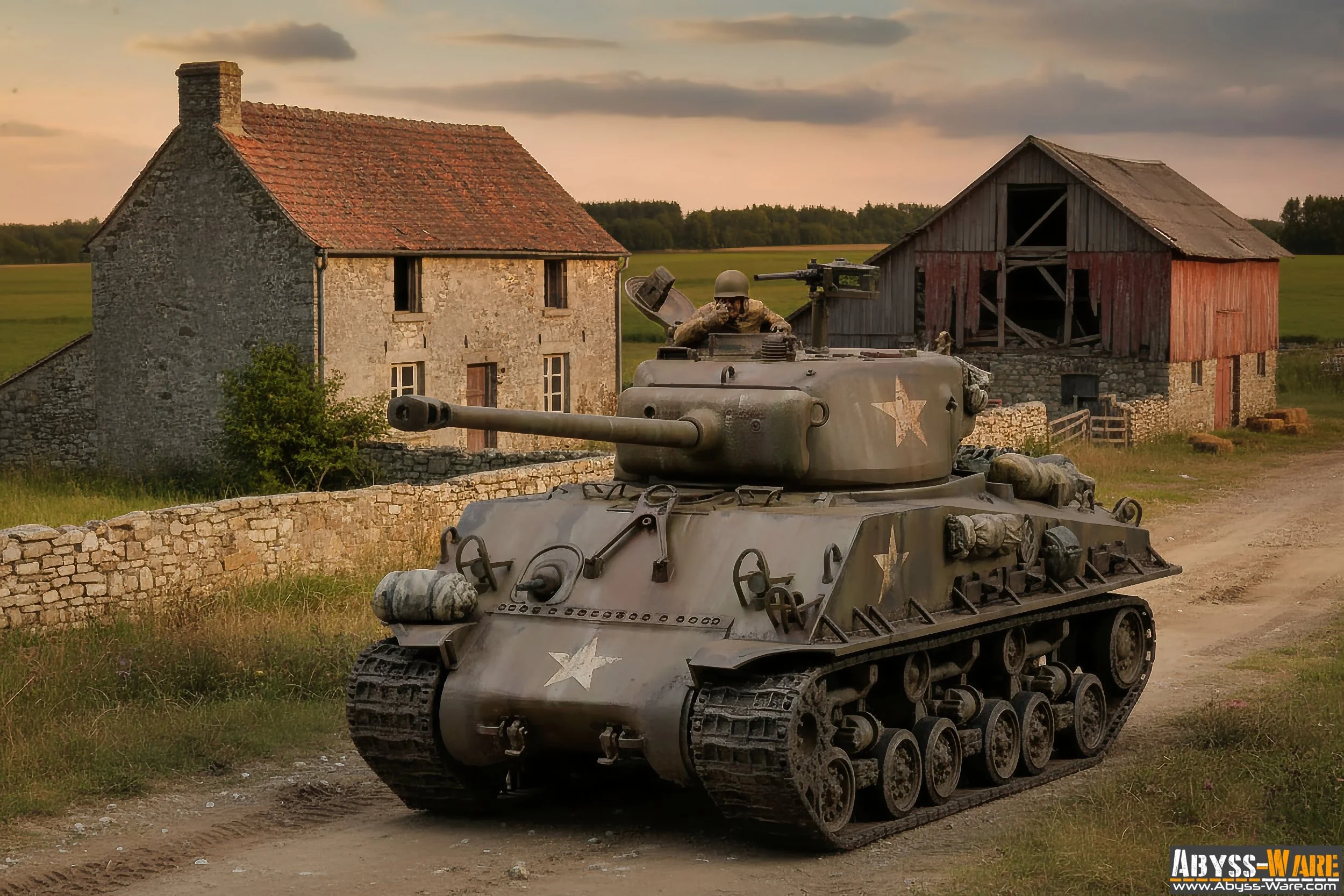
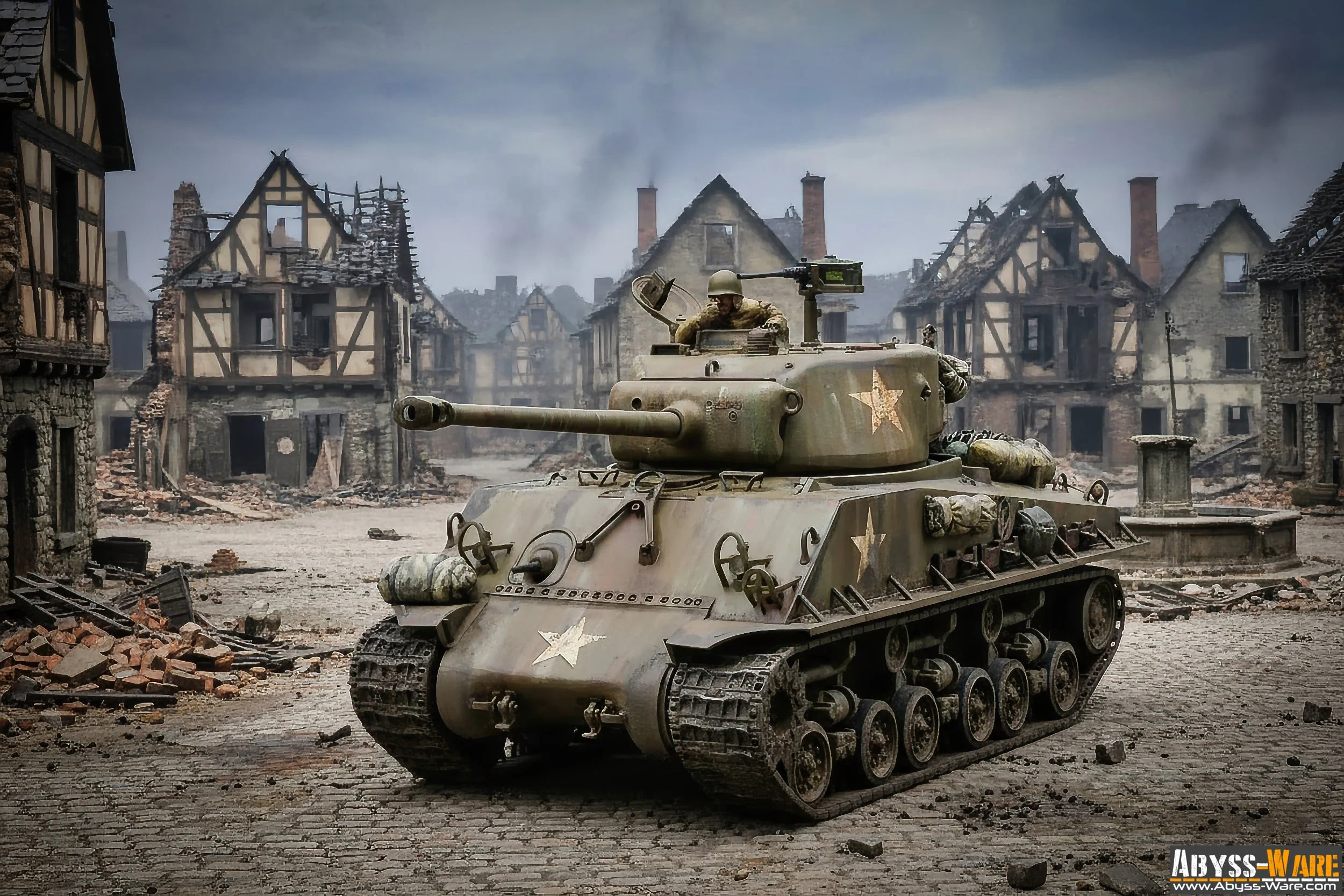
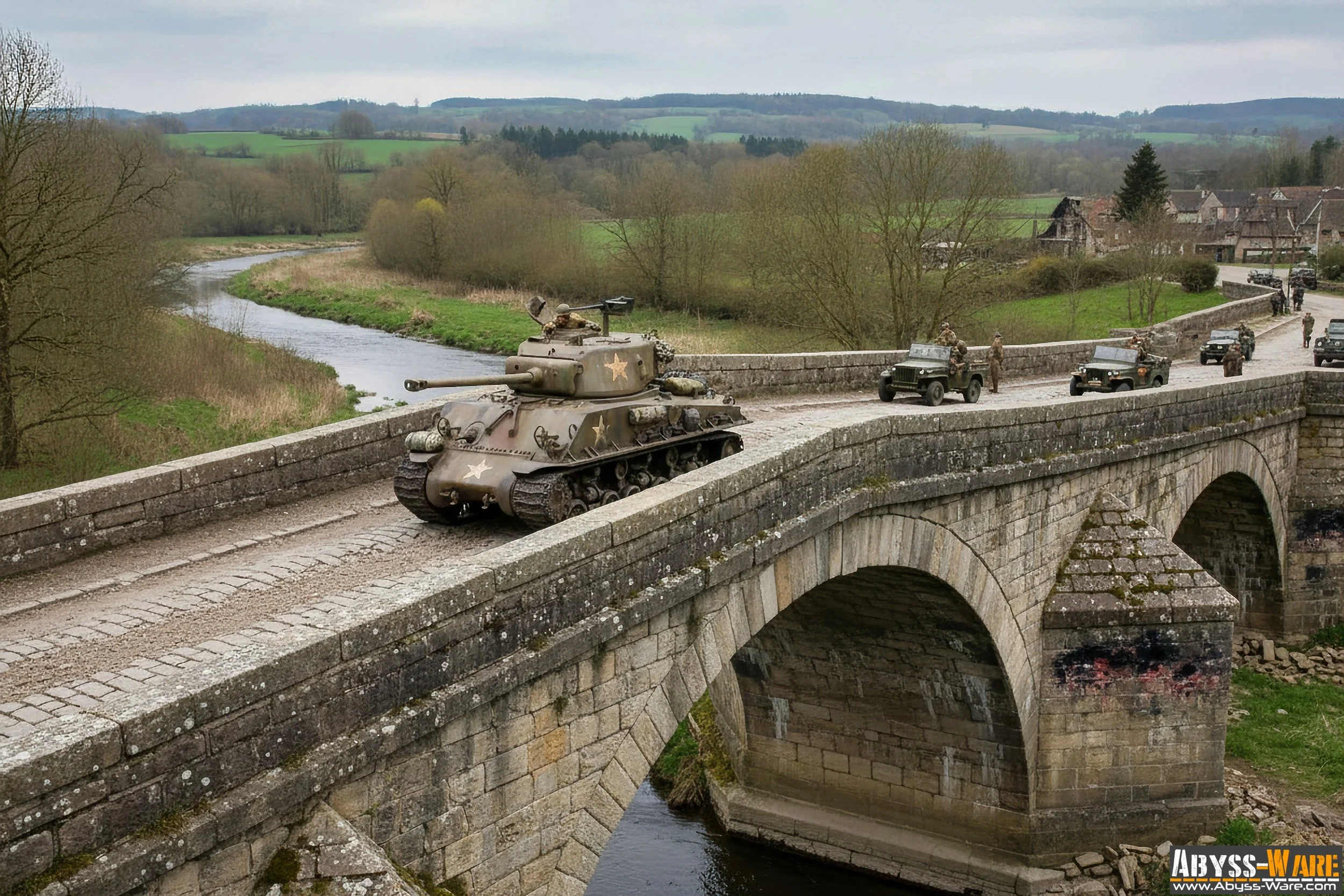
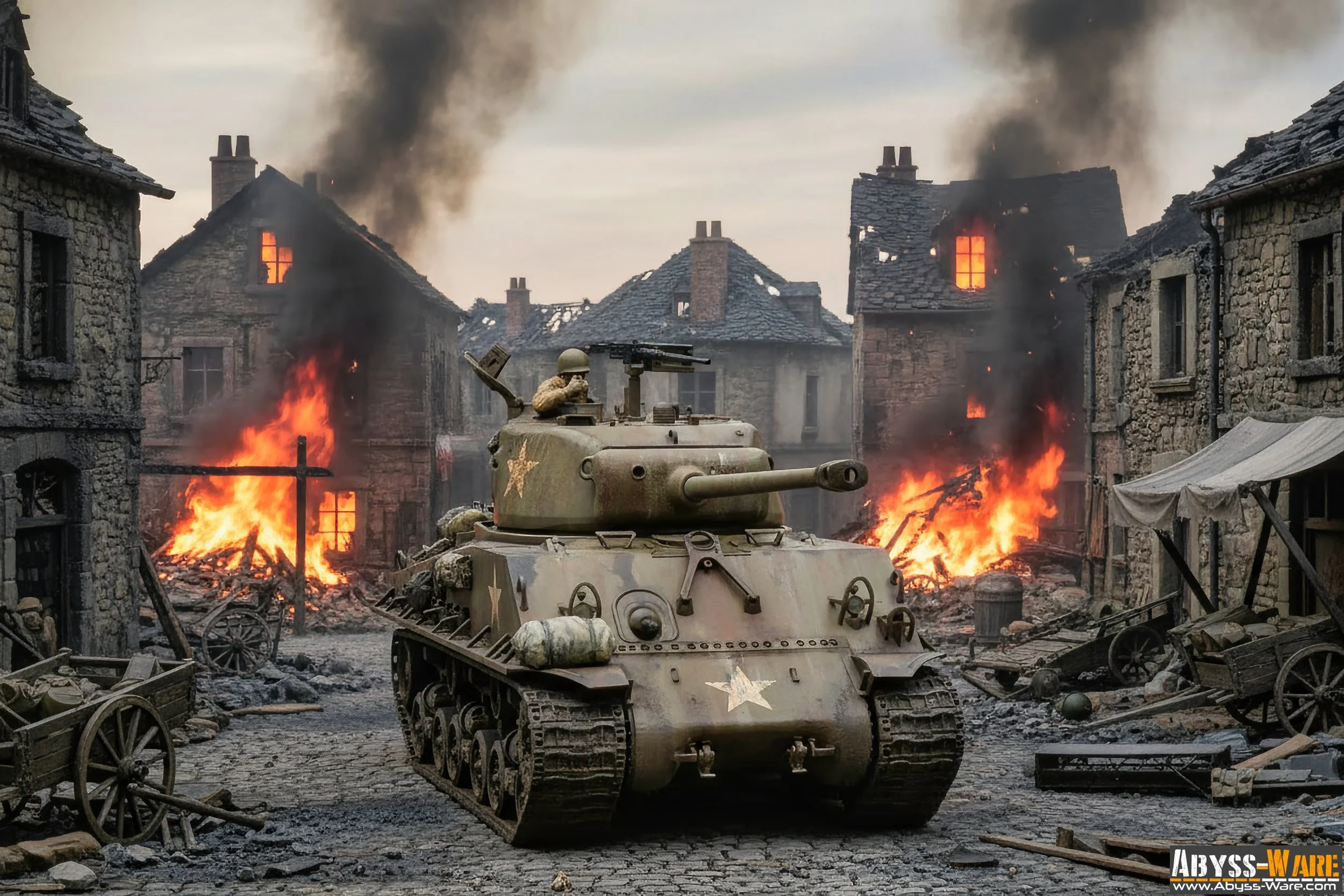
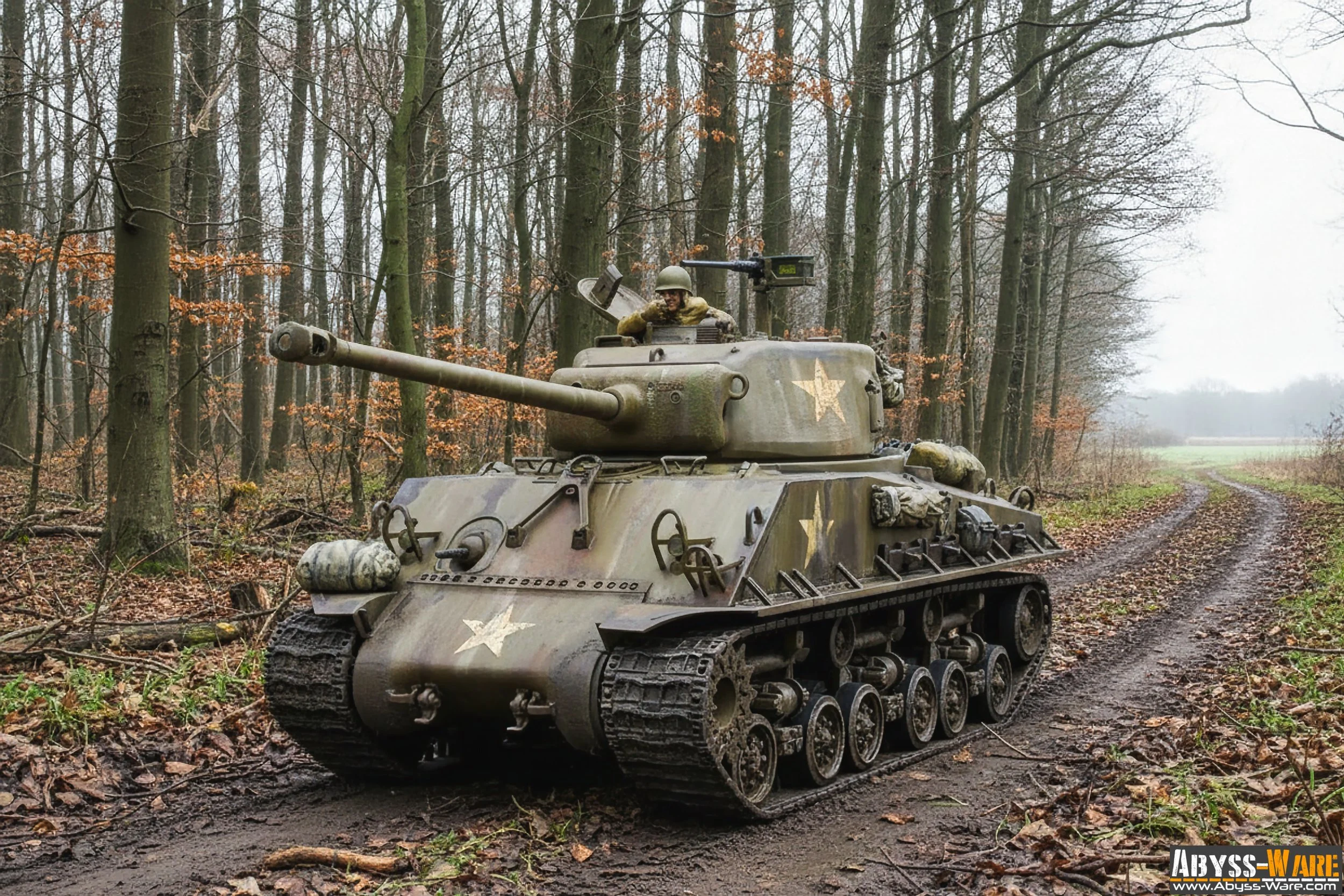
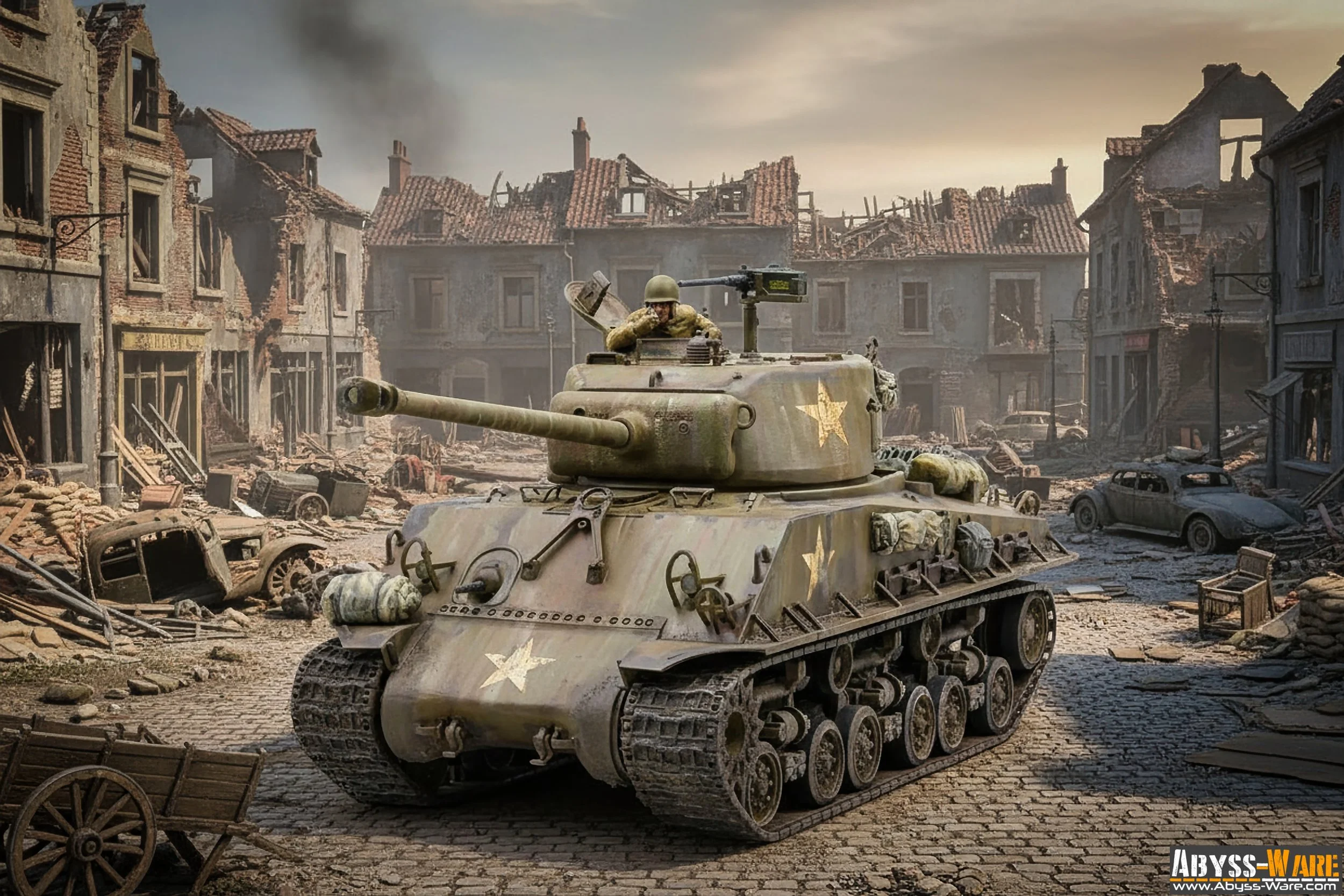
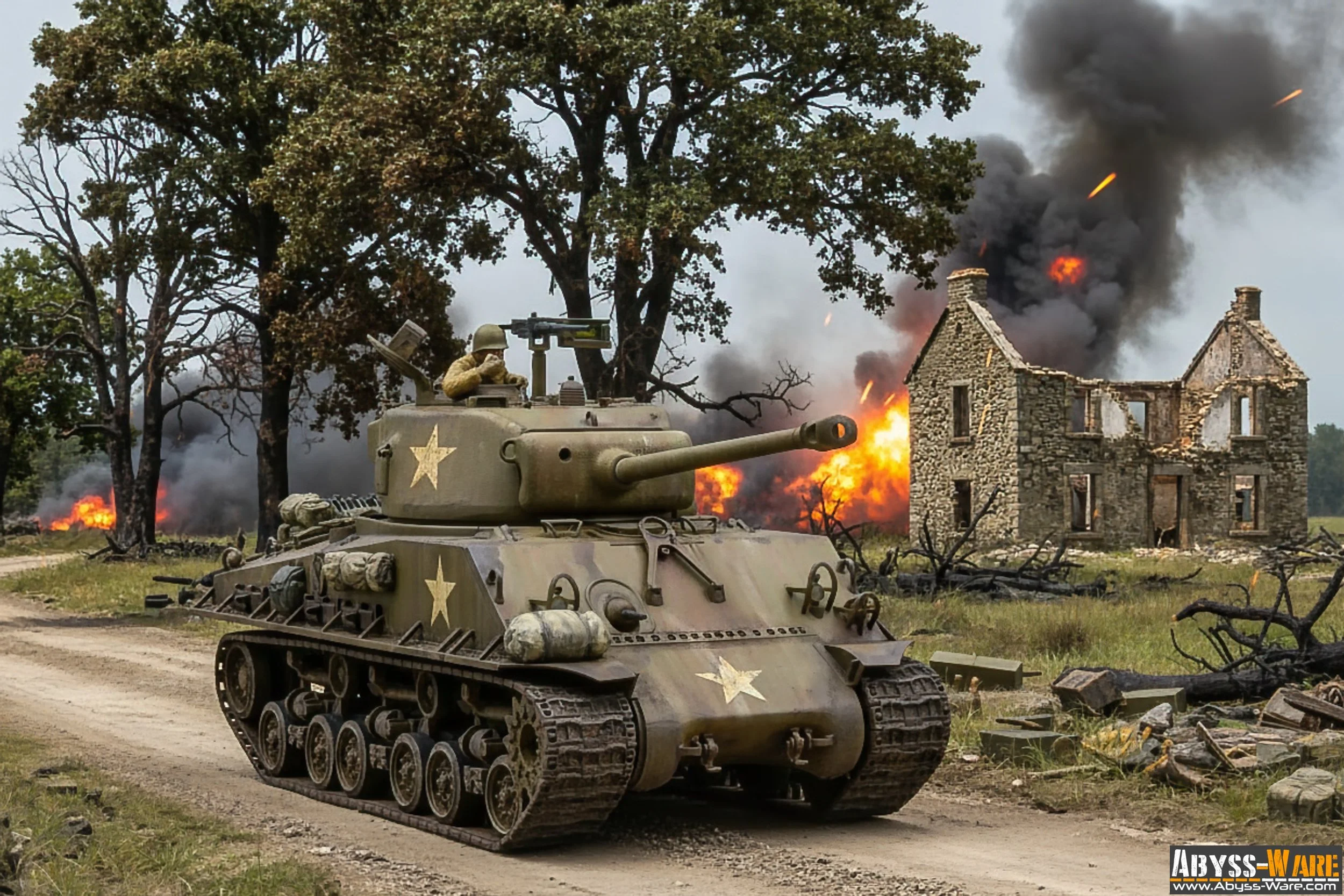
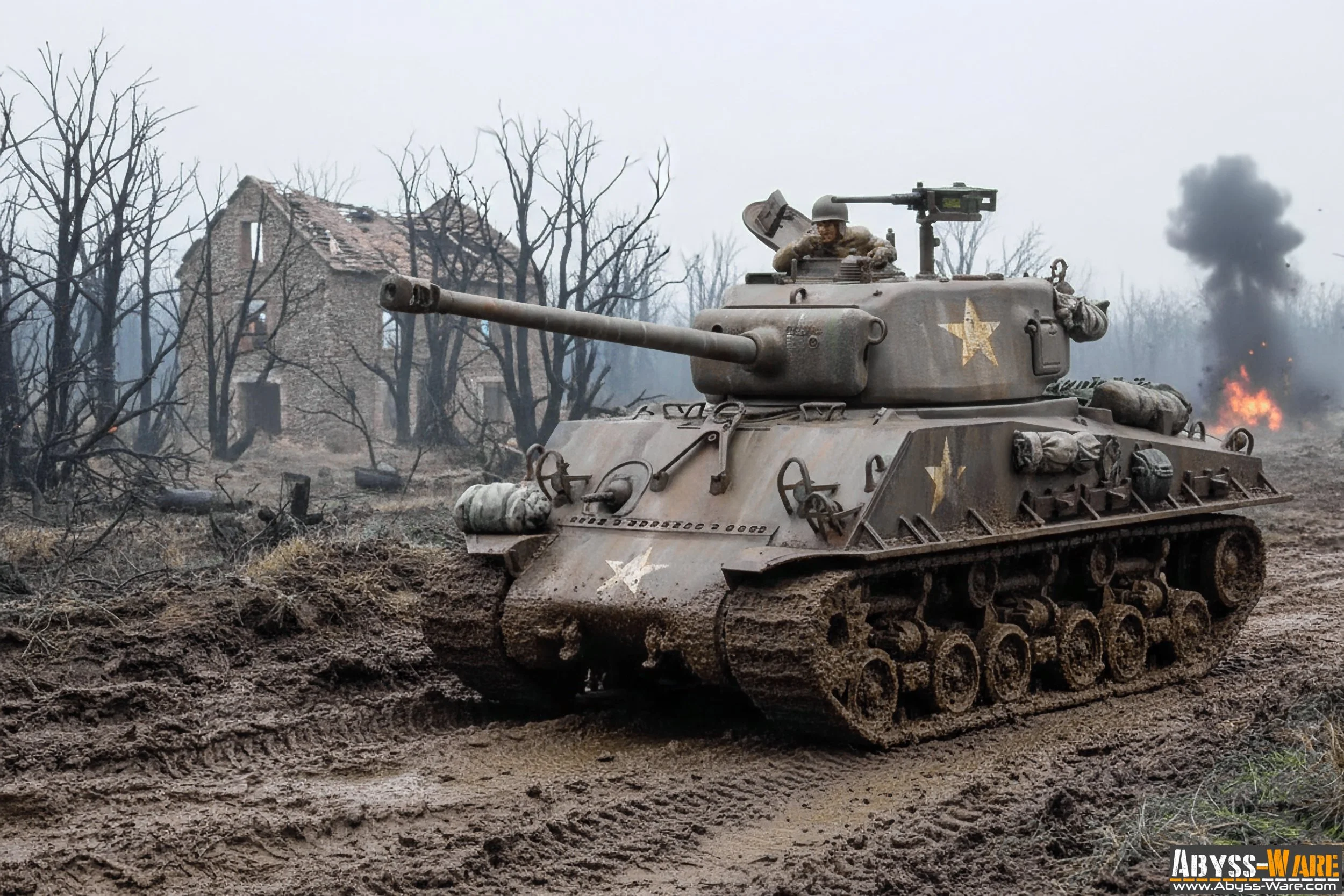
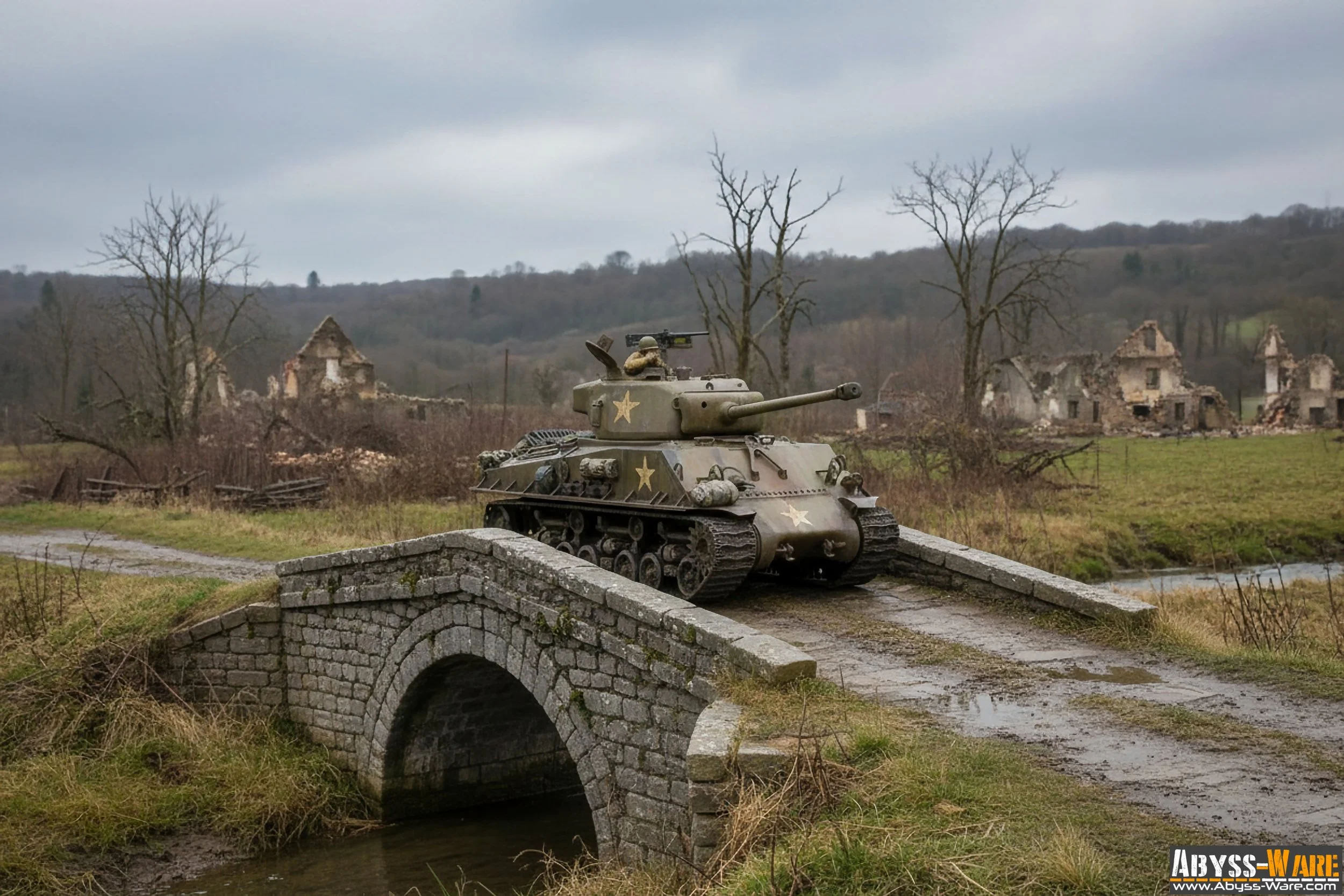
Winter camo version of the same kit
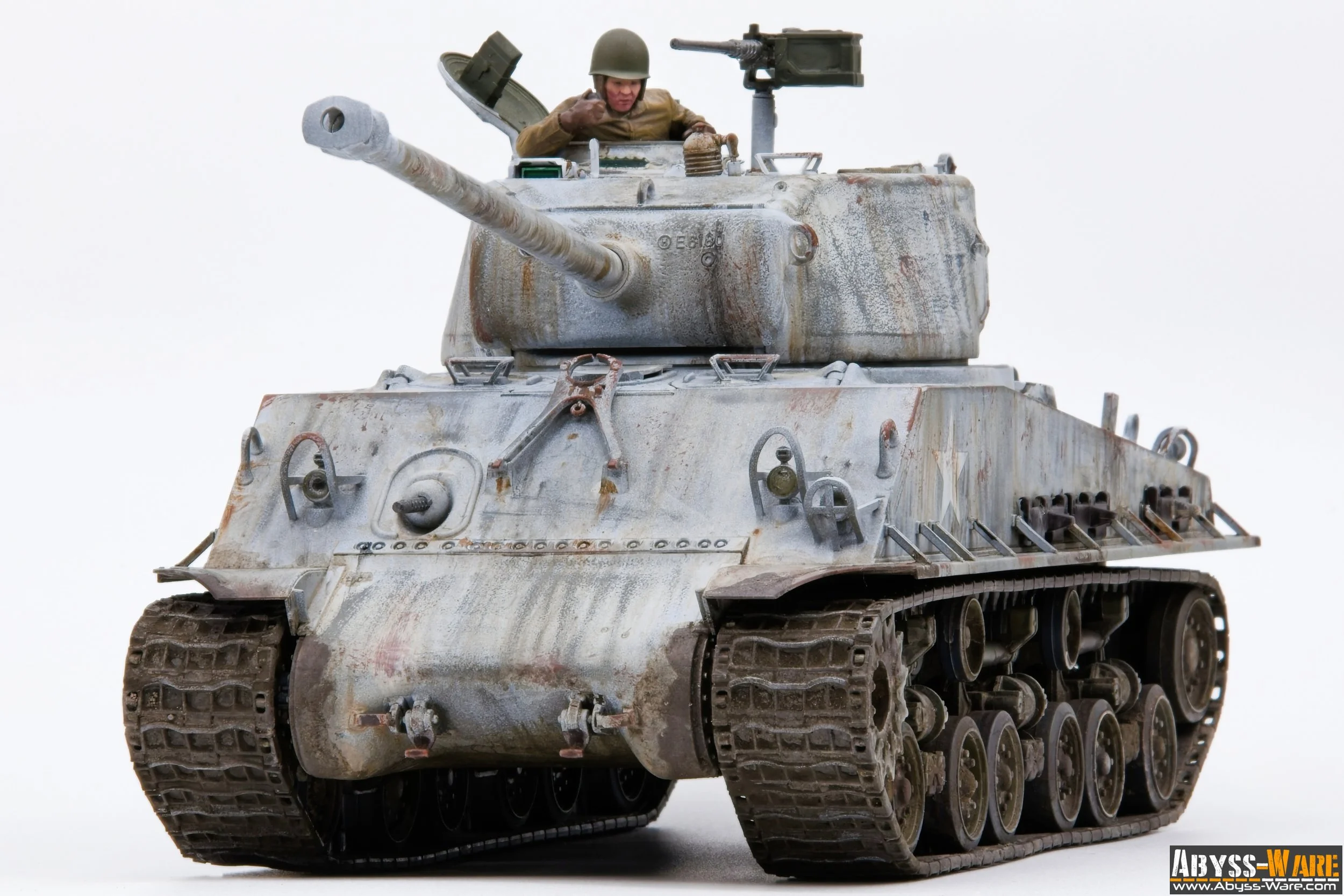
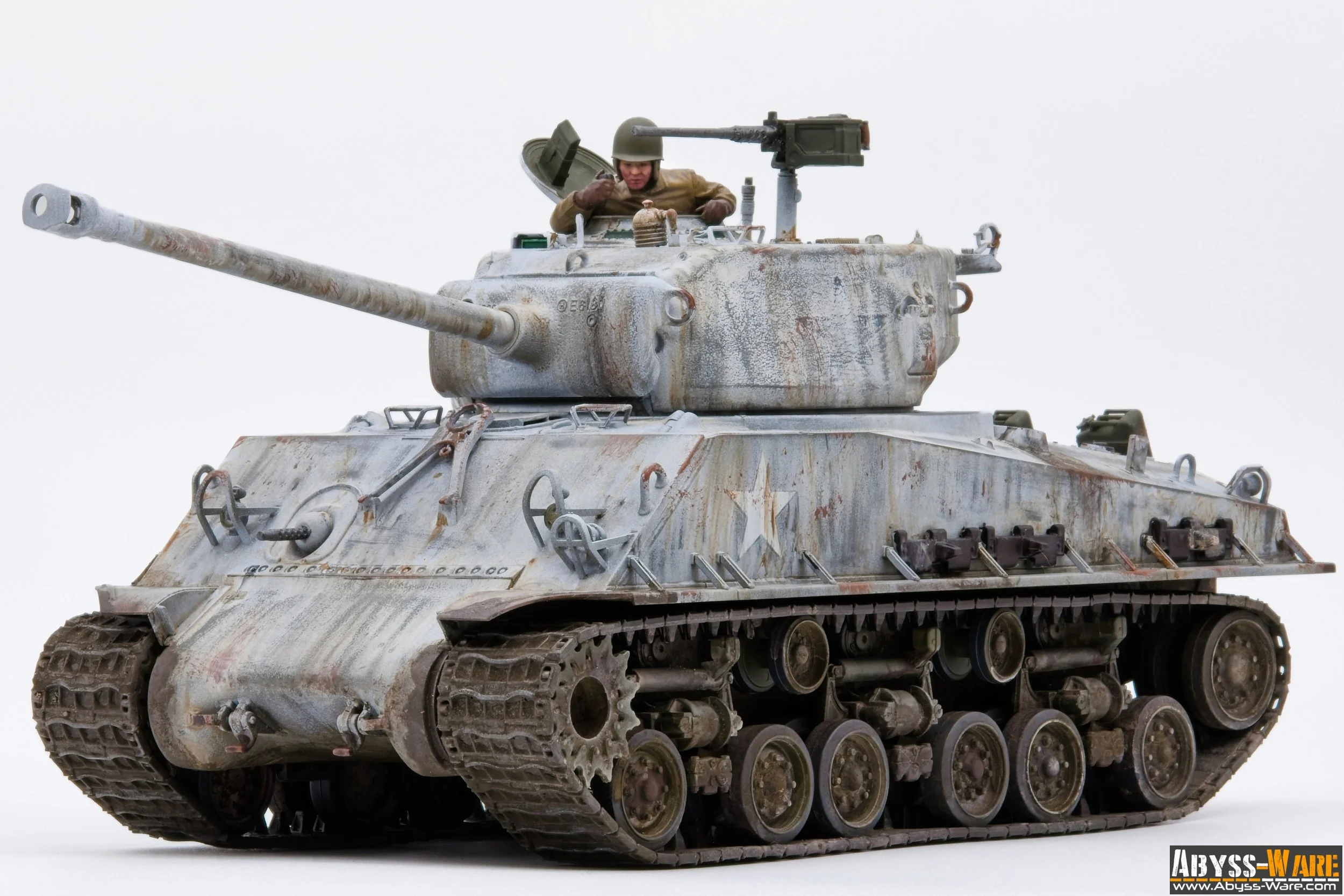
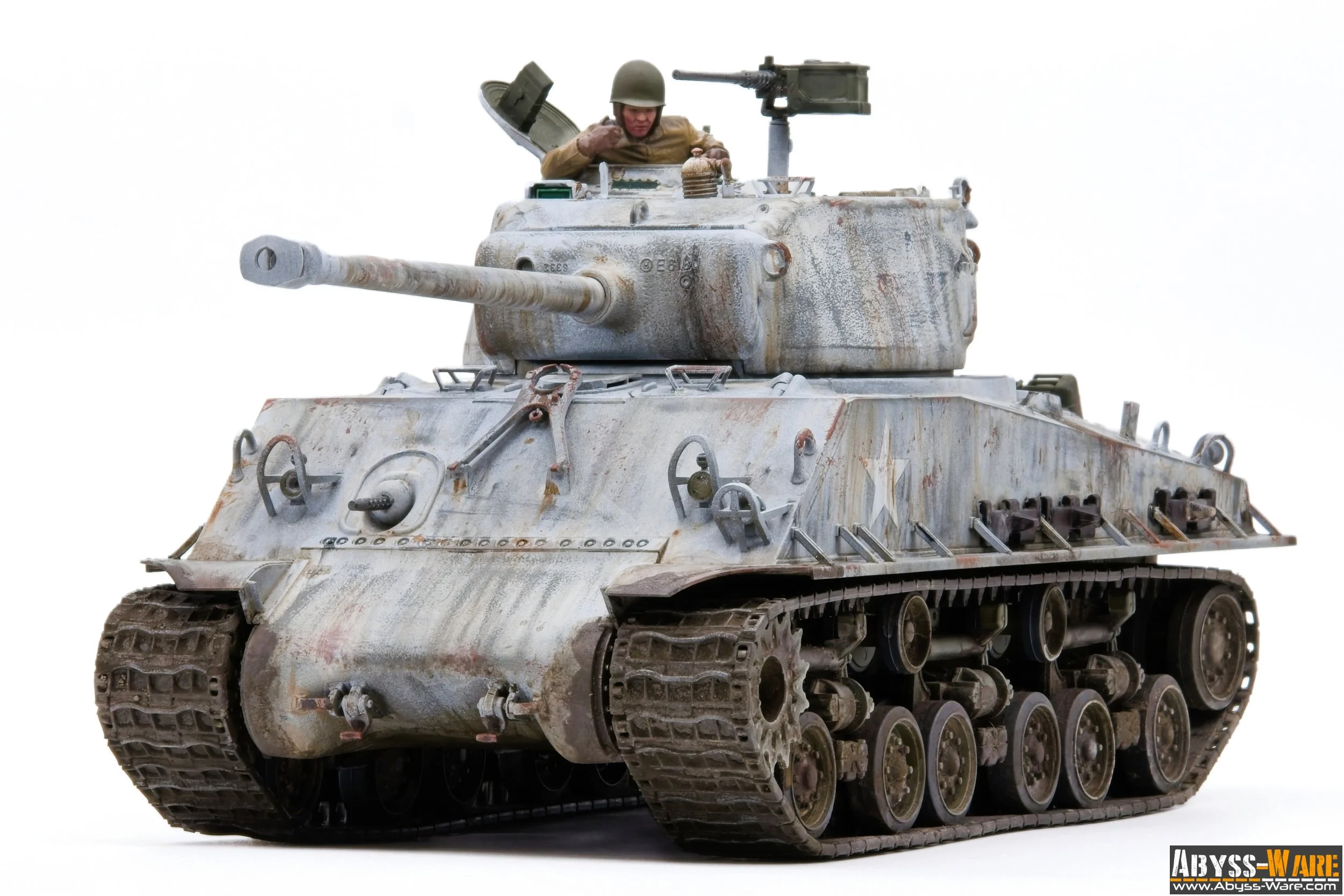
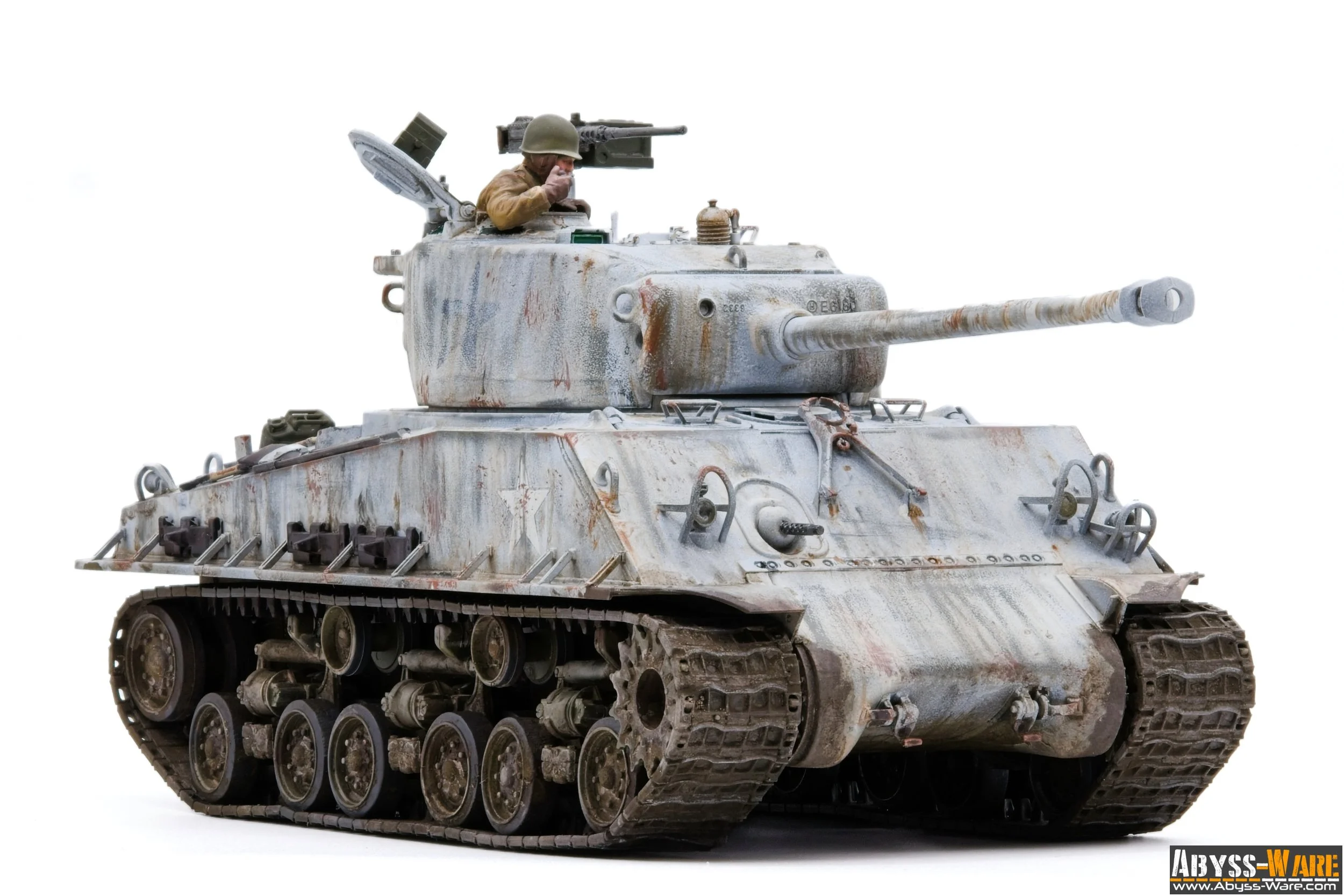
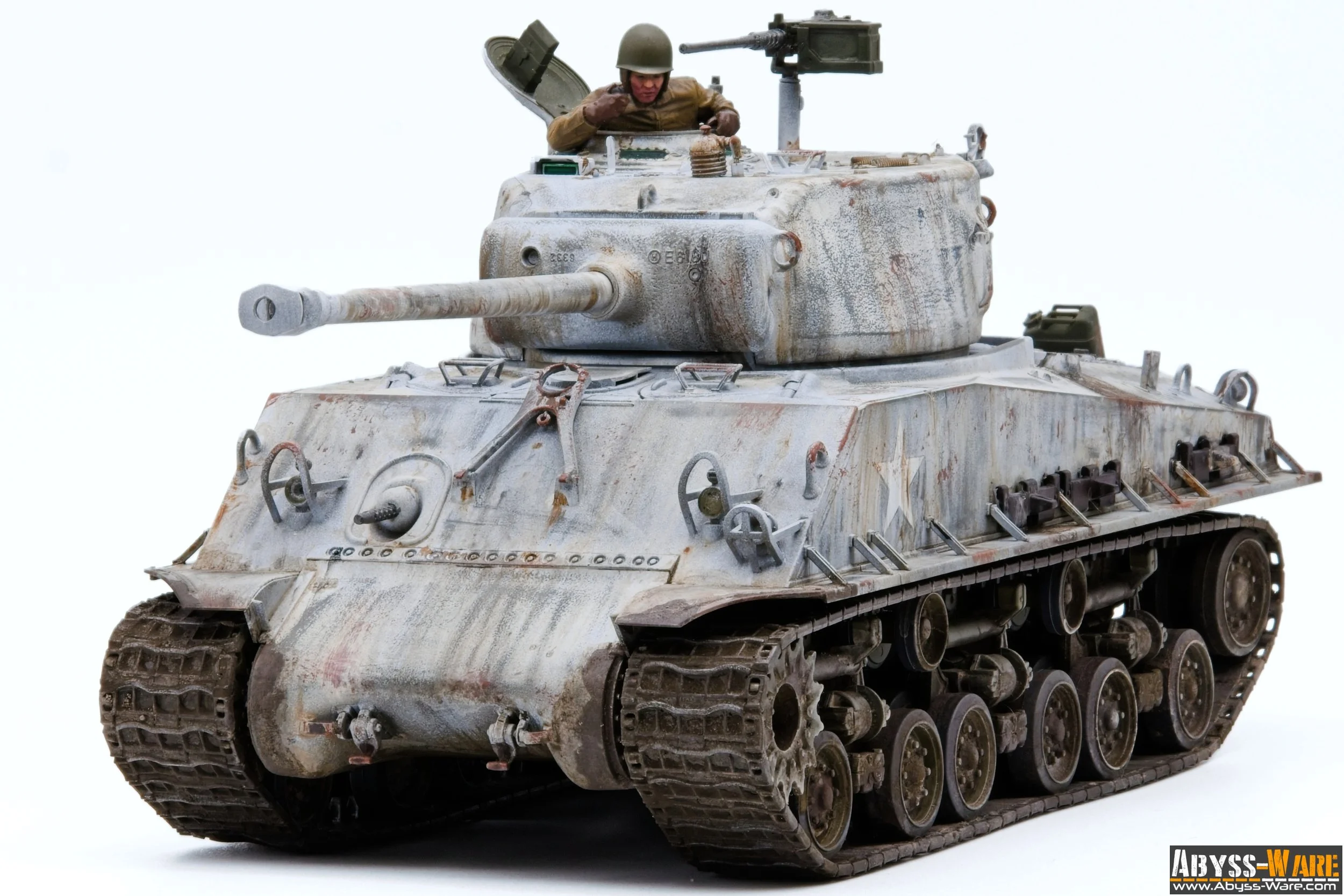
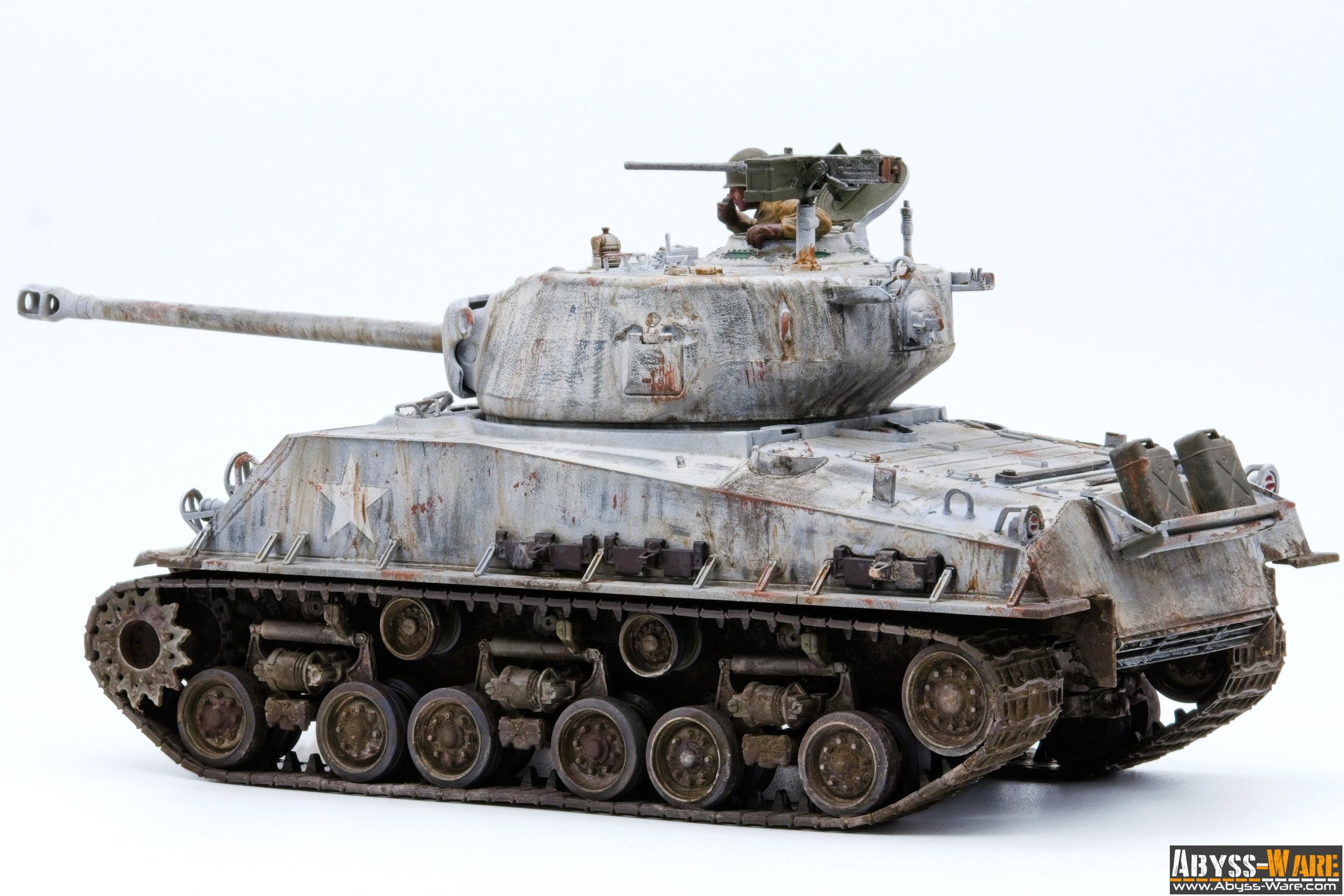
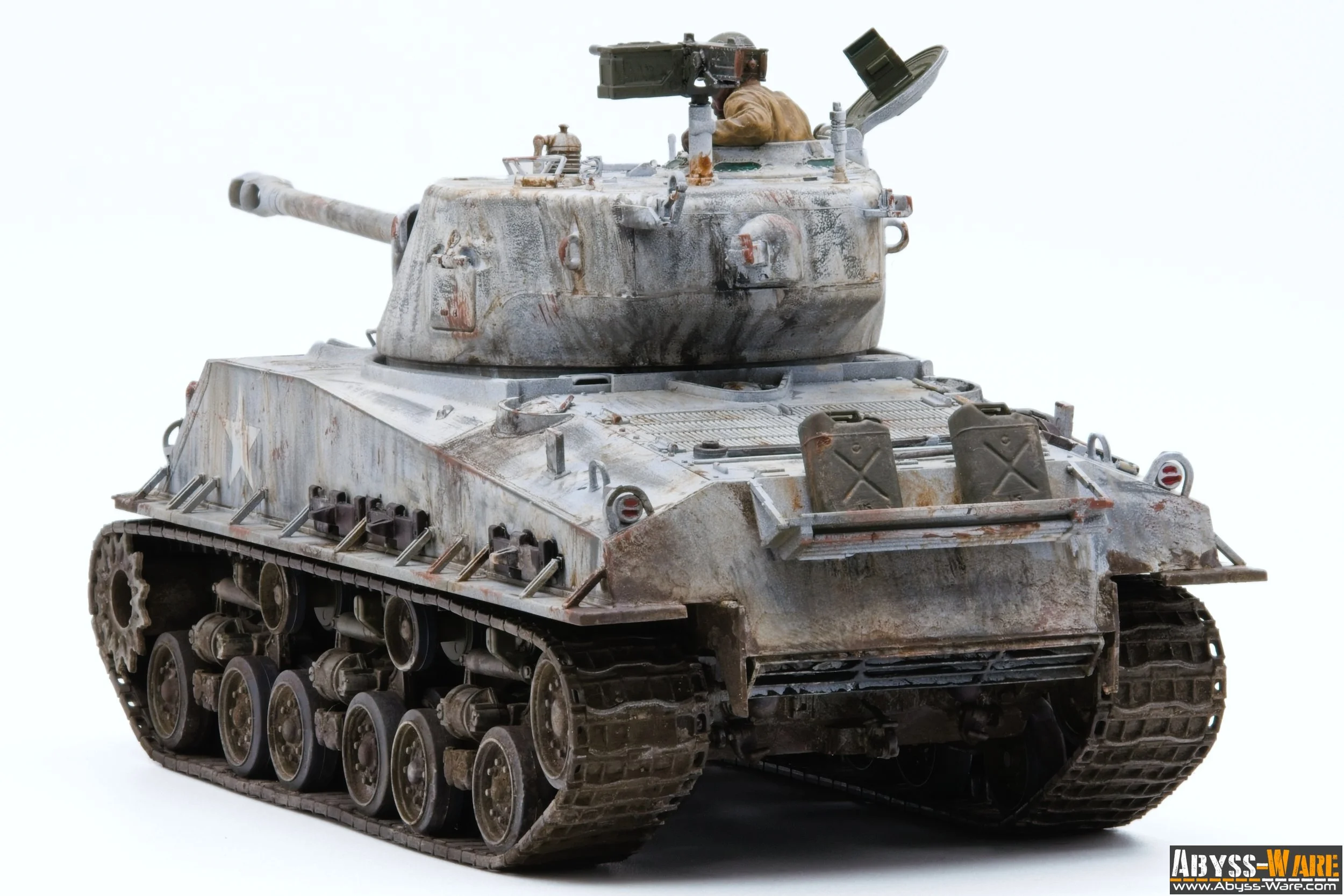
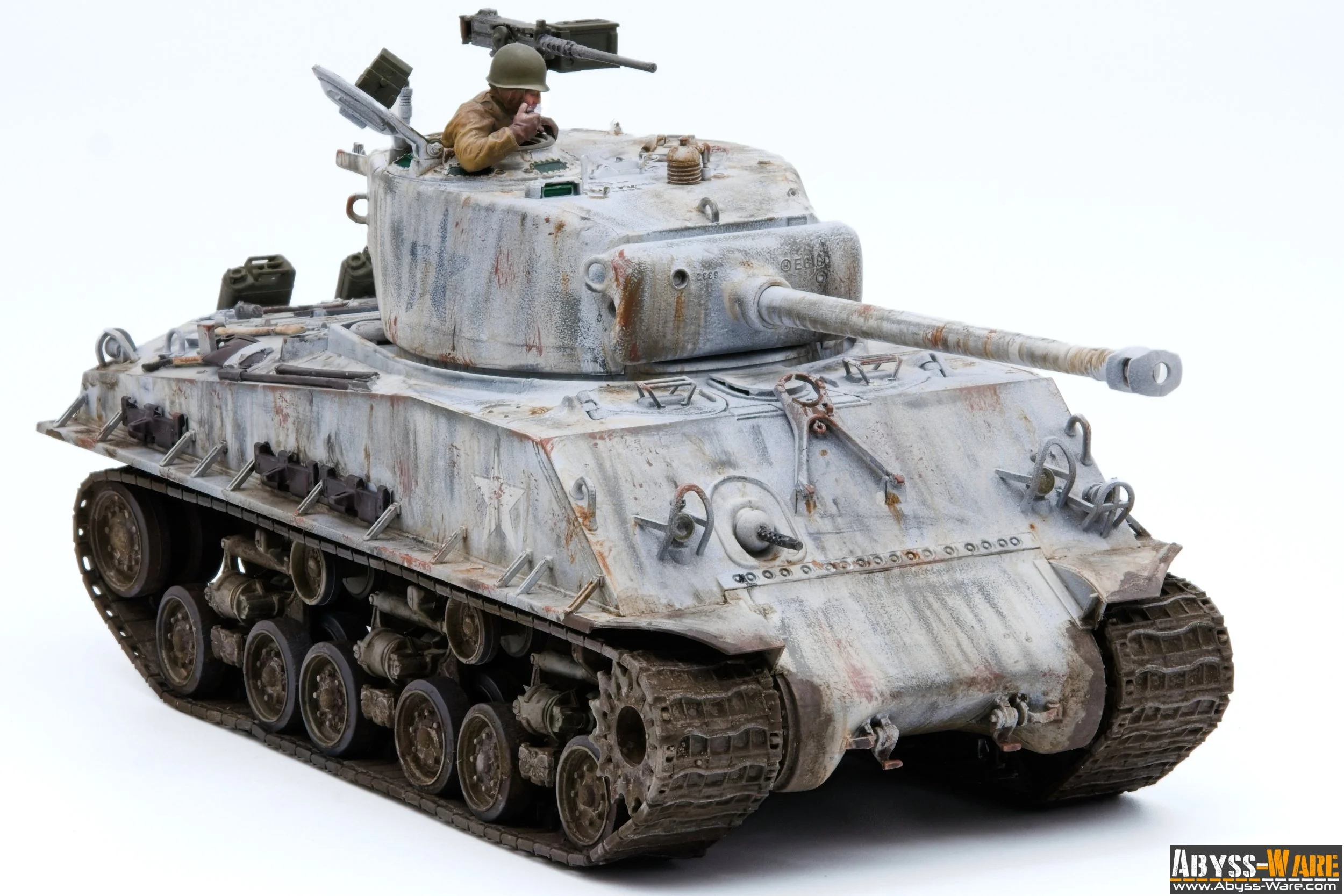
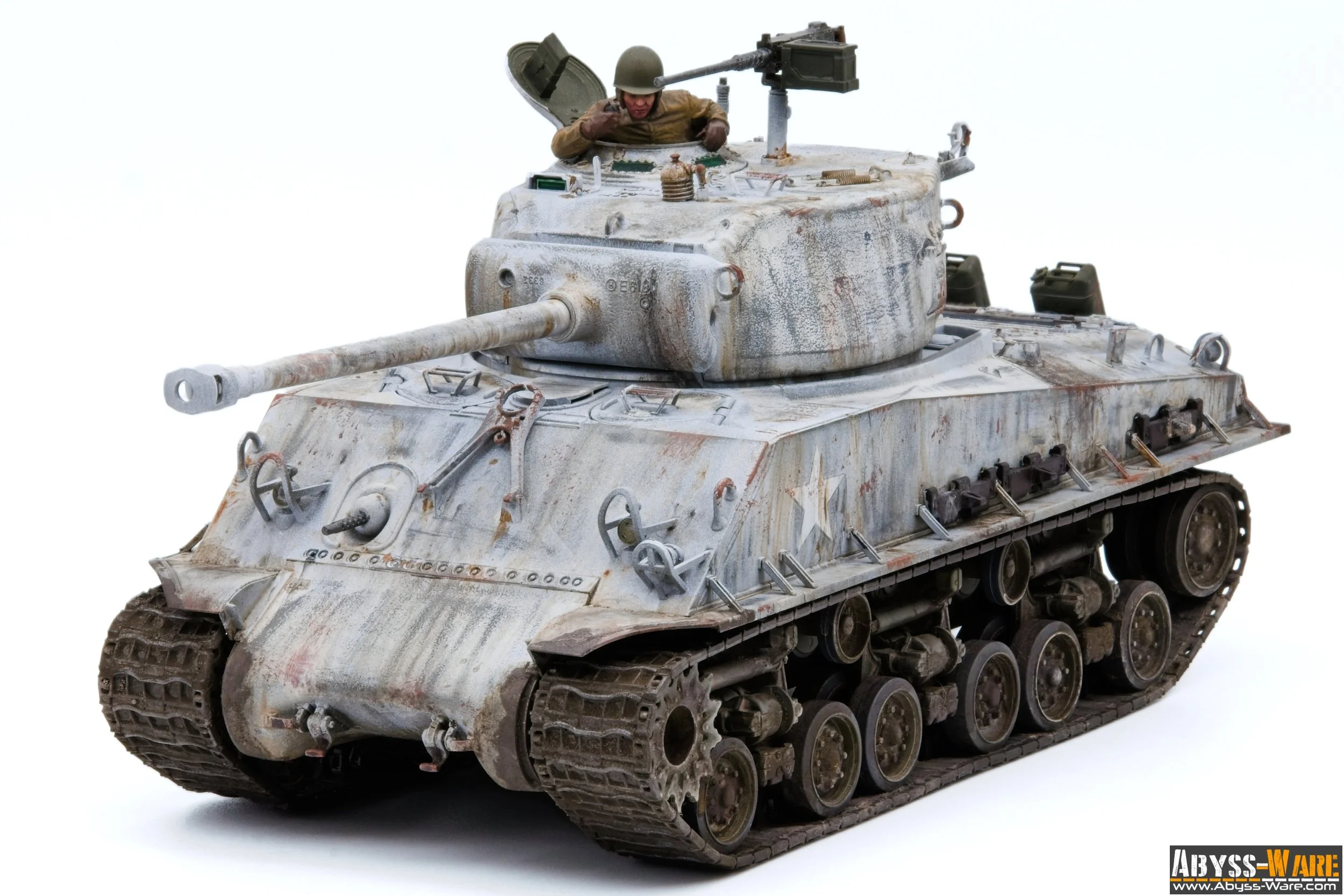
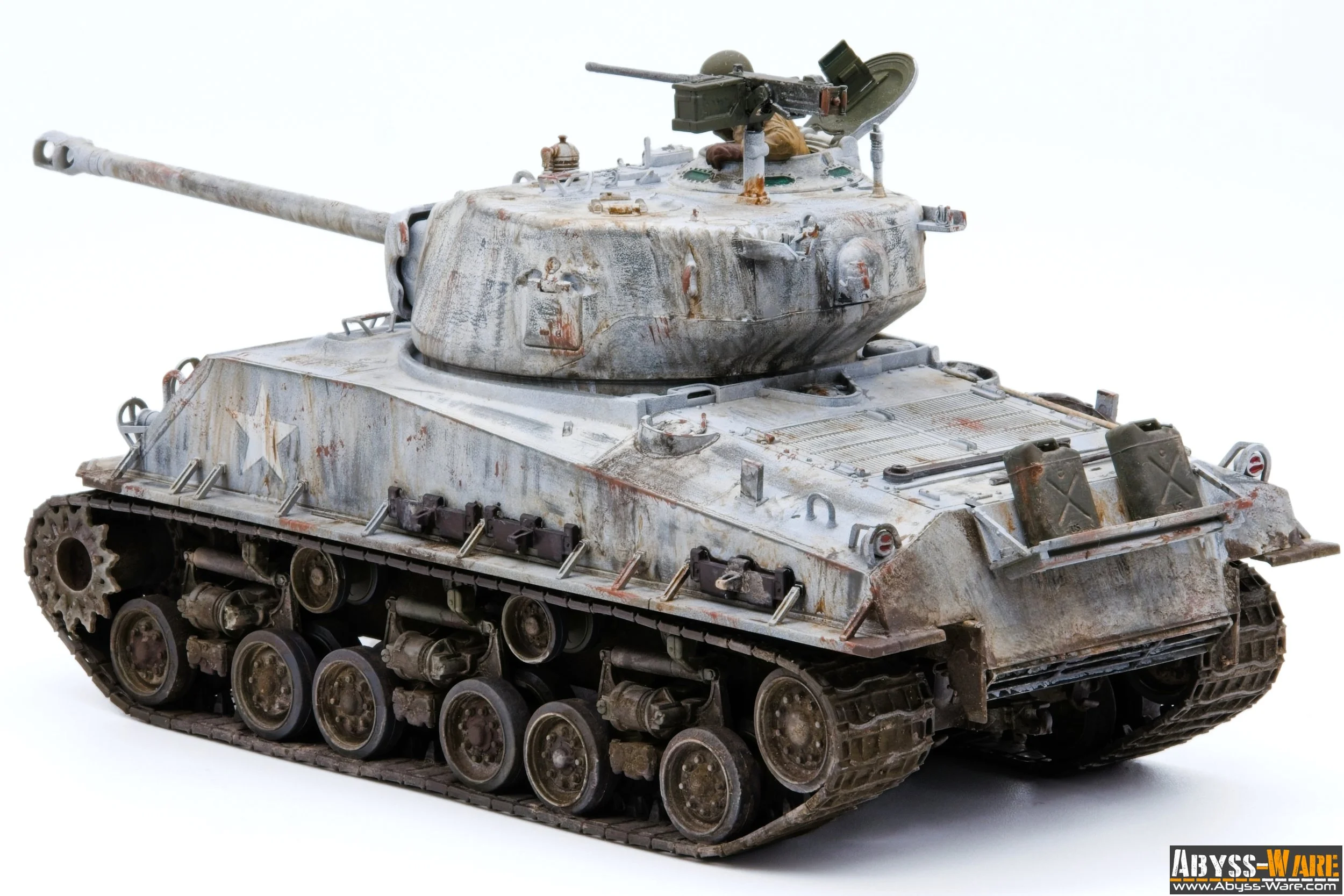
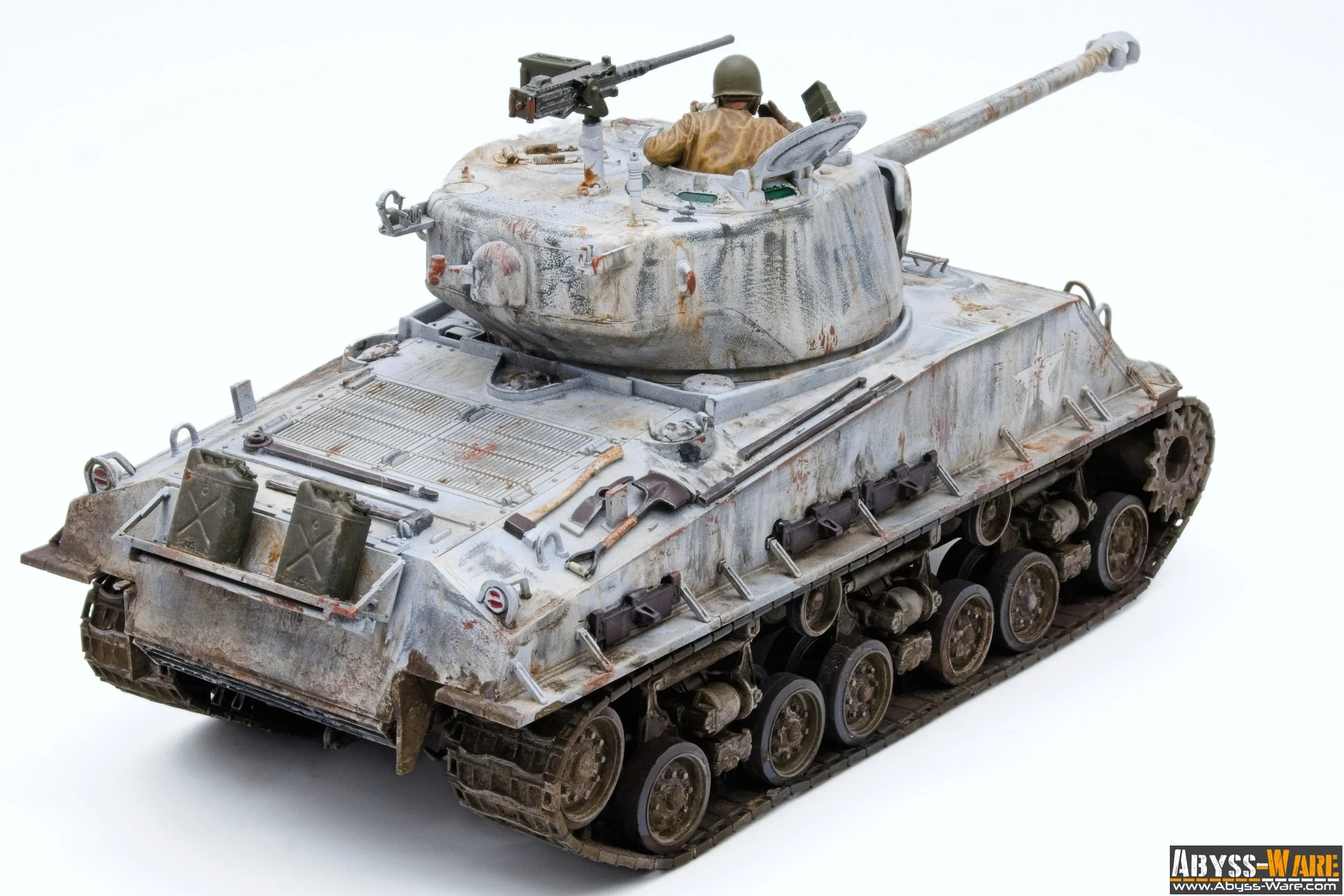
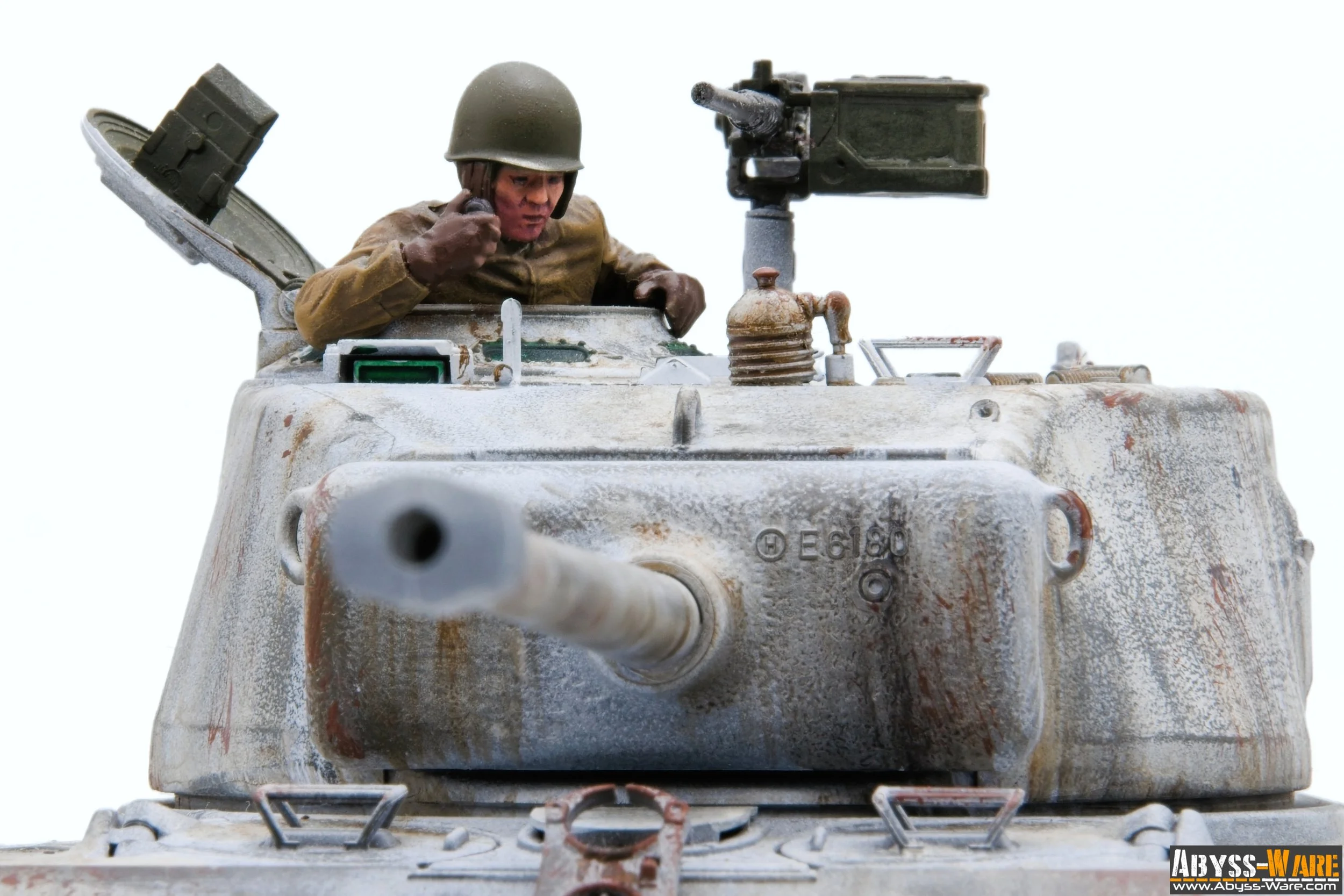
Note: The images presented bellow feature photographs of actual scale models, enhanced with AI-generated backgrounds and environments for visual effect. These visuals are intended for illustrative and artistic purposes only and should not be interpreted as real photographs or historical references.
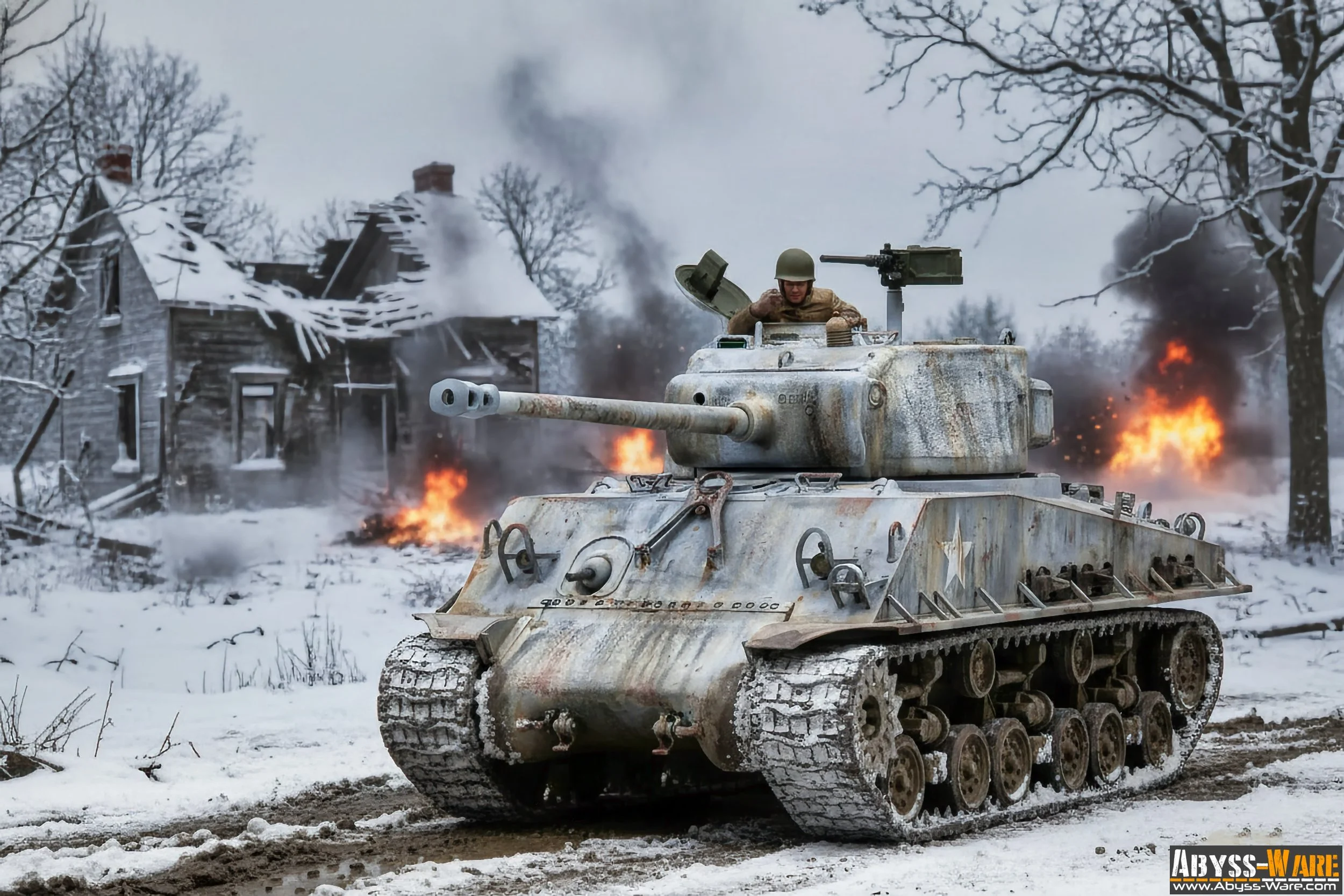
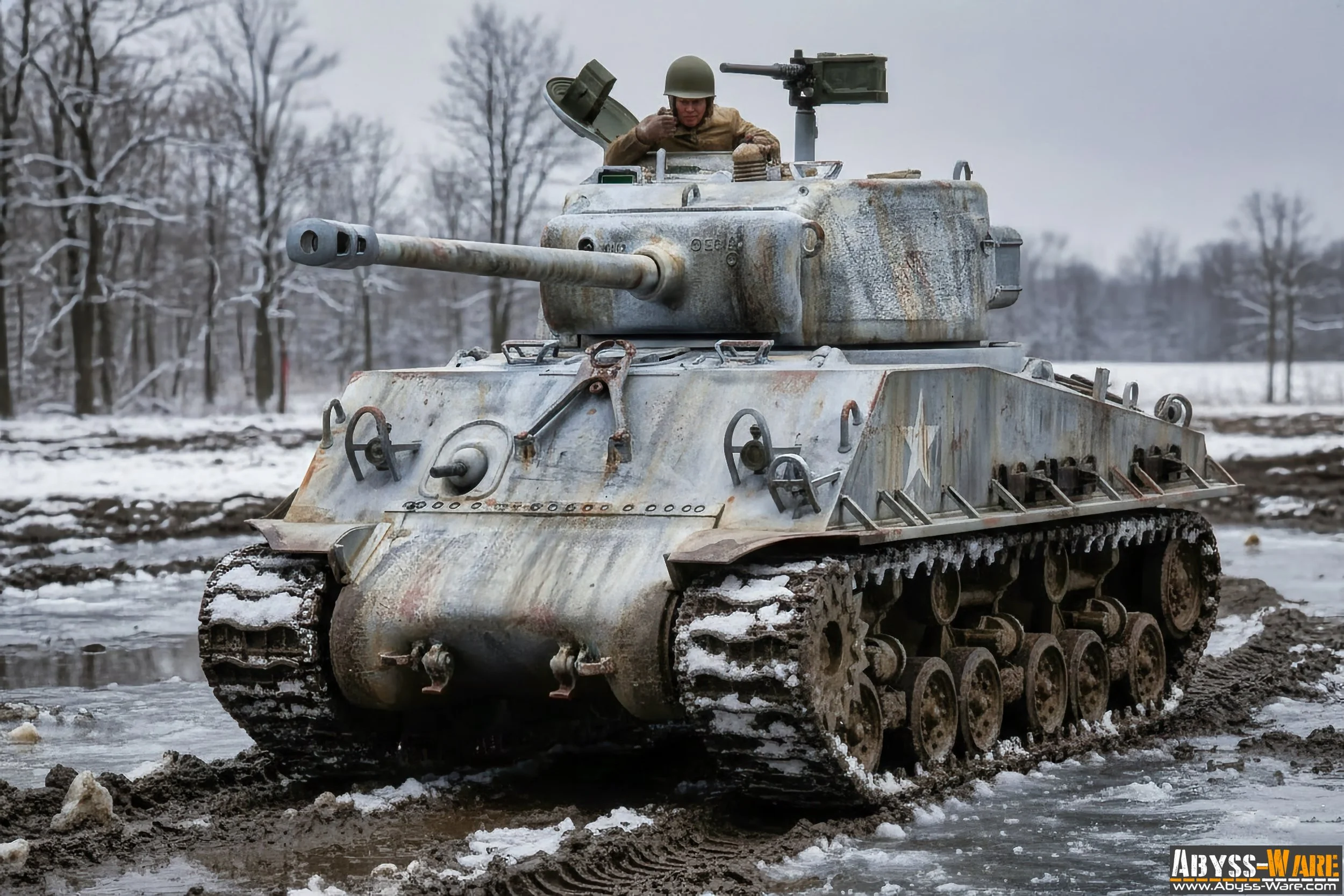
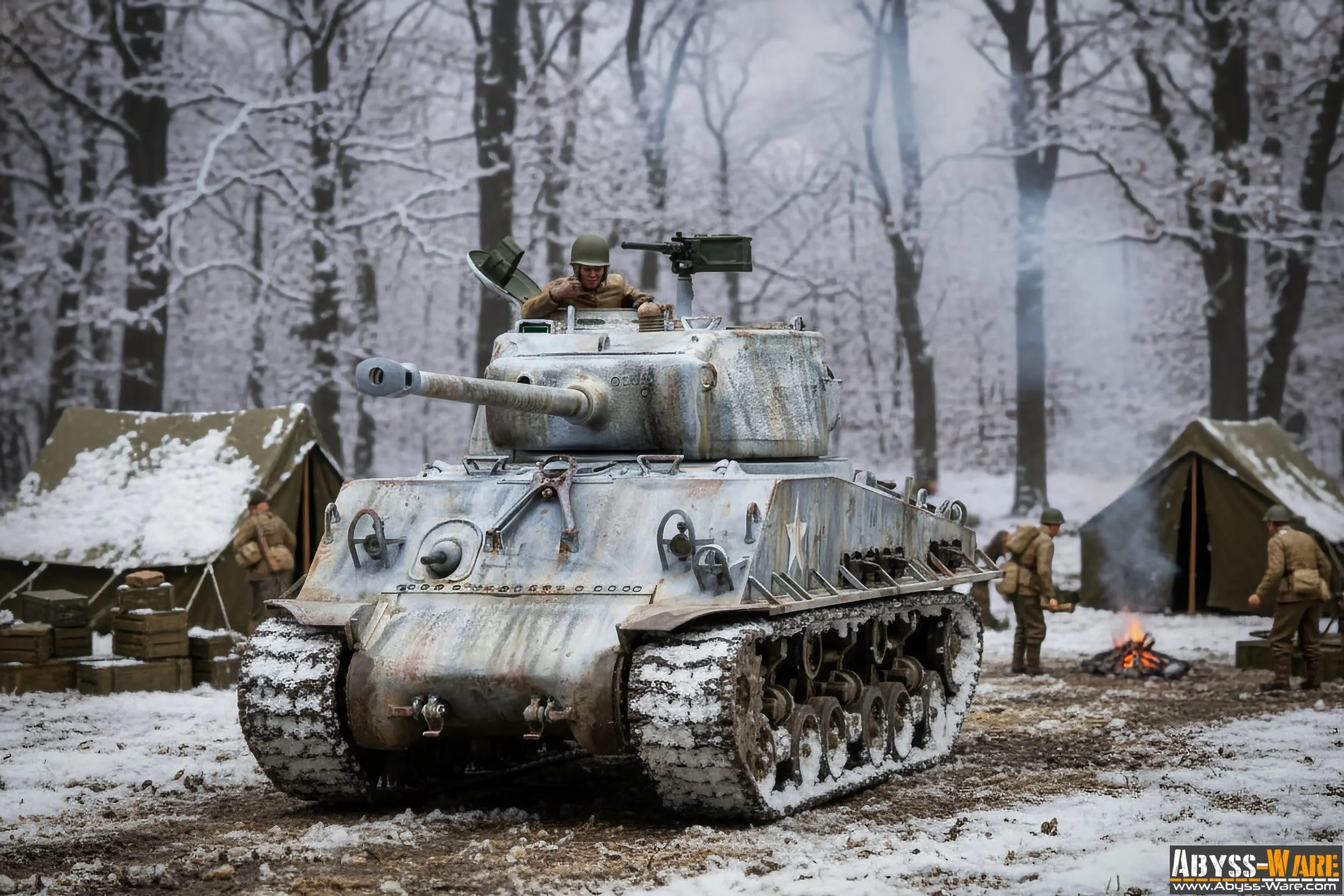
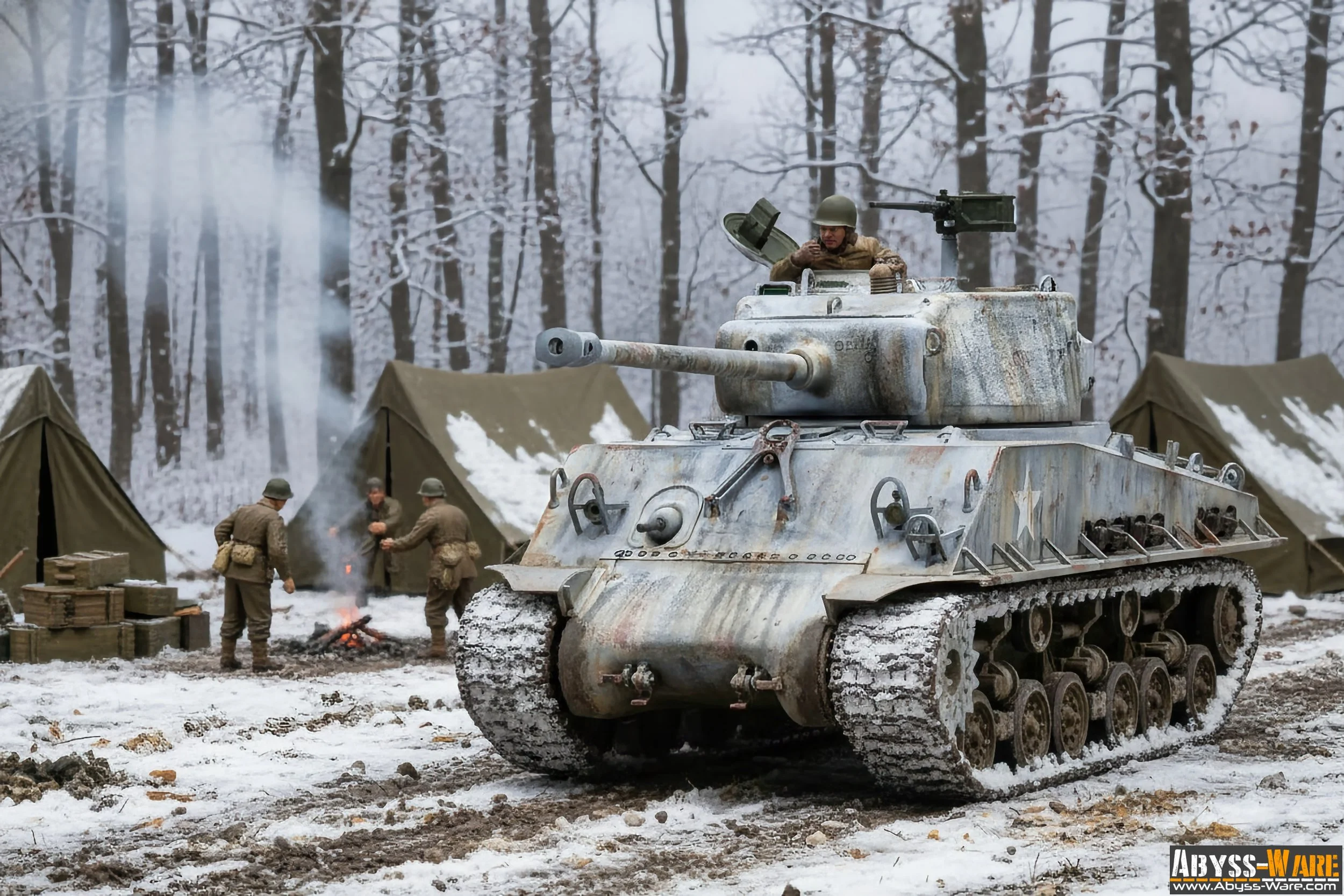
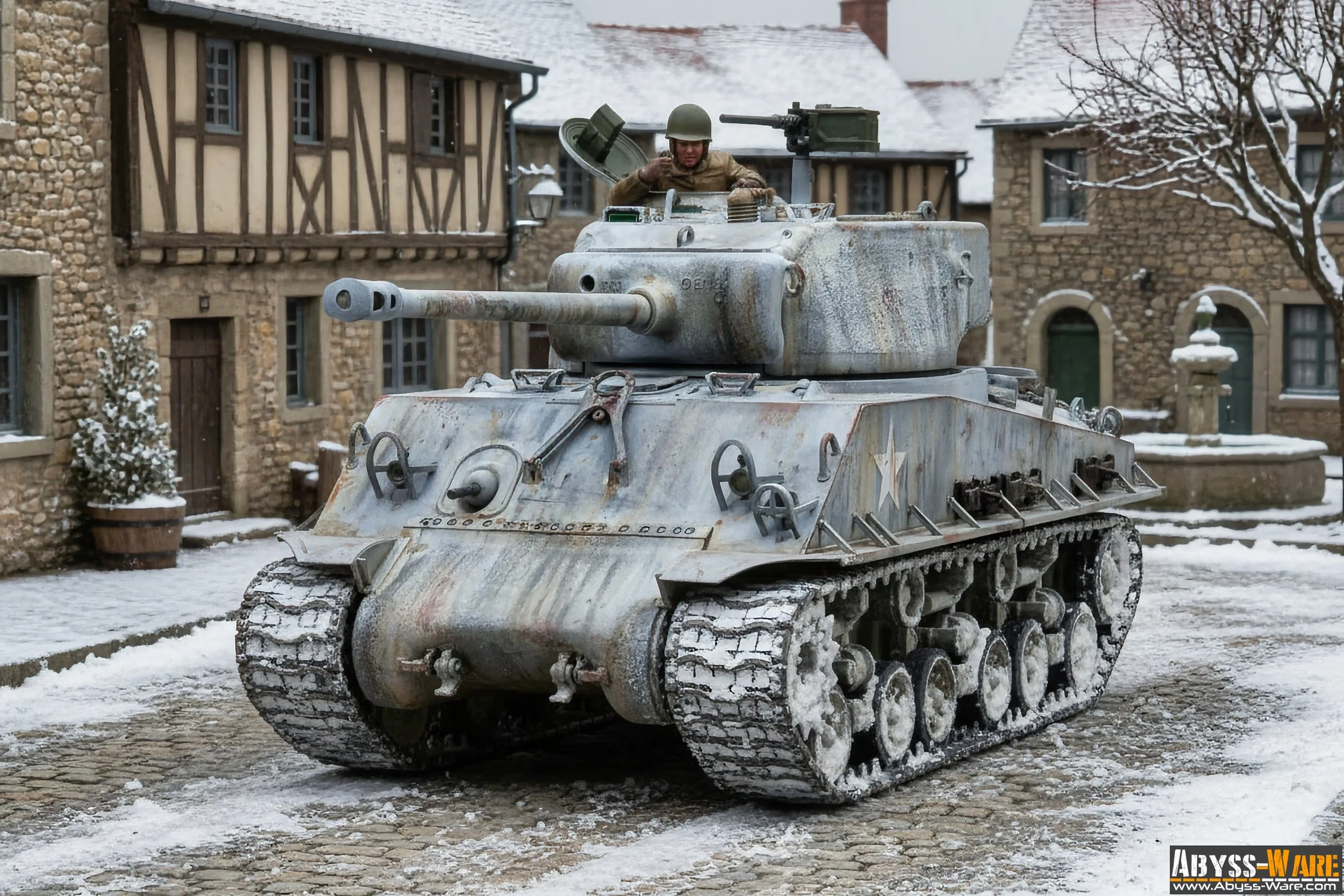
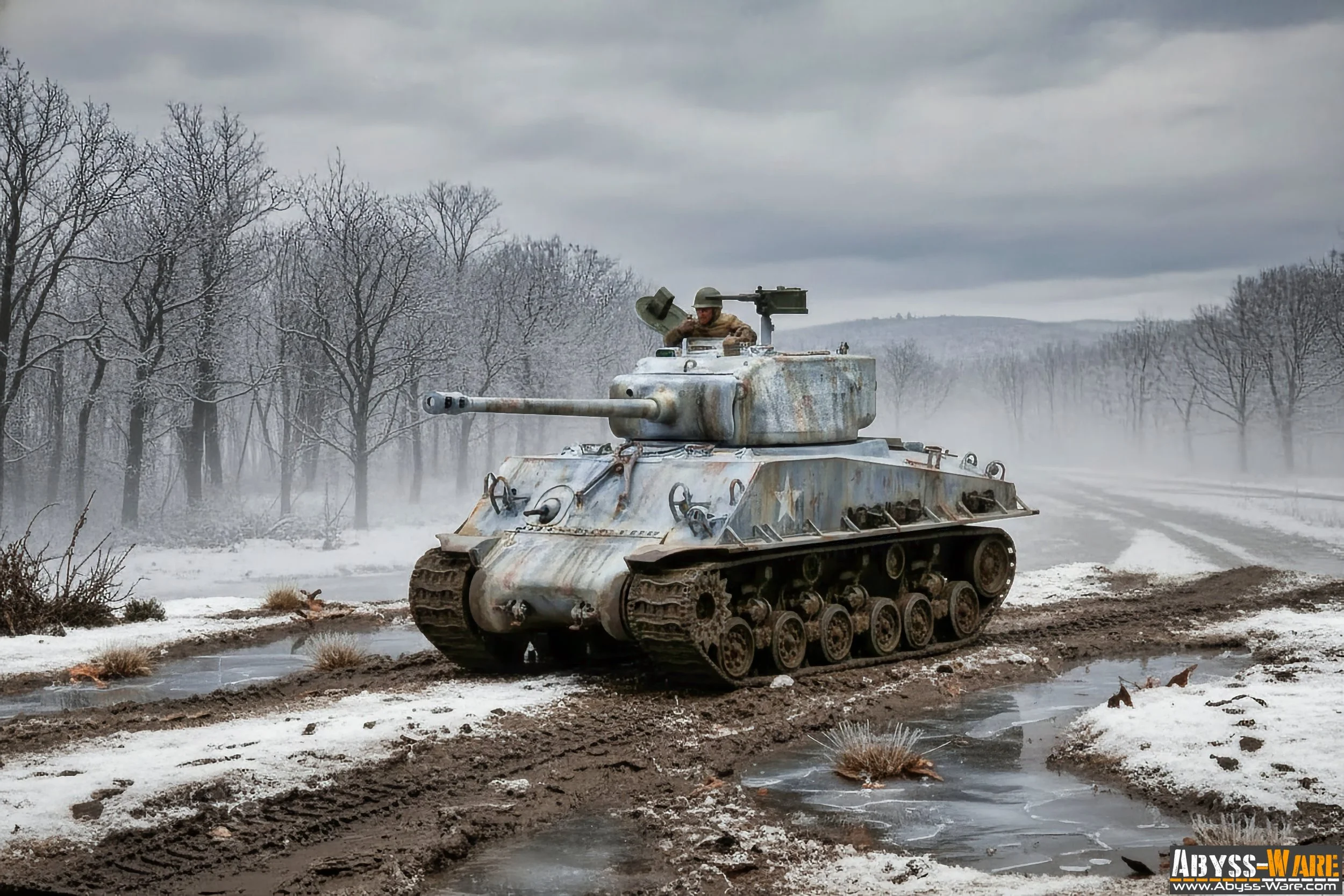
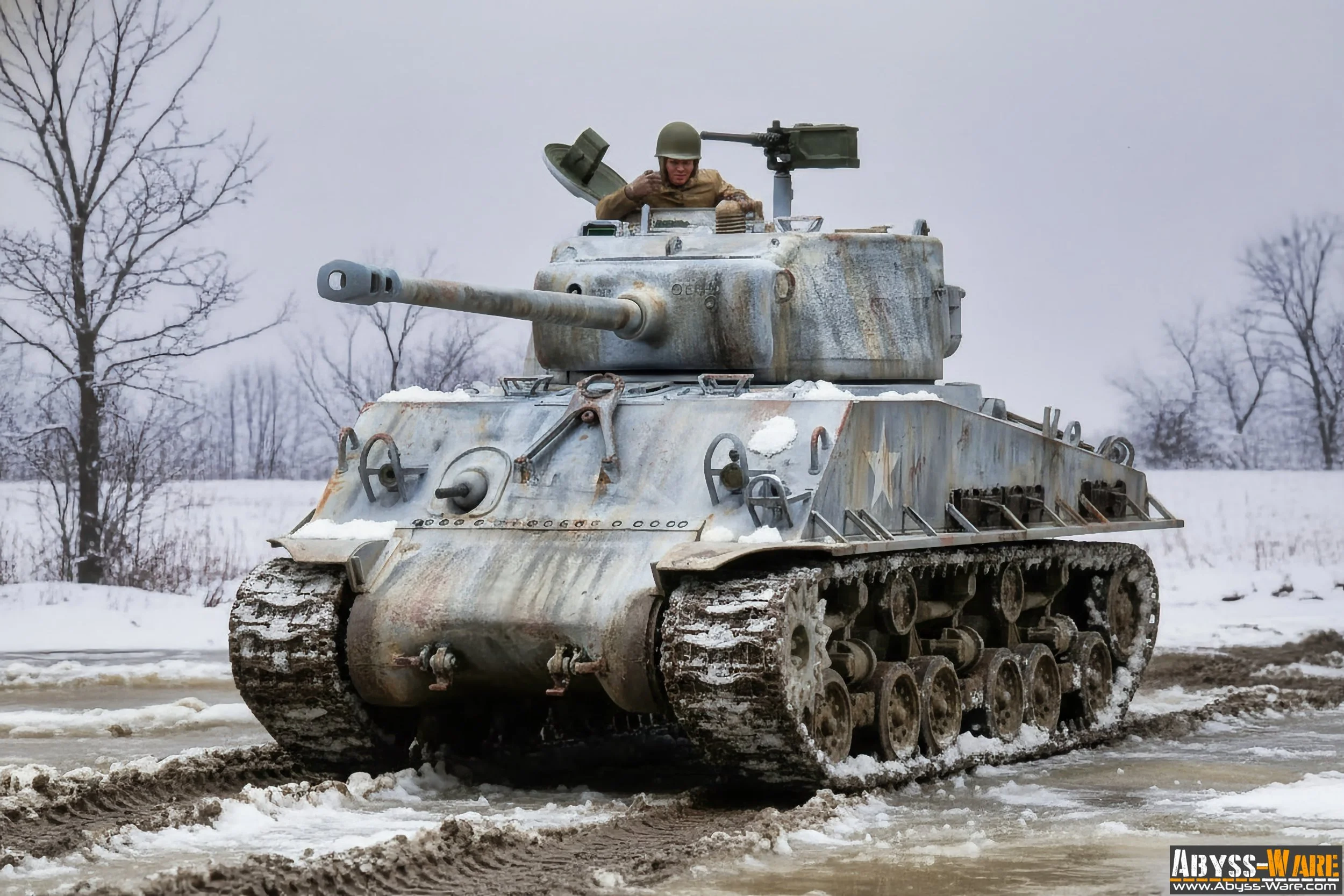
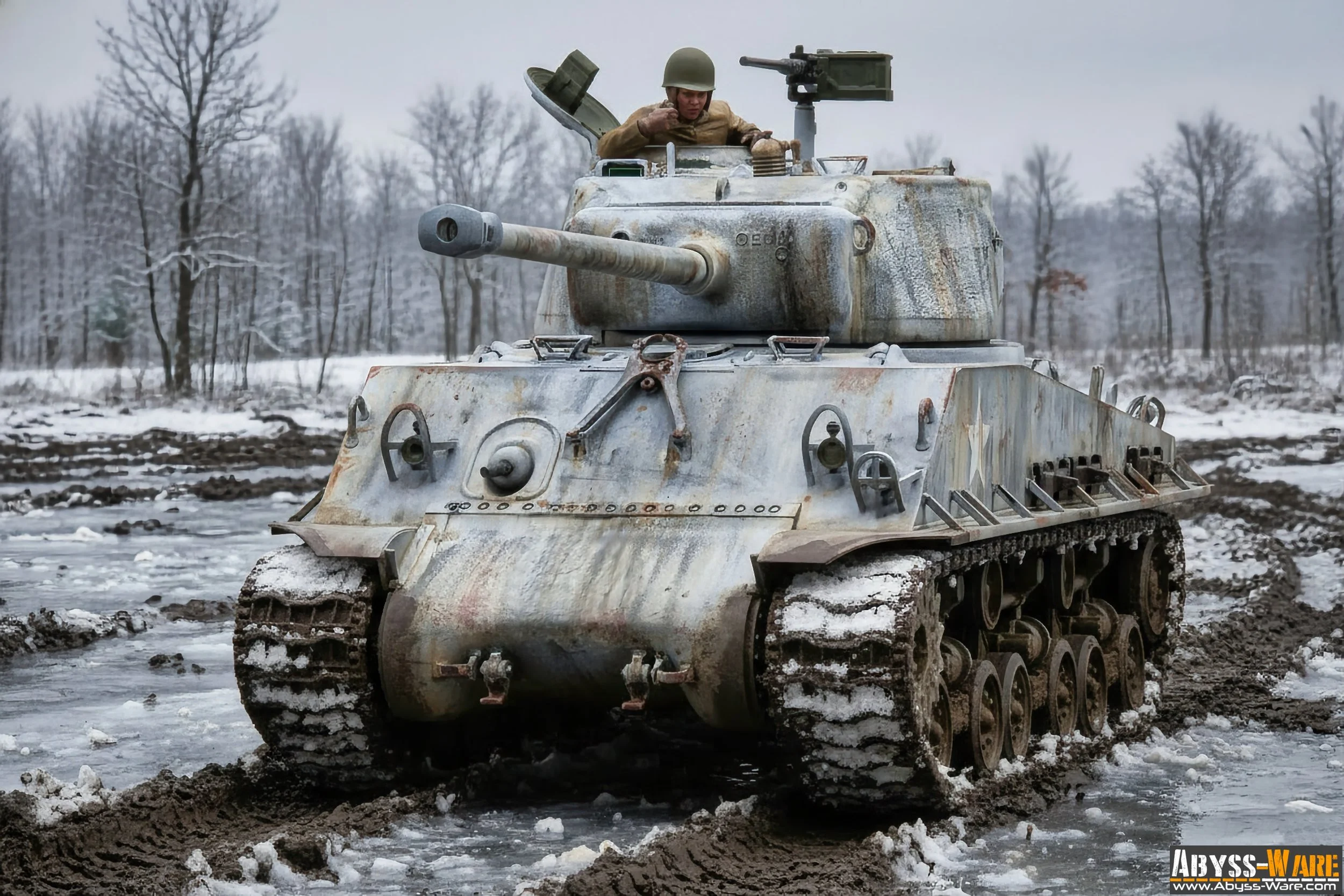
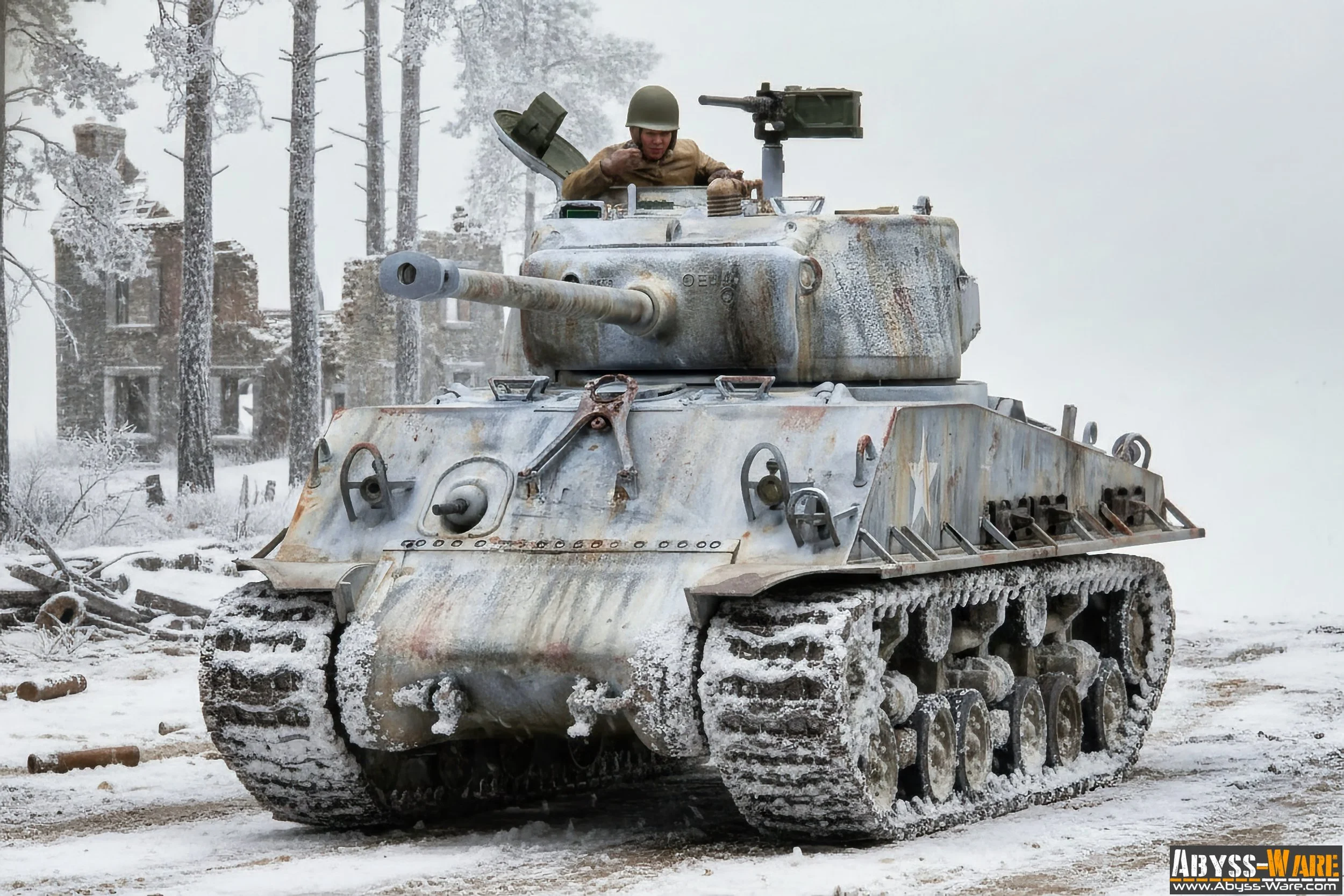
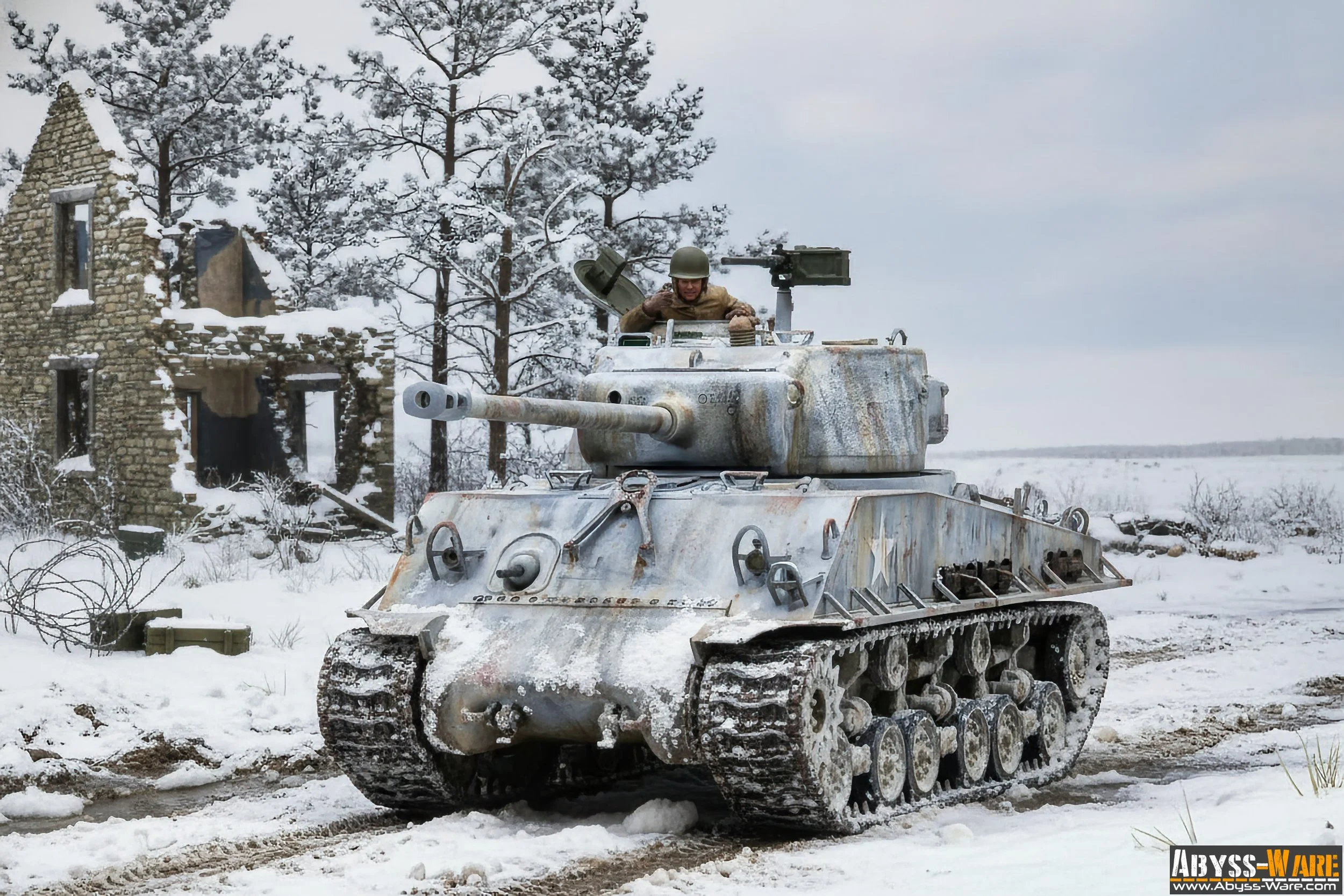
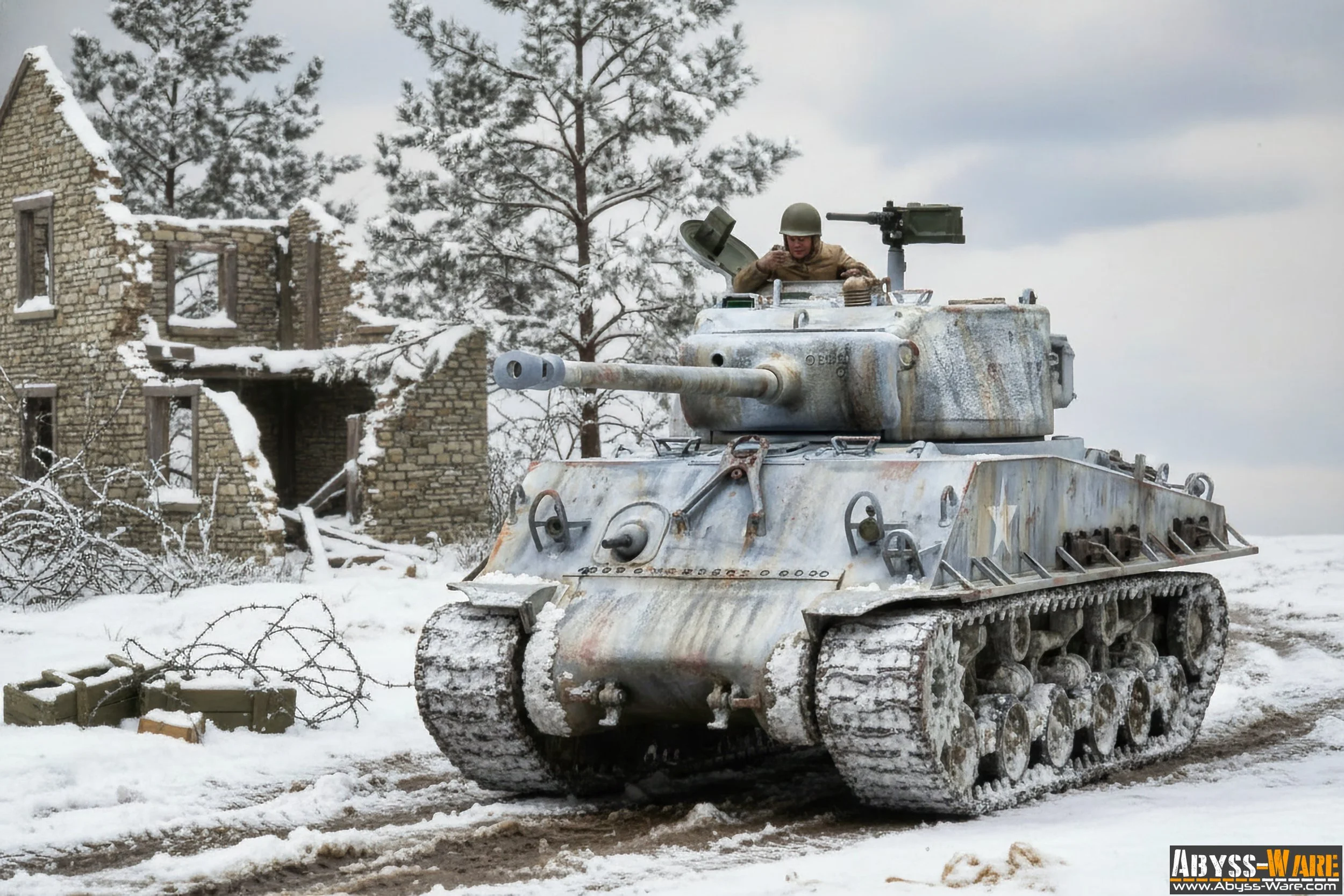
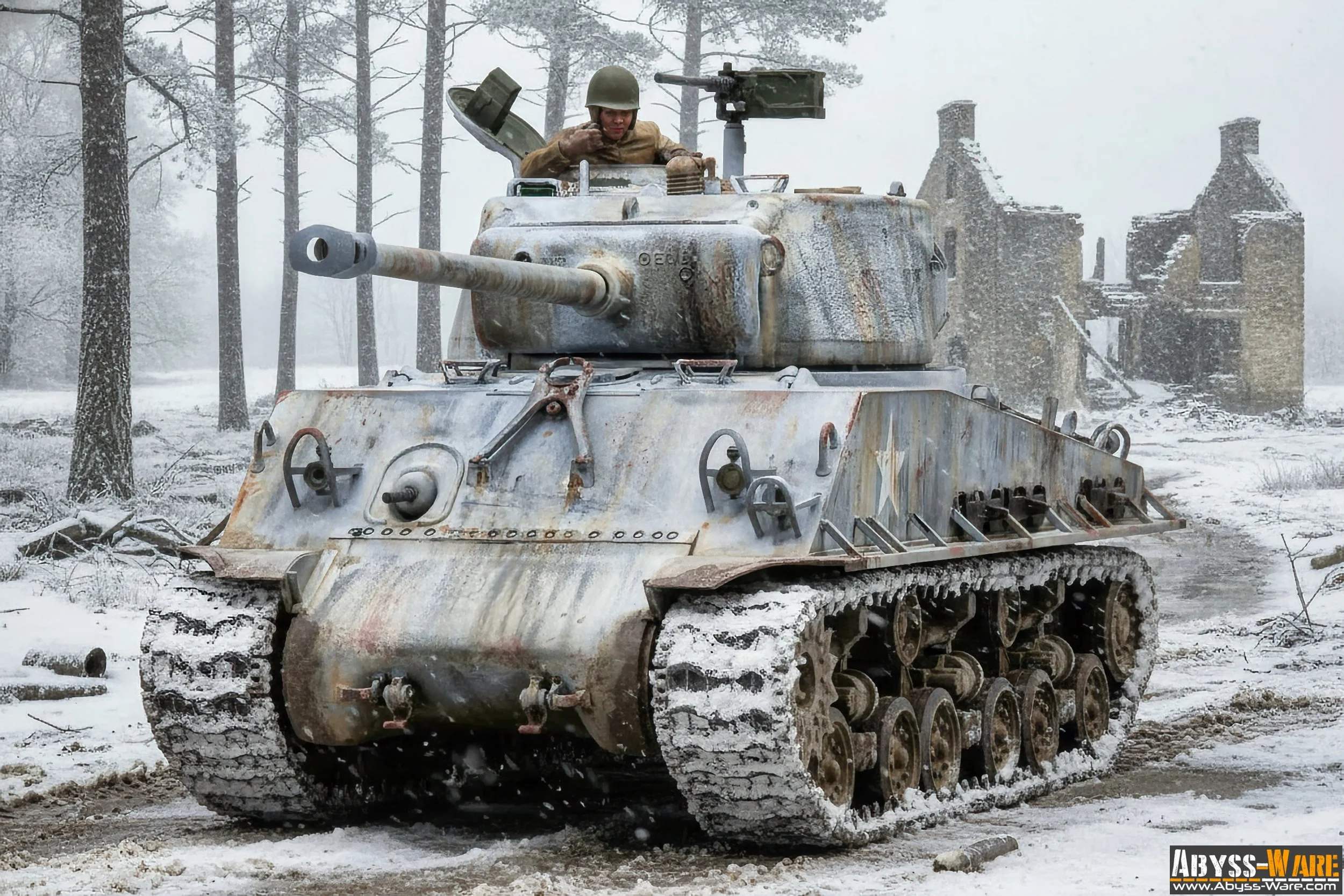
The M4A3E8 Sherman, affectionately nicknamed the "Easy Eight" or simply "E8," stands as one of the most refined and capable variants of the iconic American M4 Sherman medium tank family. Emerging late in World War II, this tank represented the culmination of iterative improvements to a design that had already proven itself as the backbone of Allied armored forces. While not the most heavily armored or powerfully gunned tank of the war, the Easy Eight combined reliability, mobility, firepower, and crew-friendly features in a package that crews praised for its smooth ride and combat effectiveness. The nickname "Easy Eight" derives from the experimental designation "E8," where "E" stood for the phonetic alphabet's "Easy" (representing the letter E in WWII-era military communications). The "8" referred to the eighth experimental modification in a series of suspension upgrades - specifically, the adoption of the Horizontal Volute Spring Suspension (HVSS) system paired with wider tracks. Crews quickly adopted the moniker because the new suspension delivered a notably smoother, more comfortable ride compared to the earlier Vertical Volute Spring Suspension (VVSS) found on most Shermans. This "easy" handling proved especially valuable over rough European terrain or muddy Korean hills.
Origins and Development of the Sherman Family
To fully appreciate the Easy Eight, one must understand its place in the broader Sherman lineage. The M4 Sherman originated from pre-war U.S. Army requirements for a medium tank to replace the lighter M2 and M3 series. Designed with mass production in mind, the Sherman emphasized reliability, ease of maintenance, and logistical simplicity over raw individual superiority. Production began in 1942, and by war's end, American factories churned out nearly 50 000 units across dozens of variants - making the Sherman the second-most produced tank of WWII after the Soviet T-34. Early Shermans mounted a 75mm gun in a cast or welded turret, powered by various engines (radial, diesel, or gasoline). They featured sloped frontal armor (initially around 2 inches at 47 degrees on large-hatch hulls) and a five-man crew: commander, gunner, loader, driver, and co-driver/bow gunner. Strengths included excellent reliability, good cross-country performance for their era, a stabilized gun for firing on the move, and overwhelming numbers. Weaknesses - often exaggerated in popular memory - included relatively thin armor against late-war German threats and a propensity for ammunition fires in early "dry" stowage models.
The U.S. Army continuously refined the design based on combat feedback. Key upgrades included:
Wet ammunition stowage ("W"): Ammo racks surrounded by fluid-filled containers (water mixed with ethylene glycol and rust inhibitor, nicknamed "Ammudamp") to reduce the risk of catastrophic fires when penetrated.
Larger hatches for better crew entry/exit and visibility.
Up-gunning to the 76mm M1 series high-velocity gun, which offered superior armor-piercing performance.
Improved hulls, such as the M4A3's welded construction with a single-piece 47-degree glacis plate.
The M4A3 variant itself became a favorite. It used the powerful Ford GAA V8 gasoline engine (a liquid-cooled, 1,100 cubic inch, 500 gross horsepower unit), which provided better power-to-weight and reliability than many radial or diesel alternatives once initial teething problems were resolved. The M4A3(76)W combined this engine with wet stowage and the 76mm gun in the larger T23 turret. The final major leap came with the HVSS suspension. Earlier VVSS systems used vertical springs that limited wheel travel and caused a harsher ride, higher ground pressure, and reduced speed over uneven ground. HVSS employed horizontal volute springs, allowing greater articulation, six road wheels per side (in three bogies), wider 23-inch tracks (T66, T80, or T84 types with chevron or rubber pads), and shock absorbers. This reduced ground pressure to around 11 psi, improved ride quality, enhanced cross-country speed, and allowed better performance in snow, mud, or soft soil. The combination - welded M4A3 hull, 76mm gun, wet stowage, and HVSS - yielded the M4A3(76)W HVSS, officially tagged M4A3E8 in experimental nomenclature.
Technical Specifications and Design Features:
The Easy Eight measured approximately 19 feet 5 inches to 24 feet 7 inches long (depending on gun forward or rear, with muzzle brake), about 9 feet 8 inches wide with sand shields, and roughly 9 feet 7 inches tall to the cupola. Combat weight hovered around 33-34 tons (74,200 pounds fully loaded with T66 tracks). Ground clearance was 17 inches, with a fording depth of 36 inches.
Armor protection was typical for a late Sherman but improved in layout:
Hull front upper: 2.5 inches at 47 degrees (effective thickness significantly higher due to slope).
Lower front: Varied from 4.25 to 2 inches.
Sides: 1.5 inches.
Turret front/gun shield: Up to 3.5 inches.
Overall maximum around 76mm (3 inches) in key areas, though not equivalent to heavy tanks like the German Tiger or Panther in raw thickness.
The tank relied on slope, speed, and numbers rather than brute armor. Many field modifications added appliqué plates or sandbags for extra protection.
Armament centered on the 76mm M1A1, M1A1C, or M1A2 gun (L/55 caliber length) in the M62 mount. This high-velocity weapon fired a variety of rounds, including:
Armor-piercing capped ballistic capped (APCBC).
High-velocity armor-piercing (HVAP) "super shot" for better penetration against Panthers or Tigers at range.
High-explosive (HE) for infantry and soft targets.
It could penetrate roughly 4-5 inches of armor at typical combat ranges with standard ammo, more with HVAP. Rate of fire reached up to 20 rounds per minute in ideal conditions, though sustained rates were lower. The gun featured a muzzle brake to reduce recoil and dust kick-up, and an elevation stabilizer for firing on the move. Traverse was hydraulic (full 360 degrees in about 15 seconds) with manual backup; elevation ranged from -10 to +25 degrees or similar.
Secondary weapons included:
Coaxial .30-06 Browning M1919A4 machine gun.
Bow-mounted .30-cal M1919A4.
Pintle-mounted .50-cal Browning M2HB anti-aircraft/anti-infantry gun on the turret.
Optional 2-inch smoke mortar in the turret.
Ammunition stowage: Around 71-97 rounds for the main gun (wet racks reduced fire risk), hundreds for machine guns. A crew of five operated the vehicle efficiently, with the commander often directing from the cupola.
Powerplant and Mobility: The Ford GAA V8 delivered 450-500 horsepower (net/gross), giving a power-to-weight ratio of about 12-13.5 hp/ton. Top road speed reached 23-30 mph (sustained around 26 mph), with a cruising range of 100-120 miles on 168 gallons of 80-octane gasoline. The synchromesh transmission offered 5 forward speeds and 1 reverse, with controlled differential steering. The HVSS dramatically improved handling: better obstacle crossing (24-inch vertical wall, 7.5-foot trench), softer ride, and lower ground pressure for superior flotation in poor conditions. Crews reported the Easy Eight felt more like a sports car than earlier "bouncy" Shermans. Other features included 24-volt electrical systems, SCR radios (508/528 series), interphone for crew communication, and fire suppression (CO2 systems). Production ran primarily from late 1944 to early 1945 at facilities like Detroit Tank Arsenal and Fisher Tank Arsenal, with roughly 2,617 M4A3E8 units built (some sources cite variations in exact counts across sub-variants).
Combat in World War II: Easy Eights arrived in Europe in small numbers by December 1944, just in time for the Battle of the Bulge. Units like elements of Patton's Third Army received them during preparations for the Ardennes offensive. They saw limited but impactful service in the final months of the war in Northwest Europe, where their improved mobility helped in muddy winter conditions and pursuit operations across Germany in 1945. The 76mm gun provided better parity against Panthers, though frontal engagements with Tigers still favored the Germans at long range. Crew training, combined arms tactics, air support, and sheer numbers often compensated. In the Pacific, some Shermans (including HVSS variants) supported island-hopping campaigns, though the theater's jungle and beach terrain highlighted the tank's versatility more than direct tank-vs-tank duels. Overall, the Easy Eight's late introduction meant it did not dominate headlines like earlier Shermans, but it earned quiet respect as a reliable "final form" of the design.
Service in the Korean War: The Easy Eight's most extensive combat came years later in Korea (1950-1953). Post-WWII demobilization left U.S. forces with limited modern tanks in the Far East. When North Korean T-34/85s rolled south in June 1950, American commanders scrambled. They gathered scattered M4A3E8s from Japan and formed units like the 8072nd Temporary Tank Battalion (later 89th Tank Battalion), which landed at Busan in August 1950. In total, around 679 Easy Eights deployed to the peninsula. The Sherman proved highly effective. Between July and November 1950, Easy Eights reportedly destroyed 41 enemy tanks, often outperforming the T-34/85 in direct engagements thanks to superior U.S. ammunition (especially HVAP), optics, fire control, and crew experience. The 76mm gun could penetrate the T-34's armor at normal ranges, while the Sherman's wet stowage and reliability reduced crew losses. Its lower ground pressure and narrower profile suited Korea's mountainous, narrow roads and rice paddies better than heavier Pershings or Pattons in some phases - roads sometimes collapsed under wider-tracked heavies. Later in the war, Shermans excelled in infantry support, bunker-busting with HE rounds, and mobile defense. Canadian forces also operated them (purchasing batches post-WWII), with units like Lord Strathcona's Horse seeing action. By the armistice in 1953, the Easy Eight remained a workhorse despite newer tanks arriving. Its mechanical simplicity allowed field maintenance under harsh conditions, and crews preferred it for certain roles over more complex heavies.
Legacy, Variants, and Post-War Use: After Korea, many Easy Eights served in allied armies or as training vehicles. South Korea received hundreds, using them into the 1970s before replacing them with M48 Pattons. Other nations, including Japan (post-occupation), the Netherlands, and others, operated them briefly. Israel famously upgraded Shermans extensively (M50 and M51 "Super Shermans") with French 75mm or 105mm guns, diesel engines, and other mods, keeping derivative Shermans in frontline service into the 1980s and beyond. Preserved examples exist worldwide. Museums like the Patton Museum, National Museum of Military Vehicles, American Heritage Museum, and others display restored Easy Eights - some fully operational, demonstrating obstacle courses or live-firing .50-cal machine guns. Restorations often highlight Korean War schemes, such as "Rice's Red Devils" markings or tiger-stripe camouflage. In popular culture, the Easy Eight appears in films like Fury (though the on-screen tank blends variants), video games (Company of Heroes, World of Tanks), and scale modeling kits from Tamiya and others. Its image evokes the American industrial might and the "good enough, in massive numbers" philosophy that helped win WWII.
Why the Easy Eight Mattered: The M4A3E8 was never a revolutionary "wonder weapon." It did not outclass the best German or Soviet tanks one-on-one in every metric. Instead, it exemplified pragmatic engineering: incremental upgrades that addressed real battlefield complaints without sacrificing the Sherman's core advantages - producibility, reliability, crew survivability features (wet stowage, stabilizer, good visibility), and integration into combined-arms operations. Crews loved the smooth ride, responsive power, and confidence-inspiring gun. Logisticians appreciated shared parts with the vast Sherman fleet. Commanders valued its balance of speed, firepower, and availability. In Korea, it punched above its weight against a peer adversary. Today, the Easy Eight symbolizes the evolution of armored warfare during a pivotal era. From the snowy forests of the Ardennes to the rugged hills of Korea, this "easy-riding" Sherman helped secure victory and deter aggression long after the guns of WWII fell silent. Its story reminds us that great military hardware often succeeds not through perfection, but through thoughtful refinement and the courage of the soldiers who manned it.