
WARBIRDS
Scale Models
"Fight on and fly on to the last drop of blood and the last drop of fuel, to the last beat of the heart..”
-- Manfred von Richthofen
Wings of War: A Short History of Military Aviation
From the moment the Wright brothers lifted off the sands of Kitty Hawk in 1903, the military potential of flight was undeniable. What began as a fragile experiment of wood, wire, and fabric evolved within a single century into supersonic, stealth and autonomous killing machines that redefined the nature of human conflict. The history of the military aviation is a story of engineering genius, tactical evolution, and the relentless pursuit of the high ground.
The Dawn of Flight and the Great War (1900–1918)
In the early 1900s, high-ranking military officials viewed the "aeroplane" as a novelty. General Ferdinand Foch, later the Supreme Allied Commander in WWI, famously remarked, "Airplanes are interesting toys but of no military value." At the time, the military used tethered balloons for observation - a practice dating back to the French Revolutionary Wars. However, the 1911 Italo-Turkish War saw the first actual use of an aircraft in combat when Italian Captain Carlo Piazza flew a Blériot XI over Turkish lines for reconnaissance. A year later, the first bombs (converted grenades) were dropped by hand from a cockpit.
1914: The Eye in the Sky - When World War I broke out, the primary role of the airplane was reconnaissance. Pilots were the "eyes of the army," spotting troop movements that cavalry could no longer see behind the stagnant trenches. Initially, enemy pilots would wave to one another as they passed. This chivalry died quickly. Pilots began carrying bricks, pistols, and eventually rifles to harass one another. The true birth of the "fighter" came with the development of the synchronization gear. In 1915, Dutch engineer Anthony Fokker, working for the Germans, perfected a mechanism that allowed a machine gun to fire through the spinning propeller blades without hitting them. This gave the German Eindecker a terrifying advantage, leading to the "Fokker Scourge." The Allies eventually caught up with designs like the British Sopwith Camel and the French SPAD S.XIII. By 1918, the sky was a crowded battlefield. The concept of the "Ace" was born: larger-than-life figures like Manfred von Richthofen (The Red Baron) and Edward Rickenbacker who turned aerial combat into a deadly form of theater.
The Golden Age and the Interwar Darwinism (1919–1938)
From Wood to Metal - The two decades between the world wars saw the fastest rate of technological change in aviation history. In 1919, military planes were largely biplanes made of wood and fabric. By 1939, they were all-metal, monoplane "super-fighters." The catalyst was competition. Events like the Schneider Trophy (for seaplanes) pushed designers to seek extreme speeds. Engineers realized that the drag created by the second wing of a biplane was a hindrance. Advances in metallurgy led to "monocoque" designs, where the metal skin of the aircraft supported the load, allowing for sleeker, faster silhouettes.
The Rise of Strategic Bombing Theory - Thinkers like Giulio Douhet and Billy Mitchell began arguing that the next war would be won by "strategic bombing" - the destruction of an enemy’s industrial heartland from the air. This led to the development of "heavy bombers" like the Boeing B-17 Flying Fortress. Meanwhile, in Germany, the Luftwaffe was being built in secret (violating the Treaty of Versailles), focusing on "Blitzkrieg" or lightning war, where dive bombers like the Ju-87 Stuka acted as flying artillery for ground tanks.
World War II – The Pinnacle of Piston Power (1939–1945)
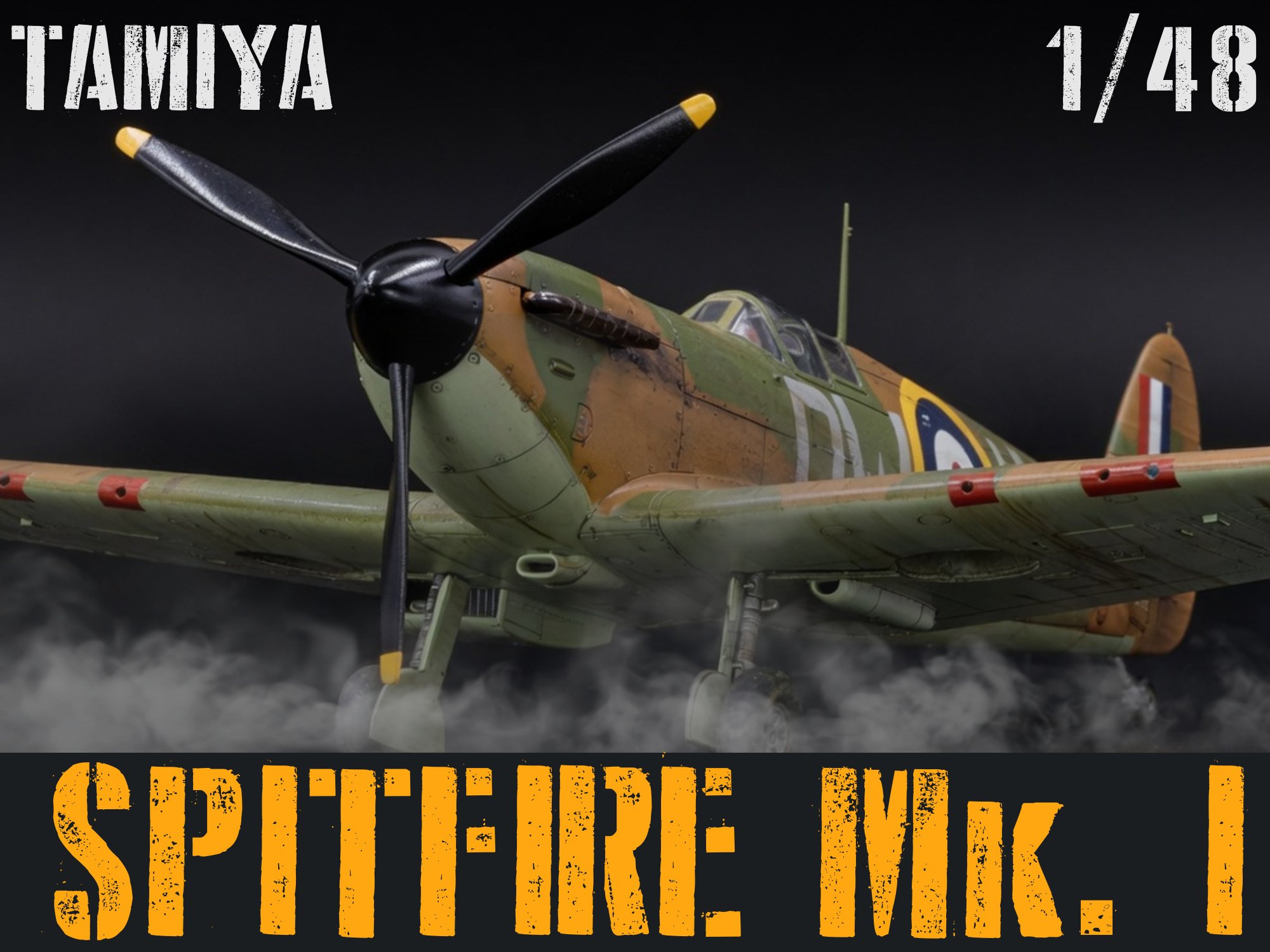
The Battle of Britain: Radar and the Spitfire - 1940 marked the first major conflict fought entirely in the air. The German Luftwaffe attempted to crush the Royal Air Force (RAF) to pave the way for an invasion. The RAF’s success relied on two things: the Supermarine Spitfire/Hawker Hurricane duo and the world’s first integrated air defense system using Radar. This proved that air superiority was a prerequisite for any land or sea operation.
The Pacific Theatre: The Death of the Battleship - On December 7, 1941, the attack on Pearl Harbor signaled the end of the battleship era. The aircraft carrier became the new "king of the sea." Planes like the Japanese Mitsubishi A6M Zero dominated early on due to their incredible range and maneuverability, but American industrial might eventually produced the F6F Hellcat and P-38 Lightning, which turned the tide.
The Long-Range Escort: The P-51 Mustang - One of the greatest tactical shifts occurred with the introduction of the P-51 Mustang. By using external "drop tanks," the P-51 could escort Allied bombers all the way to Berlin and back. This allowed the Allies to achieve total air supremacy over Europe, systematically dismantling the German war machine.
The Birth of the Jet Age - In the closing years of the war, the sound of the sky changed. In 1944, the Messerschmitt Me 262 became the world’s first operational turbojet fighter. It was faster than anything the Allies possessed, but it arrived too late and in too few numbers to change the outcome. However, the "genie was out of the bottle." The age of the propeller-driven dogfighter was over.
The Cold War and the Jet Revolution (1946–1969)
The Sound Barrier and Korea - Following WWII, the United States and the Soviet Union raced to capture German aerodynamic data. This led to the development of swept-wing jets. In the skies over Korea (1950–1953), the American F-86 Sabre and the Soviet MiG-15 engaged in the first high-speed jet dogfights. In 1947, Chuck Yeager broke the sound barrier in the Bell X-1. Suddenly, military designers were obsessed with "Mach" numbers. The 1950s saw the "Century Series" of fighters (F-100 to F-106), each designed to go faster and higher than the last.
The Missile Delusion and Vietnam - By the 1960s, many military theorists believed that the era of dogfighting was dead. They thought air combat would consist of firing long-range missiles at radar blips. This led to the design of the F-4 Phantom II, which initially didn't even have an internal gun. The Vietnam War proved this theory wrong. North Vietnamese MiGs, though older and slower, engaged U.S. jets in close-quarters "knife fights" where missiles often failed. This led to the creation of the Navy’s "TOPGUN" school and a return to teaching basic fighter maneuvers (BFM).
The Fourth Generation and the Digital Age (1970–1990)
The "Energy-Maneuverability" Revolution - Following the lessons of Vietnam, the U.S. developed the "Teen Series" - the F-14 Tomcat, F-15 Eagle, F-16 Fighting Falcon, and F-18 Hornet. These were "Fourth Generation" fighters, characterized by high thrust-to-weight ratios, "fly-by-wire" flight controls, and advanced pulse-doppler radars. The Soviet Union countered with the Su-27 Flanker and the MiG-29 Fulcrum, aircraft that remain the backbone of many air forces today. These planes were designed for "super-maneuverability," capable of performing gravity-defying stunts like the "Cobra" to shake off an enemy.
The Secret War: Stealth - While the world was focused on speed and agility, a small group at Lockheed’s "Skunk Works" was working on making airplanes invisible. Using mathematical models of how radar waves reflect off flat surfaces, they created the F-117 Nighthawk. During the 1991 Gulf War, the F-117 shocked the world by flying into the heart of Baghdad’s dense air defenses completely undetected, ushering in the age of Stealth.
The Fifth Generation and the Information Age (1991–Present)
Dominance Through Data - The transition to the "Fifth Generation" (led by the F-22 Raptor and F-35 Lightning II) changed the definition of a fighter plane. It was no longer just about how the plane flew, but how it handled data. Fifth-generation aircraft combine:
All-Aspect Stealth: Low-observable shapes and RAM (Radar Absorbent Material).
Supercruise: The ability to fly supersonic without using fuel-guzzling afterburners.
Sensor Fusion: The pilot no longer looks at multiple screens; the aircraft’s computer merges radar, infrared, and electronic data into a single tactical picture.
The Rise of the Drones (UAVs) - The 21st century introduced a paradigm shift: removing the pilot from the cockpit. The MQ-1 Predator and MQ-9 Reaper changed counter-terrorism operations, allowing for long-loiter surveillance and precision strikes controlled via satellite from thousands of miles away.
The Future – The Sixth Generation and Beyond
As we look toward the 2030s and 2040s, the "Sixth Generation" of military aircraft is already on the drawing boards (such as the U.S. NGAD or the European FCAS). These will likely feature:
Variable Cycle Engines: Engines that can act like high-efficiency turbofans for cruising and high-performance turbojets for combat.
Directed Energy Weapons: The use of lasers to intercept incoming missiles.
Loyal Wingmen: AI-controlled drones that fly alongside manned fighters, acting as sensors or weapon carriers.
Hypersonics: Aircraft and missiles capable of flying at Mach 5 or higher, making traditional interception nearly impossible.
Conclusion: The Enduring Legacy of the Military Airplane
The history of the military airplane is a testament to the dual nature of human ingenuity. The same technology that allows us to travel the globe in comfort was forged in the fires of survival and tactical necessity. From the canvas-covered biplanes of 1914 to the data-linked stealth fighters of today, the airplane has fundamentally altered the geography of power. It has made the world smaller, but the stakes of conflict infinitely higher. As we move into an era of AI and space-edge flight, the sky remains what it has been for a century: the ultimate high ground.
Key Aircraft That Changed History: A Quick Reference
Fokker E.I (1915): The first true fighter with a synchronized gun.
Supermarine Spitfire (1940): The icon of the Battle of Britain.
B-29 Superfortress (1945): The plane that ushered in the nuclear age.
MiG-15 (1950): The Soviet jet that shocked the West in Korea.
SR-71 Blackbird (1964): The fastest air-breathing manned aircraft ever built.
F-117 Nighthawk (1983): The first operational stealth aircraft.
F-35 Lightning II (2015): The most complex multi-role sensor platform in history.