
TIGER I Ausf. E Sd.Kfz.181
TAKOM 2200
SCALE 1/35
.
;
The Tiger I, officially designated Panzerkampfwagen VI Ausf. E (Sd.Kfz. 181), stands as one of the most iconic and feared heavy tanks of World War II. Introduced in 1942, this German behemoth was developed in response to the surprise appearance of superior Soviet armor like the T-34 and KV-1 during Operation Barbarossa. Built primarily by Henschel, the Tiger I combined devastating firepower, thick protection, and imposing presence that struck terror into Allied and Soviet forces alike. Weighing approximately 57 tonnes in combat configuration, the Tiger measured about 6.3 meters long (8.45 m with gun forward), 3.56 meters wide, and 3 meters tall. It was powered by a Maybach HL 230 V-12 gasoline engine producing around 700 horsepower, enabling a top road speed of roughly 38-45 km/h and about 20-25 km/h cross-country. Its crew of five included a commander, gunner, loader, driver, and radio operator. The tank's hallmark was its powerful 8.8 cm KwK 36 L/56 gun, derived from the legendary anti-aircraft "Eighty-Eight." This weapon could penetrate 100 mm of armor at ranges up to 1,000 meters or more, often destroying enemy tanks like the M4 Sherman or T-34 before they could close the distance. Frontal armor reached 100-102 mm thick (with even thicker mantlet protection), rendering it nearly impervious to most Allied guns at typical combat ranges, while side and rear armor was 80 mm. Two 7.92 mm MG 34 machine guns provided secondary defense. Deployed in independent heavy tank battalions, Tigers first saw action in late 1942 on the Eastern Front and in North Africa. They excelled in defensive roles and long-range engagements, with skilled crews achieving impressive kill ratios. However, the Tiger's immense weight led to mechanical issues - particularly with the transmission and suspension - high fuel consumption, and logistical challenges, including difficulty crossing bridges. Only about 1,347 were produced between 1942 and 1944 before production shifted to the Tiger II. Despite its limitations in numbers and reliability, the Tiger I remains a symbol of German engineering excellence and armored dominance on the WWII battlefield. Its legacy endures in museums, with the famous Tiger 131 at the Tank Museum in Bovington being one of the few fully operational survivors today.
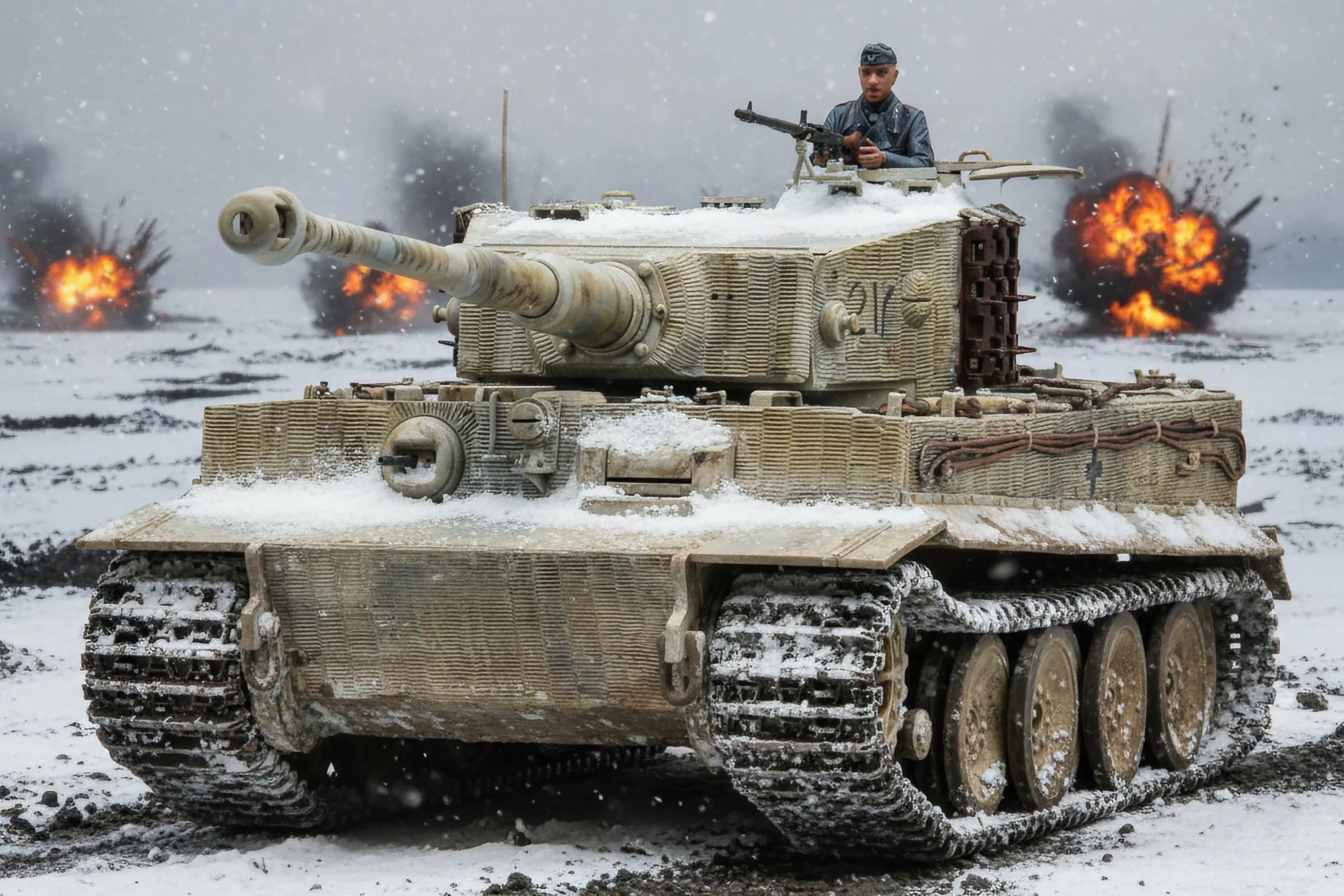
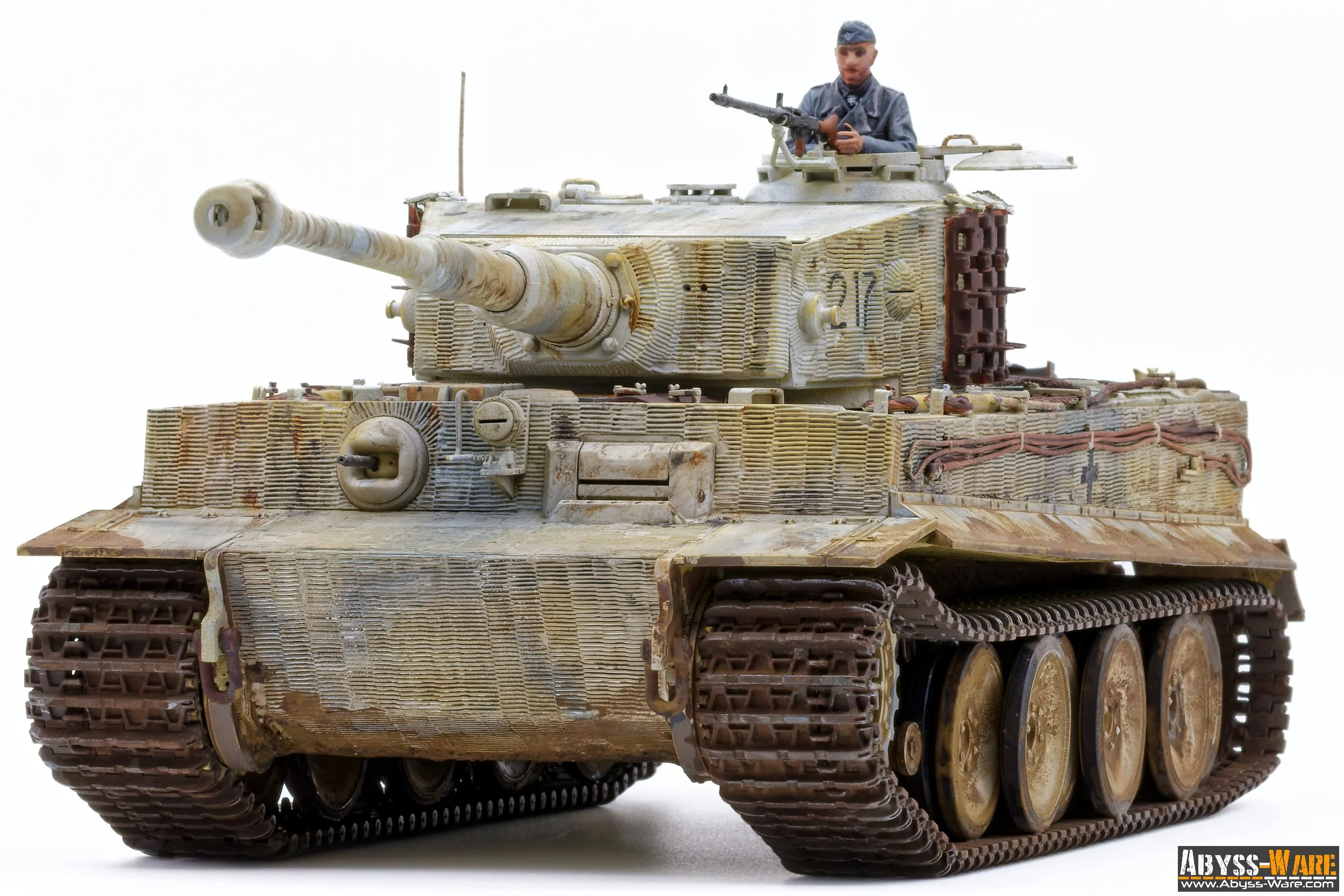
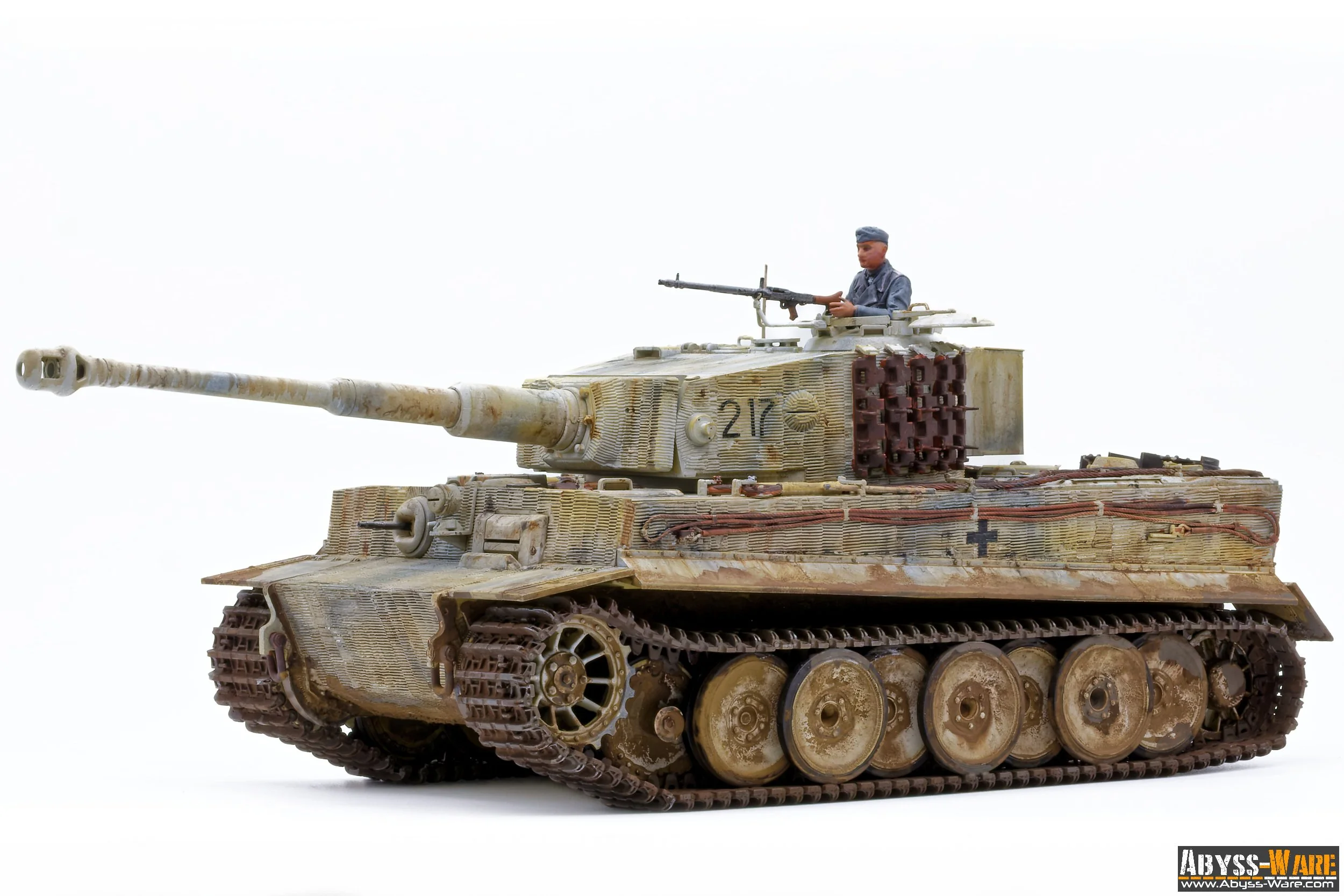
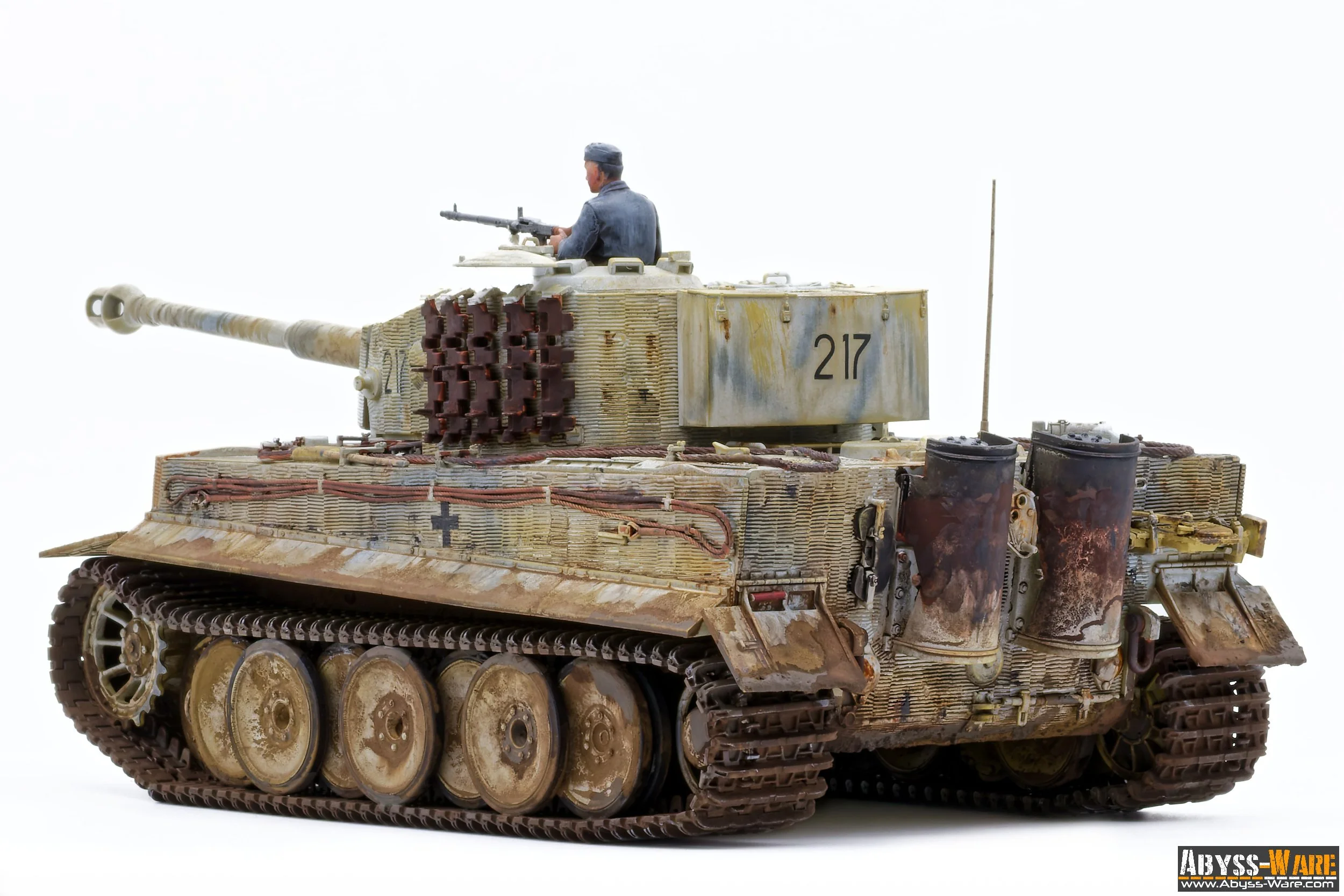
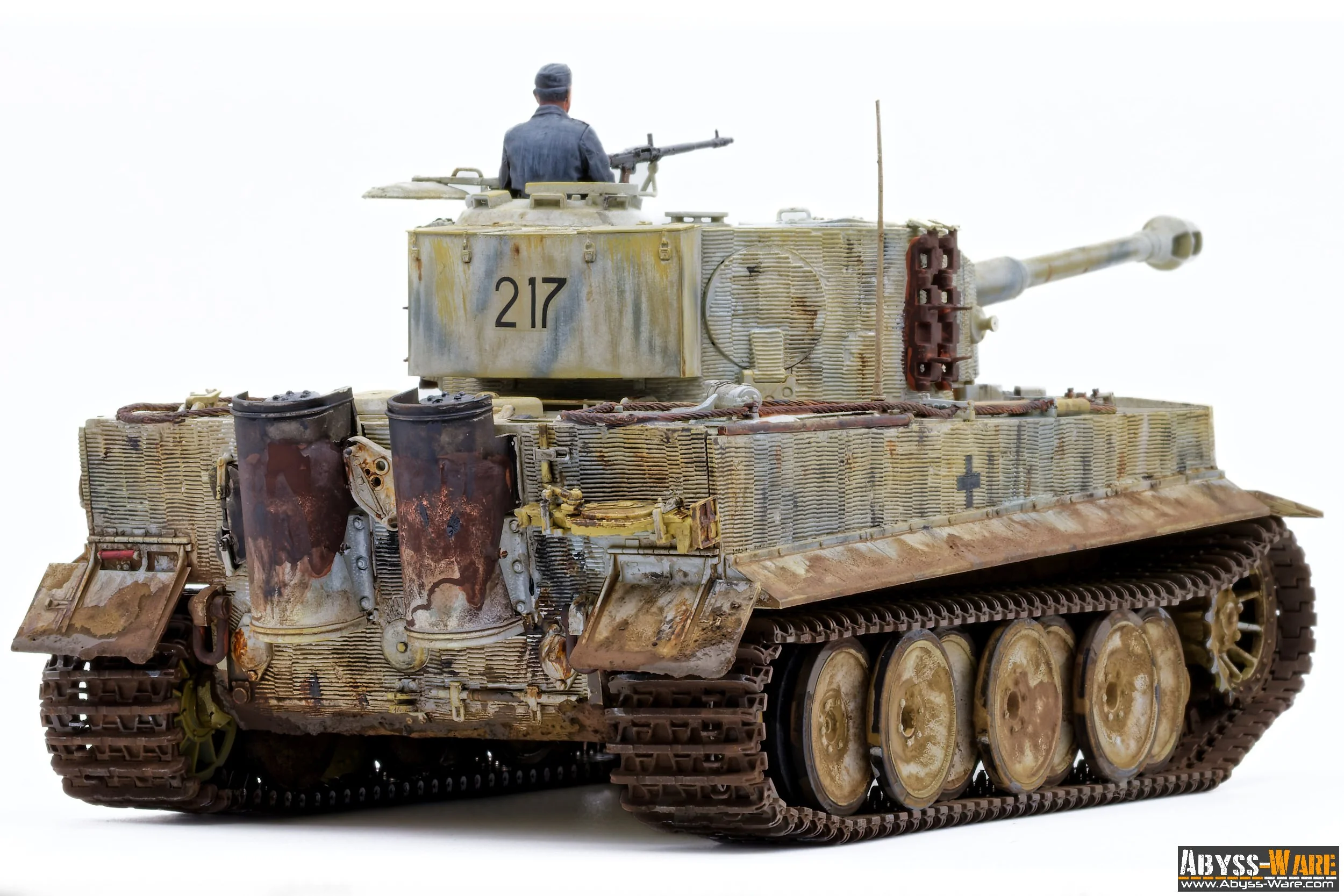
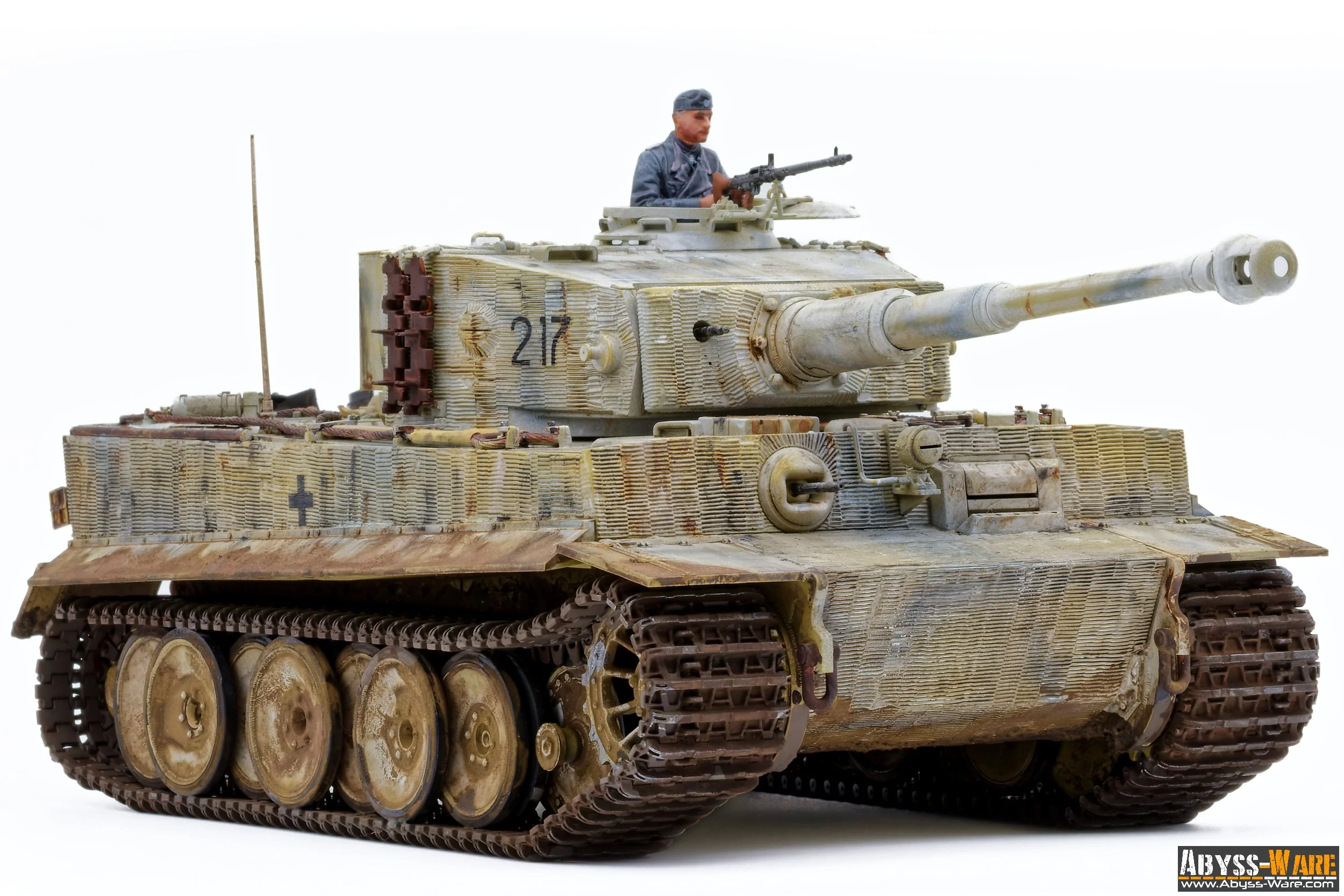
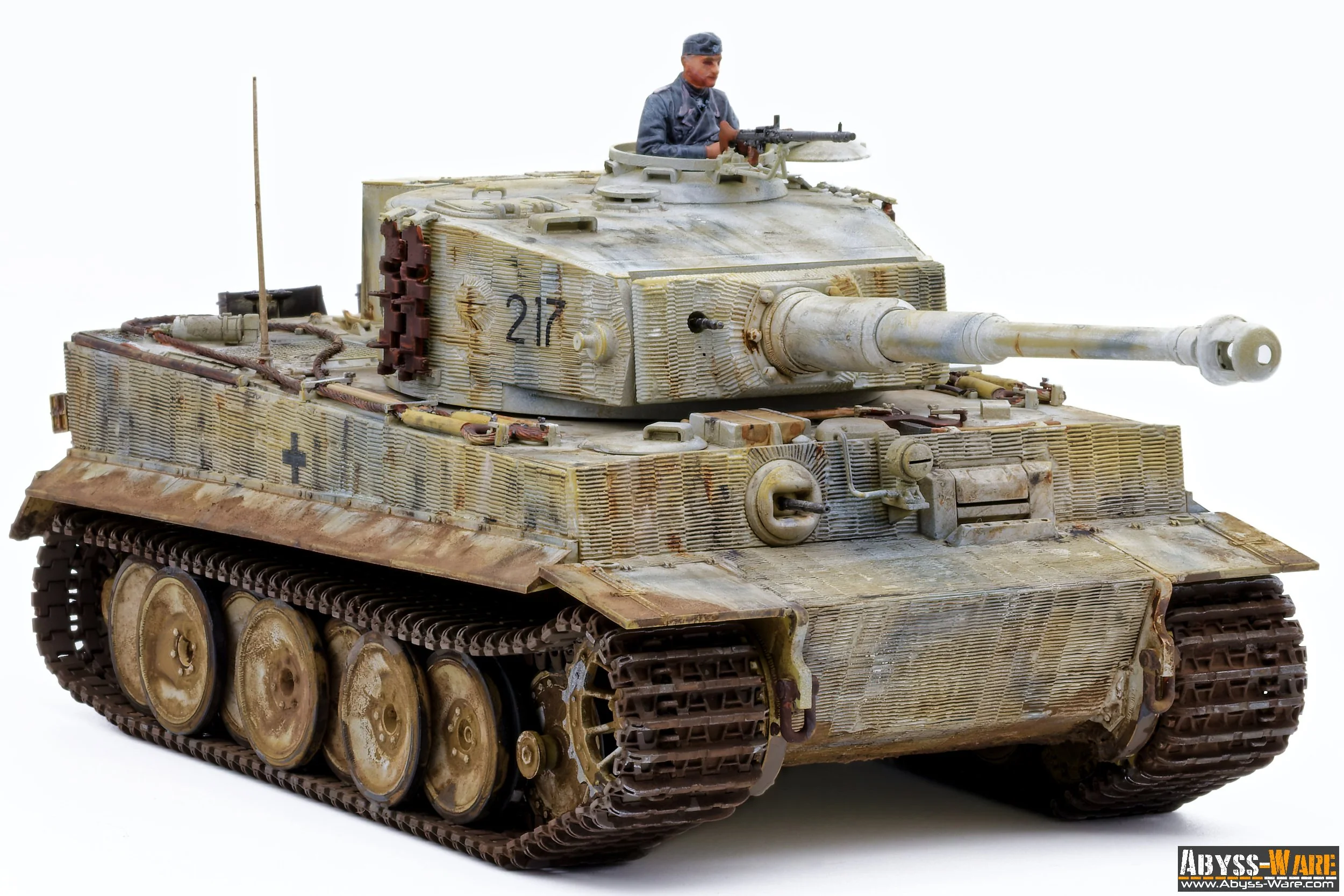
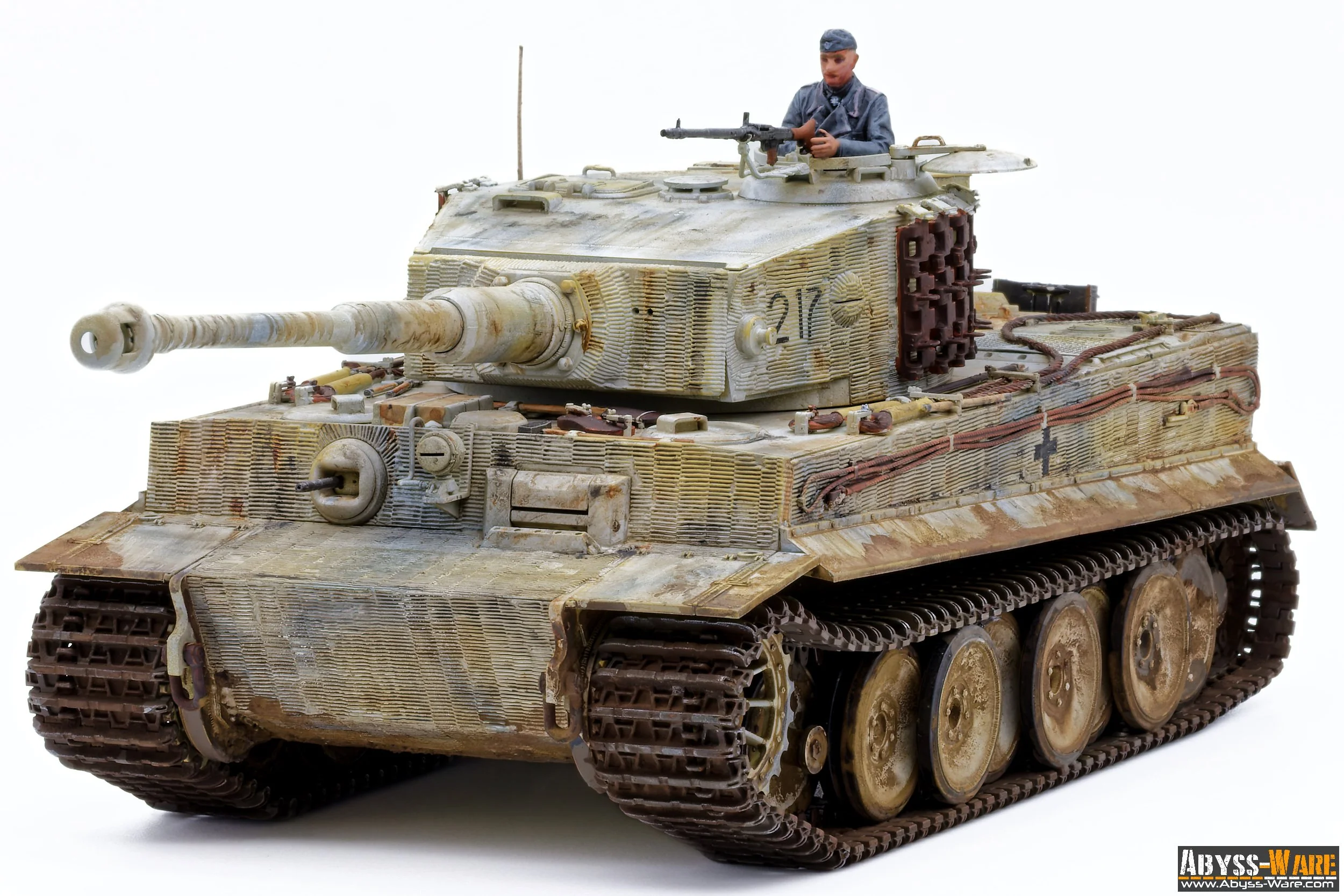
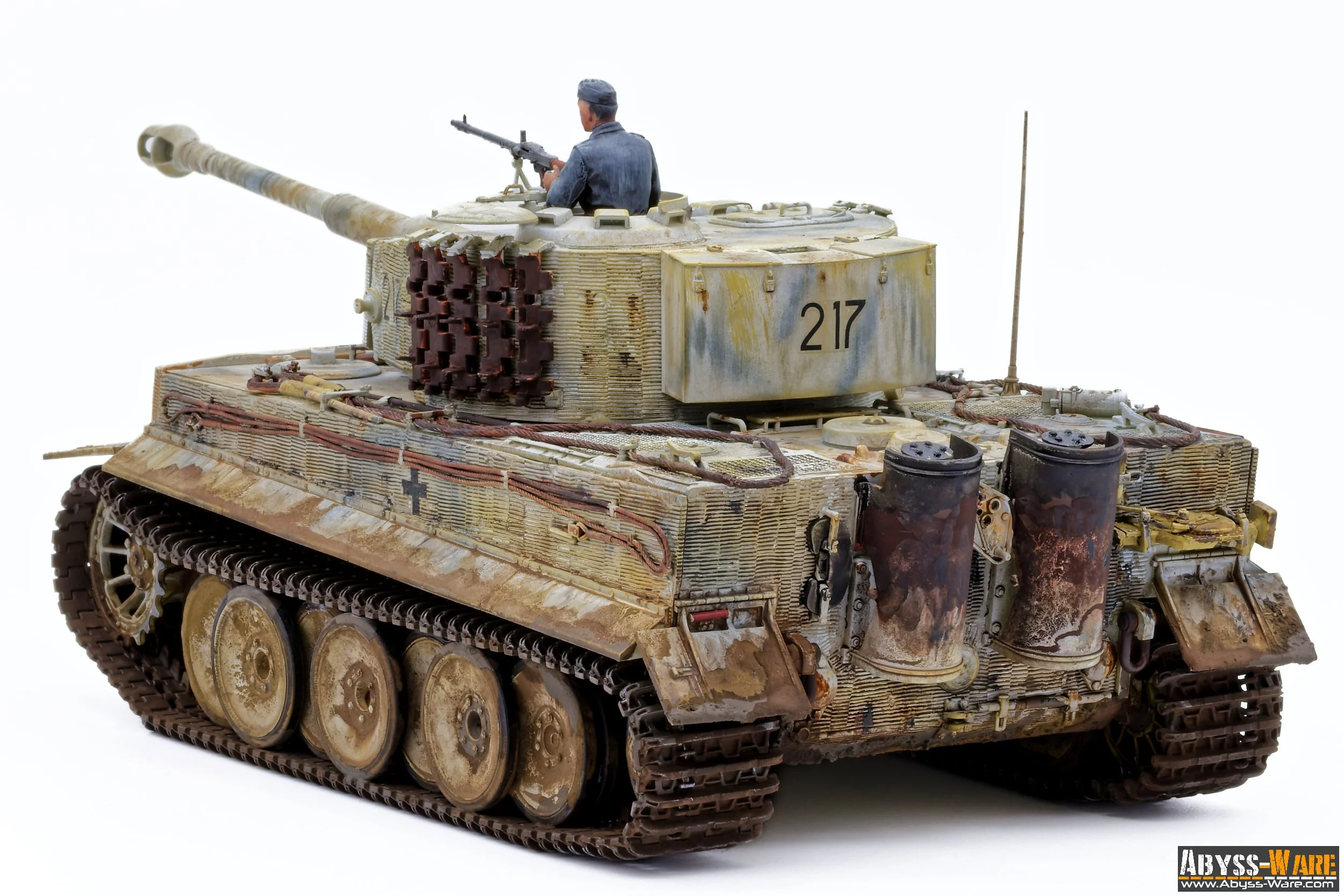
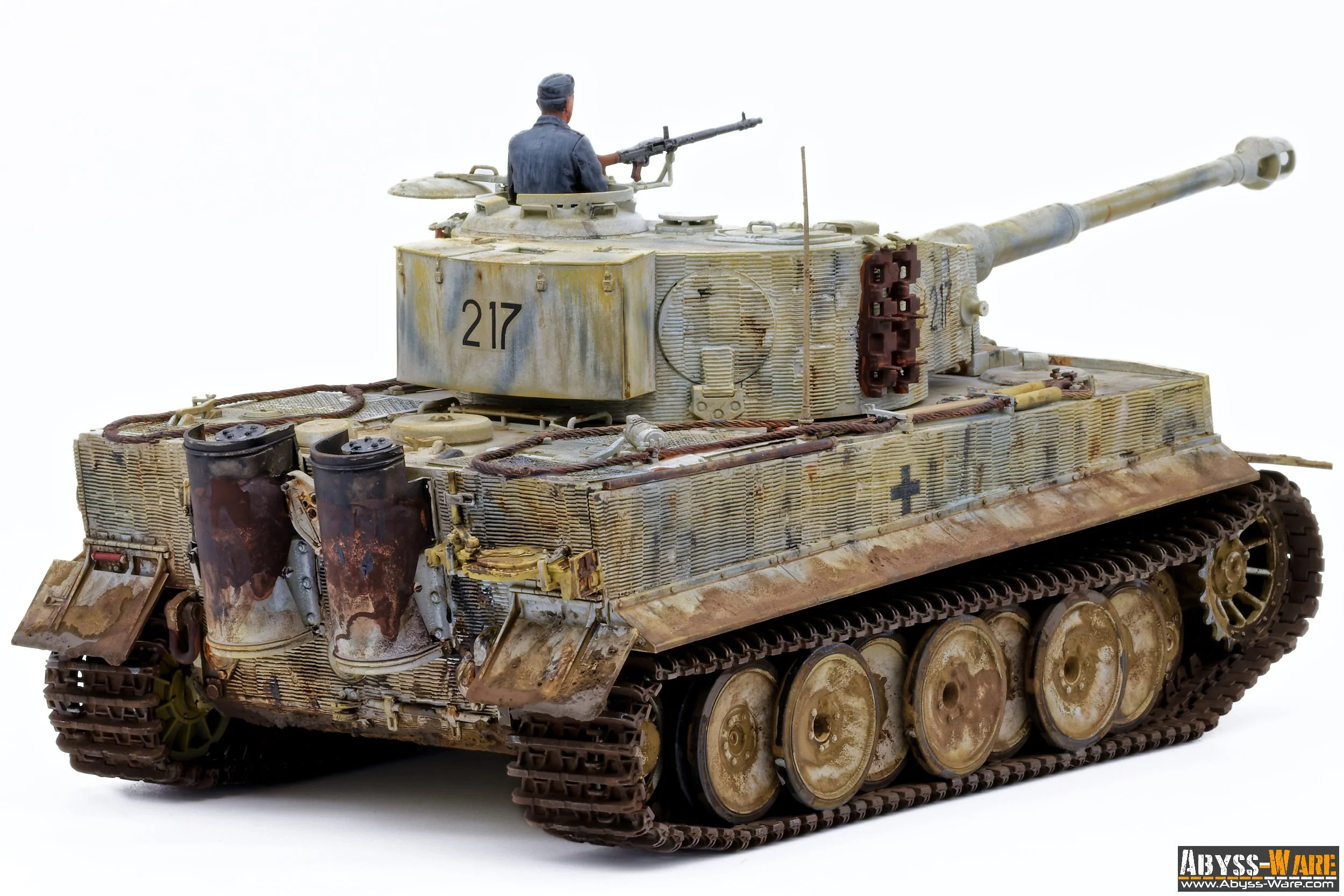
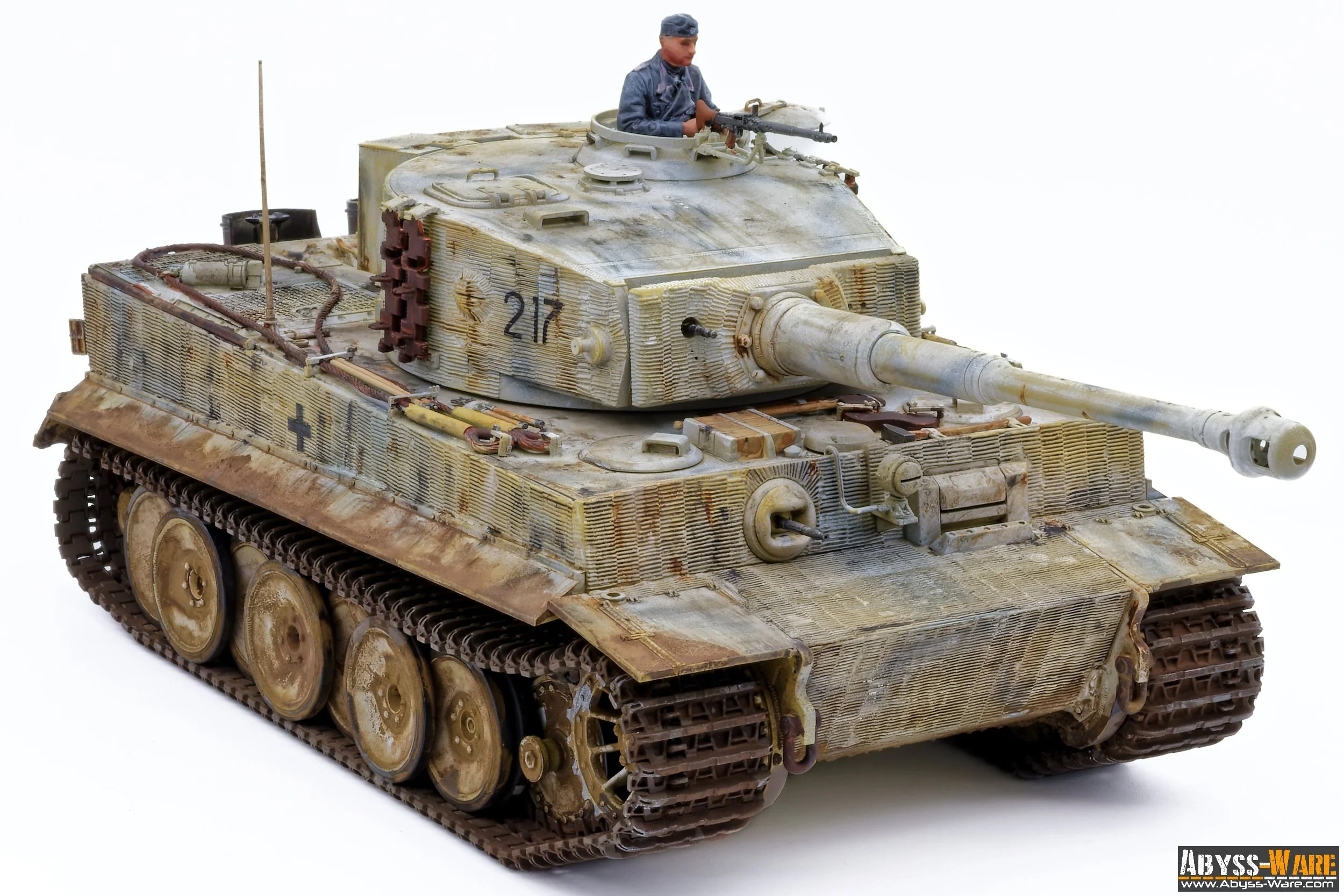
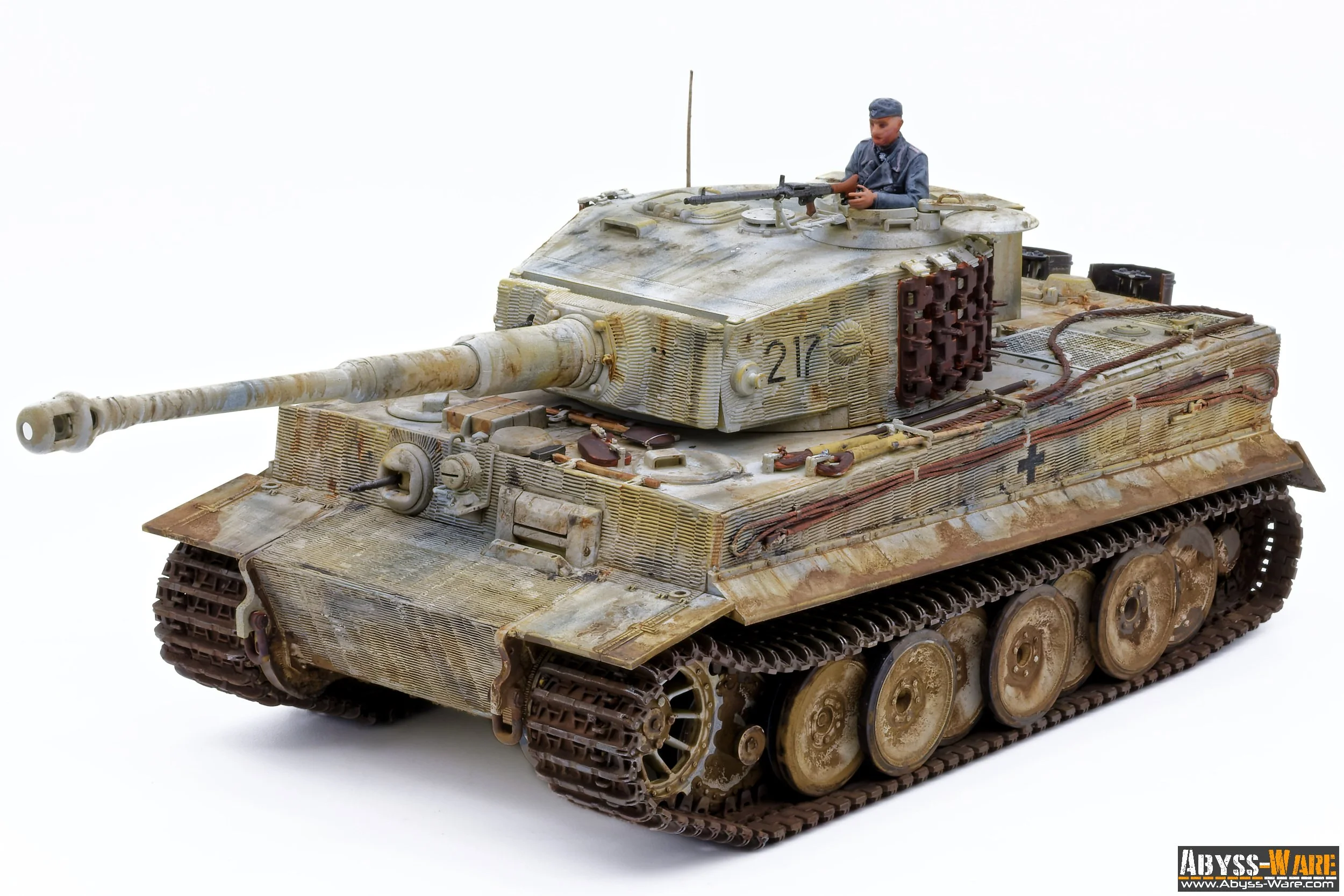
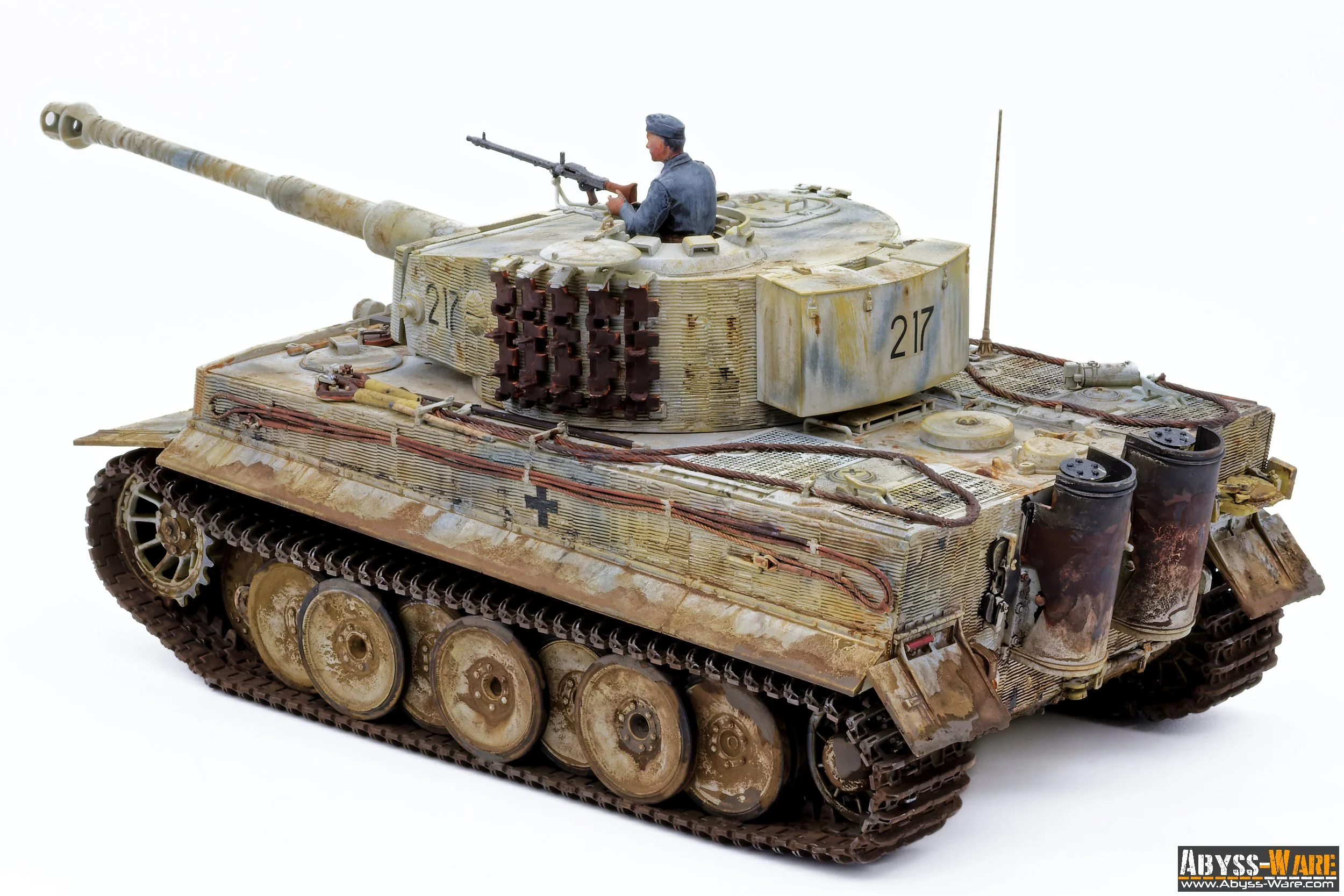
Note: The images presented bellow feature photographs of actual scale models, enhanced with AI-generated backgrounds and environments for visual effect. These visuals are intended for illustrative and artistic purposes only and should not be interpreted as real photographs or historical references.