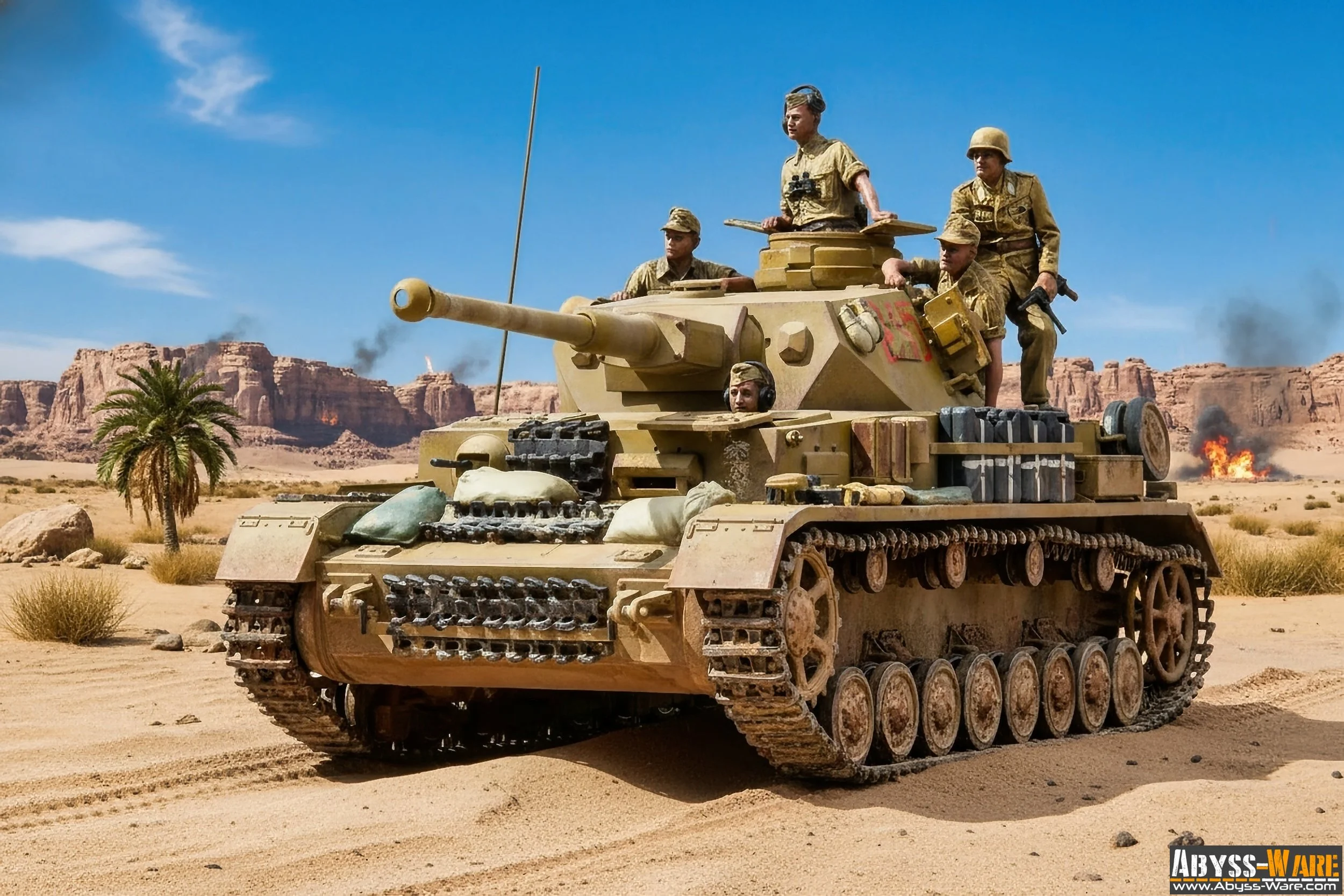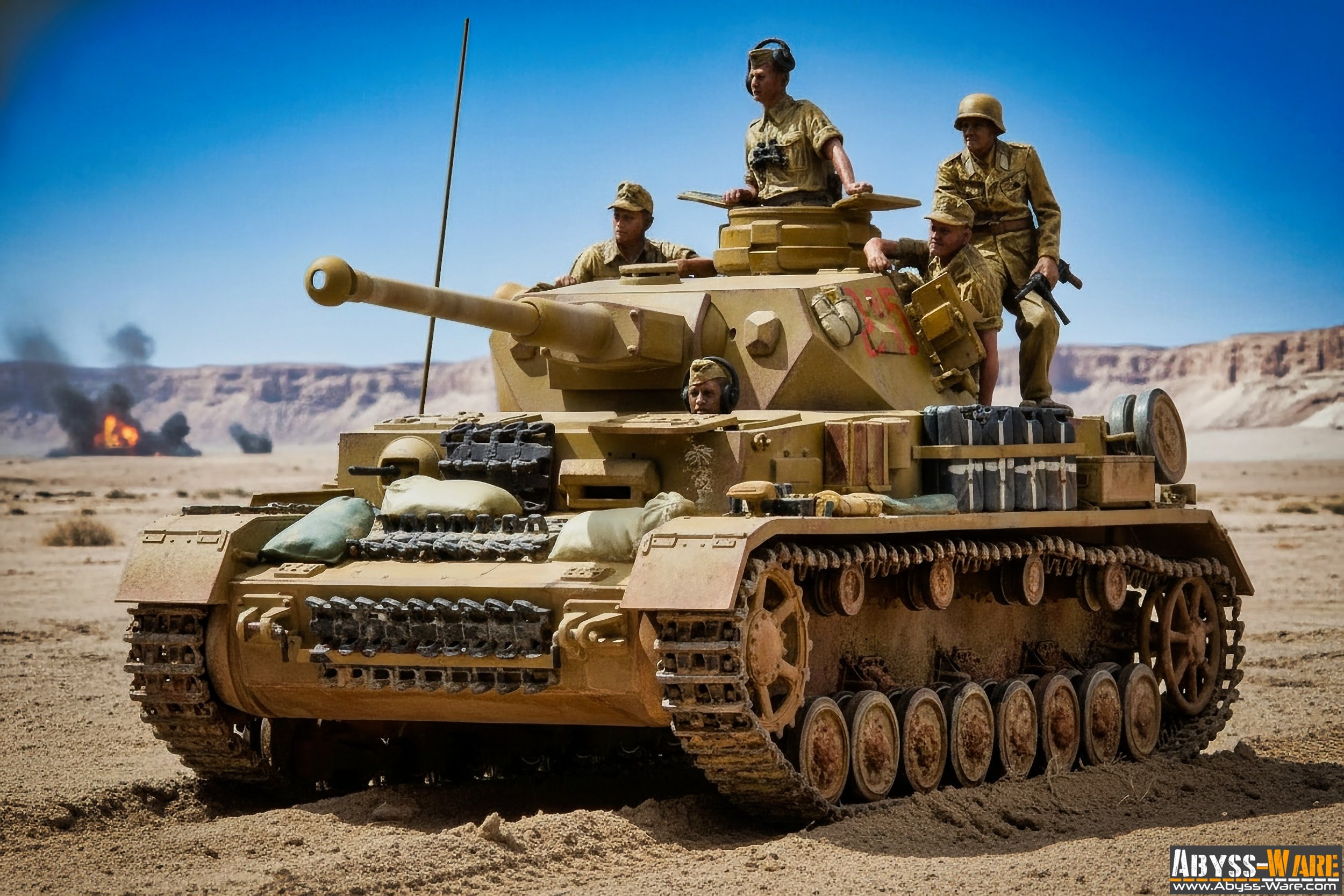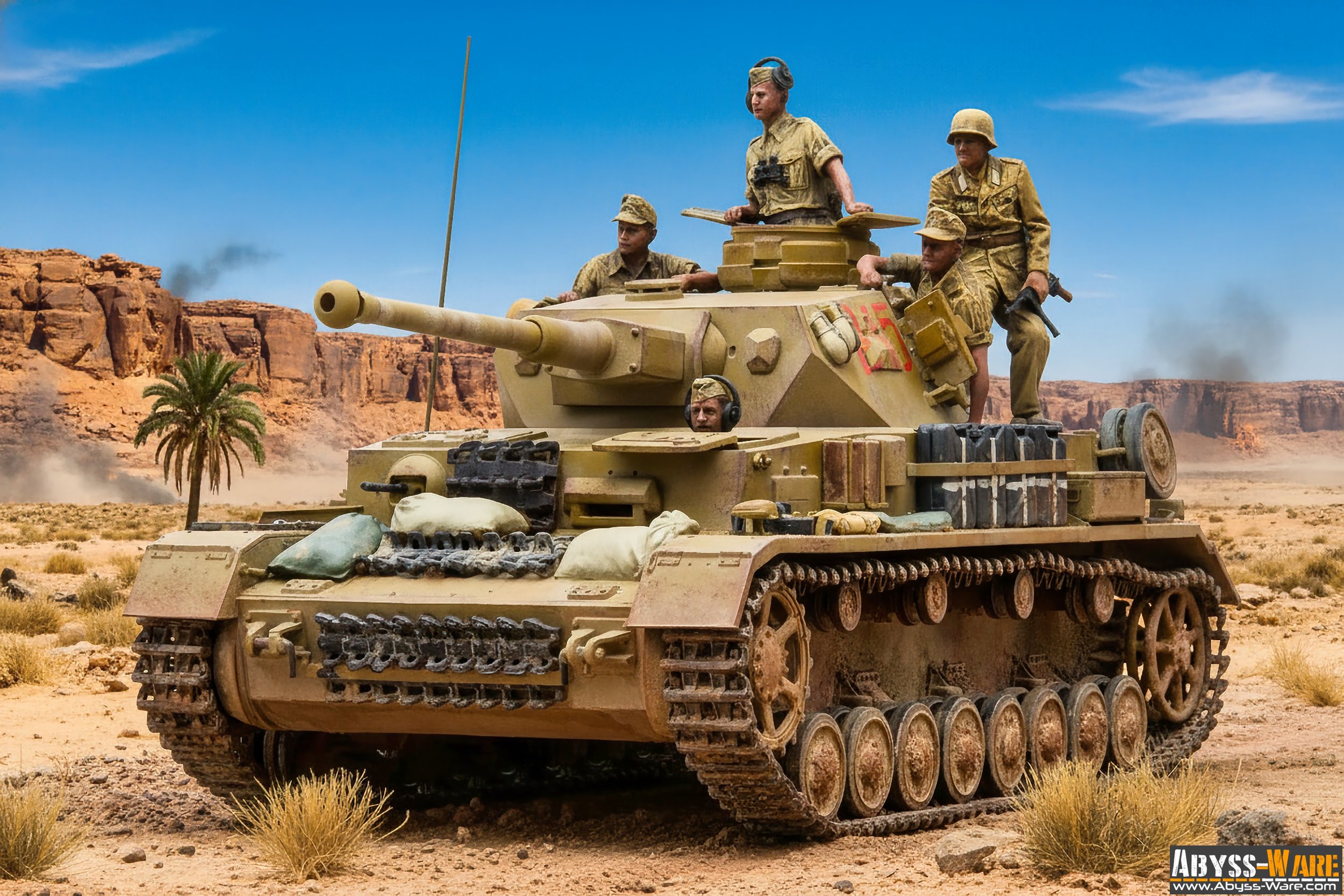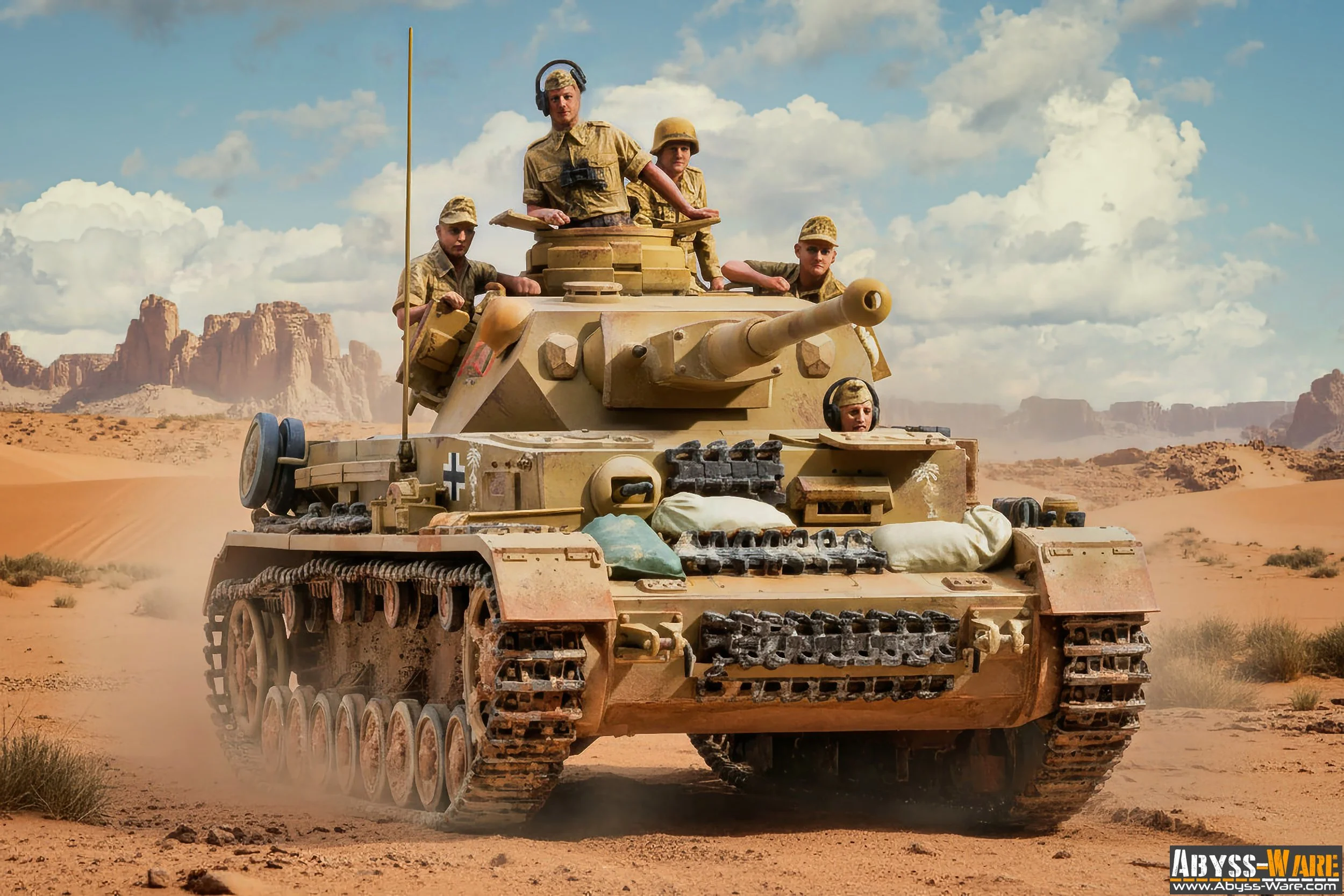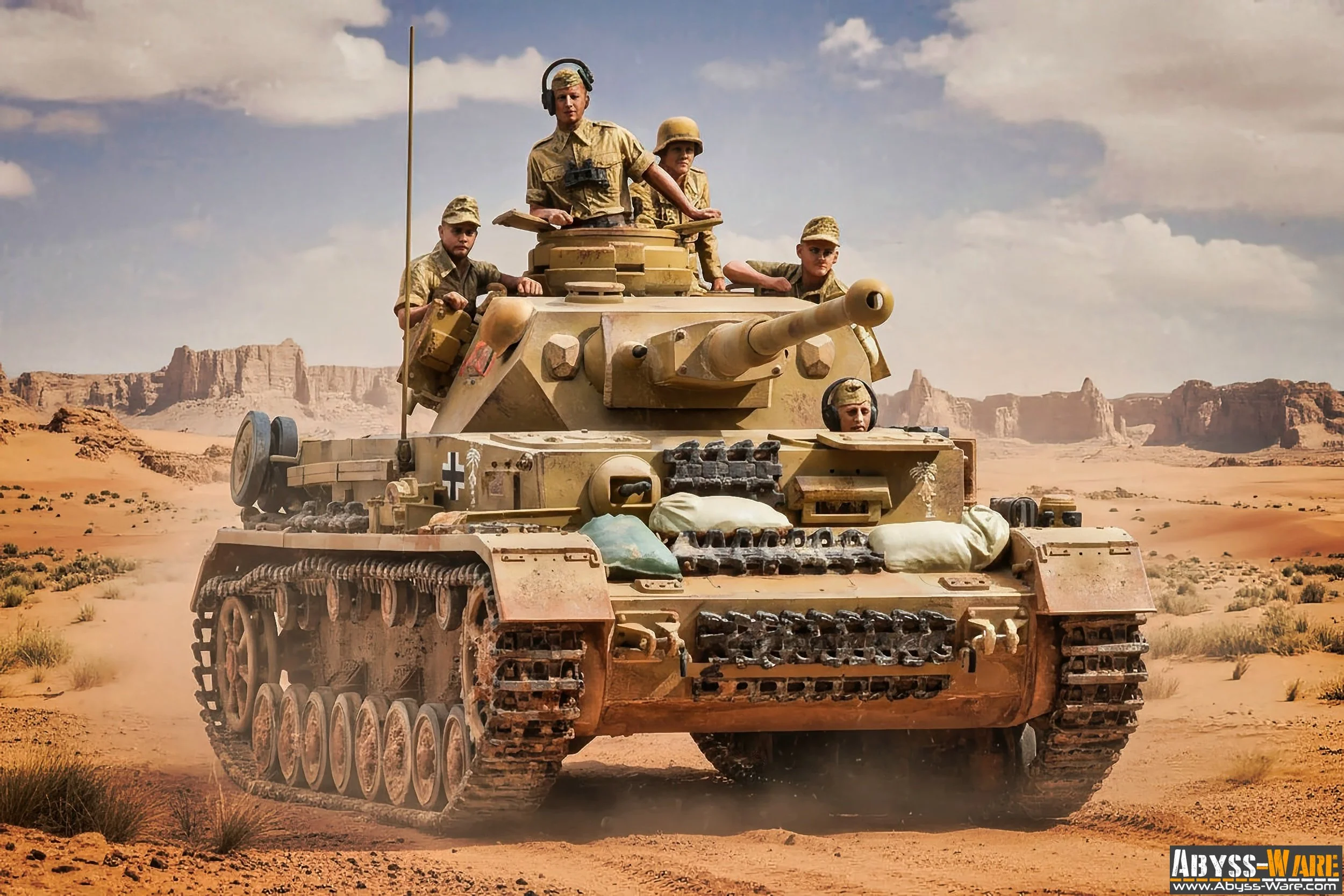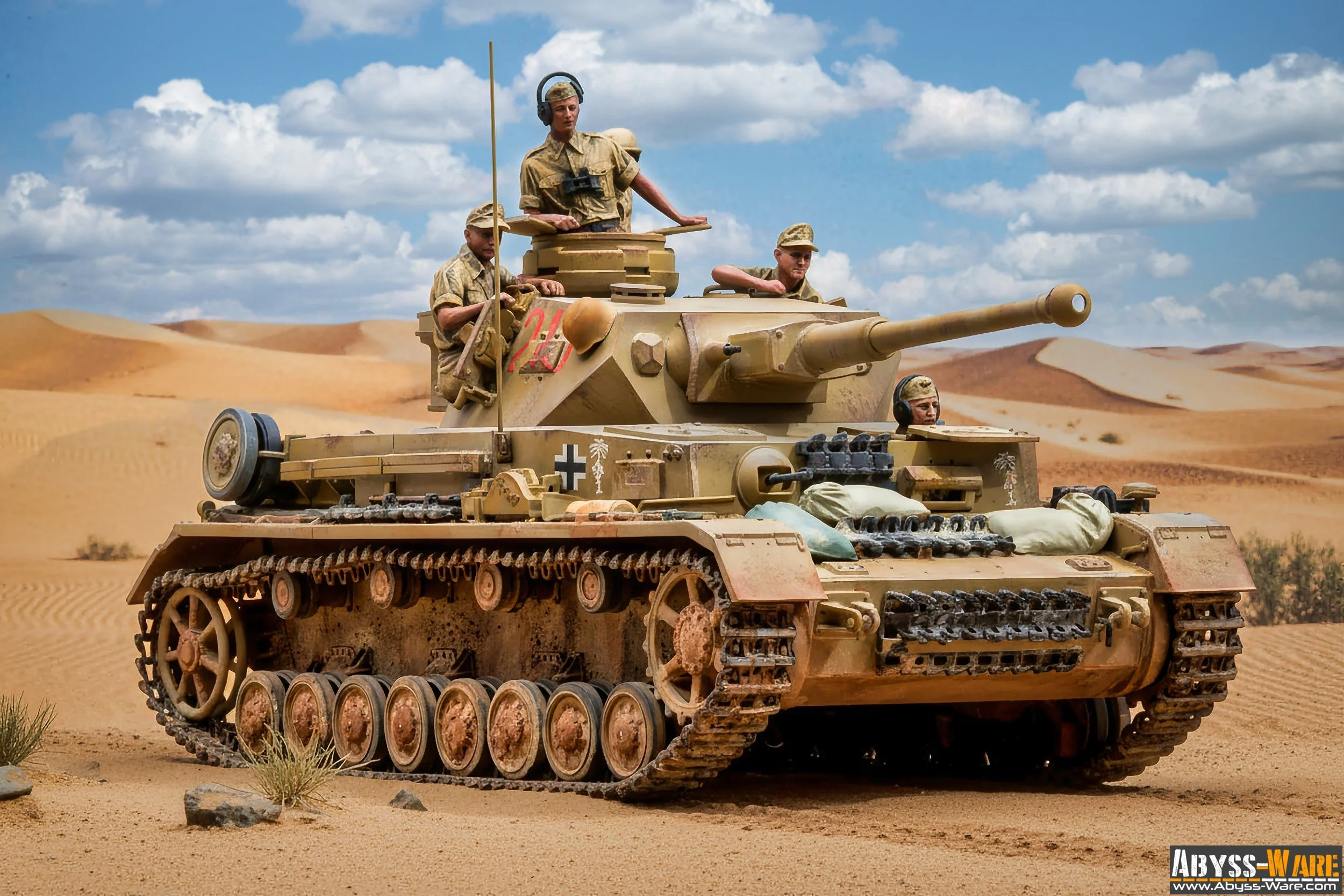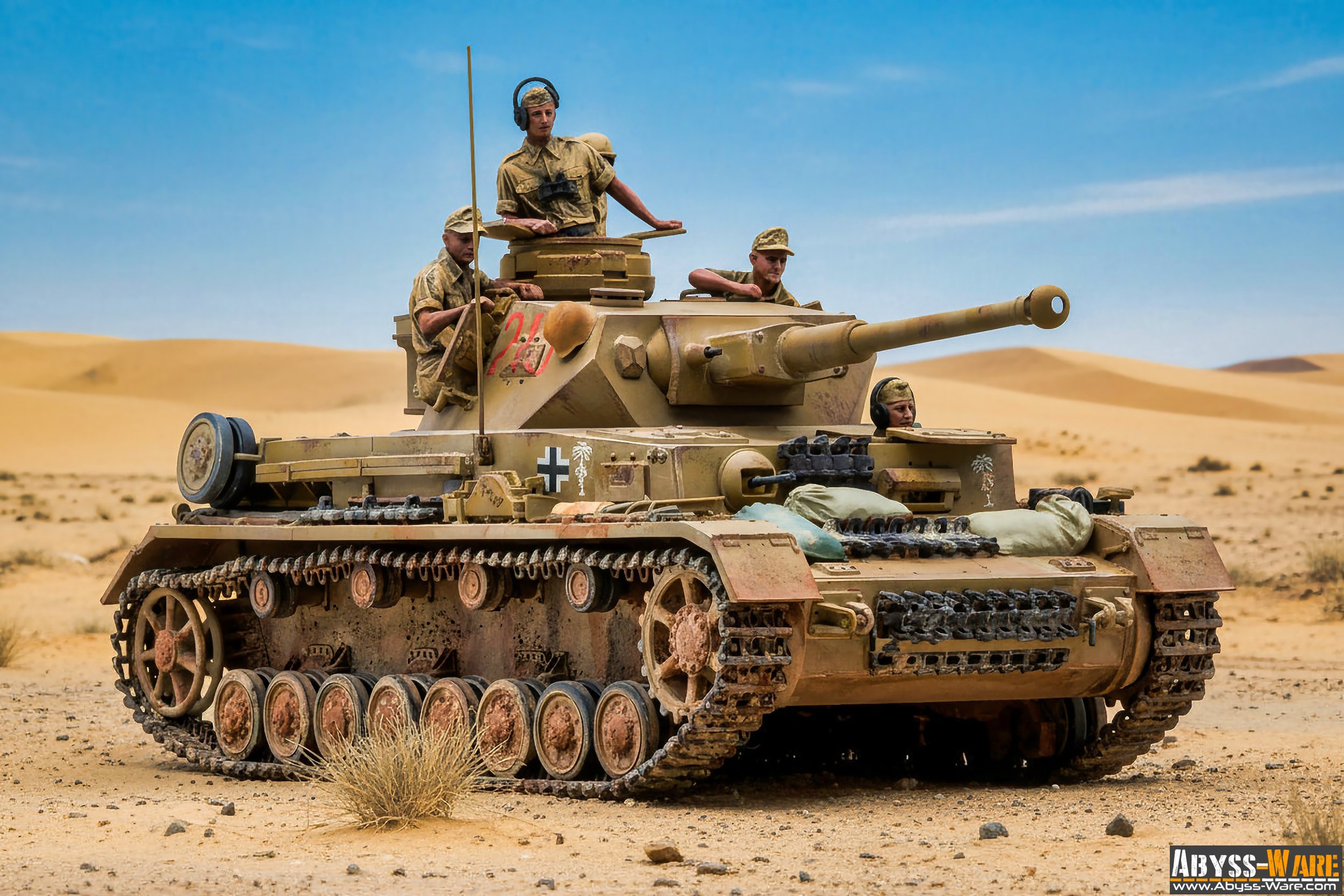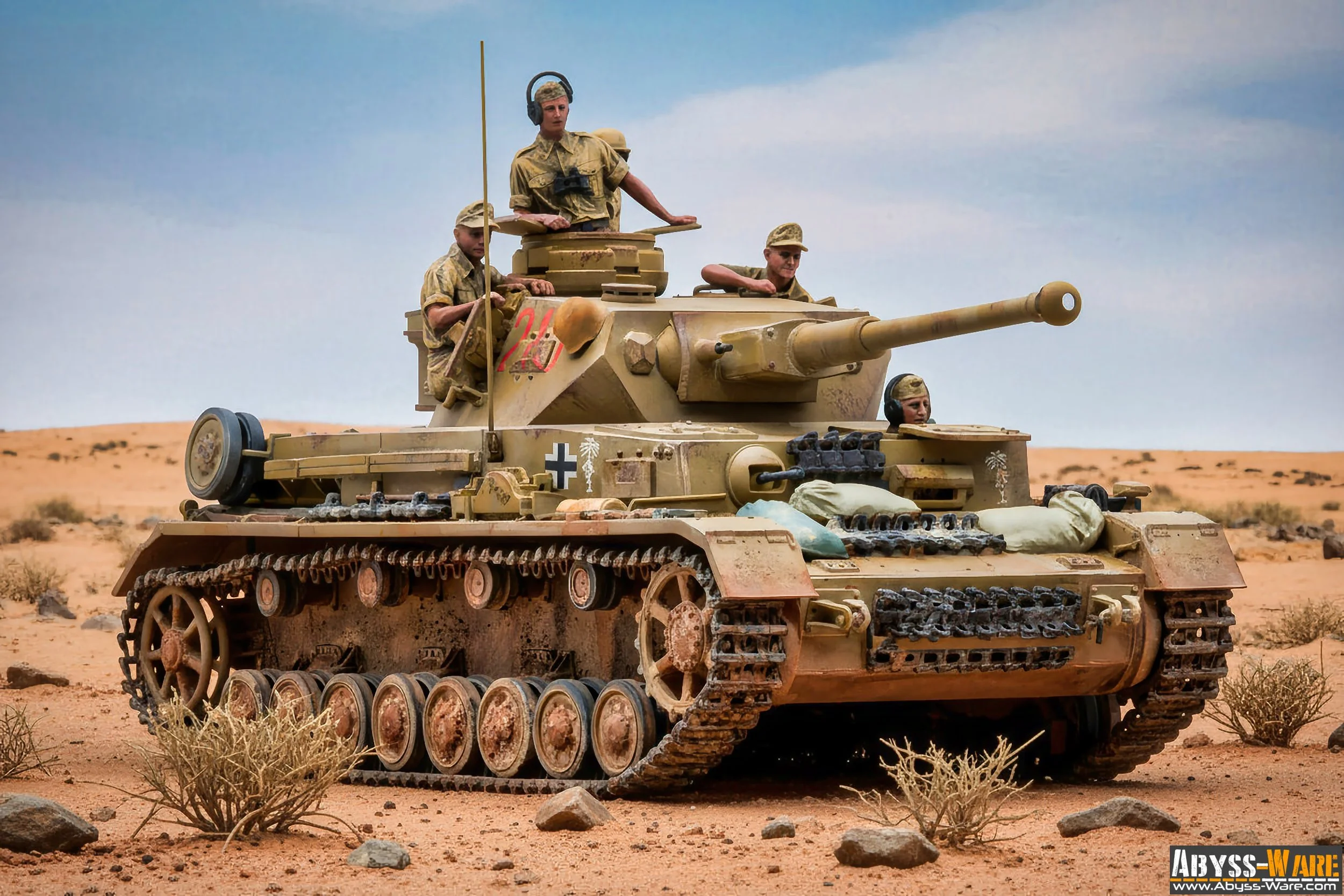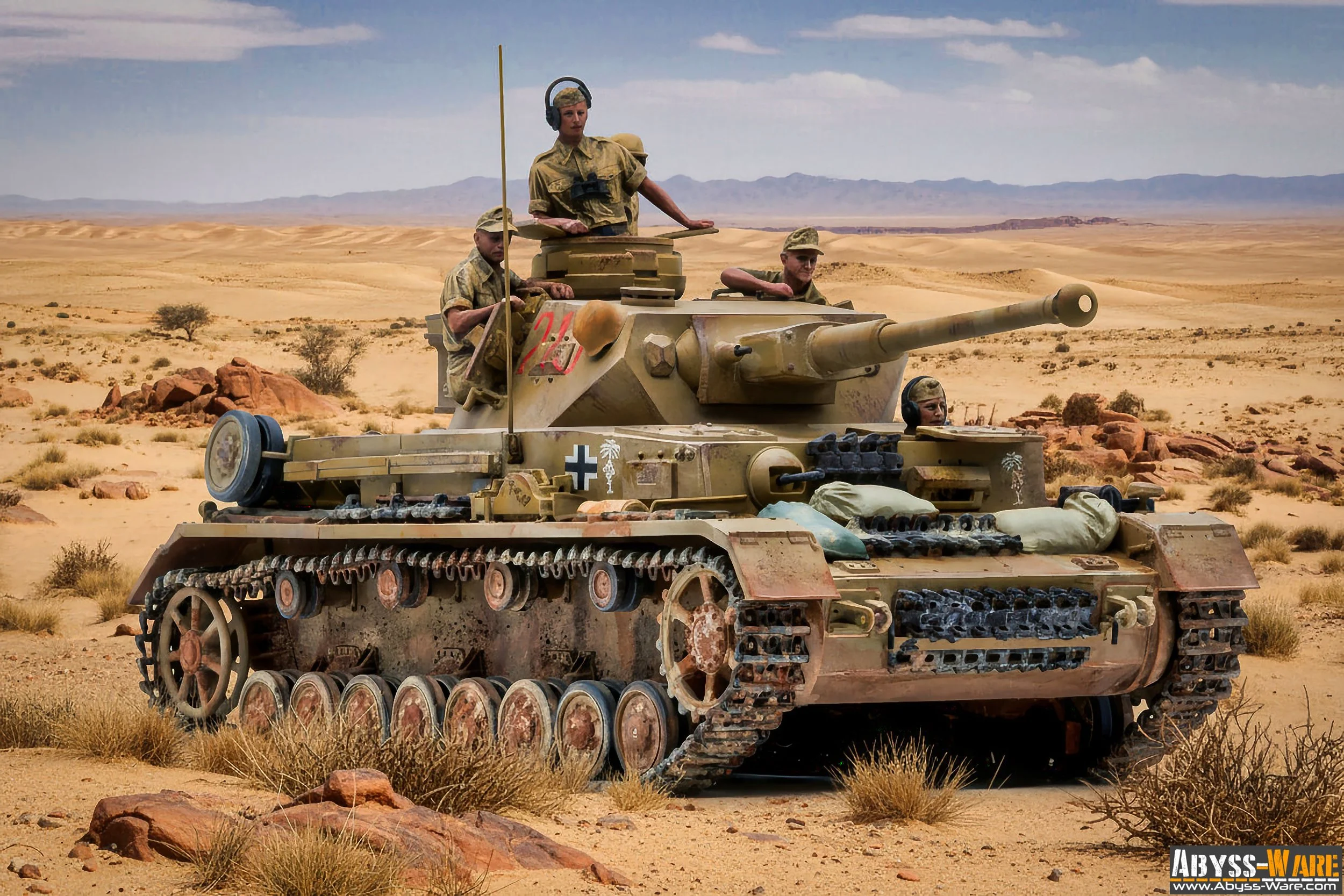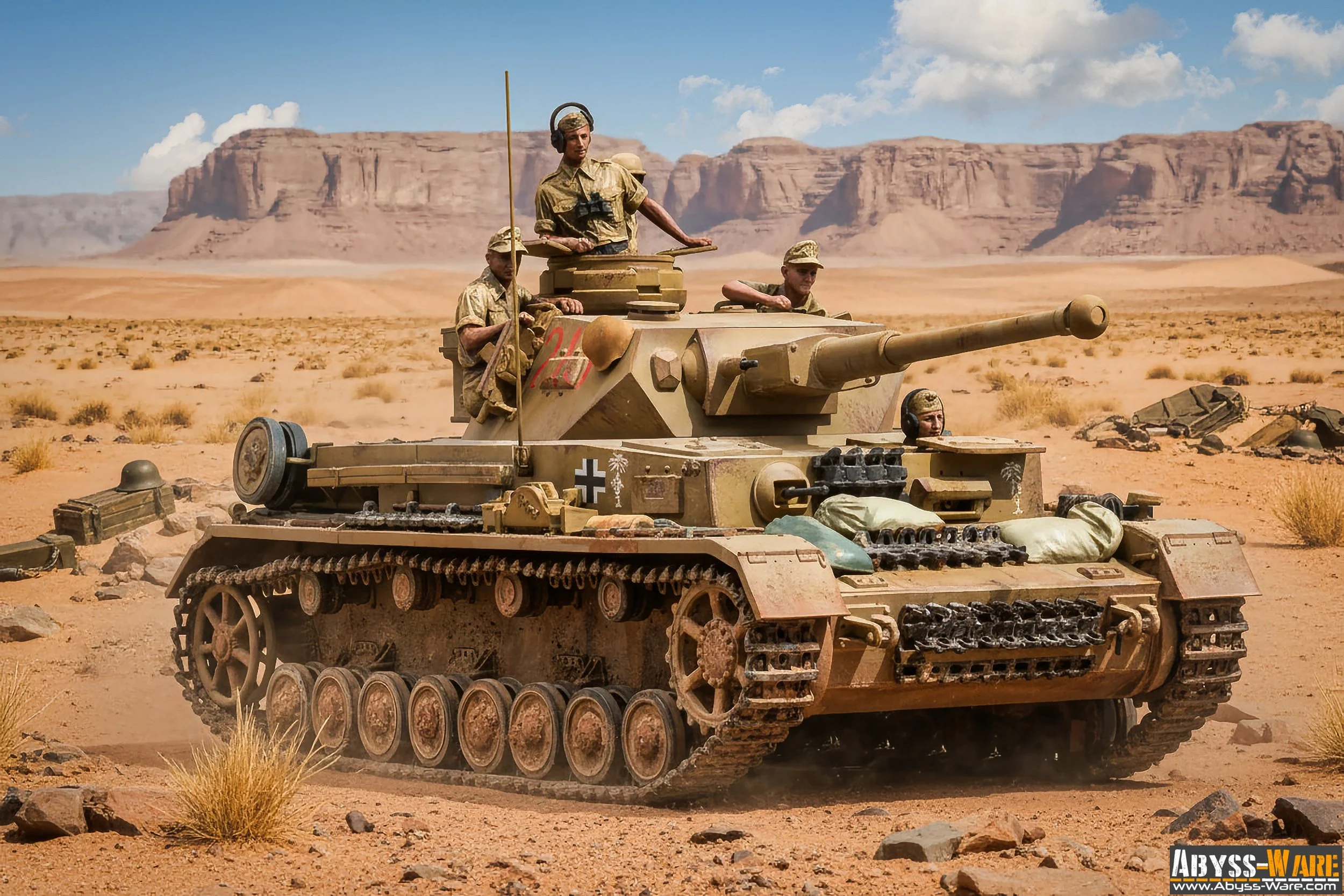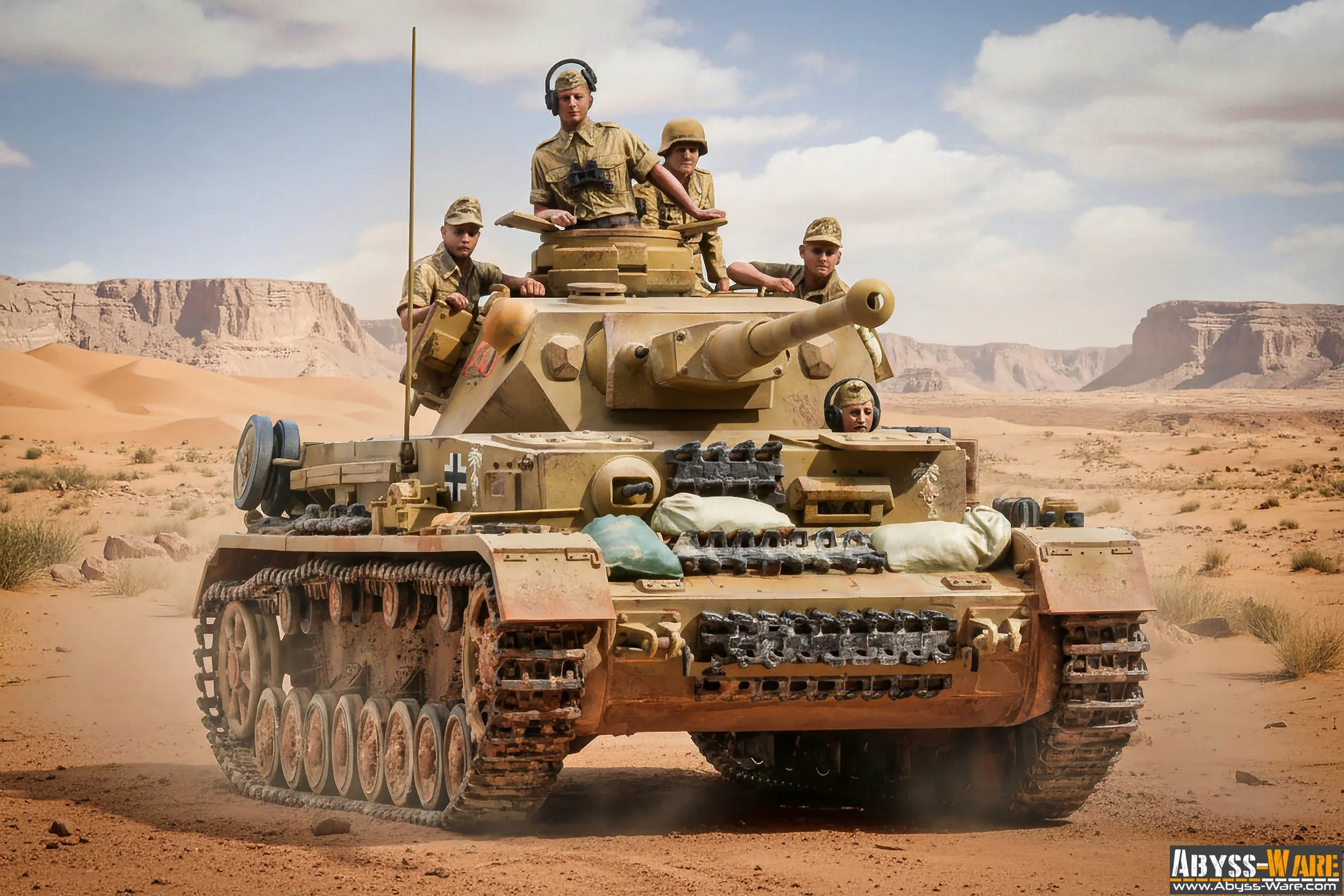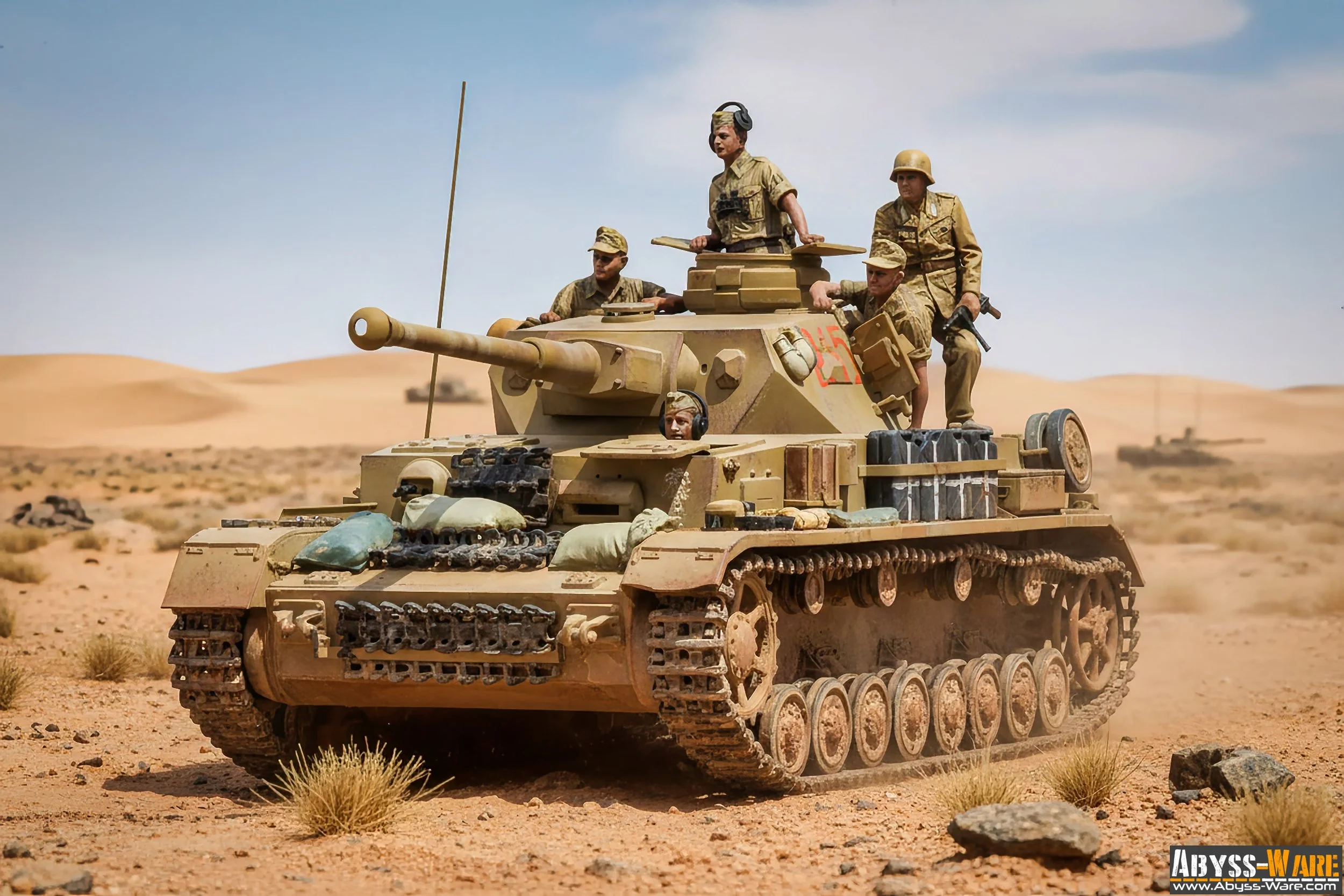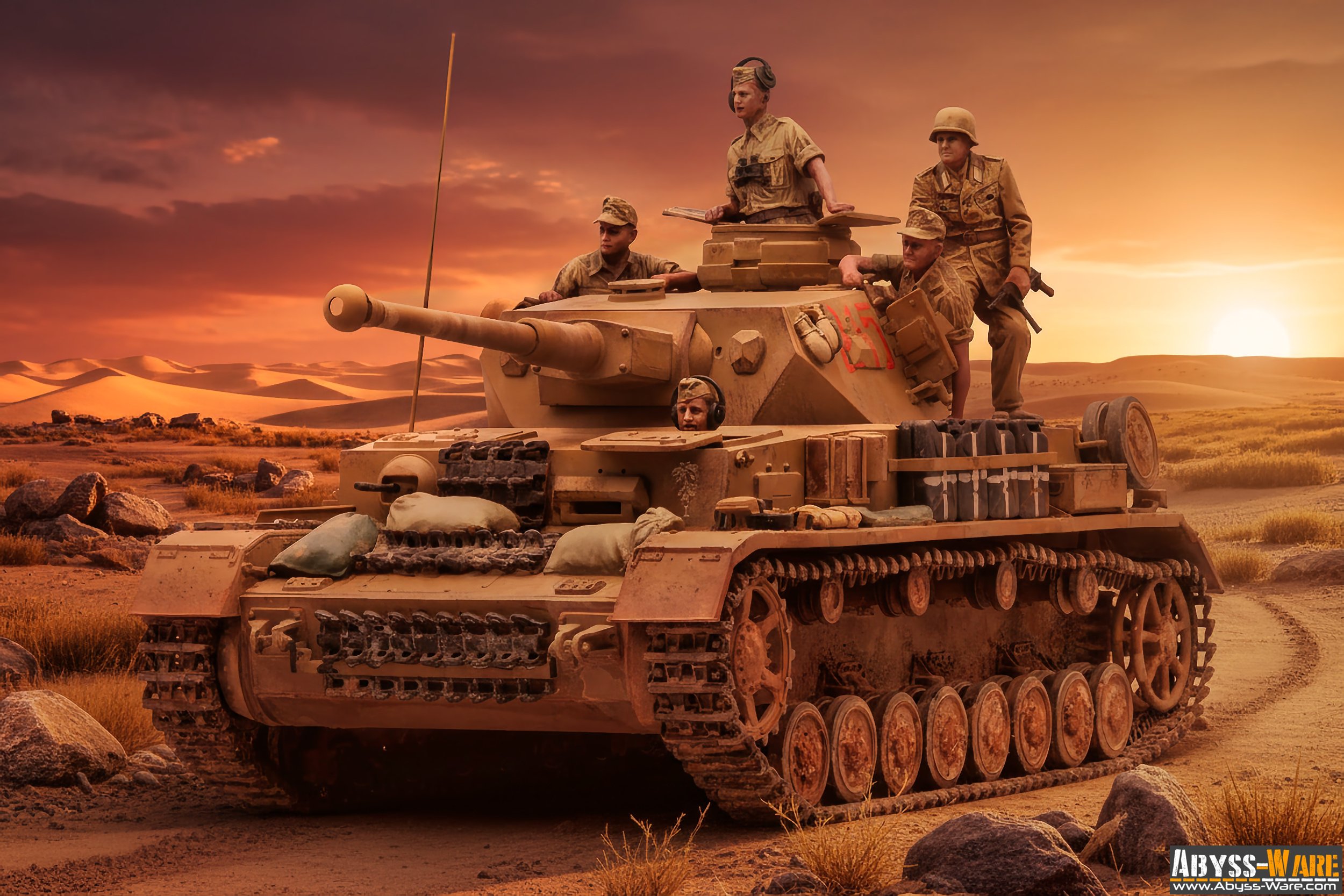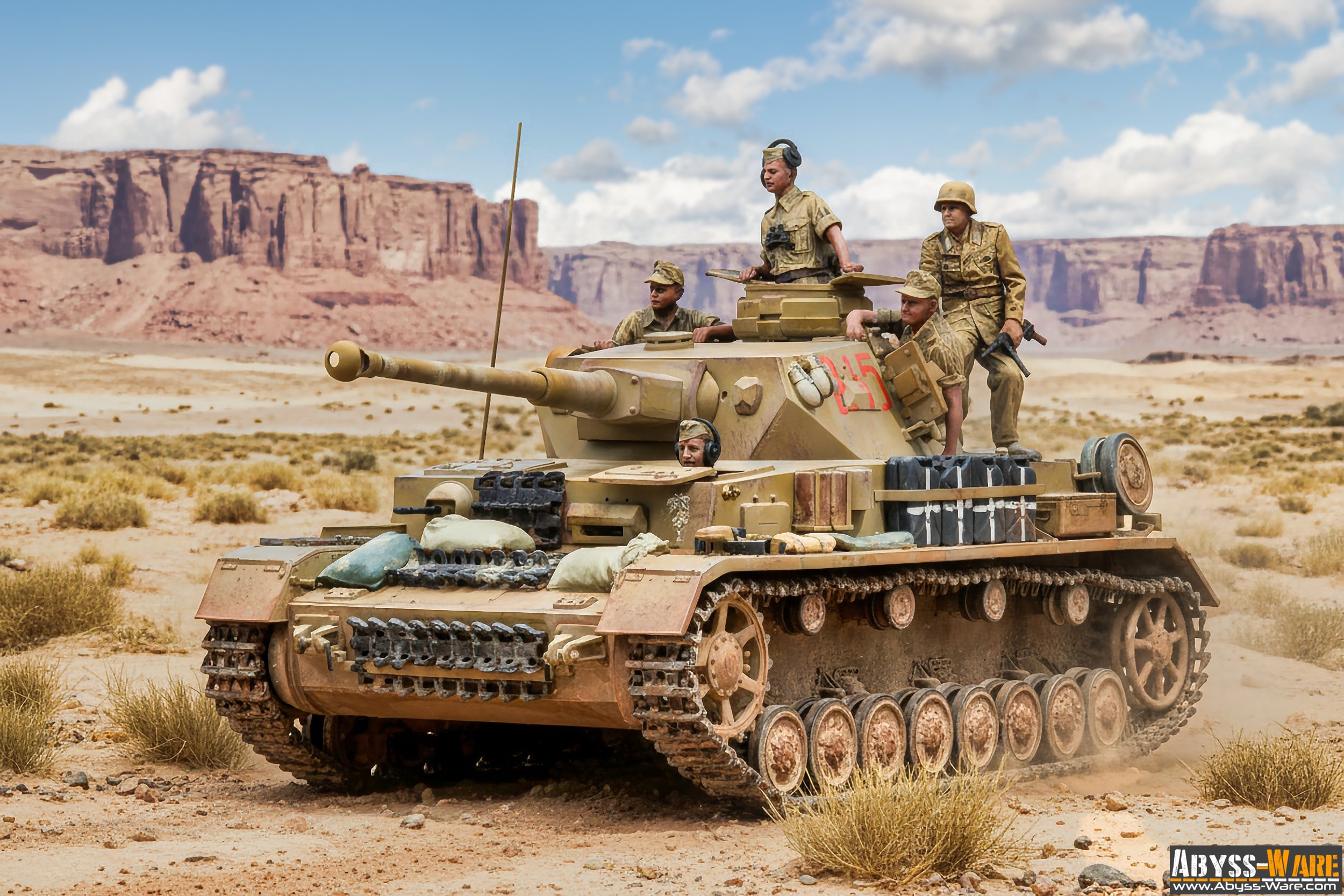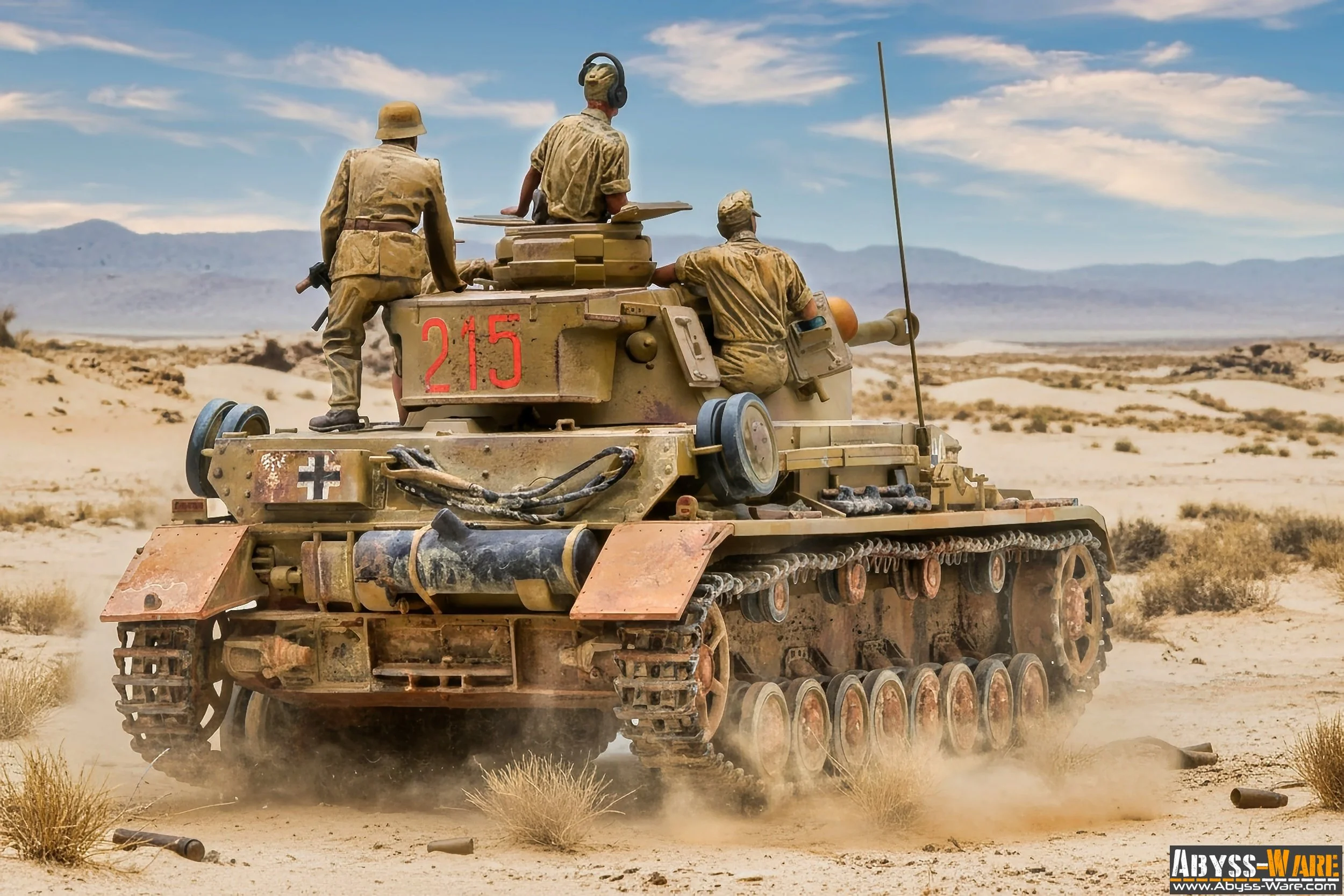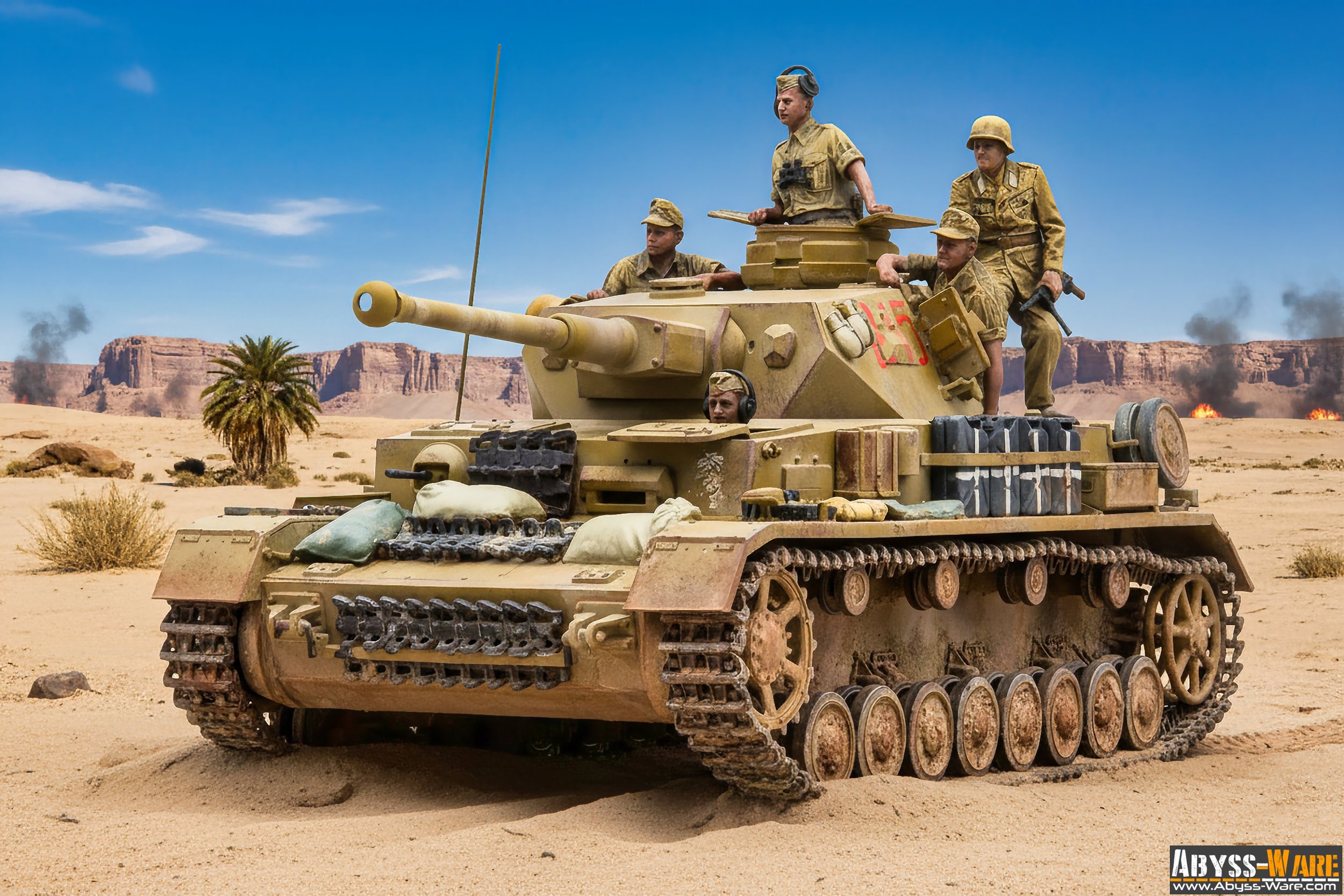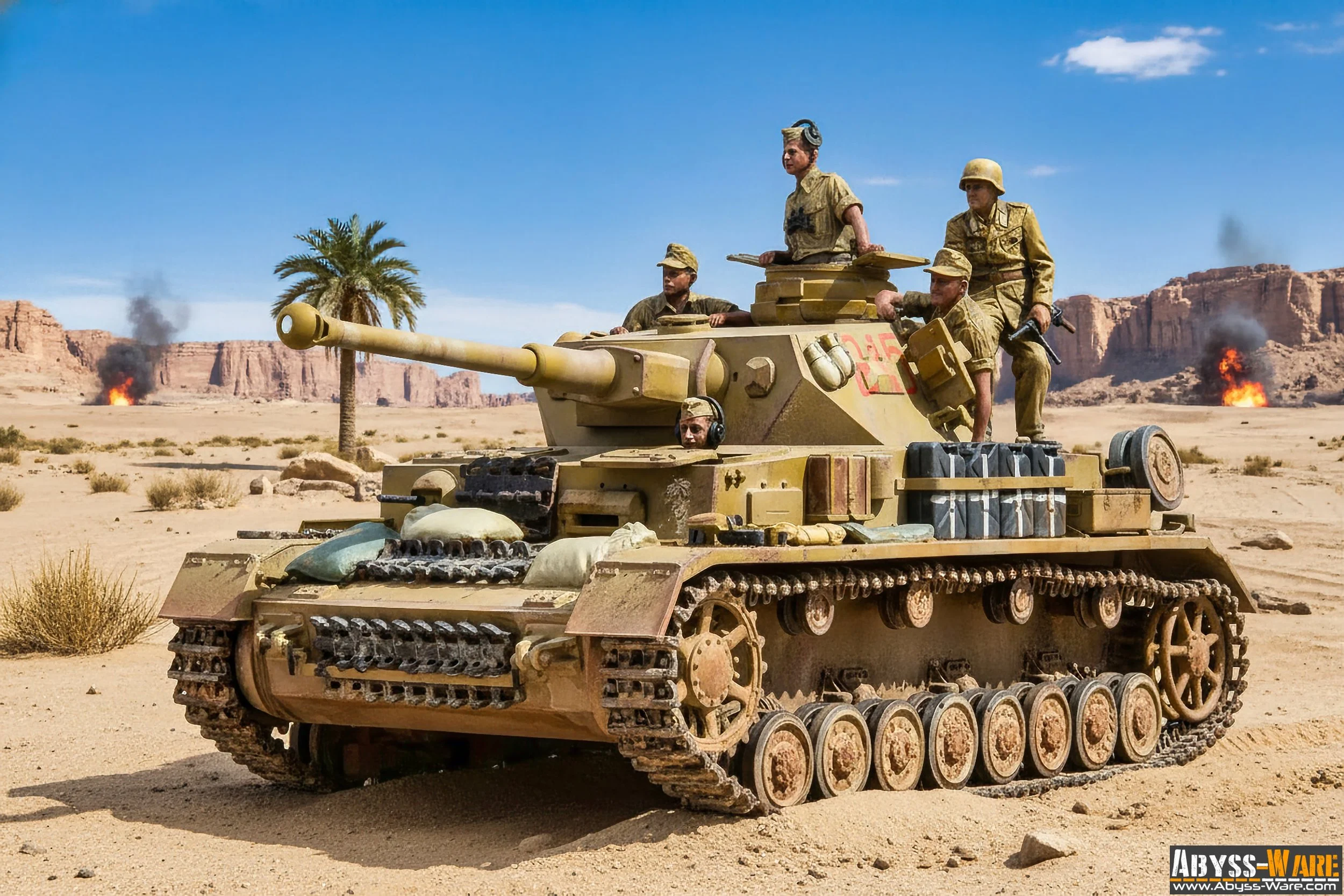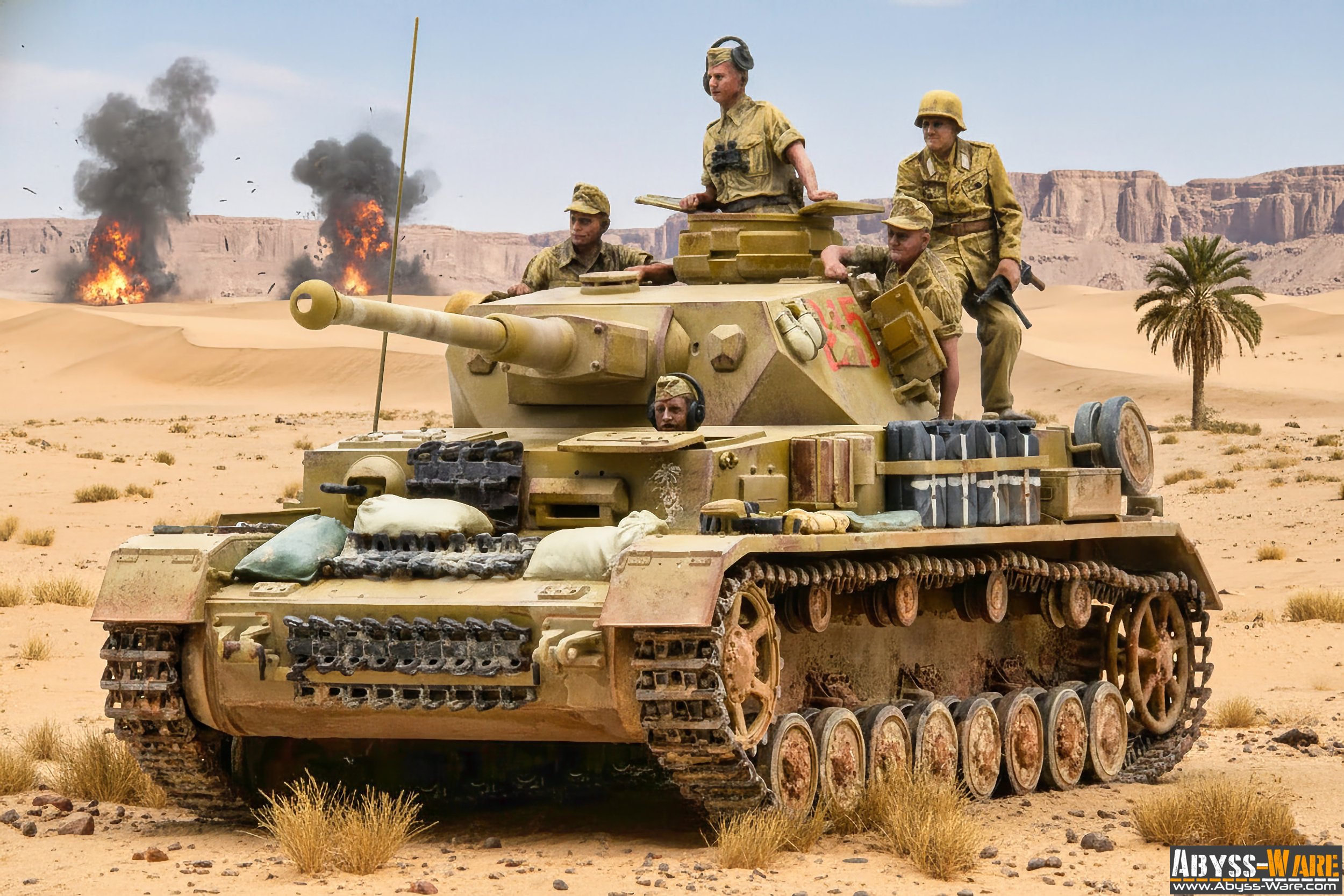
PANZER IV Ausf. G Sd.Kfz.161/1
TAMIYA 35378
SCALE 1/35
.
;
The Panzer IV, officially designated Panzerkampfwagen IV (Pz.Kpfw. IV) or Sd.Kfz. 161, stands as one of the most important and versatile German armored vehicles of World War II. Developed in the mid-1930s by Krupp as a medium support tank, it was originally designed to provide infantry with direct fire support using its short-barreled 7.5 cm KwK 37 L/24 howitzer, which excelled at firing high-explosive shells against soft targets, fortifications and anti-tank positions. Entering production in 1936, the Panzer IV became the only German tank continuously manufactured from before the war until its end in 1945, with a total of approximately 8,553 units built across various versions (Ausf. A through J). Early models (Ausf. A–F1), weighing around 18–23 tons, featured relatively thin armor (up to 50 mm frontal) and were powered by a Maybach HL 120 engine producing about 300 hp, enabling a top road speed of roughly 40 km/h. The tank's defining evolution came after encounters with Soviet T-34 tanks in 1941. From the Ausf. F2/G onward, it received a far more potent long-barreled 7.5 cm KwK 40 L/43 (later L/48) gun, capable of penetrating most Allied armor at combat ranges. Later variants like the Ausf. H and J (around 25 tons) added thicker frontal armor (up to 80 mm), side skirts (Schürzen), and improved protection, making them reliable opponents on both Eastern and Western Fronts.
Its robust chassis also served as the basis for numerous variants, including assault guns (StuG IV, Jagdpanzer IV), self-propelled artillery (Hummel), and anti-aircraft platforms (Wirbelwind).With a crew of five and secondary 7.92 mm MG 34 machine guns, the Panzer IV combined firepower, mobility, and adaptability. It formed the backbone of German panzer divisions from 1943 onward, proving far more reliable and easier to produce than heavier designs like the Panther or Tiger. Even after the war, some saw limited postwar service.
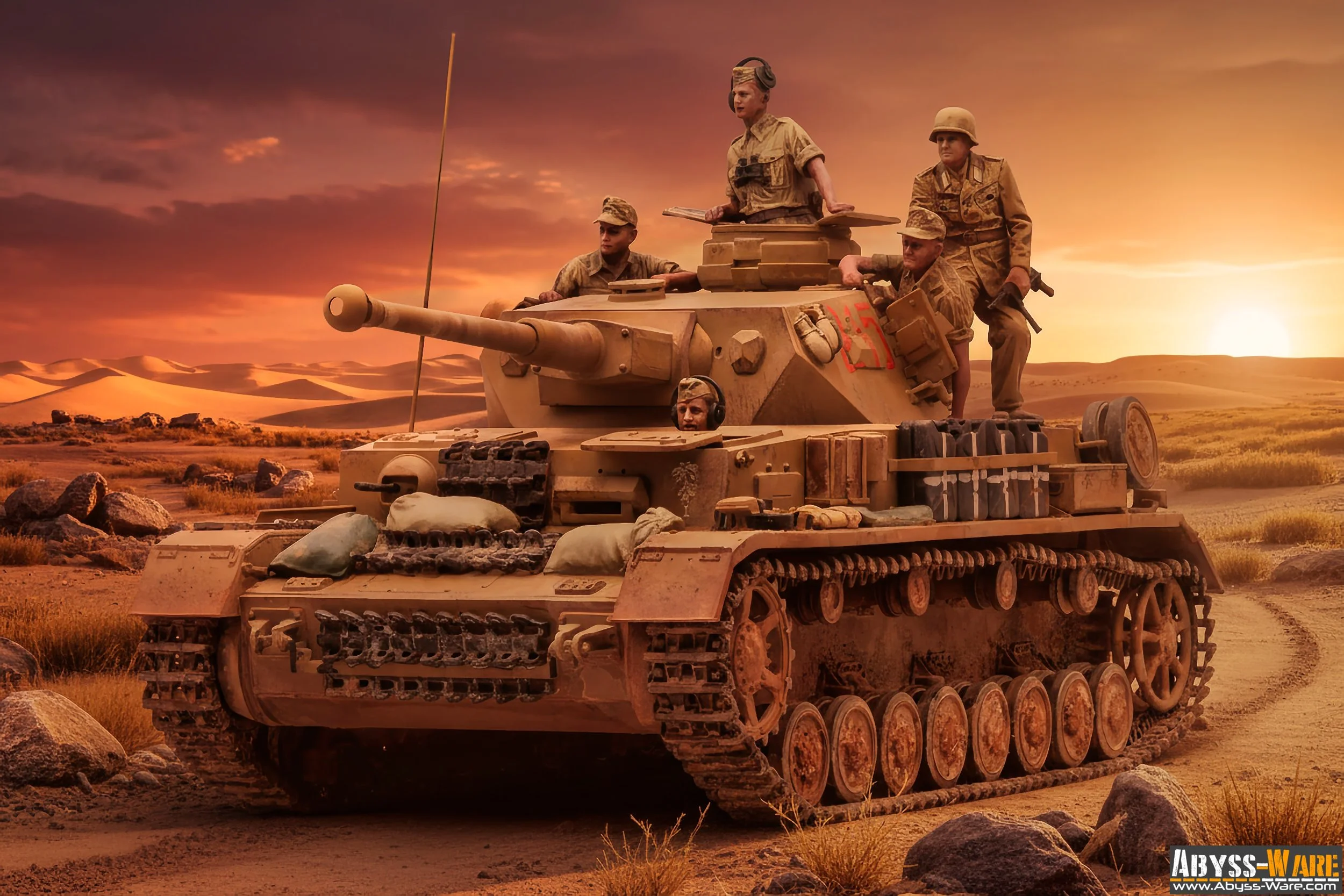
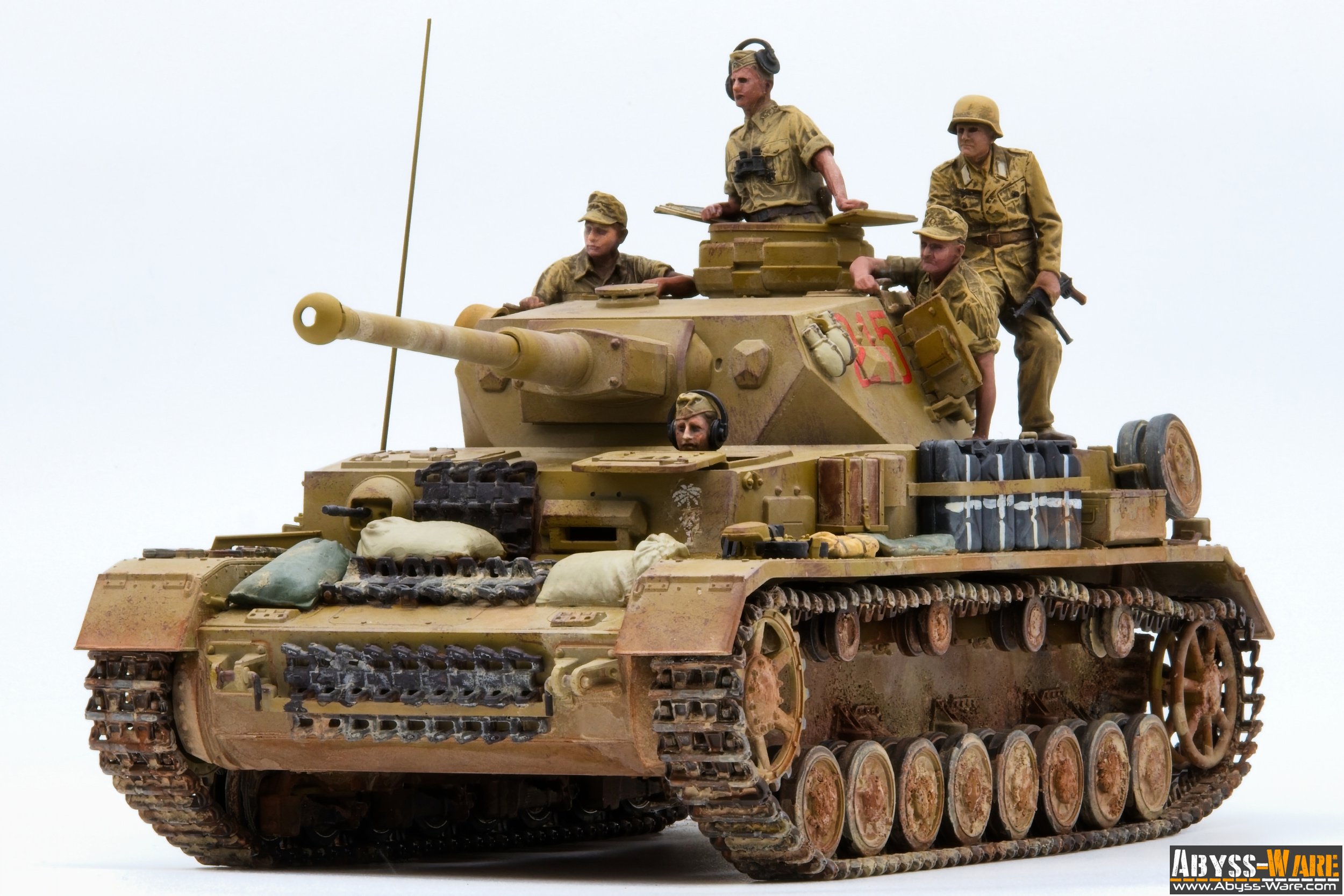

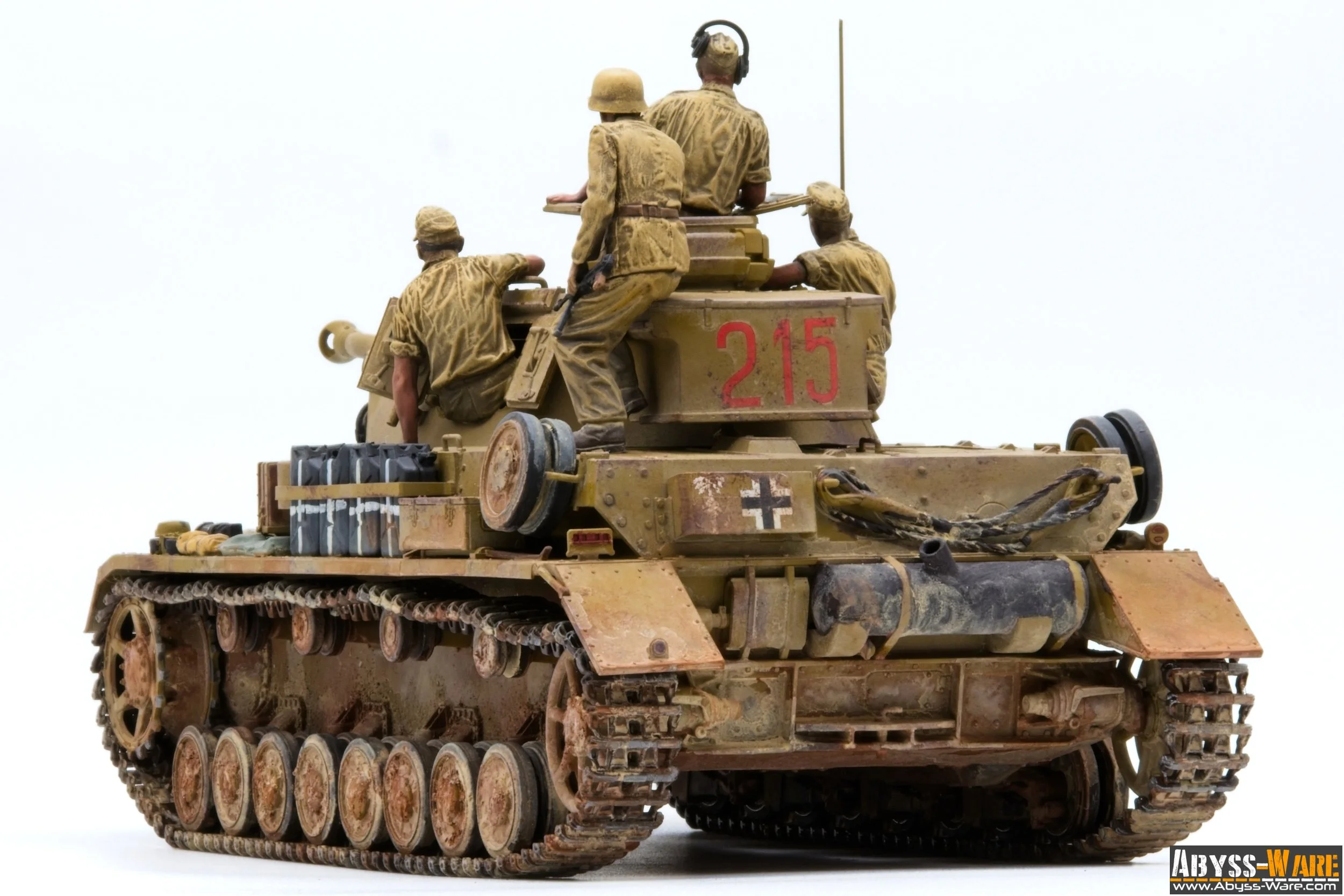
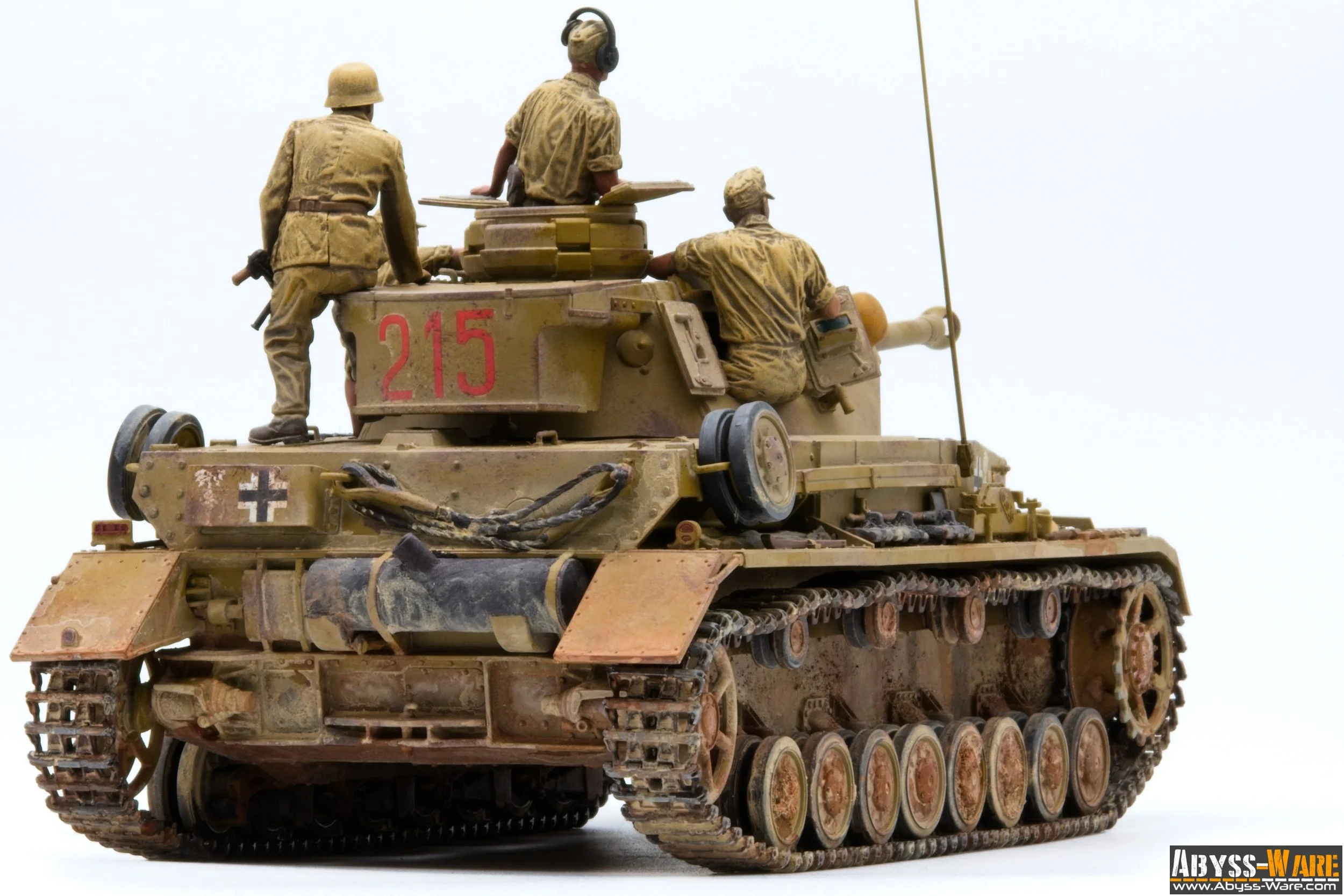
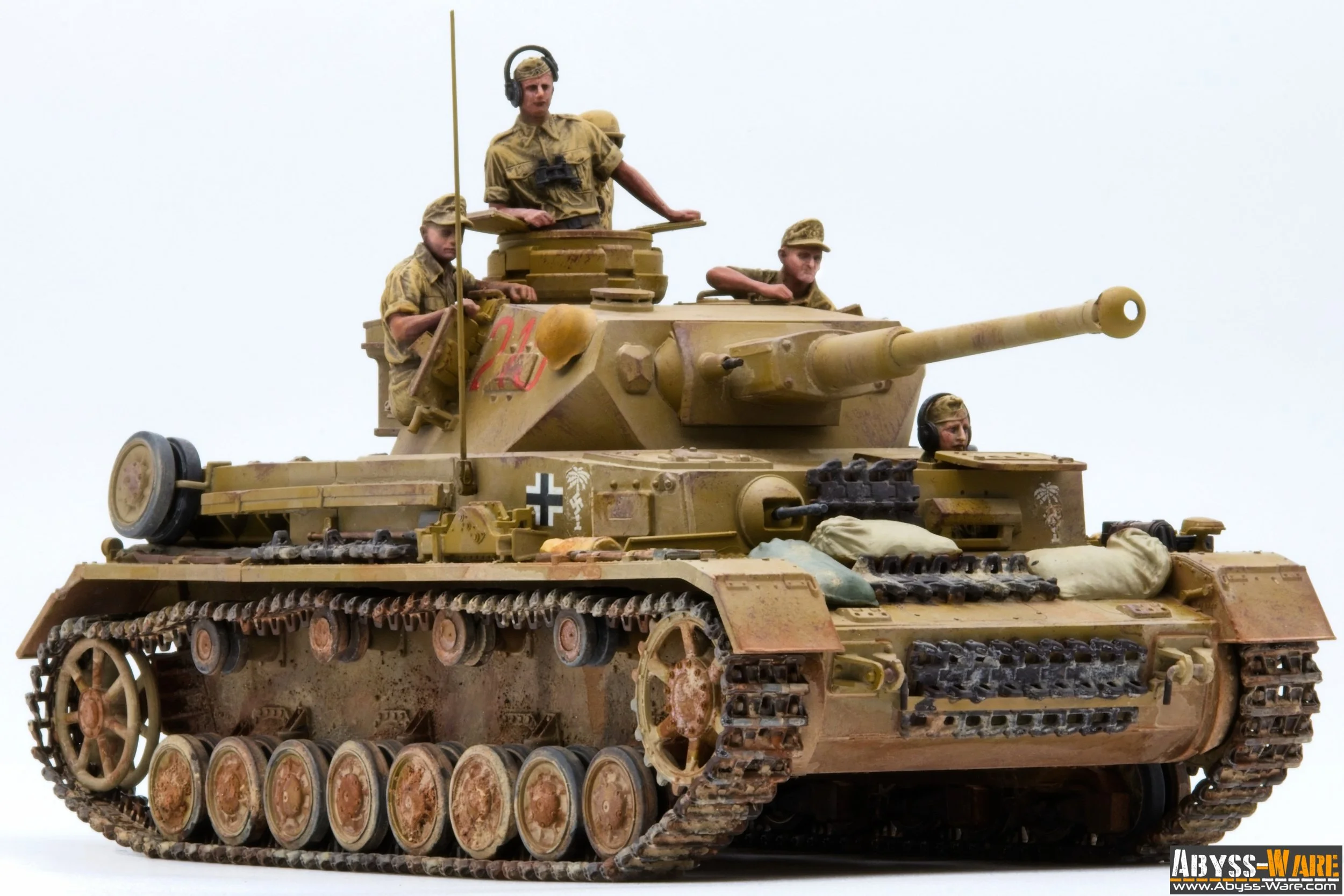
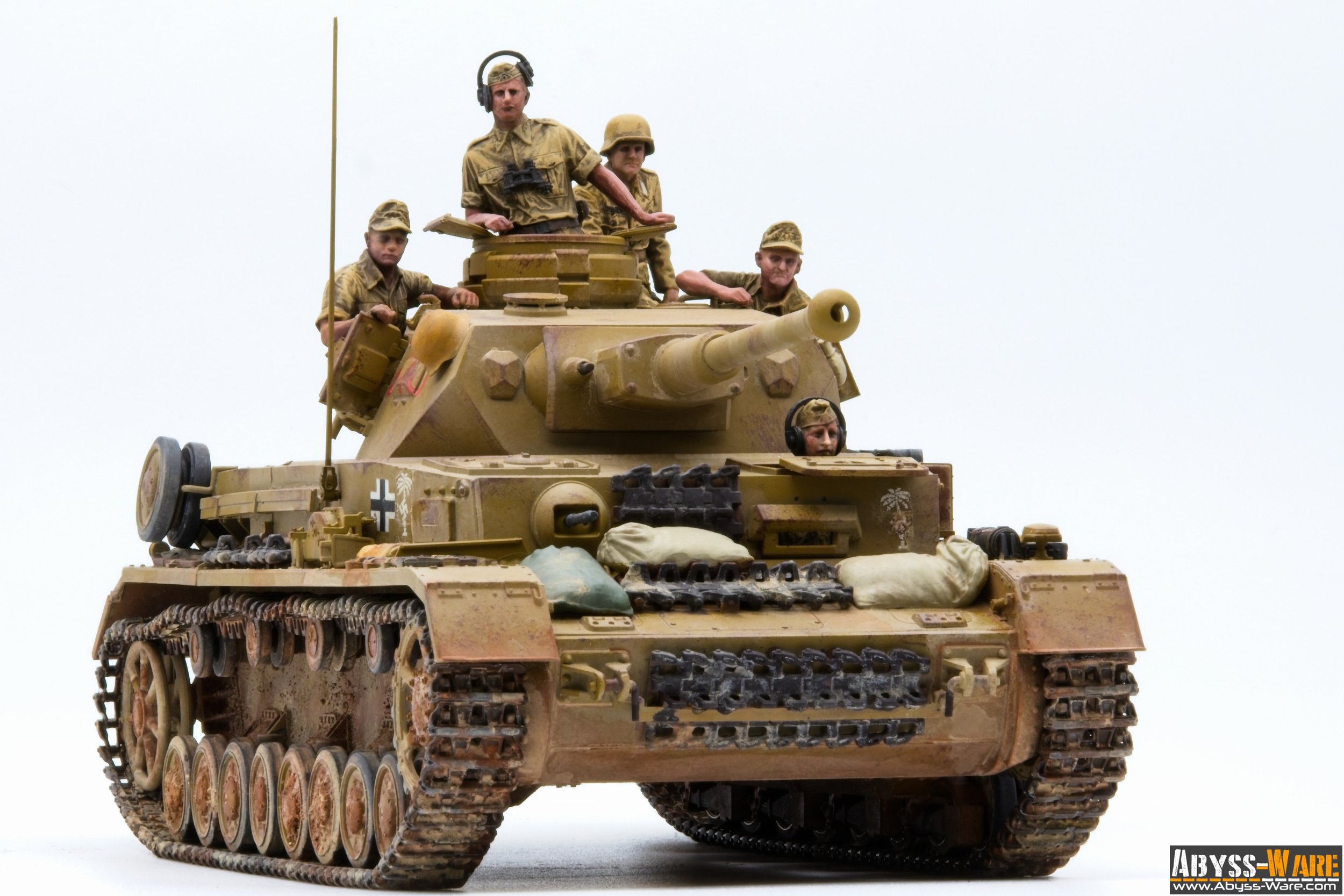
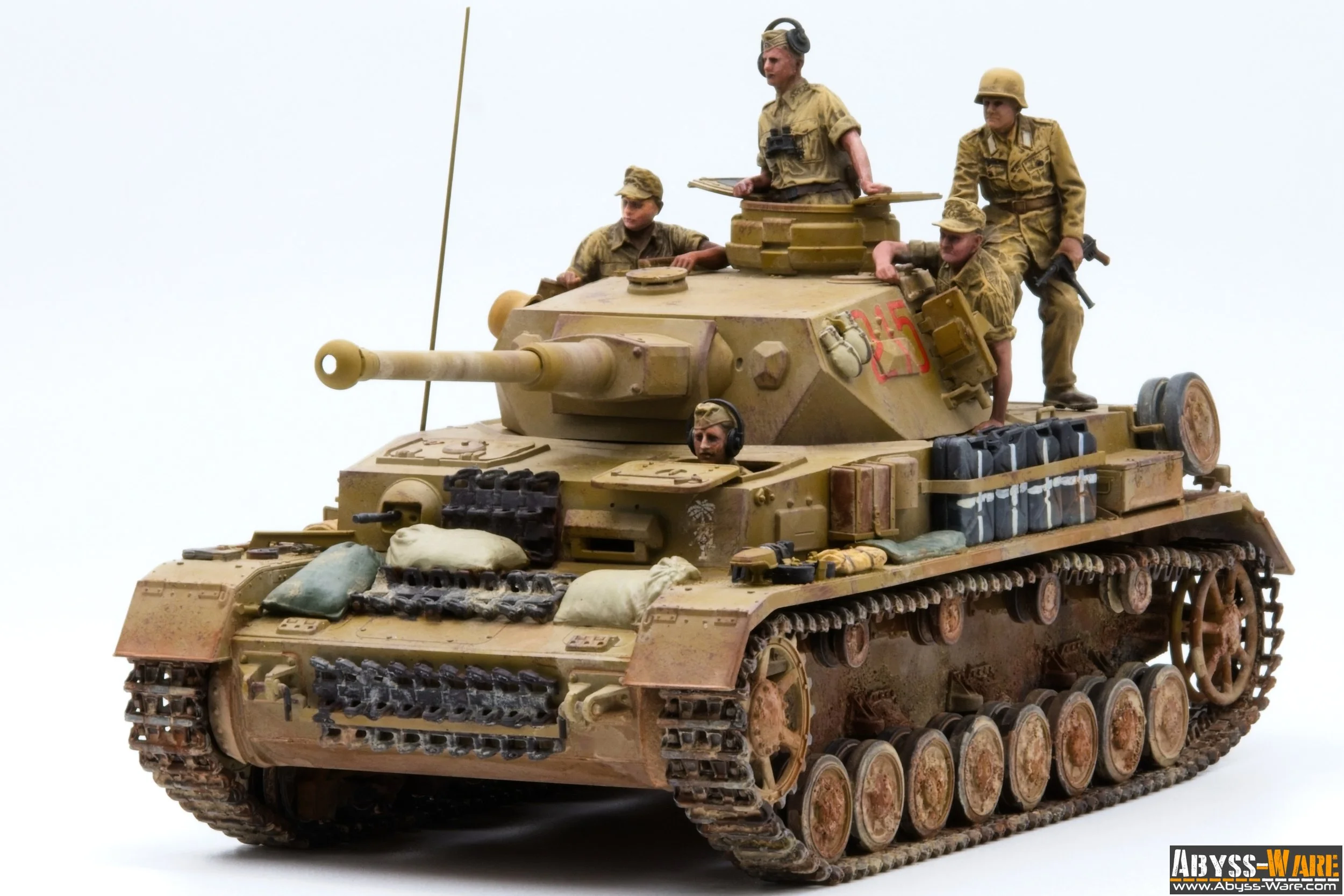
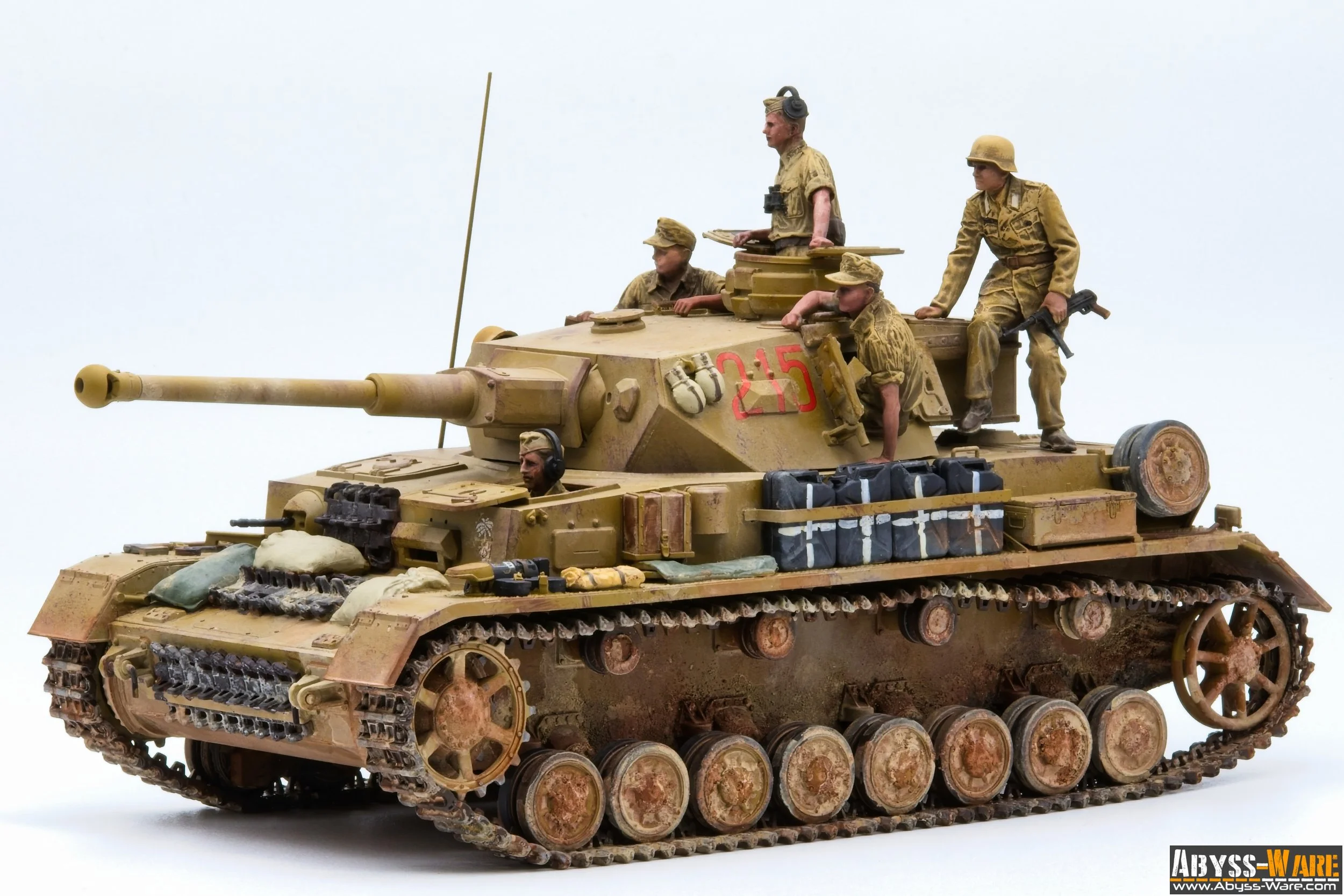
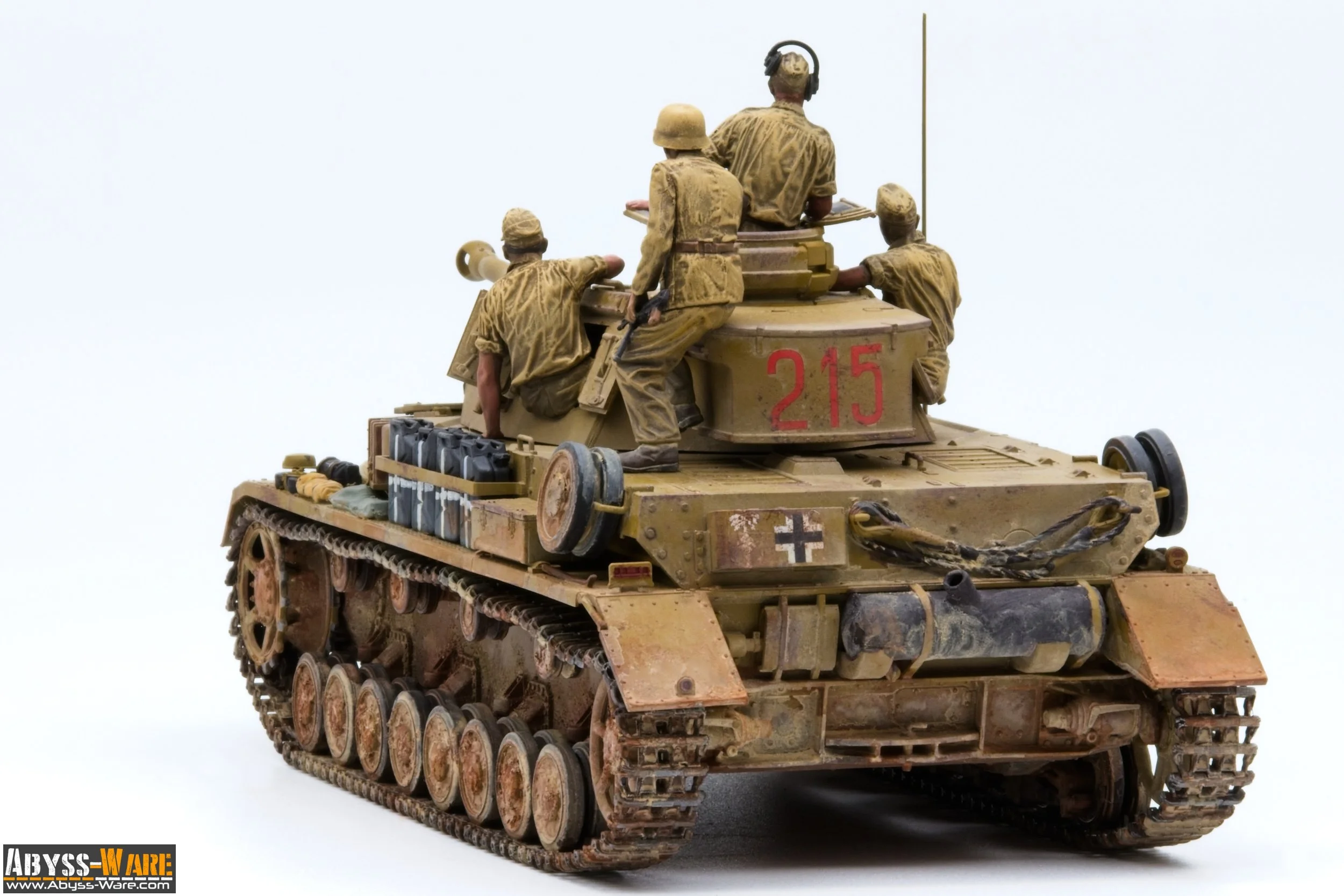
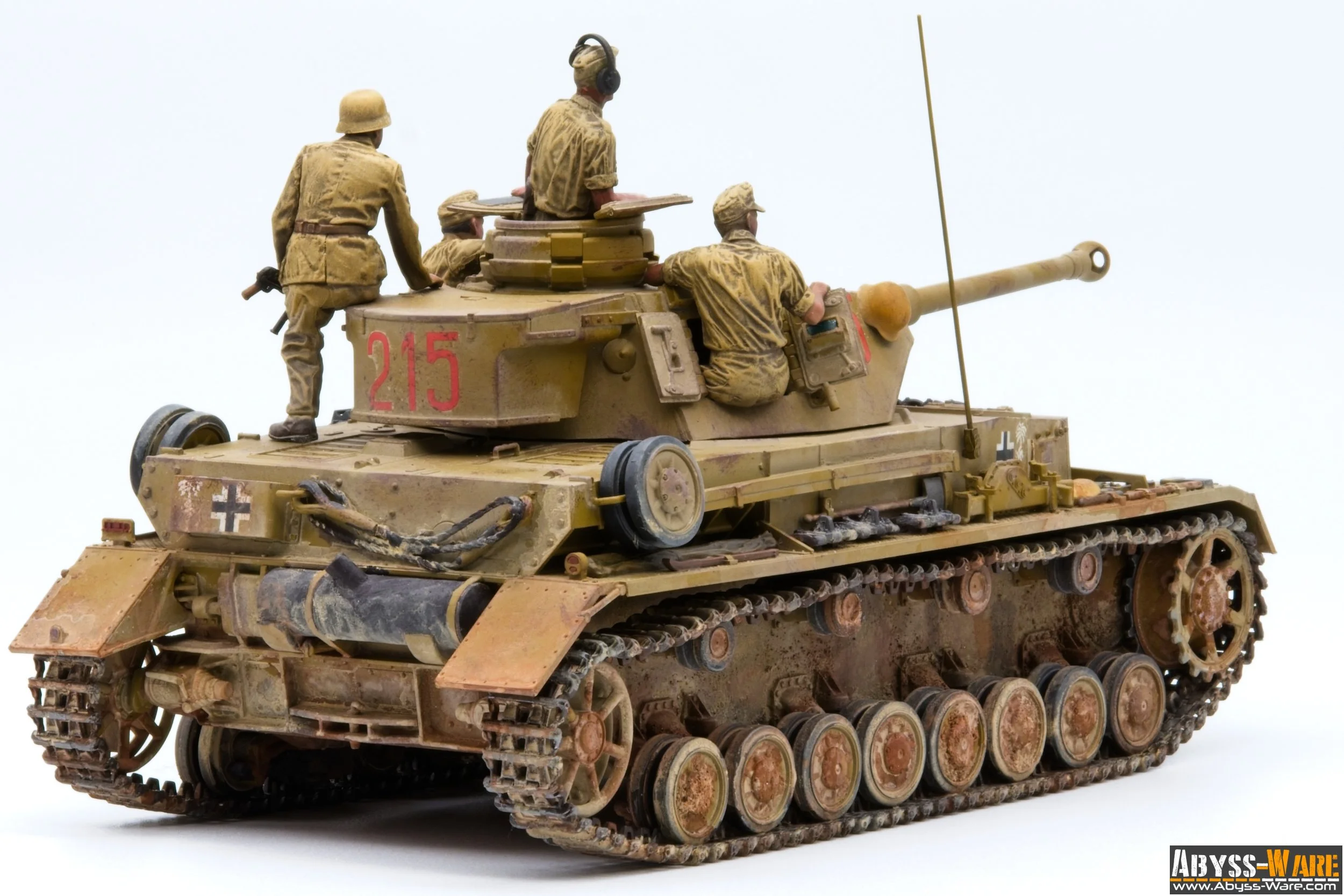
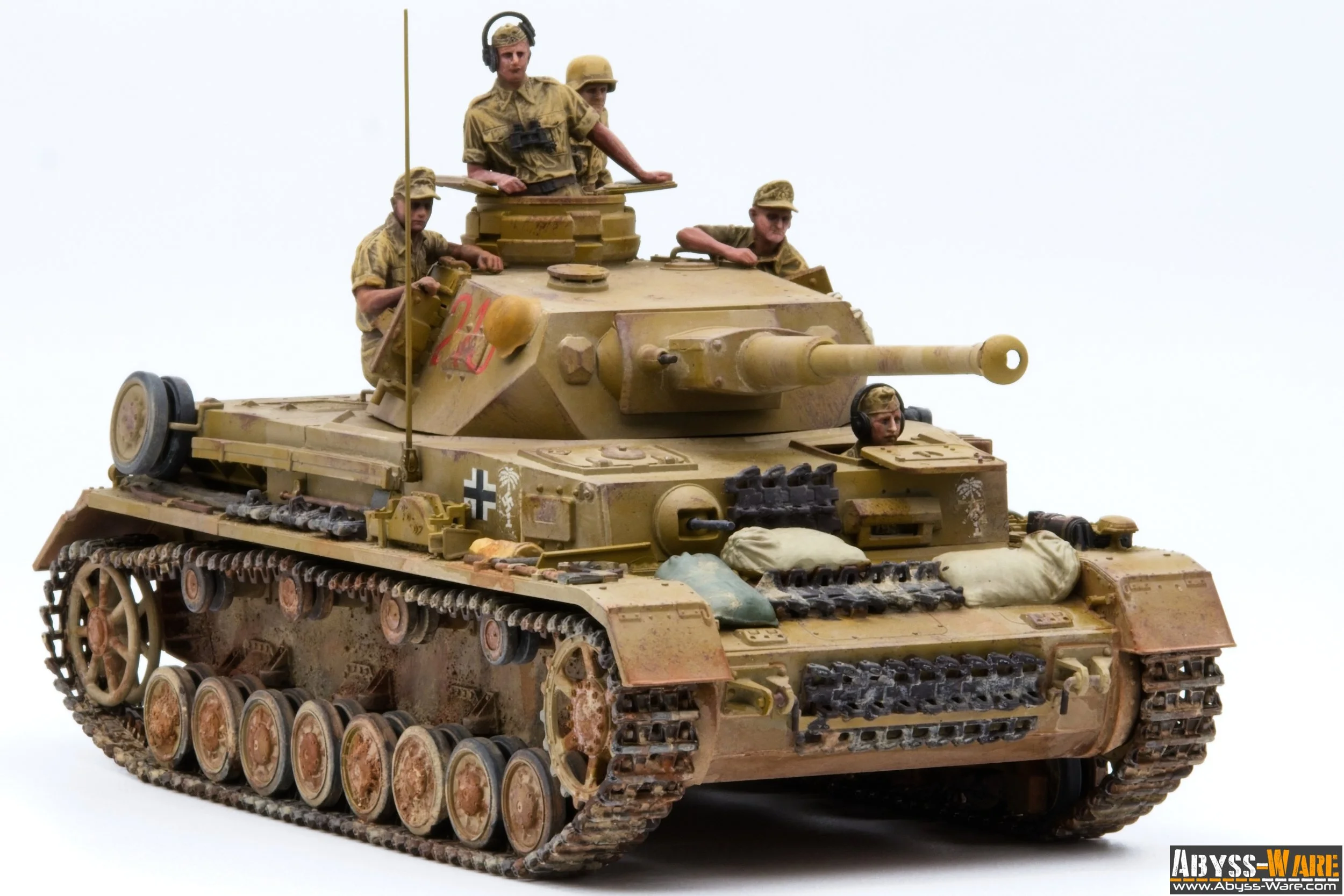
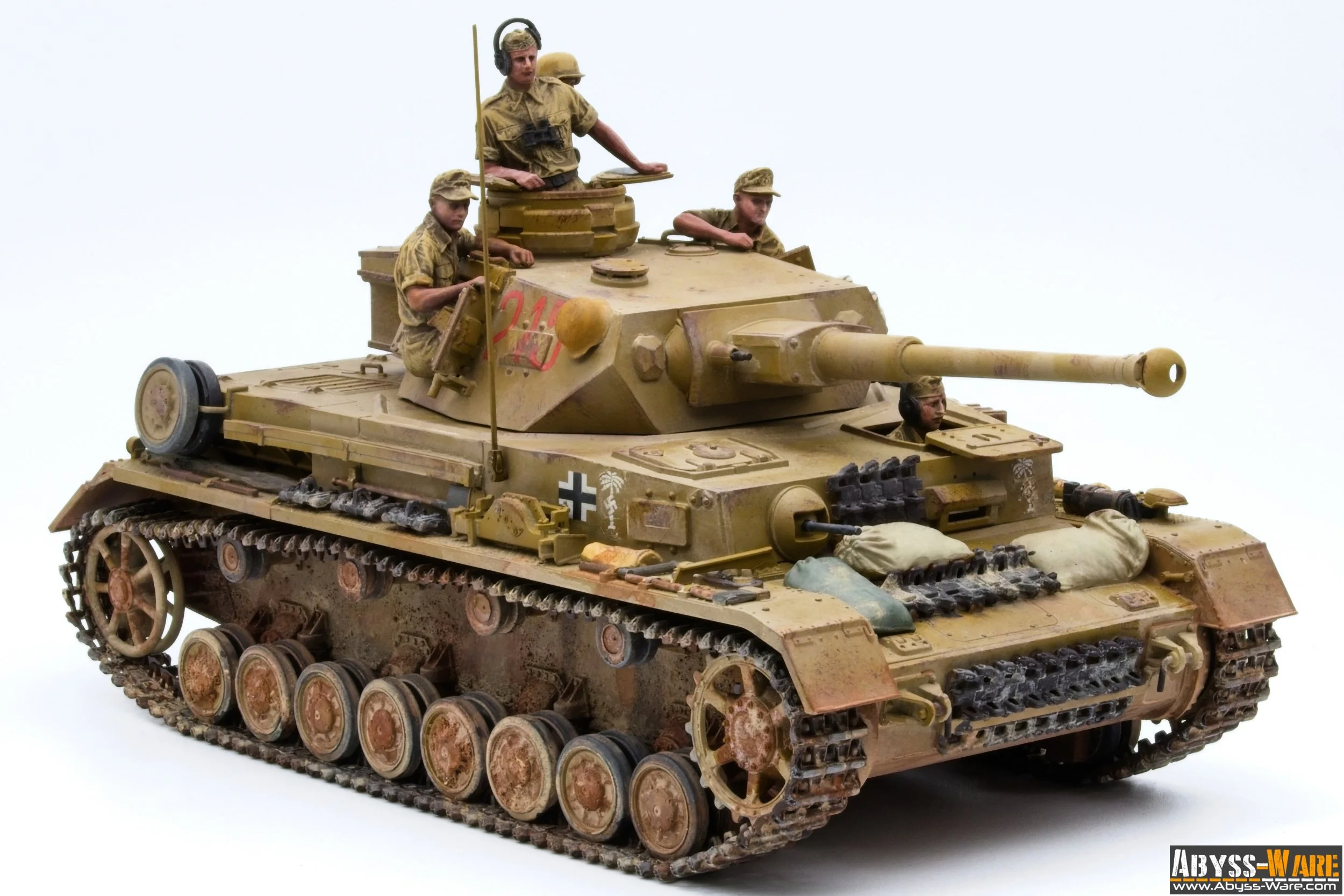
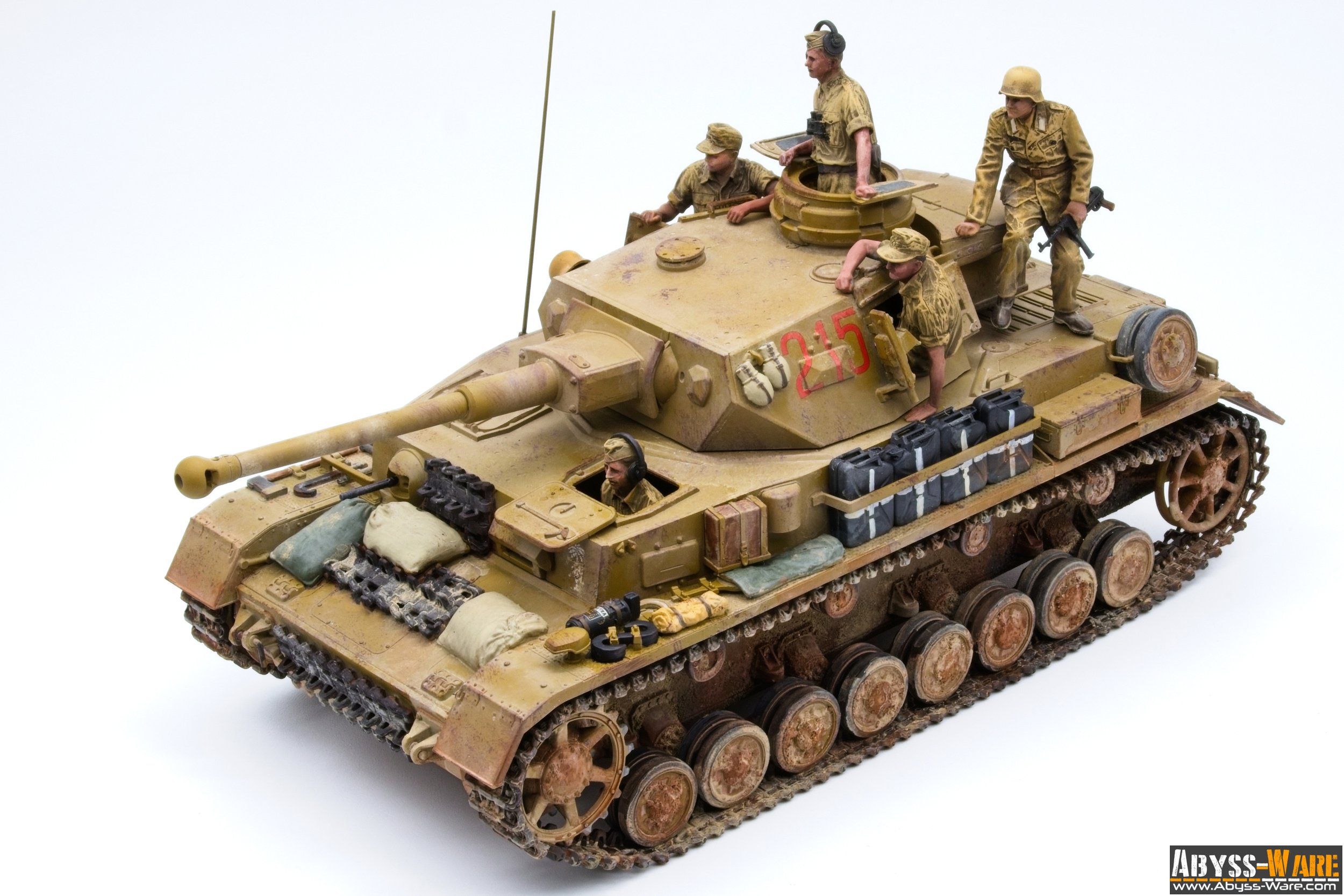
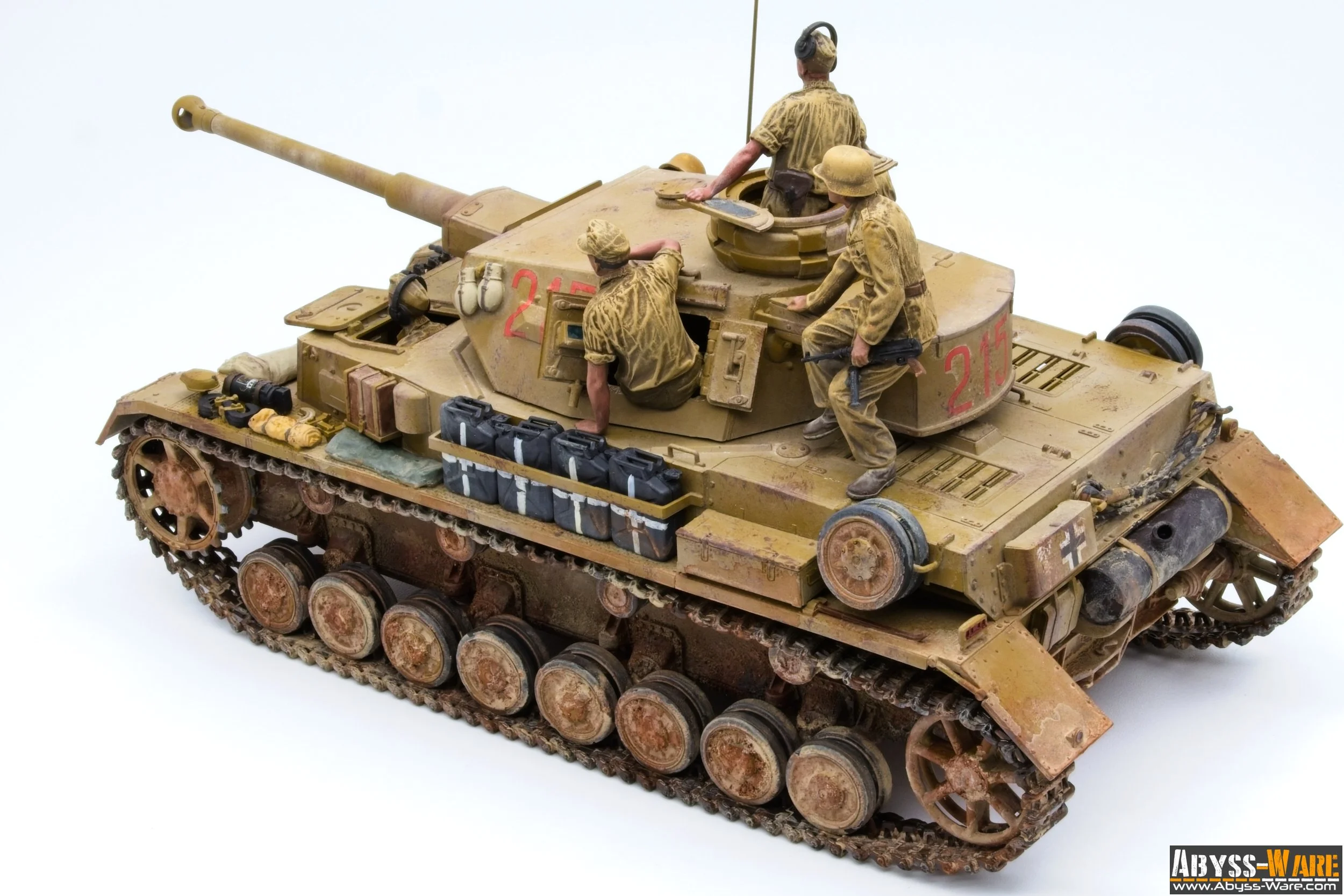
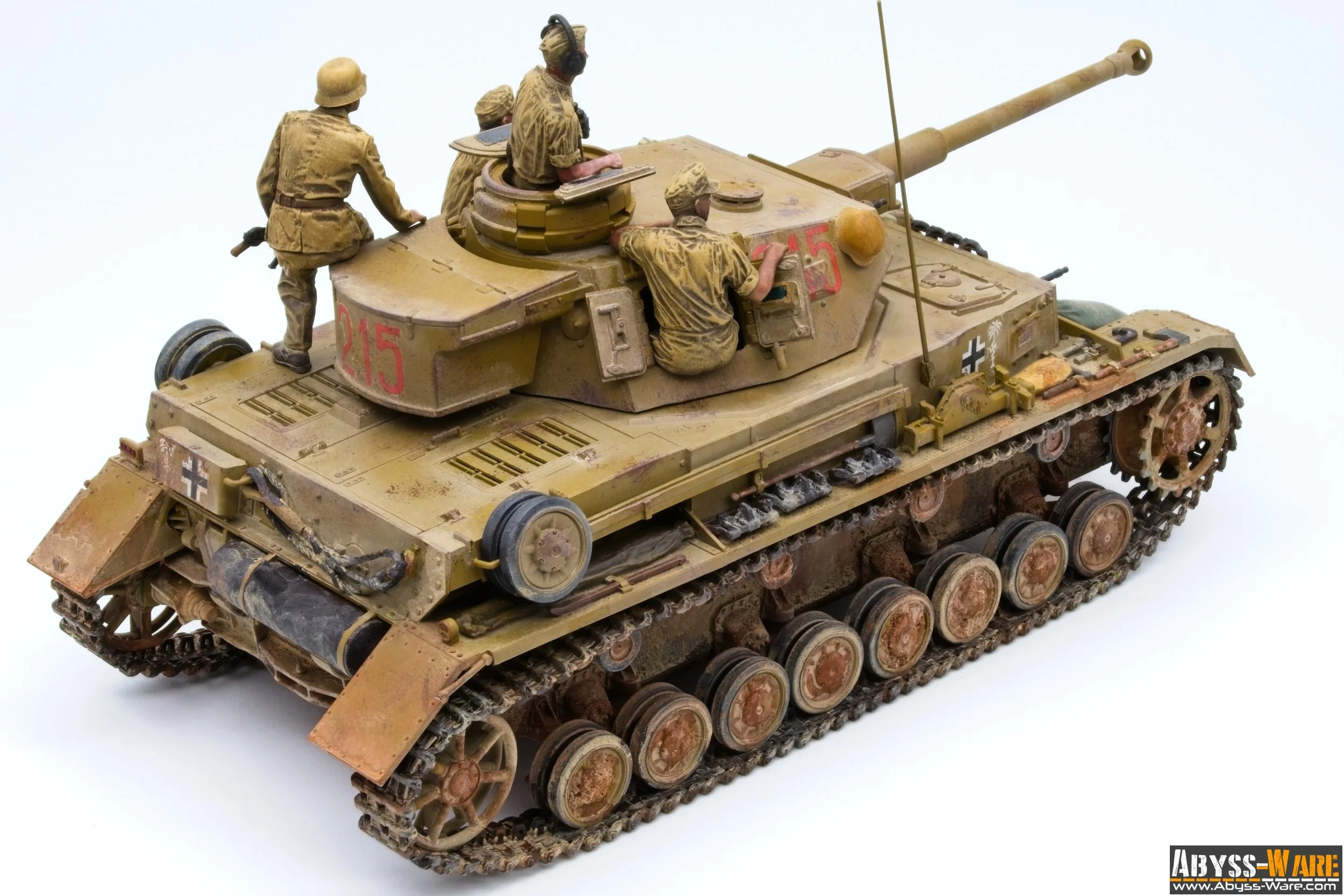
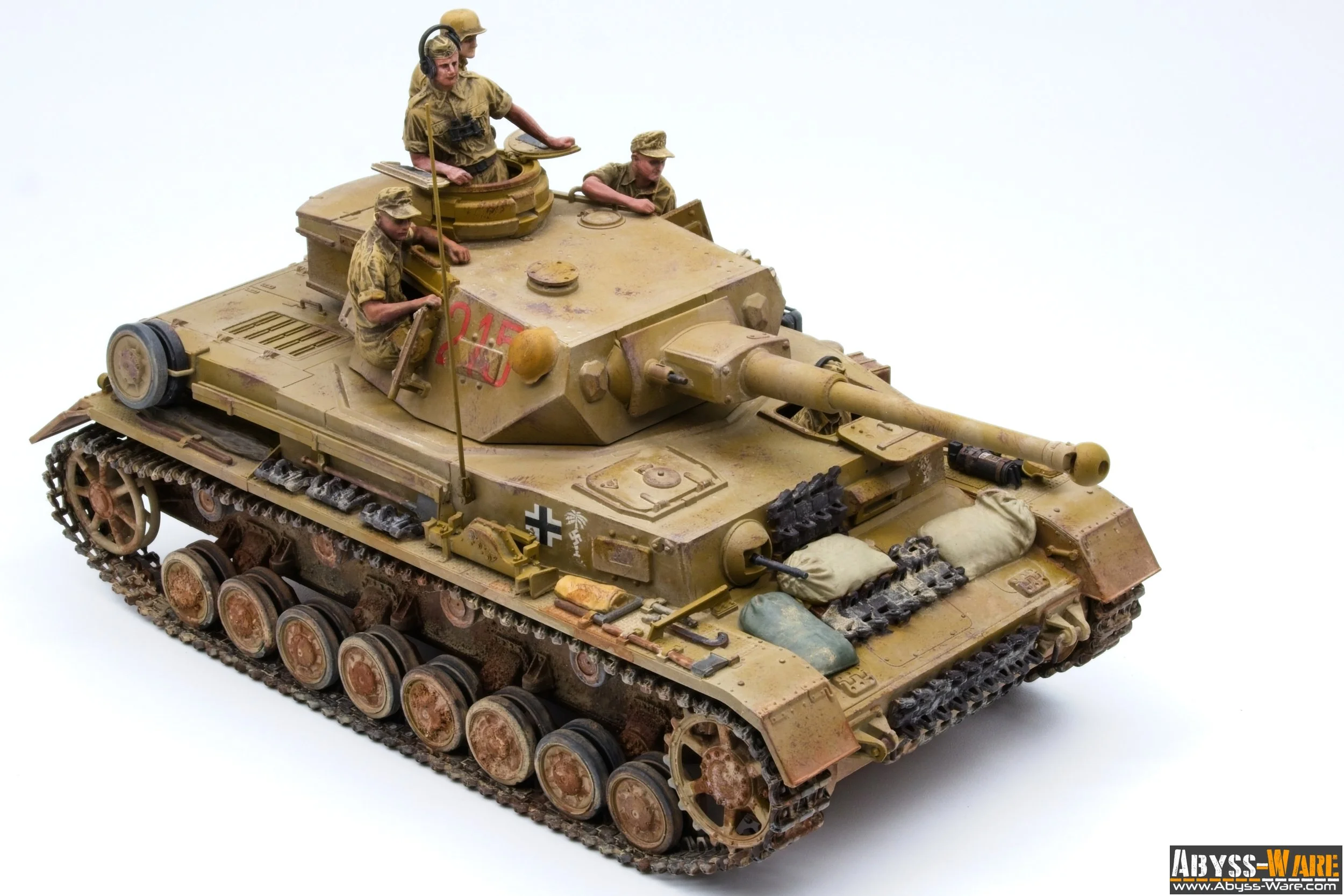
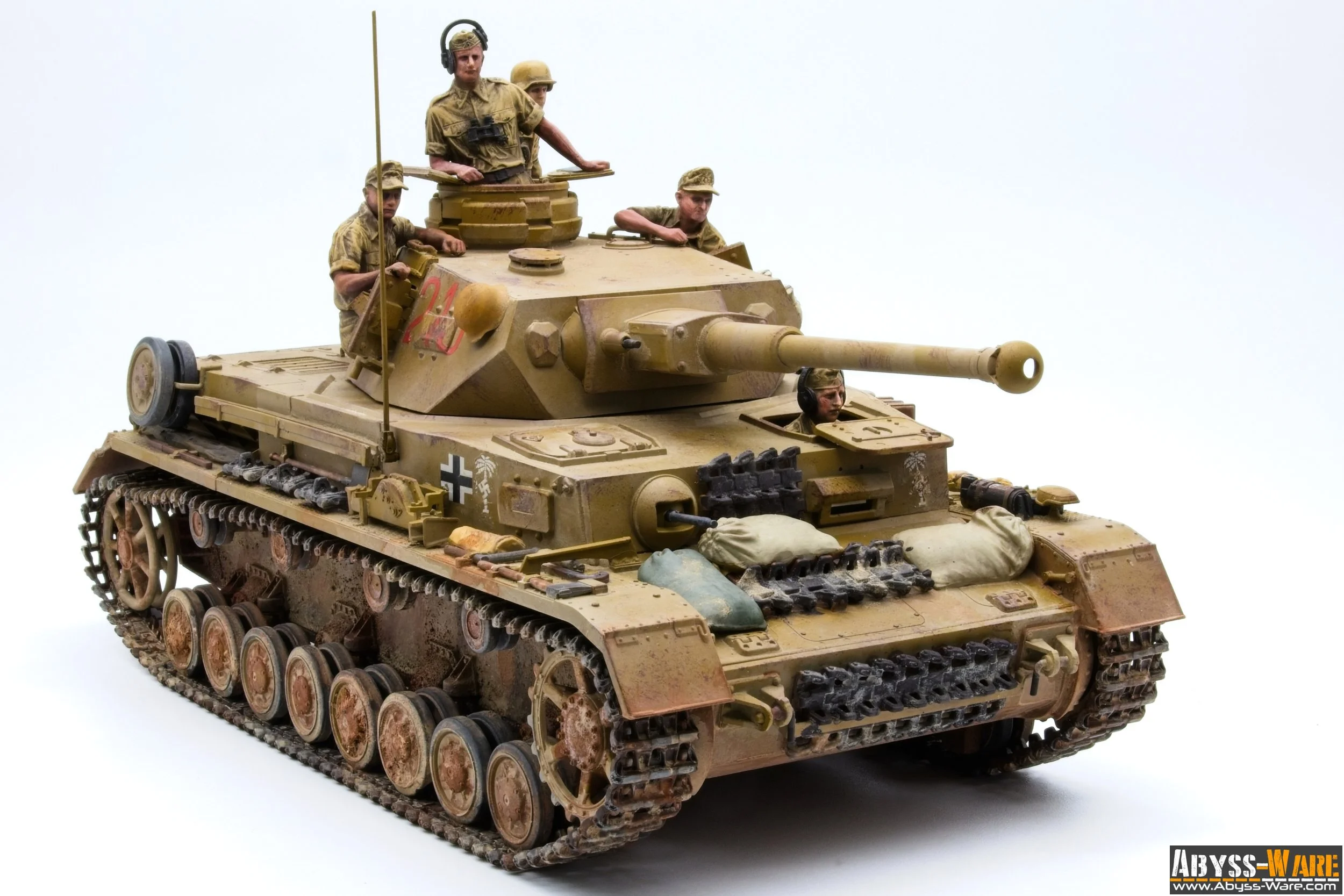
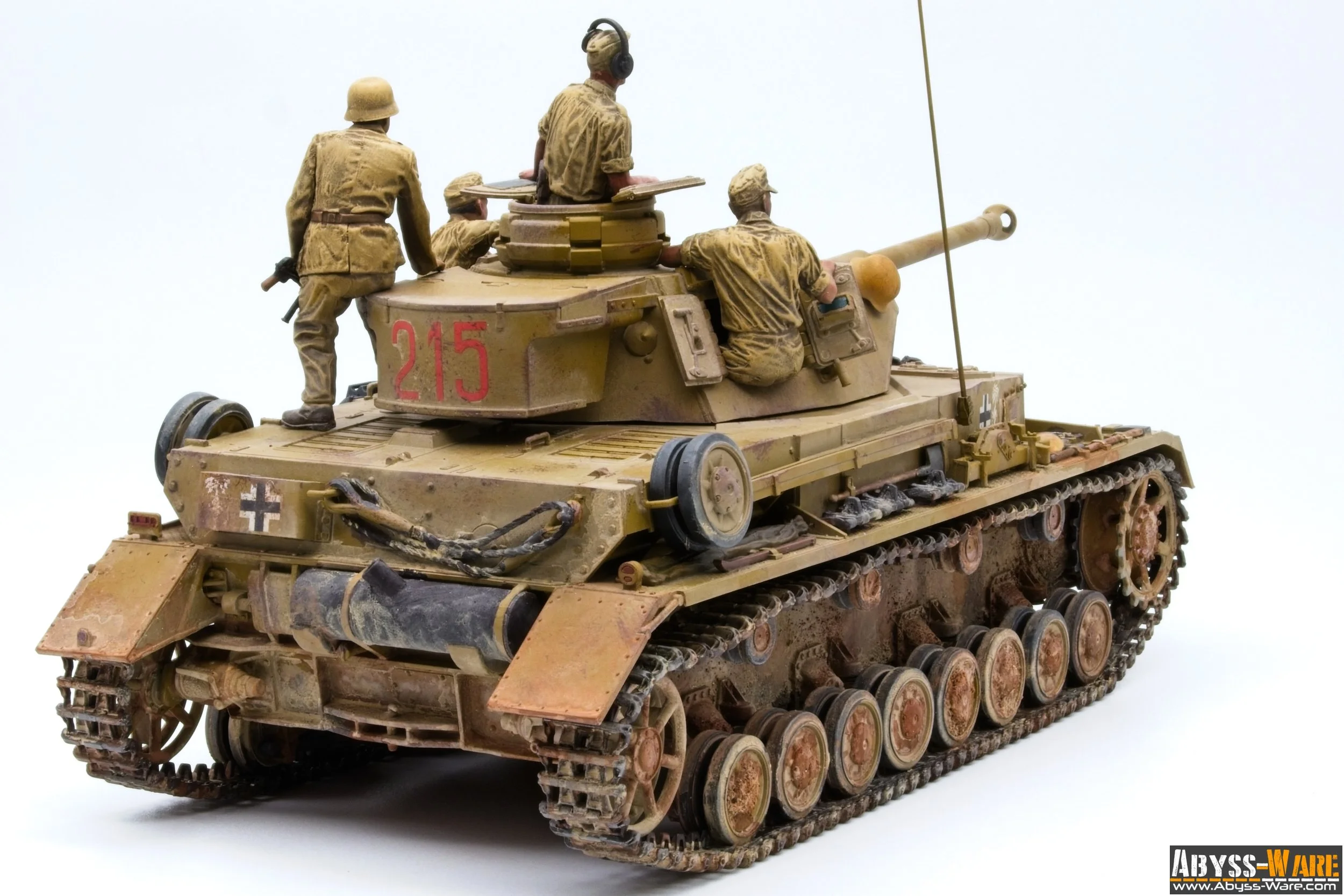
Note: The images presented bellow feature photographs of actual scale models, enhanced with AI-generated backgrounds and environments for visual effect. These visuals are intended for illustrative and artistic purposes only and should not be interpreted as real photographs or historical references.